




Edwardian Bentwood Chair
An edwardian bentwood chair brings resilient steam-formed timber and lightness to any room.
Edwardian Bentwood Chair
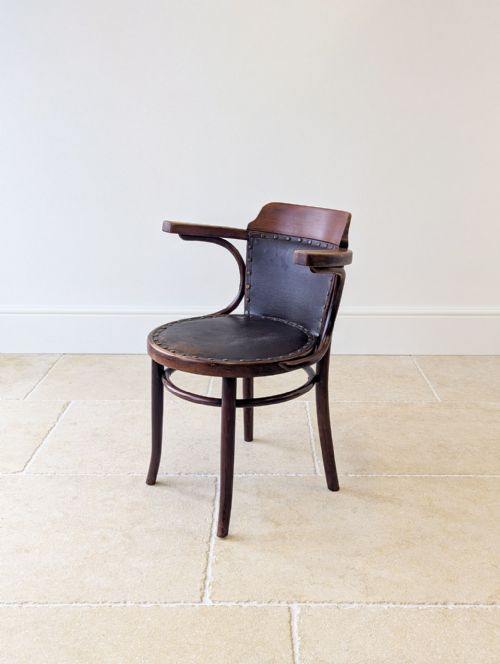
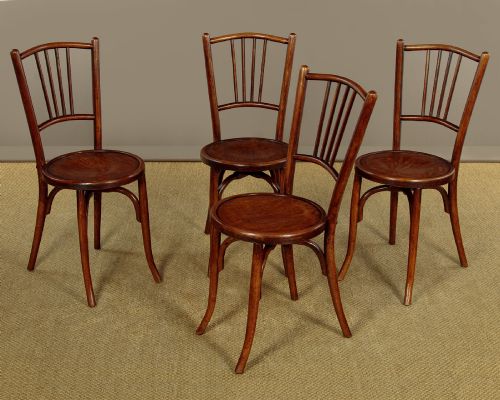
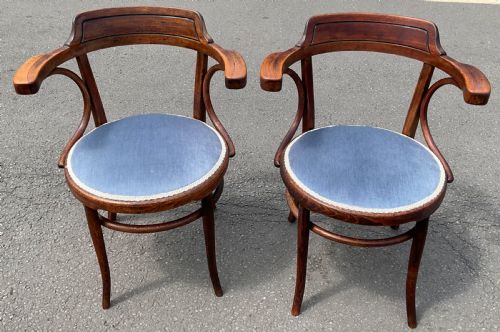
An edwardian bentwood chair is a domestic or commercial seat constructed using steam-bent timber techniques, most commonly found in dining chairs, armchairs, desk chairs, and rocking chairs. Buyers searching for an edwardian bentwood chair often encounter bistro dining chairs, revolving office desk chairs, and tub armchairs originating from the early twentieth century. The forms range from simple single seats to matched sets of four or six dining chairs, alongside occasional children's chairs and rocking variants.
The material palette of an edwardian bentwood chair relies heavily on beech or beechwood, sometimes paired with plywood seats, cane inserts, or leather upholstery and brass fittings. Stylistic influences span straightforward Edwardian production, Art Nouveau curves, Victorian country utility, and distinct Thonet or Viennese bentwood traditions. These pieces reflect a period of industrial efficiency combined with organic form, making them practical for daily use around a modern table or desk.
How they were made
Makers produced an edwardian bentwood chair by placing solid beech or beechwood rods into steam chambers until the timber became pliable enough to pull around cast-iron metal moulds. Once dried and set, these curved structural components formed continuous frames, backrests, and legs without the need for heavy corner blocks.
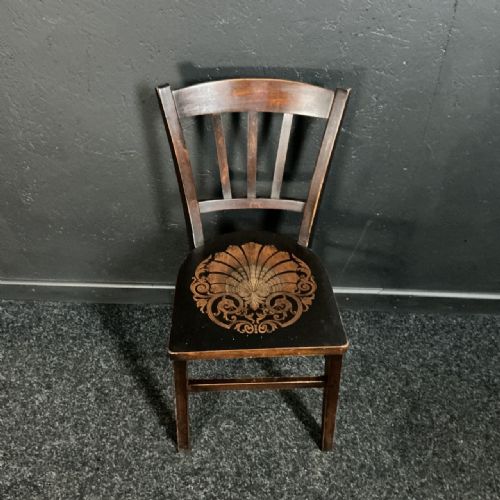
Seats of an edwardian bentwood chair were frequently shaped from pressed plywood stamped with decorative floral or geometric reliefs, or hand-woven from cane set into recessed frame channels. Where cushioning was required, leather pads were fastened over stuffing, and joints were secured using screws or metal brackets rather than traditional complex joinery.
Children's bentwood chairs scaled down entire industrial steam-bending techniques for toddlers long before modern nursery ergonomics.
What varies in quality
The grade of an edwardian bentwood chair depends on the integrity of the steam-bent frame and whether the primary beechwood remains free from structural splitting or excessive dryness. Thicker gauges of timber and well-preserved original surface patination distinguish superior examples from ordinary production.
Execution of secondary details alters the standing of an edwardian bentwood chair, such as crispness in embossed plywood seat patterns or tightness in woven cane work. Complete sets of matching dining chairs or labeled pieces by recognised makers demonstrate a higher level of original intent than isolated, heavily altered examples.
Codina·Thonet·Watkins And Doncaster·J And J Kohn
The Edwardian Bentwood Chair Glossary
- Bentwood
- Wood that has been shaped by heating it with steam until pliable and bending it into curved forms. This technique creates strong, lightweight furniture frames.
- Beech
- A hard, fine-grained timber commonly used for bentwood furniture due to its excellent response to steam-bending. It forms the primary structural material for these chairs.
- Cane
- Strips of rattan woven into an open mesh pattern to form lightweight, flexible seats and backrests. It provides breathability and traditional texture.
- Plywood
- Manufactured wood made from thin sheets of wood veneer glued together with grain layers running at right angles. It is often pressed with decorative motifs for chair seats.
Edwardian Bentwood Chair: Frequently Asked Questions
How do I clean a cane seat?
Wipe cane inserts gently with a damp sponge using mild soap and warm water, ensuring the material is not overly saturated.
Allow the cane to dry naturally in a well-ventilated space so the natural fibres tighten back up properly.
Are these chairs suitable for daily dining?
Most bistro and dining variants of these chairs were originally engineered for bustling hospitality environments and heavy daily use.
Their lightweight construction makes them easy to move around a dining table while maintaining robust structural resilience.
How do I identify a maker mark?
Makers often stamped their company names, paper labels, or brand logos directly onto the underside of the wooden seat or stamped the frame.
Some manufacturers also burned their signatures into the interior wooden components during the steam-pressing process.
Can I use a desk chair on carpet?
Revolving desk chairs with wooden bases or metal brackets move best when placed over smooth hard flooring rather than thick carpets.
Using a protective chair mat prevents unnecessary strain on the lower revolving mechanism and legs.