



Thonet Cafe Chair
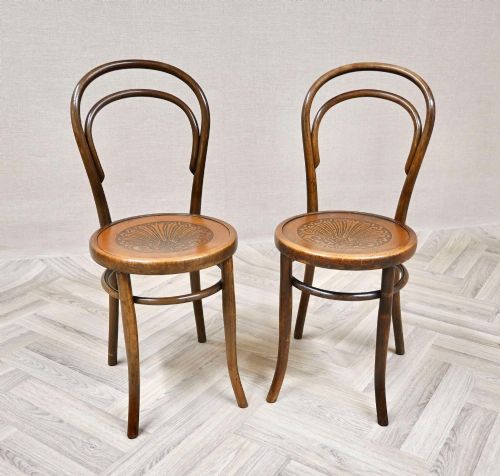
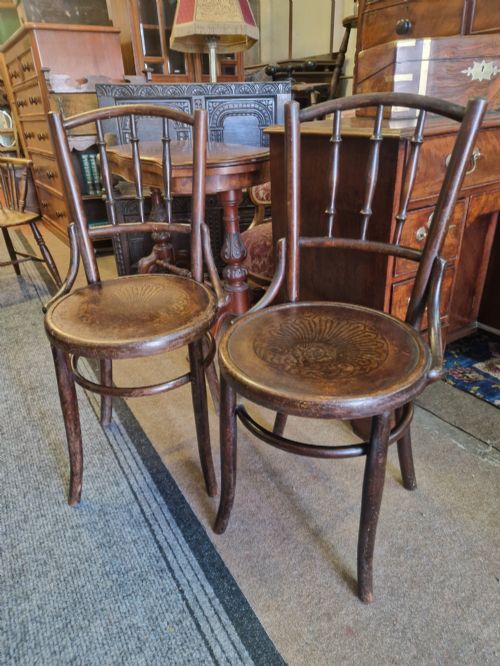
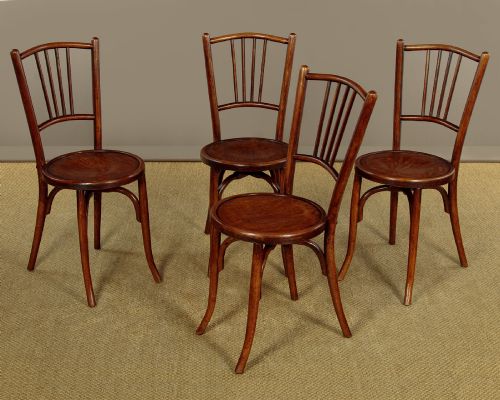
These Thonet cafe chair pieces are steam-bent timber dining seats and armchairs built for European bistros, offering resilient curves that buyers select for commercial or domestic dining rooms.
Thonet Cafe Chair
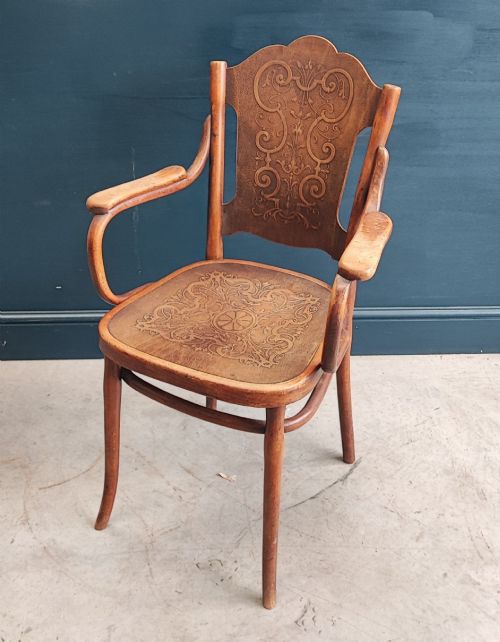
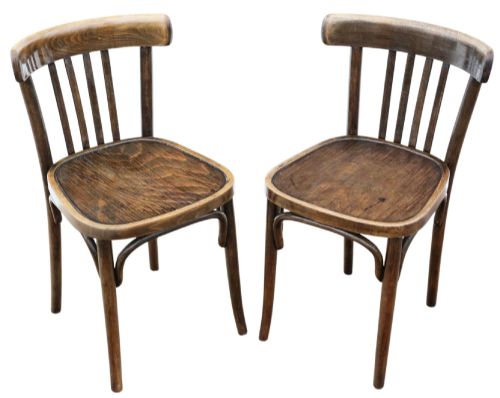
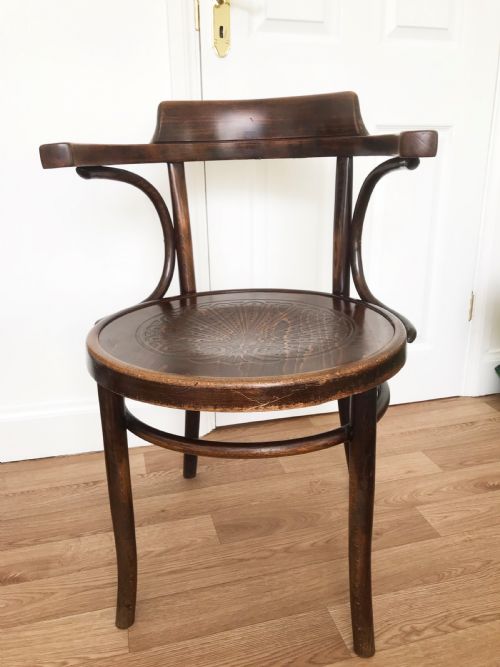
A thonet cafe chair is a lightweight dining seat or armchair driven by the principles of steam-bent timber, designed to withstand the daily demands of hospitality venues. When searching for a thonet cafe chair, buyers encounter forms ranging from simple side chairs to carvers and armchairs produced across several decades.
The selections span distinct periods including late Victorian, Edwardian, 1900, 1910, 1920, 1930, and 1960. Styles include Art Nouveau, European bistro, Mid-Century bentwood, and Victorian bentwood.
Dining chairs and armchairs dominate the inventory, often appearing as matched pairs, sets of four, five, six, seven, or ten. Origins reach back to commercial spaces such as the Cafe Royal in London, alongside workshop productions from Yugoslavia.
Construction and materials
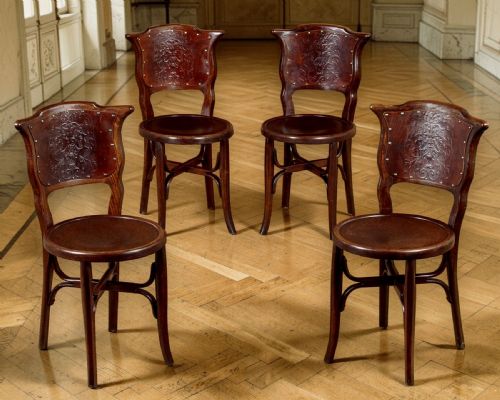
Construction relies heavily on beech, beechwood, and general timber subjected to steam-bending techniques to achieve continuous curved frames without heavy joints. Plywood and embossed plywood appear frequently for seat bases, adding geometric or floral pressed patterns.
Assembly often incorporates subsidiary elements such as brass studs to secure components or upholstery. Stained wood finishes protect the timber while highlighting the natural grain of the bent elements.
Thonet Cafe Chair Retail Price Guide 2026
Typical asking prices for thonet cafe chair among the pieces listed under this phrase on Sellingantiques today, from the lower quarter to the upper quarter. They describe what is for sale here now, not the wider market.
Several chairs on offer spent their early mornings serving coffee at the historic Cafe Royal in London.
Evaluating quality
Quality variation lies in the crispness of the steam-bent curves and the depth of the embossed plywood seat patterns. Earlier workshop examples demonstrate superior control over the bending process, maintaining structural integrity across slender profiles.
The presence of maker attribution, such as branded marks associated with Thonet, J & J Kohn, or Codina, distinguishes workshop productions from generic counterparts. Set uniformity across larger groupings also determines the standing of a collection.
Thonet·J & J Kohn·Codina
The Thonet Cafe Chair Glossary
- Bentwood
- Timber shaped by exposure to steam, allowing craftsmen to create smooth, sweeping curves for chair backs and frames. This technique forms the structural foundation of every piece in the category.
- Embossed Plywood
- Manufactured wood compressed under heat and pressure to impress decorative patterns into the seat surface. This method provided durability alongside ornamentation for heavy commercial use.
- Carver
- An armchair featuring arms integrated into the top rail or supports, designed for use at the head of a dining table. These models offer additional comfort compared to standard side chairs.
- Bistro
- A small European restaurant setting where lightweight seating was deployed to maximise floor space. Chairs built for this environment prioritised ease of movement and robust daily utility.
- Side Chair
- A dining chair manufactured without arms, intended to fit neatly beneath tables in multiples. These pieces represent the most common form encountered in cafe seating.
Thonet Cafe Chair: Frequently Asked Questions
What defines a bentwood cafe chair?
A bentwood cafe chair is constructed using solid timber softened in steam chests and bent into curved structural components. This manufacturing innovation allowed for lightweight, resilient frames that revolutionised commercial seating in European coffee houses.
The resulting designs combine minimal material use with high structural strength. This engineering approach makes them enduringly popular for modern dining spaces.
How do I care for stained beech chairs?
Maintenance involves dusting with a dry cloth and occasionally applying appropriate furniture wax to nourish the stained wood finish. Avoid placing these pieces in direct sunlight or near excessive heat sources to protect the bent timber joints.
Regular checks on screw fixings ensure the frame remains stable during daily use. Gentle handling preserves both the original finish and the structural integrity of the steam-bent components.
Were these chairs used in homes?
While originally commissioned for commercial bistros and cafes, their domestic utility was recognised almost immediately. Victorians and Edwardians brought them into domestic dining rooms for their lightness and clean lines.
Today, they transition easily between residential kitchens and formal dining spaces. Their neutral aesthetic complements various interior styles from traditional to mid-century.
How are larger sets assembled?
Larger sets often bring together chairs produced within the same manufacturing period or retrieved from specific hospitality venues. Dealers match these groups based on timber tone, seat configuration, and overall proportions.
Matched sets of four, six, or more provide uniform seating for dining tables. Each chair retains individual characteristics while functioning cohesively as a set.