
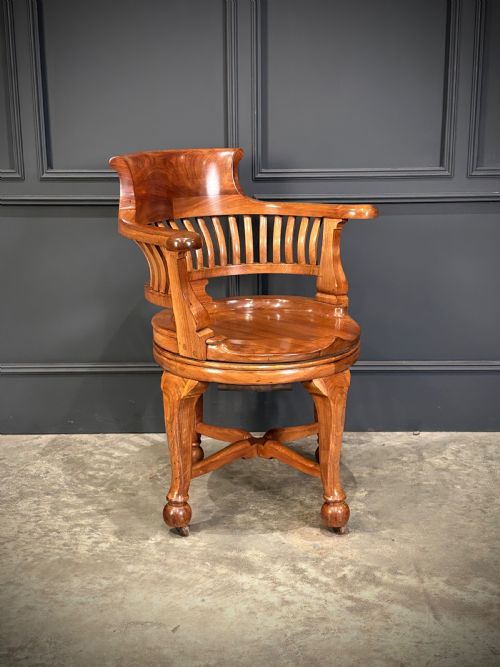
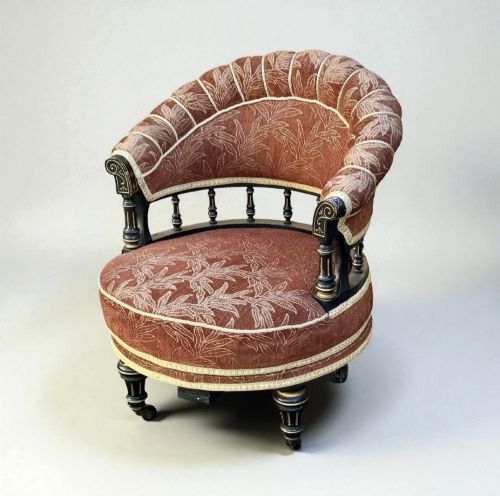
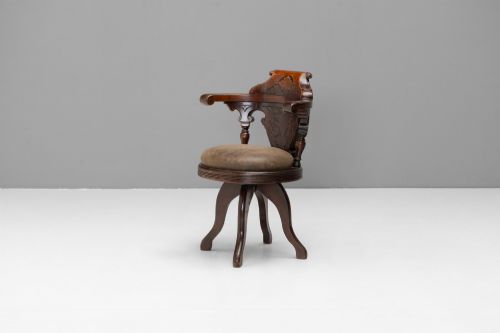

Vintage Swivel Desk Chair
A vintage swivel desk chair brings reliable mechanical movement and period character directly to a workspace.
Defining the vintage swivel desk chair
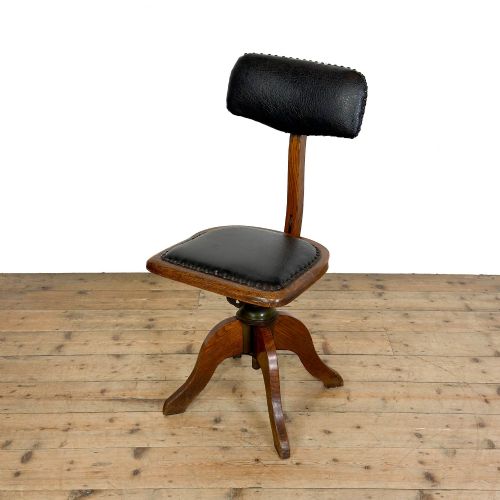
A vintage swivel desk chair is a practical seating option designed for movement at a desk or table, combining a revolving mechanism with supportive seating. These pieces span the Victorian, Edwardian, and George V periods, offering functional seating solutions from the nineteenth and early twentieth centuries.
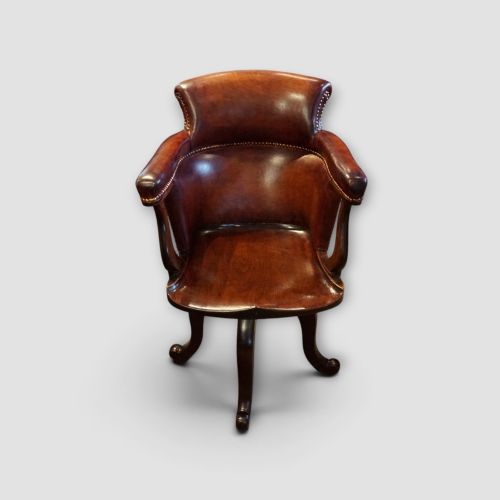
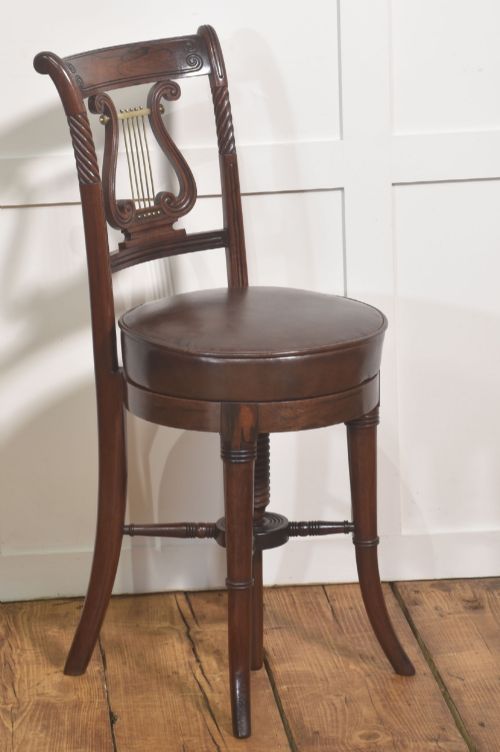
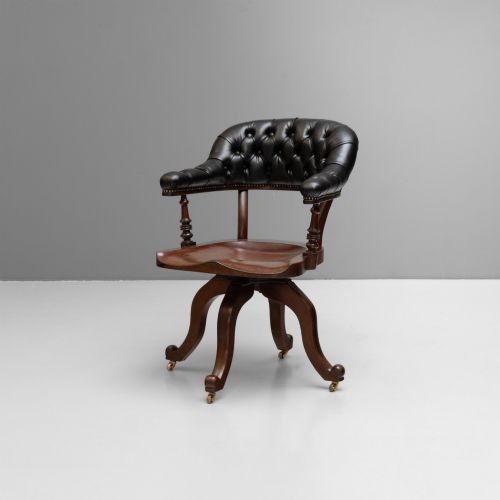
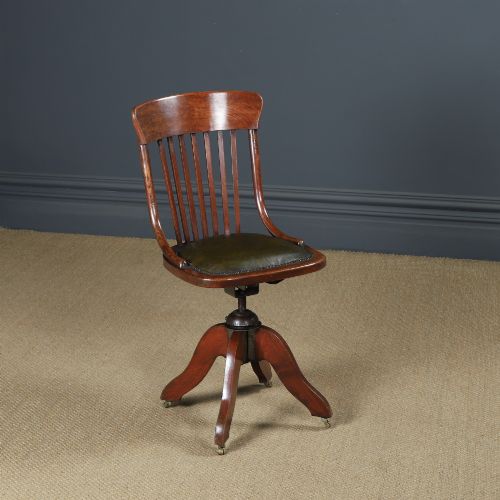
The versions most commonly met on this page include revolving armless small office desk side chairs, captain's chairs, and machinist's chairs. They originate from British workshops and European makers, utilising traditional woodworking and metalworking techniques of their respective eras.
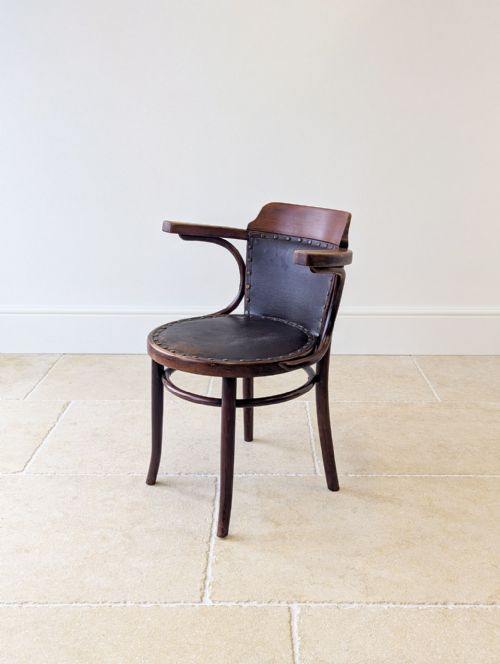
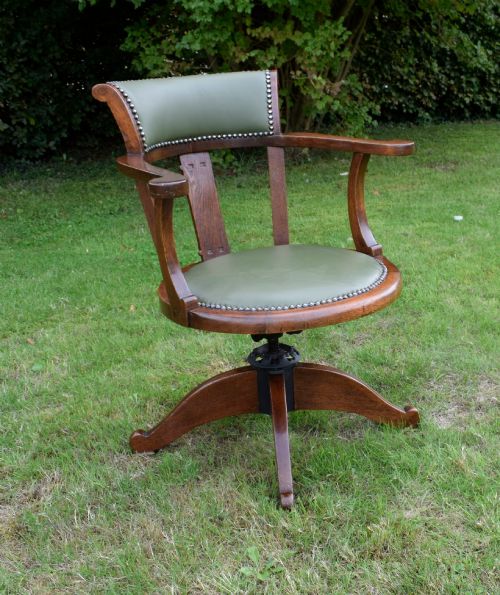
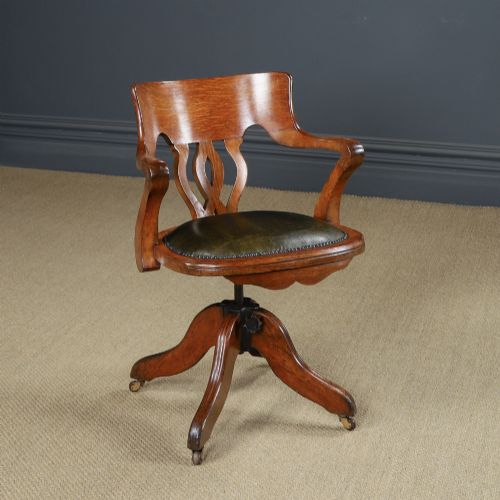
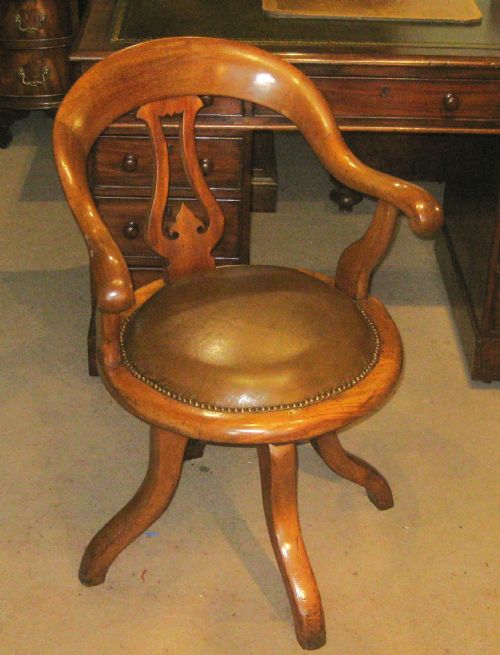
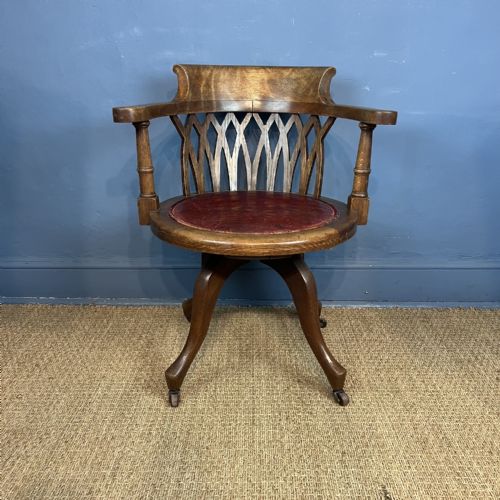
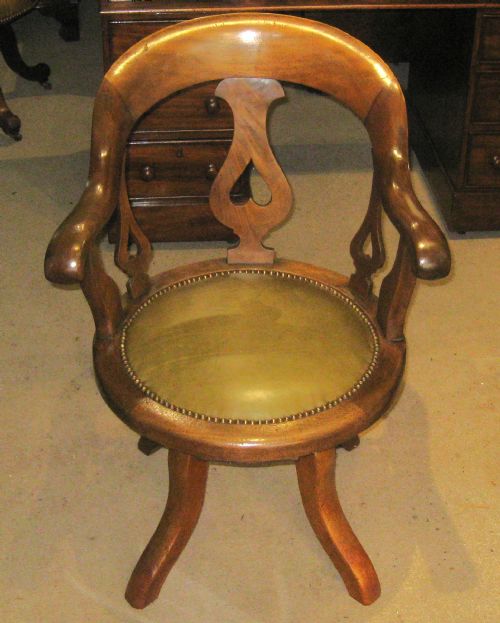
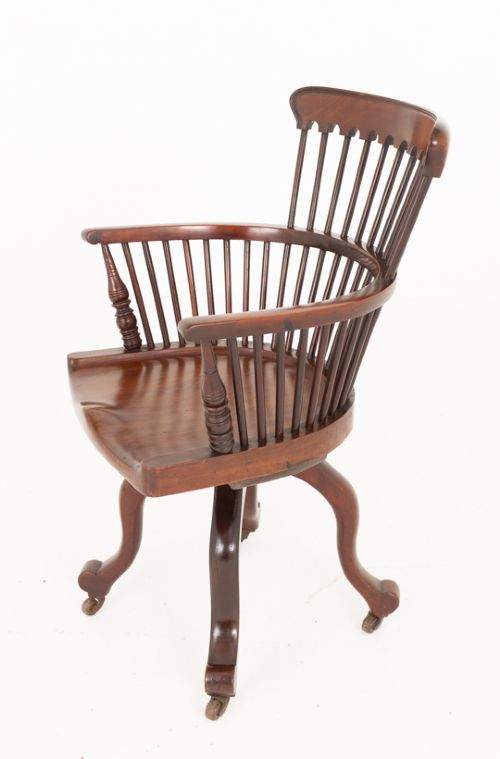
Forms vary from sturdy oak and mahogany elbow study chairs to bentwood designs with leather upholstery. Each piece reflects the functional requirements of past offices, studies, and workspaces.
Materials and construction
Makers utilised a range of domestic and imported timbers including mahogany, oak, beech, walnut, and hardwood to build sturdy frames capable of supporting mechanical movement. Components were joined using traditional woodworking methods to ensure stability during daily use at a desk.
Metal and brass elements formed the revolving swivel mechanisms, allowing the seats to turn smoothly on central shafts or spider bases. Iron was frequently employed in the structural underpinnings of office and machinist's chairs for added strength.
Upholstery typically involved leather stretched over padding for seat pads and backrests, secured with tacks to the wooden frame. Bentwood techniques, as seen in Thonet examples, allowed for curved wooden armrests and backs formed under steam.
Retail Price Guide 2026
Typical UK retail prices for vintage swivel desk chair, calculated from the Sellingantiques database of over a million retail prices indexed since 2003. This retail price guide relies exclusively on Sellingantiques data; no external sources or auction records are used, so the figures do not describe the wider market.
The periods represented span from the Victorian era and Edwardian period through to the George V and early twentieth-century eras.
Assessing quality and craftsmanship
The distinction between standard examples and superior pieces rests on the complexity of the timber selection, such as golden mahogany or figured walnut, and the refinement of the turning on the legs and spindles. Superior chairs demonstrate careful attention to joinery and proportion, ensuring the frame remains rigid despite the stresses placed on a revolving mechanism.
The engineering of the swivel mechanism itself dictates the tier of quality, with robust brass and iron hardware providing smoother rotation and greater longevity than simpler iron assemblies. Original leather upholstery with patinated surfaces and intact tack work elevates a piece above those with later replacements.
Thonet
The Vintage Swivel Desk Chair Glossary
- Swivel
- A mechanical joint that allows the upper portion of the chair to rotate independently of the base. This movement relies on a central spindle or pivot.
- Revolving
- An alternative term for swivel, describing a chair designed to turn in a complete circle or partial arc. It is frequently found on nineteenth and early twentieth-century desk seating.
- Captain's Chair
- A low-backed wooden armchair, often fitted with a revolving mechanism and a padded seat for extended periods of study or office work. They provide compact support around a desk.
- Bentwood
- Wood that has been heated with steam to make it pliable, allowing craftsmen to bend it into curved shapes for chair backs and arms. Thonet is a prominent name associated with this technique.
- Mahogany
- A durable hardwood with a rich reddish-brown tone, used extensively for high-quality Victorian and Edwardian desk chairs. Golden mahogany refers to a lighter, highly figured variation.
Frequently Asked Questions
What is a vintage swivel desk chair?
A vintage swivel desk chair is a historical seating piece featuring a revolving mechanism designed for office or study use. These chairs date from the nineteenth and early twentieth centuries.
They combine wooden frames in oak, mahogany, or beech with leather upholstery and metal swivel hardware. Each piece offers functional movement combined with period aesthetic appeal.
How do I date a revolving desk chair?
Dating relies on examining the timber species, construction methods, and the style of the turning on the legs and spindles. Victorian and Edwardian examples often display specific stylistic traits.
The complexity of the swivel mechanism and the type of metal used in the undercarriage also help establish the period of manufacture. Comparing the joinery with dated examples provides further context.
Were these chairs used in homes or offices?
These chairs served in both domestic studies and professional offices during the Victorian and Edwardian eras. Their mechanical swivel action suited tasks requiring movement between different desk areas.
Sturdy captain's chairs and office armchairs were built for daily administrative duties, while lighter side chairs suited smaller writing tables.
How do I care for leather on an old desk chair?
Caring for nineteenth and early twentieth-century leather involves gentle cleaning and the application of appropriate conservative dressings to maintain flexibility. Avoid harsh chemical cleaners that strip the surface.
Protecting the material from direct sunlight and excessive heat prevents the leather from drying out and cracking over time.