
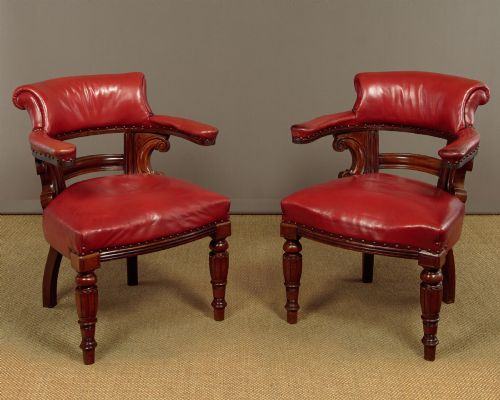
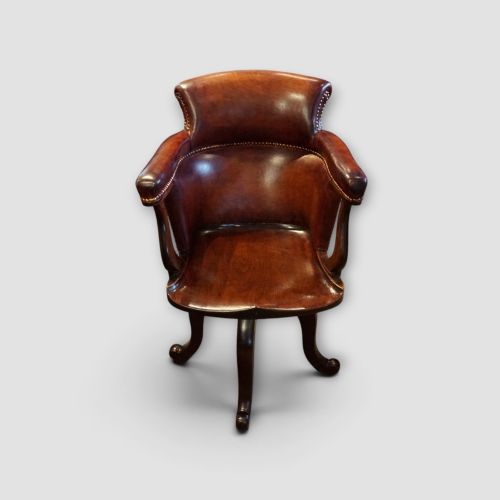
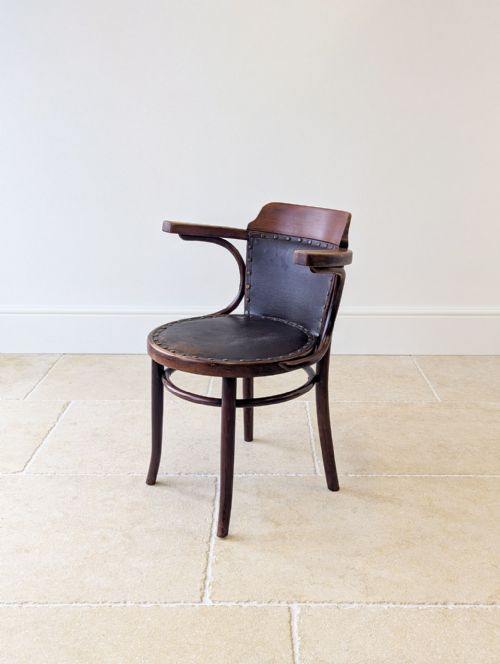
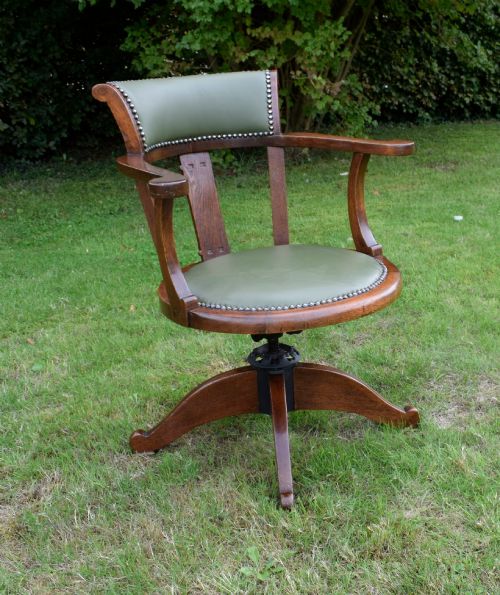


Edwardian Leather Desk Chair
An edwardian leather desk chair brings working spaces from the early twentieth century into the present through sturdy timber frames and hide upholstery.
Edwardian Leather Desk Chair
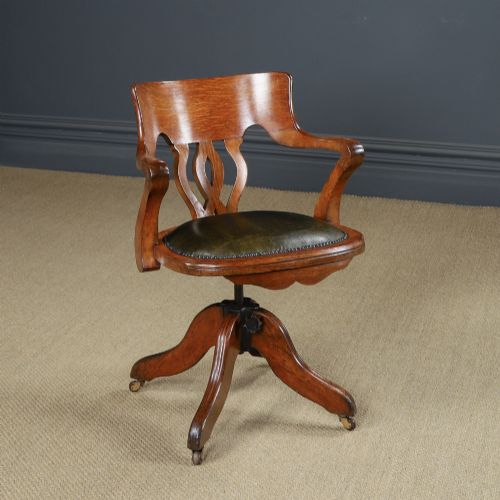
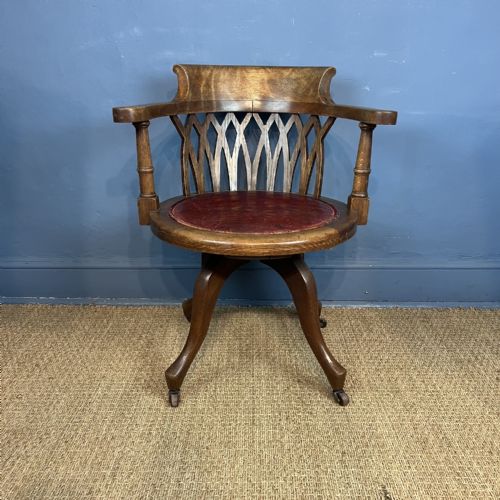
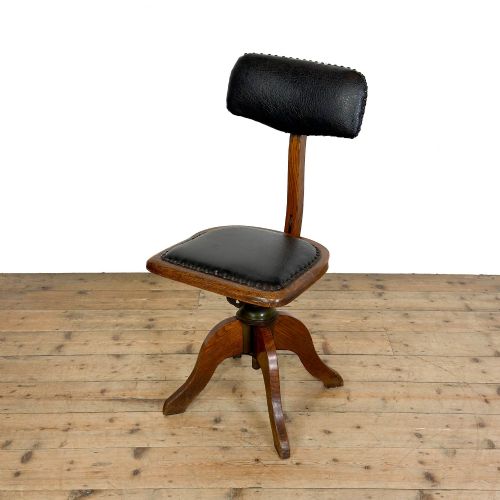
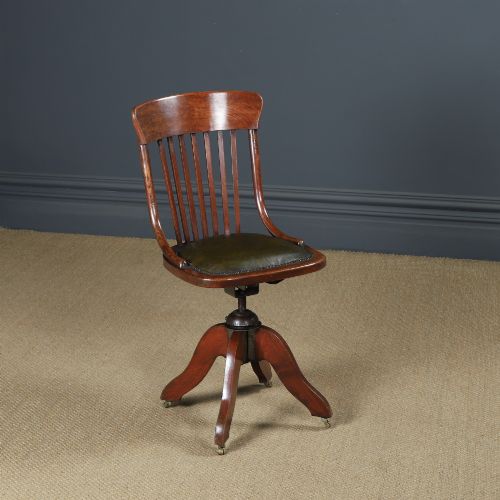
An edwardian leather desk chair encompasses swivel, tilt and stationary forms designed for early offices and libraries. These pieces often feature revolving mechanisms paired with green or red leather seats.
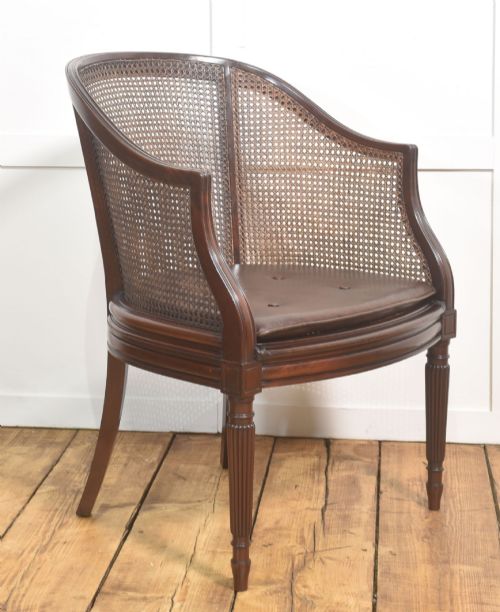
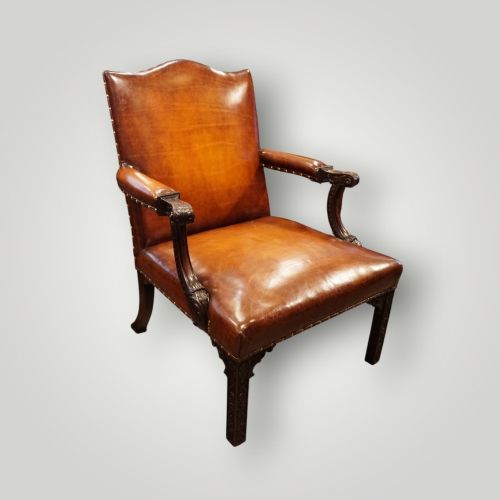
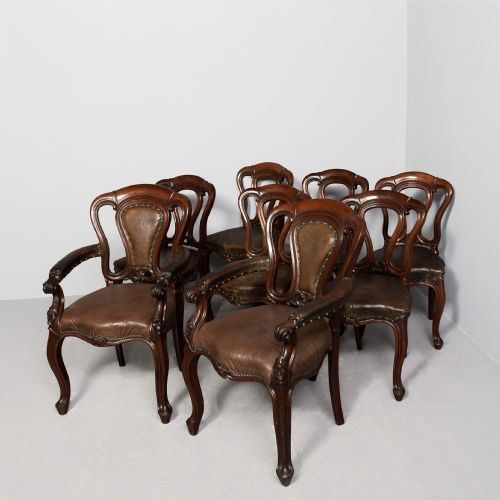
The selection ranges from solid oak and beech office models to mahogany library armchairs built around nineteen hundred. Buyers frequently encounter variants incorporating bentwood structures or cane panels alongside hide upholstery.
How They Were Made
Frames rely on sturdy timbers such as oak, mahogany, walnut, beech and fruitwood, joined for daily workspace demands. Iron and brass components support the swivelling and tilting mechanisms found on revolving variants.
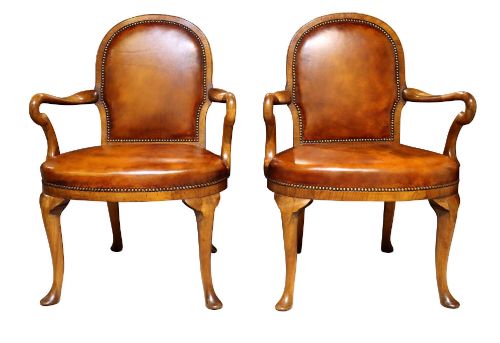
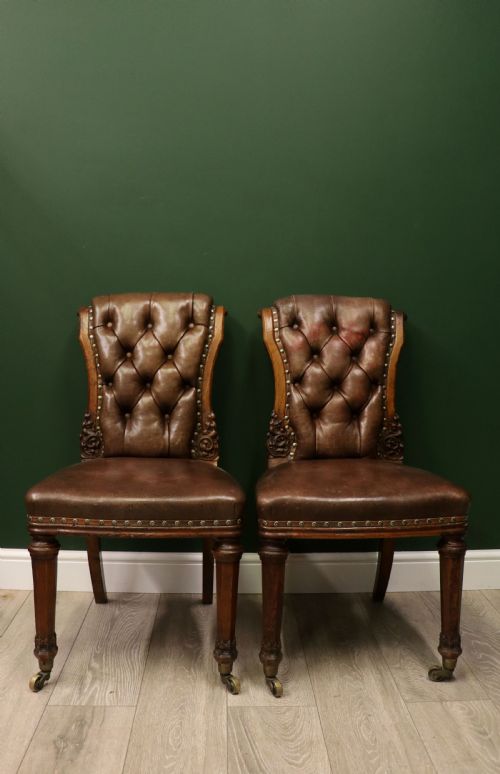
Upholstery utilises leather and hide, secured by brass studs or plain borders. Caning appears on select backrests and arm panels, complementing the polished woodwork.
Machinist and sheriff swivel models prove that early office workers took their seating rotation very seriously.
What Varies in Quality
The standard of timber selection and cabinetwork defines the distinction between utilitarian office seating and refined library armchairs. Finer examples display careful turning, balanced proportions and integrated swivel actions.
The handling of the hide upholstery, from plain stretched panels to hand-dyed finishes with detailed studding, marks the tier of production. Mechanism complexity, including adjustable height and tilt functions, also separates standard office models from superior bespoke versions.
W.Williamson & Sons·Kendrick & Jefferson·William Birchcraft·Cooke’s of Finsbury, London·A. H. Parker Ltd.
The Edwardian Leather Desk Chair Glossary
- Swivel
- A revolving seat mechanism mounted on a central pillar allowing rotation. This addition provides mobility for office and desk use.
- Hide
- Animal skin prepared for upholstery, known for durability in desk seating. It appears in green, red and tan shades across these pieces.
- Bentwood
- Wood softened by steam and bent into curved shapes. This technique forms rounded backs on specific office chairs.
- Tub chair
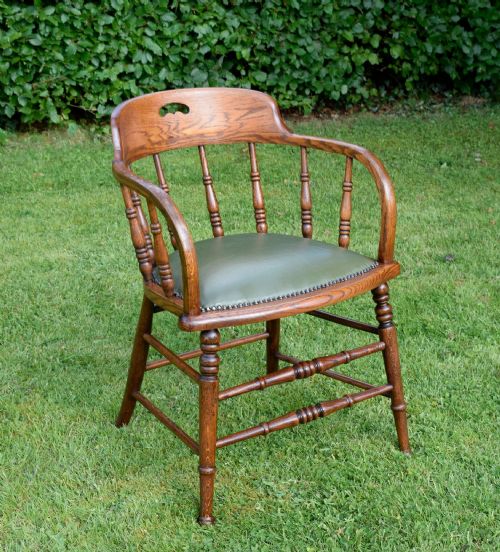
- An armchair featuring a continuous curved back and armrest rail forming a low enclosure. These models offer compact support for writing desks.
- Captains chair
- A sturdy wooden armchair with a low curved back designed for office environments. They frequently incorporate upholstered leather seats.
Edwardian Leather Desk Chair: Frequently Asked Questions
Were these chairs used in homes or offices?
These pieces served both domestic studies and commercial counting houses during the early twentieth century. Revolving oak models suited clerks and professionals needing movement at large desks.
Mahogany library armchairs and stationary models stayed in private homes and gentleman's clubs. Their design reflected the specific workspace requirements of the era.
Can I adjust the height on these chairs?
Many Edwardian office chairs feature mechanical height adjustment via a threaded central iron spindle under the seat. Turning the seat raises or lowers the user.
Some variants include tilt mechanisms that allow the backrest to move backward. Buyers should inspect the underseat ironwork to understand the exact range of movement available.
How do I care for the leather seat?
Leather upholstery requires regular dusting and occasional conditioning to maintain suppleness. Avoid placing antique hide chairs in direct sunlight to prevent drying.
Natural wax treatments help preserve the finish without damaging the original dye. Gentle cleaning maintains the surface texture accumulated over a century.