
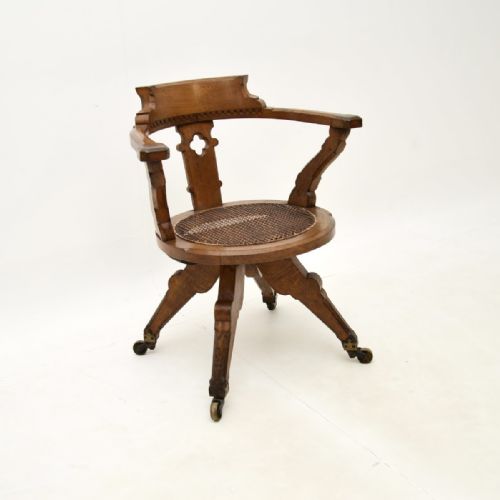


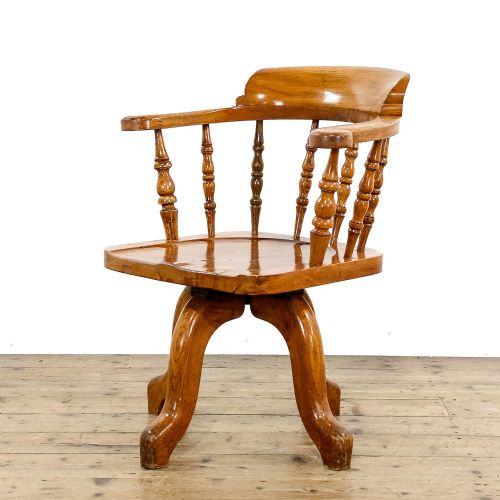
Oak Revolving Office Chair
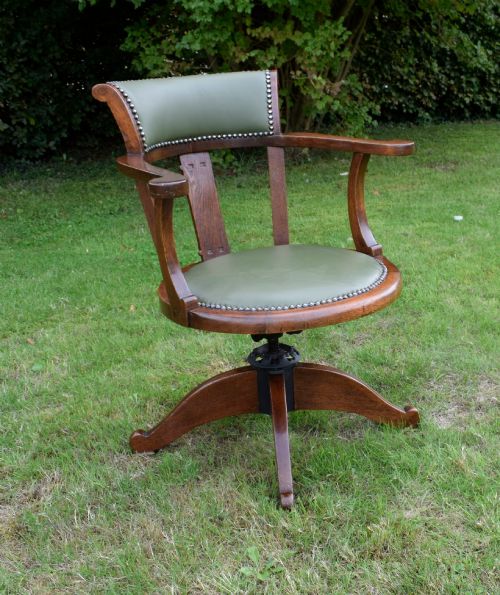
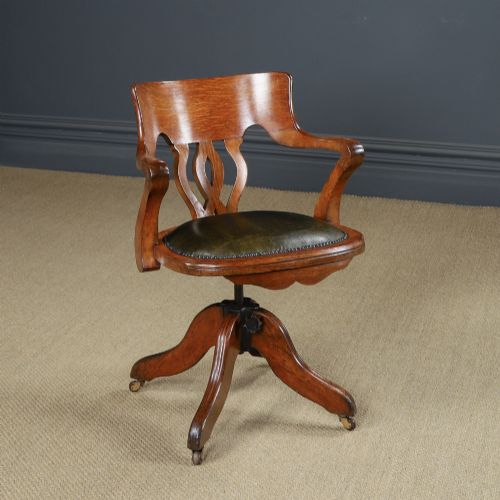
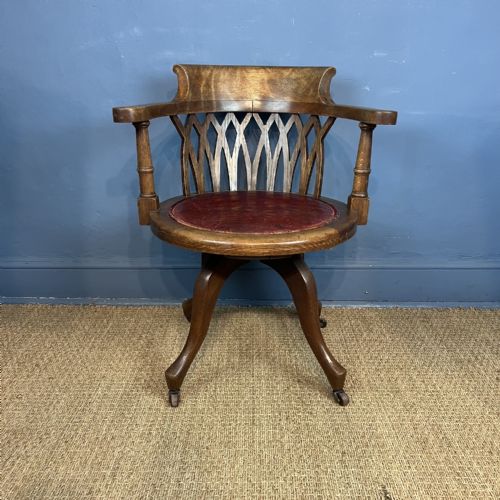
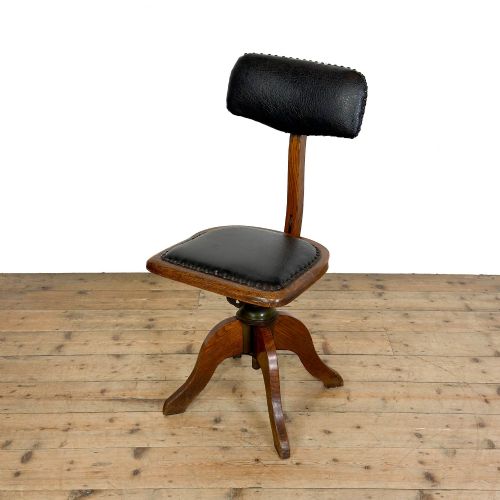
An oak revolving office chair brings working history into a modern study, offering solid construction and mechanical movement.
Oak Revolving Office Chair
An oak revolving office chair combines practical seating with sturdy timber construction, designed for long hours at a desk. These pieces span from the late Victorian period through the Edwardian era and into the early twentieth century.
Buyers most frequently encounter Edwardian and late Victorian examples on this page, often featuring adjustable height mechanisms and swiveling bases. Forms range from compact side chairs to large armchairs and upholstered tub chairs.
The selection includes specialised variations such as library armchairs, captain's chairs, and maritime seating, reflecting the diverse professional and institutional environments where these pieces originally functioned.
Assessing Craftsmanship and Condition
Quality rests in the complexity of the woodwork, seen in carved detailing, robust joinery, and the fluidity of the revolving and tilting mechanism. Fine examples balance ergonomic form with decorative carving.
The integrity of the central spindle and the original finish distinguish superior workshop production from standard utility office furniture.
Oak Revolving Office Chair Retail Price Guide 2026
Typical asking prices for oak revolving office chair among the pieces listed under this phrase on Sellingantiques today, from the lower quarter to the upper quarter. They describe what is for sale here now, not the wider market.
Listings feature oak construction combined with leather, iron, and brass across Victorian and Edwardian periods.
Kendrick and Jefferson·Edward William Godwin·Bell Barn Furniture·William Birchcraft·Johnson Chair Co
The Oak Revolving Office Chair Glossary
- Swivel
- A mechanical pivot enabling the upper seat portion to rotate fully around the fixed base. This mechanism often incorporates a threaded spindle for height adjustment.
- Bentwood
- Wood steamed and pressed into curved shapes, allowing makers to form continuous arm and back structures without heavy joints.
- Captain's Chair
- A low-backed wooden armchair designed for comfort and stability, frequently adapted with a revolving base for office use.
- Saddle Seat
- A wooden seat base carved with depressions to fit the contours of the body, providing ergonomic support without upholstery.
- Gothic Revival
- A nineteenth-century design style incorporating pointed arches, trefoils, and heavy carved ornamentation derived from medieval architecture.
Oak Revolving Office Chair: Frequently Asked Questions
How do I adjust the height on these chairs?
Many period examples feature a central threaded iron spindle that allows the seat to be raised or lowered by manually spinning it clockwise or counterclockwise. Other models utilise a tilt mechanism secured with a tension lever.
It is advisable to support the weight of the seat while making adjustments to protect the threaded wooden or metal collar from excessive wear.
Are these chairs comfortable for daily desk work?
These pieces were built for professional use and offer surprisingly ergonomic support through contoured wooden saddle seats or padded leather upholstery. The swivel and tilt functions accommodate natural movement throughout the working day.
Buyers planning regular use should check the seat height and depth against their modern desk dimensions before purchase.
How can I distinguish Victorian from Edwardian models?
Victorian examples tend to feature darker finishes, heavier proportions, and sometimes Gothic Revival or Aesthetic Movement carving details. Edwardian pieces often present lighter oak tones and simpler, more streamlined bentwood or tub chair profiles.
Documentation or registration marks can occasionally provide a more precise date of manufacture.
How should I care for the leather upholstery?
The leather inserts and panels benefit from occasional treatment with a specialised conditioning balm to prevent drying and cracking. Keeping the leather clean from dust helps preserve the original colour and patina.
Harsh chemical cleaners should be avoided to protect the aged surface and surrounding wood.