

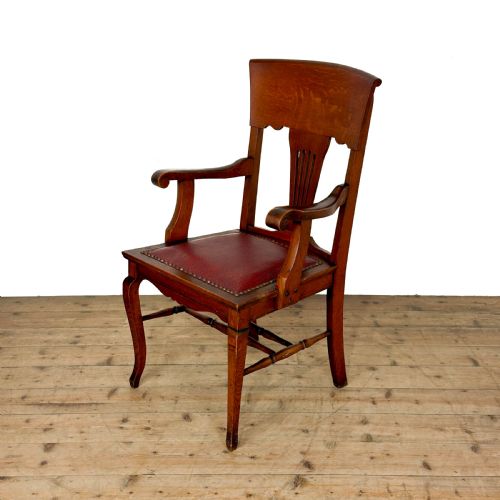


Carved Oak Office Chair
A carved oak office chair brings heavy timber, working mechanics, and deep period character to a workspace.
Carved Oak Office Chair
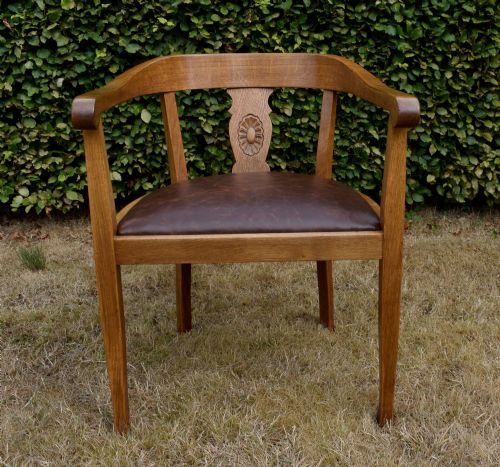
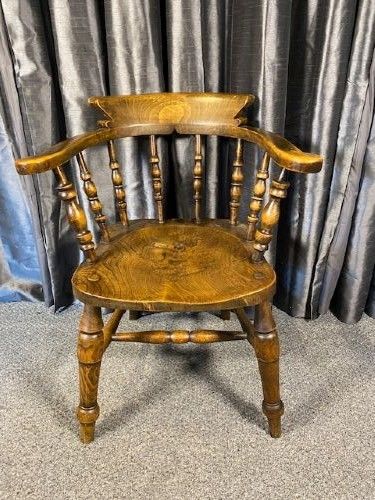
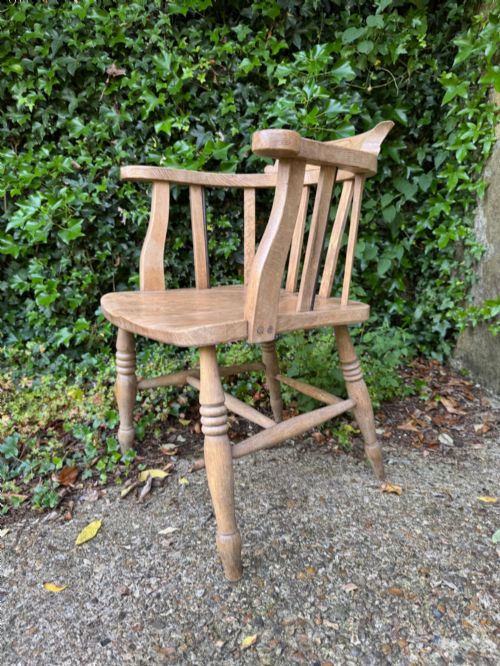
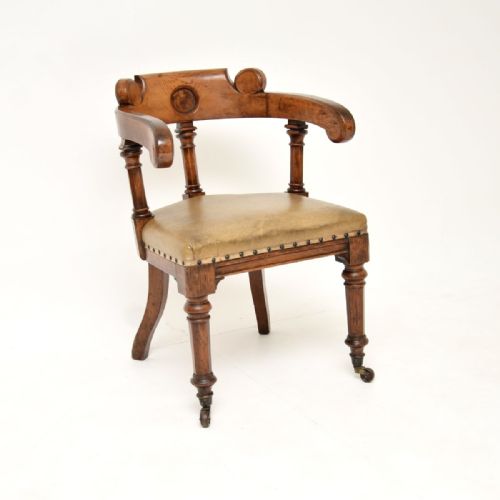
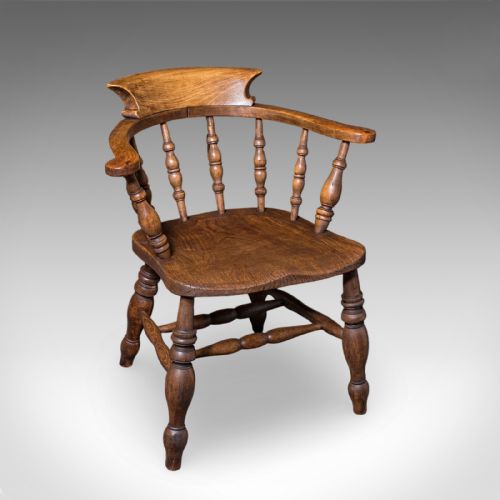
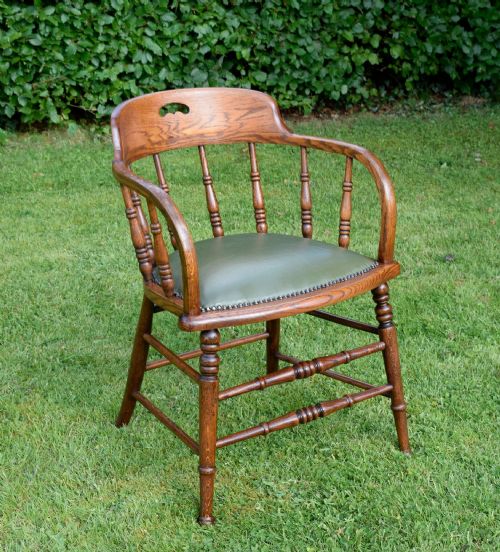
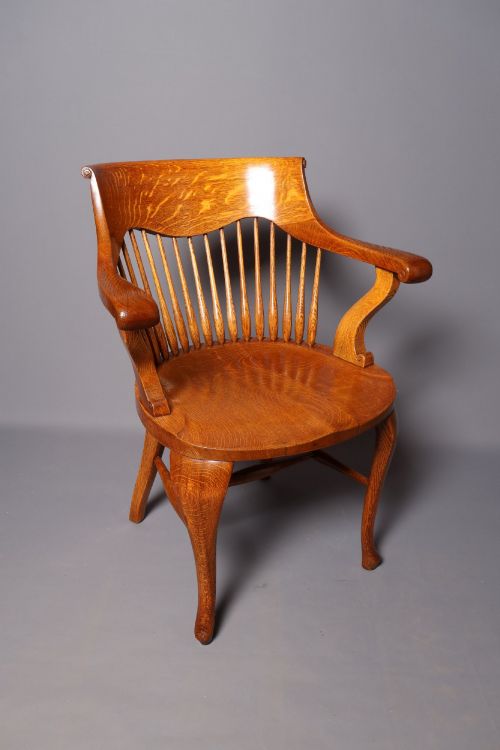
A carved oak office chair is a working seat built for the study or counting house, combining robust timber construction with practical support. When you search for a carved oak office chair, you encounter forms ranging from low-backed Captain's chairs and smoker's bows to swivel designs with adjustable heights.
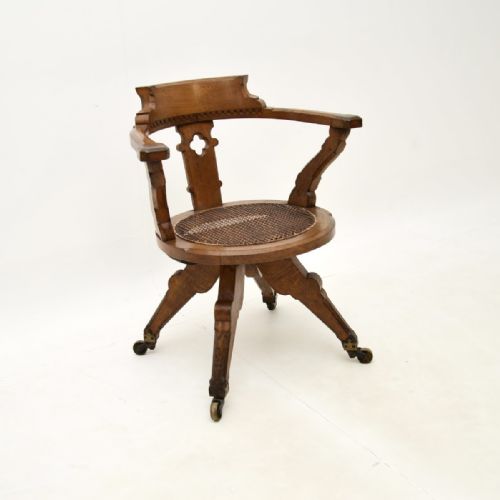
The pieces on this page span the Victorian and Edwardian eras, running from the mid nineteenth century into the early twentieth century. You will frequently find Gothic Revival details, heavy panel carving, and rotating frames that suit both traditional libraries and modern offices.
How they were made
Carpenters built these chairs using solid oak, sometimes utilising golden oak or elm for the frames, shaped into deep curves and sturdy spindles. Metal mechanisms of iron and brass allowed these seats to swivel, tilt, and adjust in height.
Upholstered versions feature leather, velvet, or fabric seats, often secured with brass studs along the edges. Carving was applied by hand to the crest rails and splats, adding relief work inspired by Gothic and Jacobean styles.
Certain heavy rotating ships chairs allow a clerk to spin briskly away from difficult maritime paperwork.
What varies in quality
Quality rests in the weight of the timber and the crispness of the hand carving on the crest rails and arm supports. A superior example uses dense golden or solid oak with well-defined joinery that remains tight through decades of rotation and weight.
The sophistication of the mechanical elements also sets pieces apart, particularly smooth swivel actions and original adjustable iron screws. Original leather upholstery with neat studwork elevates a piece far above a later replacement.
Gillows
The Carved Oak Office Chair Glossary
- Captain's chair
- A sturdy wooden armchair with a horseshoe-shaped backrest supported by turned spindles, designed for comfort during long hours at a desk.
- Smoker's bow
- A low-backed Windsor-style armchair featuring a continuous curved armrail, commonly found in nineteenth-century offices and smoking rooms.
- Gothic Revival
- A nineteenth-century design movement that revived medieval architectural motifs such as pointed arches, quatrefoils, and heavy relief carving.
- Swivel desk chair
- A revolving seat mounted on a central iron or wooden pillar, often fitted with an adjustable height mechanism.
- Elbow chair
- An armchair with proportions suitable for tucking close to a desk or writing table.
Carved Oak Office Chair: Frequently Asked Questions
Can I use a vintage oak desk chair every day?
These pieces were built for daily clerical work using solid hardwoods, making them robust enough for regular modern use.
Check the mechanical parts and joints periodically to ensure the swivel and height adjustments remain secure.
How do I distinguish a Victorian office chair from an Edwardian one?
Victorian models often feature heavier Gothic Revival carving, darker oak finishes, and more ornate structural turnings.
Edwardian examples tend to use golden oak with cleaner lines and lighter proportions suited to domestic studies.
What is the difference between a Captain's chair and a tub chair?
A Captain's chair typically has a low, rounded back rail supported by spindles above a solid timber seat.
A tub chair encloses the sitter in a continuous curved upholstered shell, often mounted on a swivel base.
Are swivel mechanisms on nineteenth-century chairs reliable?
Iron and brass screw or revolving mechanisms from this period were engineered for heavy commercial use and usually remain durable.
Gentle cleaning and lubrication will keep the moving parts functioning smoothly without altering the original metal.