




Vintage Silver Serving Tray
When you handle a vintage silver serving tray, you are holding practical tableware that carries decades of social history in its metal and form.
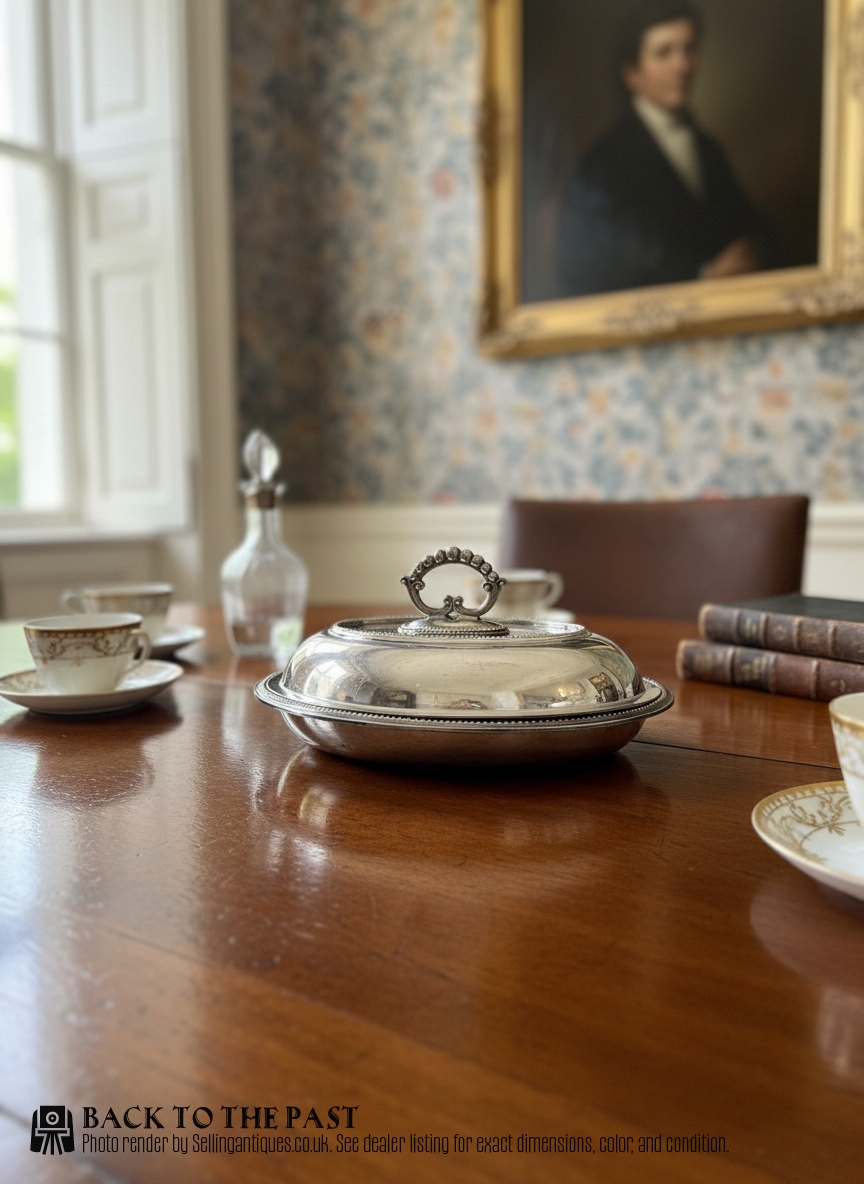
Vintage Silver Serving Tray
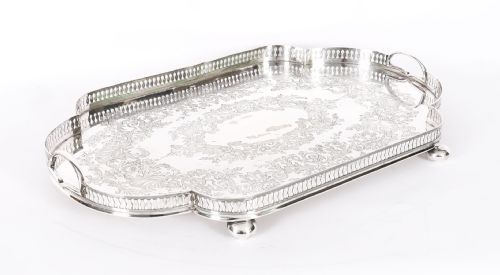
A vintage silver serving tray brings utilitarian elegance to a room, appearing in forms from simple oval platters to elaborate gallery pieces designed to hold drinks, tea services, or cocktails.
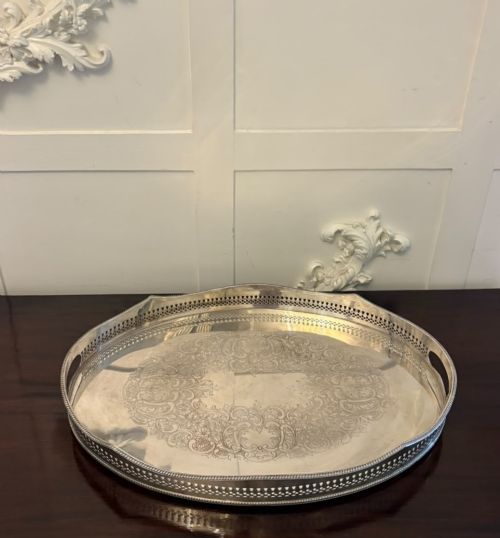
The pieces you encounter most frequently on this page date from the Edwardian period and the early decades of the twentieth century, reflecting the domestic habits of those eras.
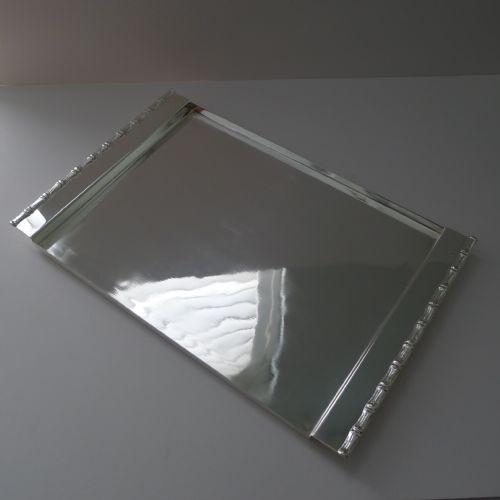
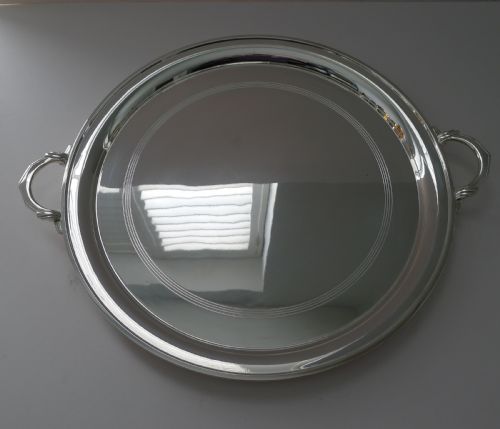
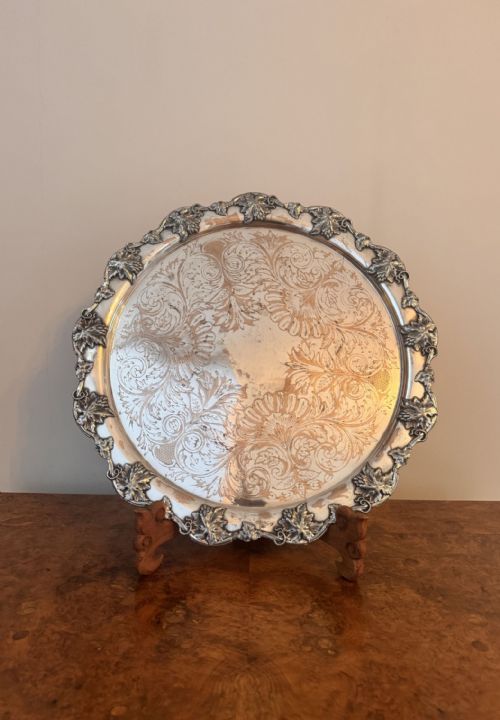
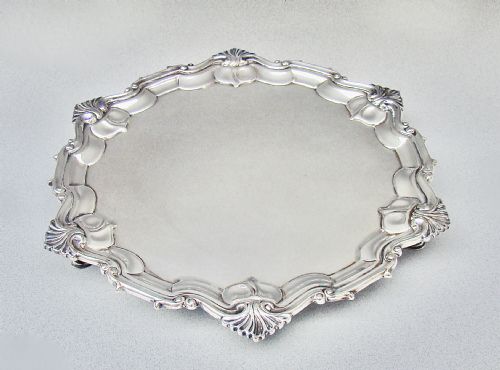
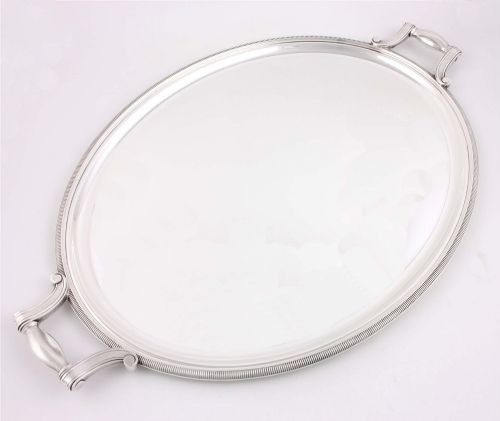
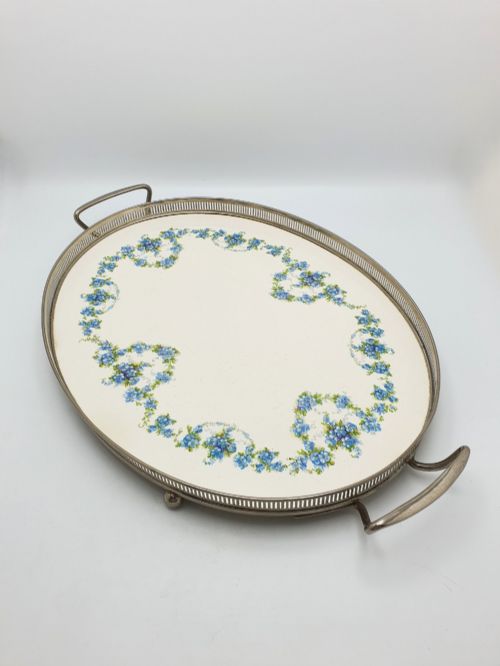
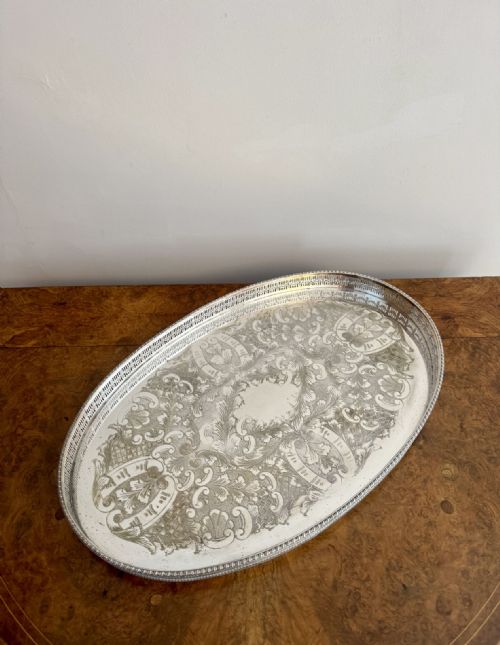
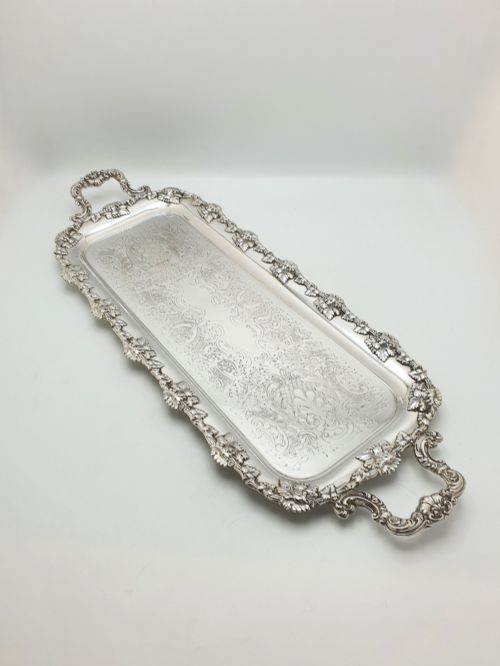
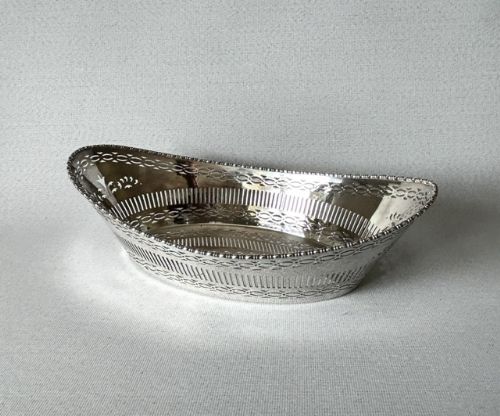
Makers shaped these items in diverse styles, ranging from Victorian floral embossing and Edwardian pierced galleries to clean Art Deco geometric lines and mid-century modern minimalism.
How they were made
Many examples rely on silver plate, EPNS, or electroplated nickel silver over a base metal foundation, though sterling silver and old Sheffield plate also appear.
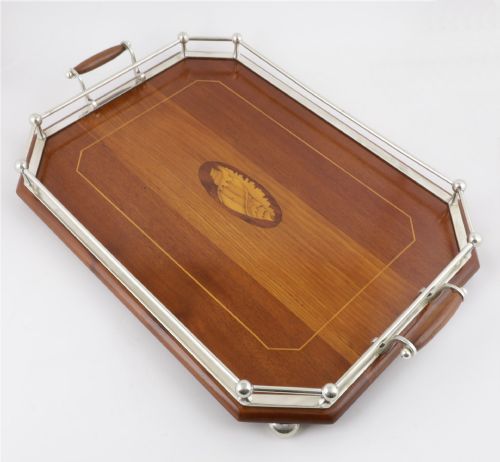
Craftsmen combined metalwork with other materials, mounting silver-plated rails onto mahogany wood bases or inserting cut glass mirrors into decorative frames.
Decoration involved techniques such as hand engraving, piercing, repoussé work, and applied borders featuring grapevine or shell motifs.
Vintage Silver Serving Tray Retail Price Guide 2026
Typical asking prices for vintage silver serving tray among the pieces listed under this phrase on Sellingantiques today, from the lower quarter to the upper quarter. They describe what is for sale here now, not the wider market.
Listings feature periods spanning from the nineteenth century through the Edwardian era and into the mid-century modern twentieth century.
What varies in quality
The distinction between standard production and top-tier execution rests on the crispness of the hand-chased detail and the structural weight of the metal.
Makers known for exceptional output, such as Mappin & Webb or William Hutton & Sons, applied rigorous standards to their mounts, handles, and gallery joints.
The choice of secondary materials, from figured mahogany to heavy bevelled glass, dictates the overall substance and longevity of the object.
Keith Murray For Mappin & Webb·James Deakin·William Hutton & Sons·Christofle·Creswick·John Hunt·Padley Parkin·Liberty & Co.·Viners of Sheffield·Christian Dior
The Vintage Silver Serving Tray Glossary
- EPNS
- Electroplated Nickel Silver. This designates a base metal core coated with a thin layer of silver through an electrical process.
- Gallery tray
- A tray featuring an upright pierced or solid metal railing around its perimeter. This design kept decanters and glasses secure during transit.
- Salver
- A formal flat serving platter, typically circular and raised on small feet. Historically used for presenting letters or glasses.
- Old Sheffield plate
- A composite material made by fusing a sheet of silver to a thicker copper core before rolling them together. This technique predates modern electroplating.
- Repoussé
- A metalworking technique where the artisan hammers the design from the reverse side to form a raised pattern in relief on the front.
Vintage Silver Serving Tray: Frequently Asked Questions
How do I clean a vintage silver serving tray?
Use a soft cloth and a gentle silver cream formulated to remove tarnish without stripping the underlying plating. Avoid harsh abrasive dips, particularly on pieces with wooden bases or glass inserts.
After polishing, rinse the tray with lukewarm water and dry it immediately with a clean cotton cloth to prevent water spots from forming on the surface.
Can I use these trays for serving food?
Most of these items were originally designed for serving tea, coffee, or bottled drinks rather than direct contact with loose food. Silver-plated surfaces handle dry items or glassware safely, but acidic foods can react with older plating over time.
For everyday dining, place napkins or doilies on the tray surface to protect the metal from moisture and potential scratching caused by cutlery.
What is the difference between a tray and a salver?
A salver is traditionally a formal, flat platter mounted on small feet, meant specifically for carrying glasses or presentation items. Trays often feature raised edges or integrated handles designed for carrying heavier loads across a room.
While the terms overlap in modern descriptions, older cataloguing usually reserves salver for footed circular pieces and tray for handled or flat serving surfaces.
How do I date a silver plated tray?
Examine the style of the handles, the geometry of the border, and any maker marks stamped into the underside or rim. Edwardian pieces often display pierced galleries and floral engraving, while 1930s examples lean towards streamlined Art Deco forms.
Maker marks and registry numbers can narrow down the production decade by cross-referencing historical manufacturer directories and patent office records.