
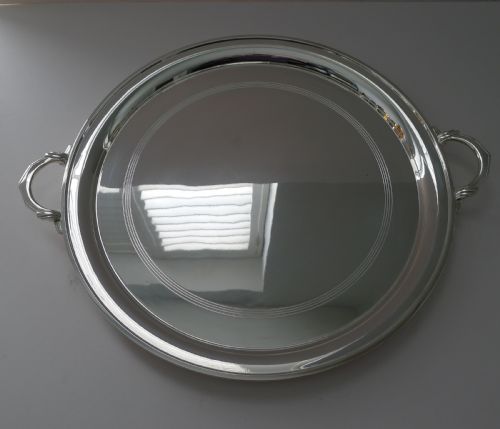
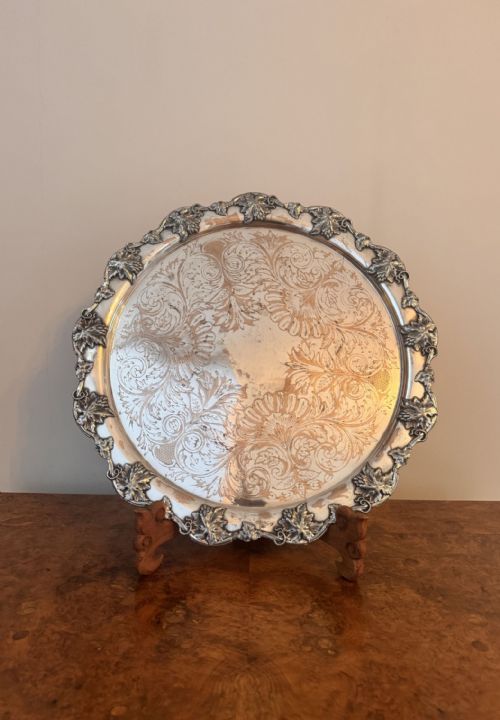

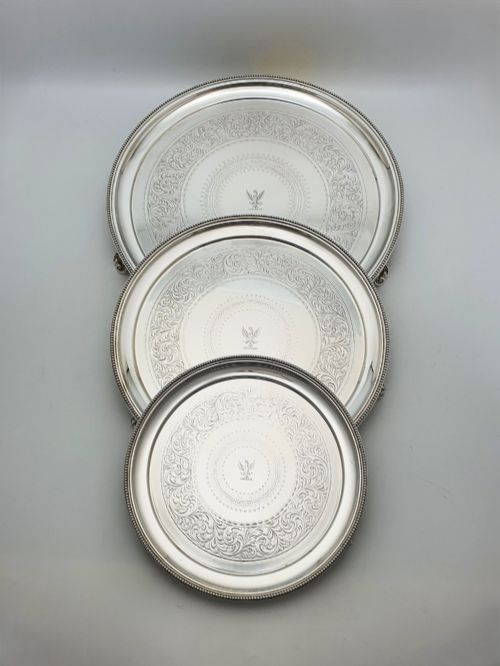
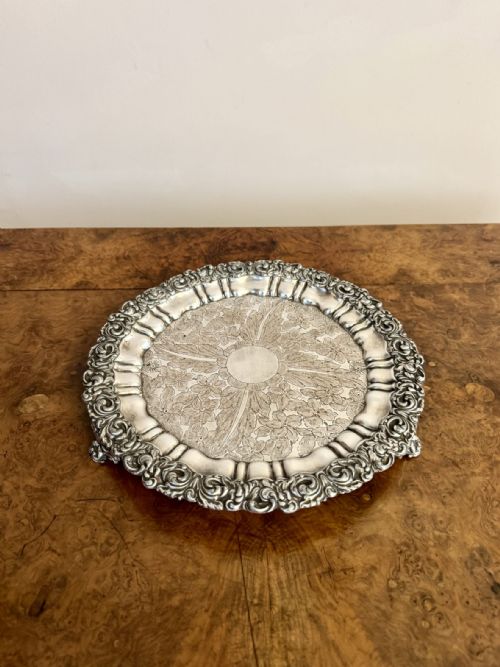


Round Silver Plated Tray
These round silver plated tray examples offer dependable service and bright metal surfaces, shaped by decades of dining habits.
Round Silver Plated Tray
A round silver plated tray serves drinks and displays glassware across dining rooms and drawing rooms. Buyers seeking a round silver plated tray encounter forms ranging from plain circular salvers to engraved serving platters.
The pieces on this page span Victorian, Edwardian, Art Deco and mid-century periods, alongside French Rococo Revival designs. Makers such as Elkington, Mappin & Webb and Walker & Hall produced many of the notable examples seen here.
Objects include mirror plateaus, cocktail trays and gallery trays, some featuring family crests or engine turned patterns. Continental and English workshops created these items in varying diameters for domestic use.
How they were made
Base metal forms provide the structural core, overlaid with silver plate or EPNS to create a reflective surface. Workshops employed electroplating techniques widely from the Victorian era onward to bond silver layers.
Engraving and etching decorate the metal surfaces, complemented by raised detailed rims soldered to the tray bodies. Mirror plateaus incorporate glass inserts secured within plated mounts.
The material record on this page spans Silver Plate, EPNS, Base Metal, Silver, Glass and Mirror.
What varies in quality
Thick silver plating on base metal endures better through repeated cleaning than thin layers that reveal the underlying metal. Substantial weight in the tray body indicates robust construction and greater stability during service.
Crispness in engraved patterns and solid attachment of raised rims distinguish superior workshop output from simpler commercial production. Recognised makers such as Elkington maintain consistent execution across their serving trays.
Keith Murray For Mappin & Webb·Elkington·John Harrison·Walker & Hall·Victor Saglier
The Round Silver Plated Tray Glossary
- EPNS
- Electroplated Nickel Silver. This designation marks base metal coated with silver through an electrical process.
- Salver
- A tray for presenting food or drinks. These pieces usually feature a footed base and a decorative rim.
- Gallery tray
- A serving tray with an openwork pierced gallery surrounding the edge. This rail keeps items secure during carriage.
- Engine turned
- A mechanical decorative technique producing precise geometric patterns. Workshops applied this finish to create textured surfaces.
- Mirror plateau
- A table centrepiece featuring a mirrored glass base. These items reflect candlelight and glassware.
Round Silver Plated Tray: Frequently Asked Questions
How do I clean my tray?
Use a soft cloth and a gentle silver polish formulated for plated items to maintain the surface. Avoid abrasive pads that wear through the thin silver layer.
Rinse the tray in warm soapy water after polishing and dry thoroughly with a soft lint-free cloth to prevent spotting.
Can I use these for drinks?
These trays suit cocktail service and the presentation of glasses or decanters. The sturdy metal construction supports weight reliably during movement.
Place cork or felt coasters on the surface if resting warm vessels or acidic liquids directly on the plating.
How do I date my tray?
Examine the style of engraving, handle shape and rim decoration alongside any maker marks stamped on the base. Victorian and Edwardian examples often feature florid chased borders and maker ciphers.
Art Deco pieces display geometric engine turning or modernist handles characteristic of the nineteen-twenties and thirties.
What causes plate loss?
Frequent polishing over many decades gradually wears away the thin outer layer of silver. This reveals the yellow or grey base metal underneath.
Store trays in dry environments away from direct sunlight to preserve the remaining plate and prevent tarnishing.