


Silver Plated Circular Tray
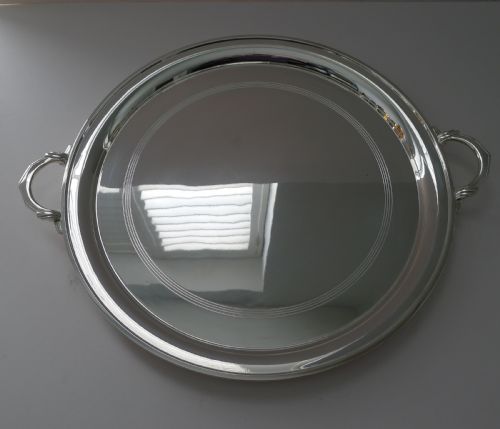
A silver plated circular tray brings weight and shine to a room, offering a solid surface for drinks or display.
Silver Plated Circular Tray
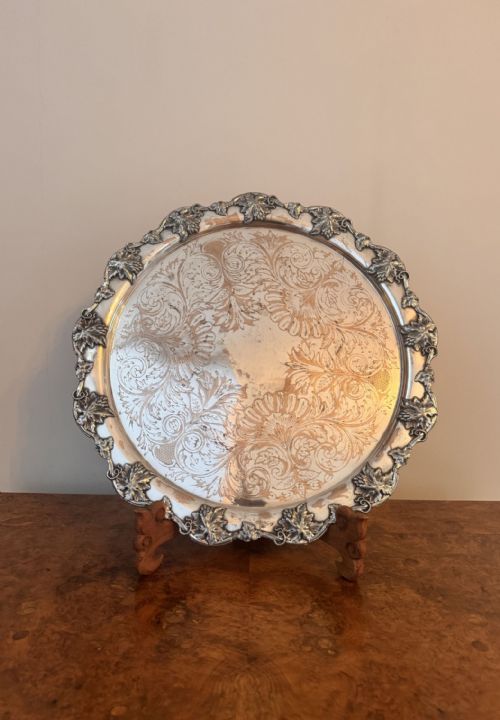
A silver plated circular tray appears in various forms across multiple eras, ranging from ornate Victorian salvers to sleek Art Deco cocktail pieces. Buyers seek these items for their utility in serving or their decorative presence on tables and sideboards.
The pieces listed on this page span the nineteenth and twentieth centuries, including styles such as Victorian, Edwardian, Art Deco, and Mid-Century Modern. Most examples take the form of round serving trays, salvers, or cocktail trays produced in England.
How They Were Made
Many early pieces utilise Old Sheffield Plate or heavy silver plating over copper or base metal foundations. Manufacturers also employed nickel plating on tubular metal and base metal for later twentieth-century designs.
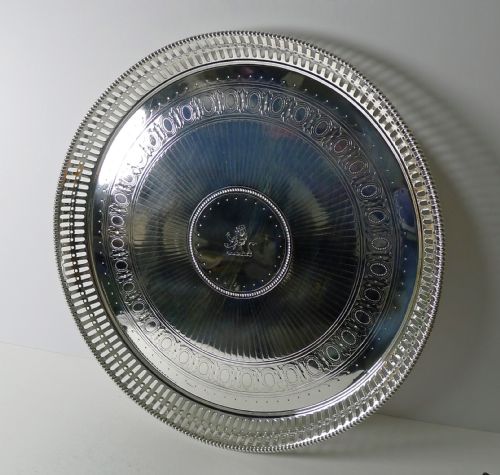
Surface decoration frequently involves hand engraving, etching, and engine turning to create geometric or floral patterns. Mirror plate and glass inserts appear in specific serving and plateau designs.
Listings on this page span the Victorian period through to the nineteen-sixties, utilising silver plate, copper, glass, and nickel plating.
What Varies in Quality
The standard of a piece depends heavily on the thickness of the silver deposition and the integrity of the underlying metal base. Substantial weight and rigid construction separate superior specimens from lighter, more flexible alternatives.
Artistry in the surface engraving and the crispness of cast borders distinguish workshops of notable scale from mass production. Well-preserved plating without extensive base metal bleed-through commands greater attention from collectors.
Keith Murray For Mappin & Webb·Walker & Hall·J Dixon & Sons·Elkington
The Silver Plated Circular Tray Glossary
- Silver Plate
- A thin layer of silver bonded to a base metal such as copper, nickel, or brass. This technique allowed makers to produce domestic wares with the appearance of solid silver at a lower cost.
- Old Sheffield Plate
- An early method of fusing a sheet of silver to a copper ingot before rolling them together into sheets. This process creates a distinctive appearance where the copper core occasionally shows at the cut edges.
- EPNS
- Electro Plated Nickel Silver. A common industrial standard where a silver coating is applied to a nickel alloy via an electric current.
- Salver
- A tray, typically with a raised rim and supported by feet, used for serving food or drinks. In historical contexts, these pieces often carried formal credentials.
- Engine Turned
- A decorative mechanical technique that cuts precise geometric patterns into metal surfaces using a specialised lathe. This method appears on many twentieth-century cocktail trays.
Silver Plated Circular Tray: Frequently Asked Questions
How do I clean my silver plated tray?
Use a soft cloth and a gentle silver polish formulated specifically for plated items to preserve the coating. Avoid harsh abrasive cleaners that strip the thin silver layer.
Wash the tray in warm soapy water and dry thoroughly after polishing to prevent residue buildup in engraved crevices.
Can I use an antique tray for serving drinks?
These pieces function well for serving cocktails, glassware, and bottled beverages during gatherings. Ensure the surface remains dry after use to protect the underlying metal from tarnishing.
Placing coasters on the tray helps prevent scratching the vintage silver plating.
How do I date a silver plated tray?
Examine the style of the decoration, such as Victorian scrollwork or Art Deco geometric engine turning, to narrow down the decade. Maker marks and manufacturing techniques like Old Sheffield Plate provide further chronological clues.
Reference the materials used, as nickel plating and base metal combinations typically point towards twentieth-century production.