
Vintage Silver Salt Cellar
A vintage silver salt cellar brings substance to the table, taking the form of open tubs, glass-lined vessels and novelty shapes from the Victorian, Edwardian and mid-century eras.
Vintage Silver Salt Cellar
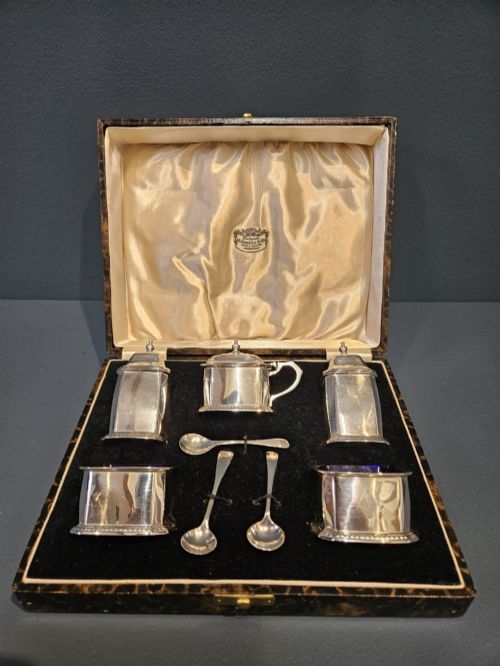
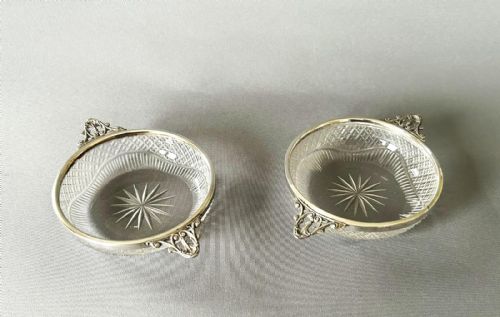
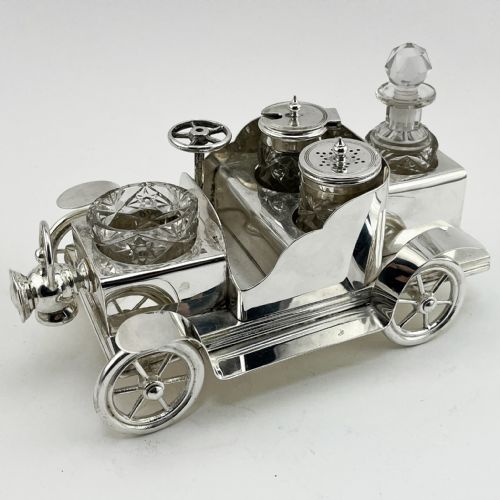
A vintage silver salt cellar serves as a small table vessel designed to hold salt, appearing either as an individual open salt or paired within cruet sets alongside mustard pots and pepper shakers. The selections on this page span from the Victorian and Edwardian periods through to the Art Deco era and the mid-twentieth century.
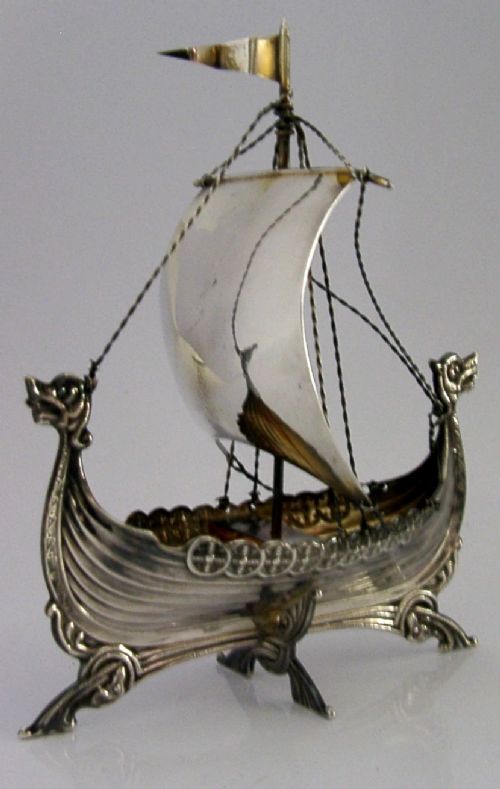
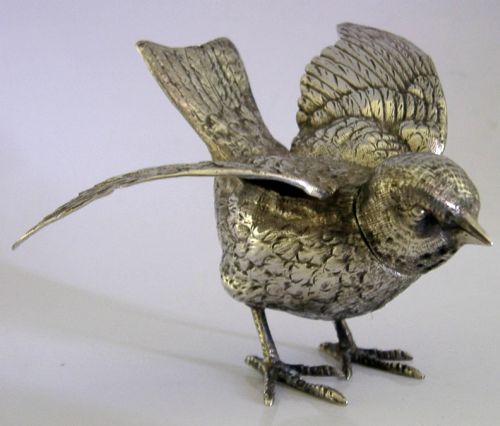
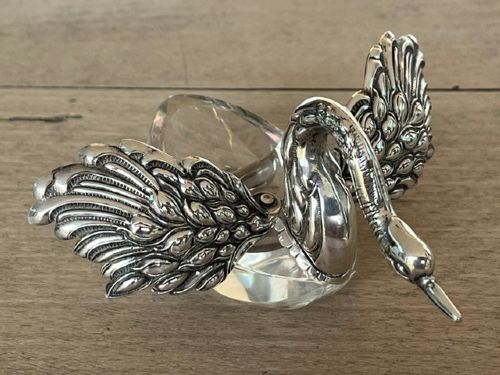
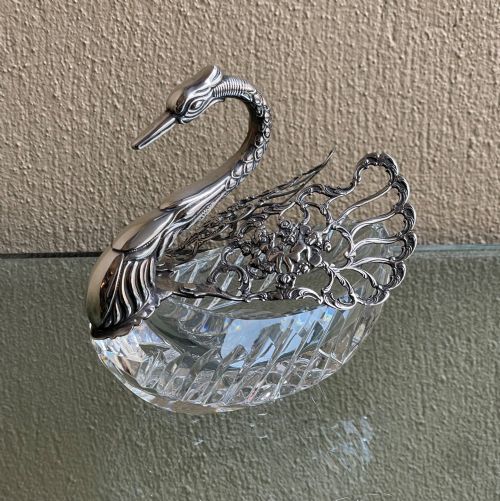
Makers produced these salt cellars in varied forms, including traditional open salt tubs, footed dishes, novelty animal shapes such as birds and owls, and thematic vessels like Viking longships. They emerge from diverse origins including English workshops, Norwegian enamel studios and Ottoman silversmiths.
Buyers encounter both sterling silver and silver plate, frequently paired with liners or bodies made from cut glass, cobalt glass, crystal, velvet and enamel. These pieces function both as tableware and as decorative dishes or trinket bowls for modern interiors.
How they were made
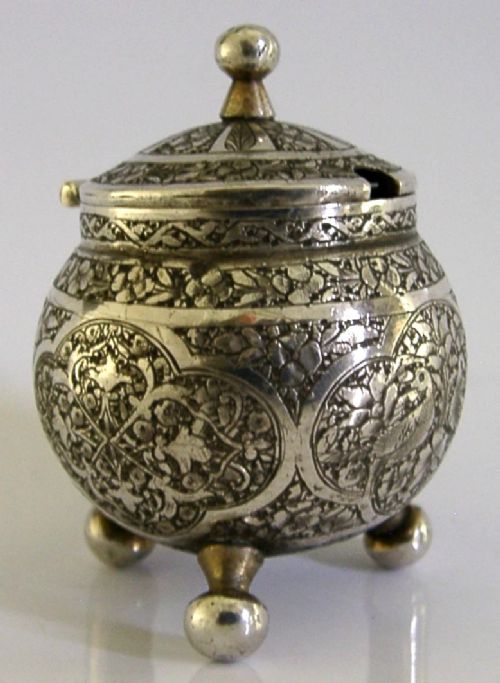
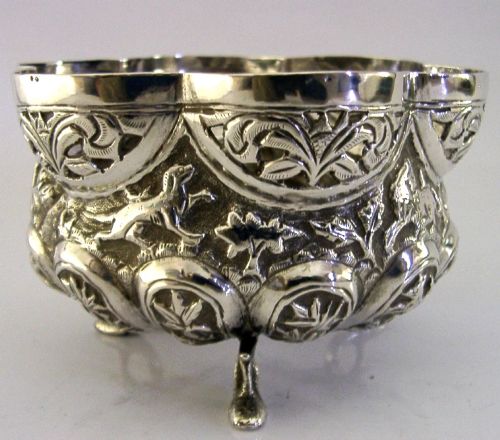
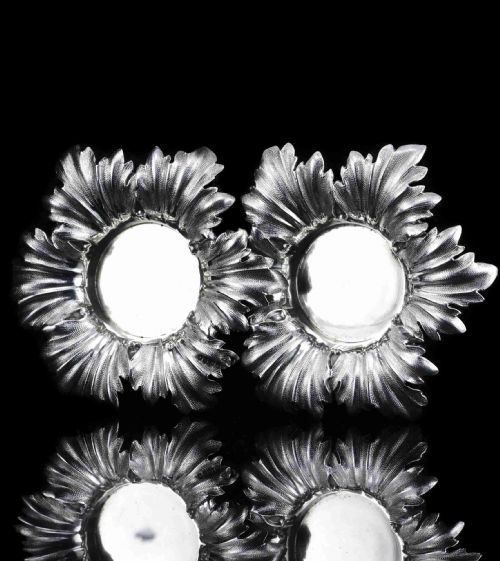
Silversmiths constructed these salt cellars using solid sterling silver or through silver plating over base metal foundations, employing techniques like casting, chasing and piercing. Many pieces feature detailed foliate chasing or smooth polished surfaces.
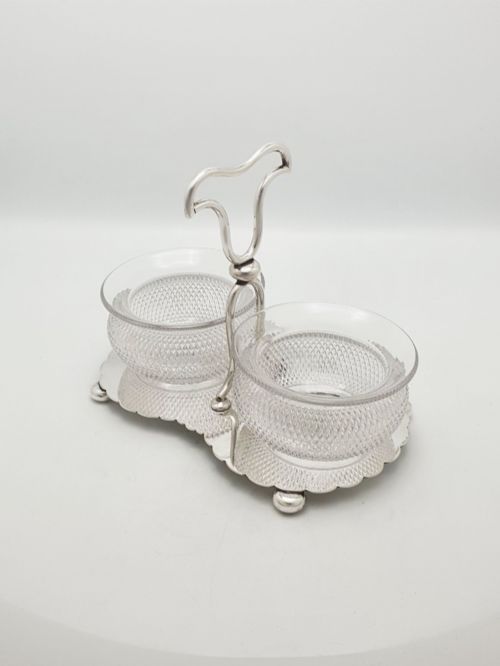
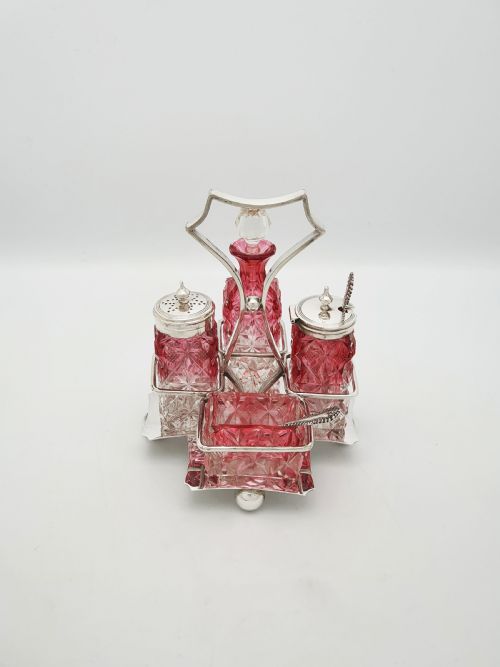
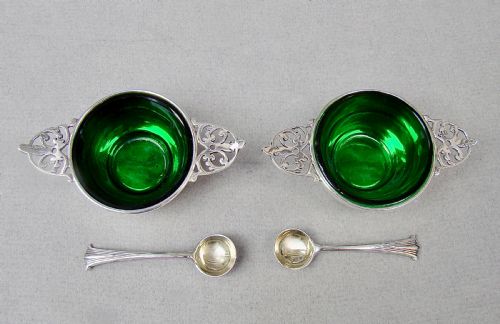
Interiors often incorporate removable glass inserts, including cobalt glass liners, cranberry flashed cut glass and clear crystal vessels designed to protect the silver from corrosion by salt. Enamel work and velvet linings appear on specific twentieth-century decorative pieces.
Several salt cellars take the form of miniature silver animals, including life-size bird chicks, owls and Norwegian Viking longships.
What varies in quality
Quality rests in the weight of the silver, the crispness of the hand-chased ornamentation, and the preservation of secondary materials like enamel and glass liners. Heavier gauge sterling pieces and cast novelty forms show greater definition than lighter plated alternatives.
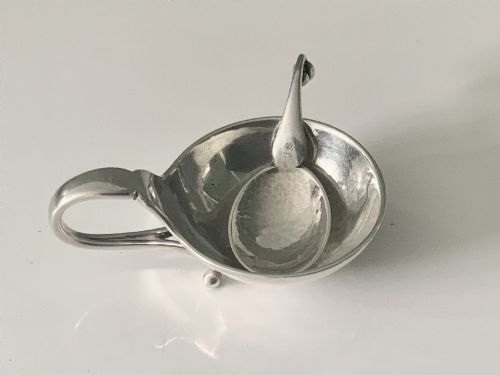
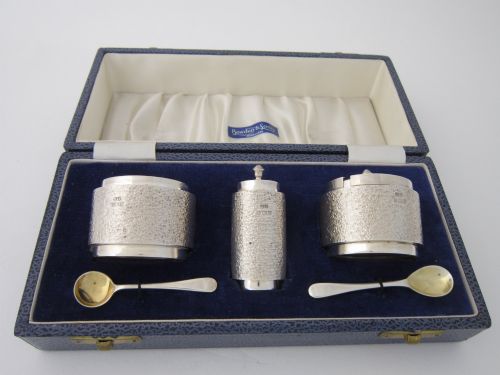
The presence of matching spoons, original fitted presentation cases, and clear hallmarks indicating maker marks and assay years elevate the standing of a salt cellar within a collection.
Goldsmith & Silversmith's·Georg Jensen·Barnards·Josiah Williams & Co·Bricks & Sons·Wilmot Manufacturing Co·Berthold Muller
The Vintage Silver Salt Cellar Glossary
- Open salt
- A small open vessel designed for salt, used before free-flowing salt and shakers became common on dining tables. These require a small spoon or fingers to dispense the contents.
- Cruet set
- A matched collection of condiment containers, typically holding salt, pepper and mustard within a tabletop stand or cased together. They coordinate in style and metalwork.
- Cobalt glass
- A deep blue glass frequently utilised for removable liners inside open salt cellars. The dark colour provides a striking contrast against pierced silver galleries.
- Foliate chasing
- A decorative metalwork technique where the silversmith hammers patterns of leaves and foliage into the front of the silver from the outside. This creates relief without removing metal.
- Quaich
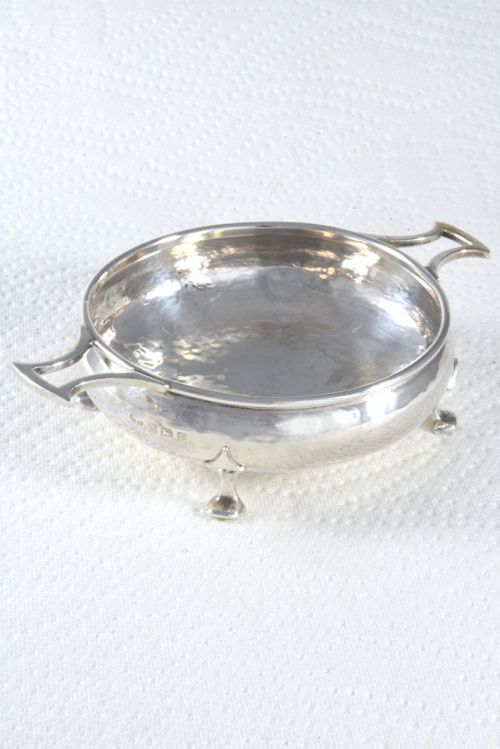
- A traditional shallow two-handled drinking vessel adapted in some Victorian and Edwardian instances as a novelty salt cellar shape.
Vintage Silver Salt Cellar: Frequently Asked Questions
How do I use an open salt cellar?
Open salt cellars hold dry table salt for guests to pinch or spoon onto their plates during a meal. They sit beside individual places or form part of a central cruet stand.
Pair them with small condiment spoons sized specifically for the vessel diameter. Keep the interior dry after use to protect the silver and any glass liner.
How do I clean silver salt cellars?
Wash silver gently in warm soapy water using a soft cloth, taking care to remove any salt residue immediately to prevent pitting. Avoid harsh abrasives that scratch the surface.
Remove glass liners before cleaning the metal frame. Polish occasionally with a dedicated silver cloth to maintain the shine.
Are glass liners original?
Many salt cellars retain their original cut glass, crystal or cobalt glass liners, which protected the metal from corrosive salt. Replacements do occur in older pieces due to breakage over time.
Check that the liner sits flush within the silver rim without rocking. Snug fits generally indicate original or period-correct manufacture.
How do I date an antique salt cellar?
Look for hallmarks stamped into the metal, which record the assay office, the maker mark and a date letter indicating the exact year of manufacture. English silver standards offer reliable chronological records.
Stylistic markers such as Edwardian proportions or Art Deco geometric enamel work also help narrow down the decade when hallmarks are absent or rubbed.