
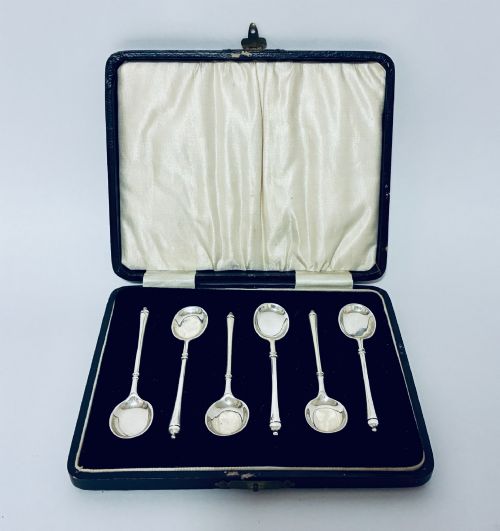
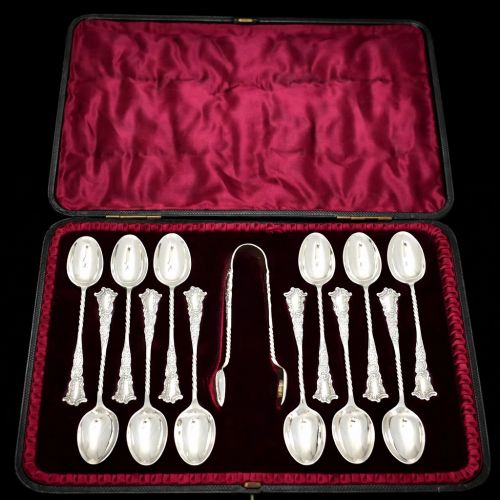


Vintage Silver Coffee Spoons
These vintage silver coffee spoons bring small-scale elegance to the table, spanning decades of fine silversmithing from Victorian times through the mid-century.
Vintage Silver Coffee Spoons
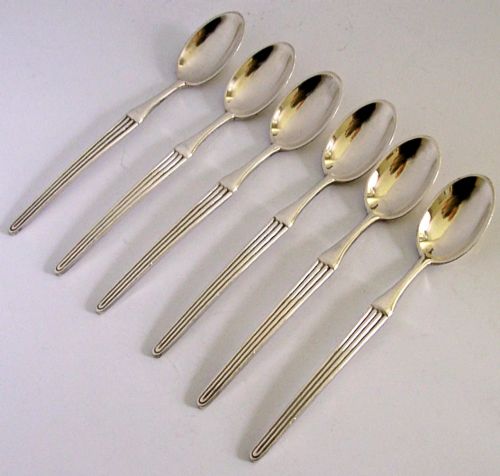
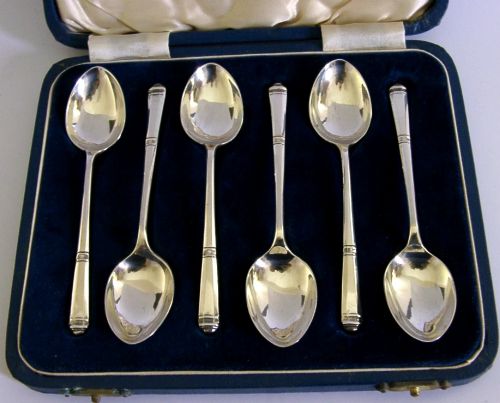
Vintage silver coffee spoons include compact flatware designed specifically for demitasse cups, often appearing as matched sets within fitted boxes lined with velvet, silk, or satin. When you search for vintage silver coffee spoons, you encounter items categorized broadly under cutlery, flatware, and silverware, alongside specific coffee service accessories.
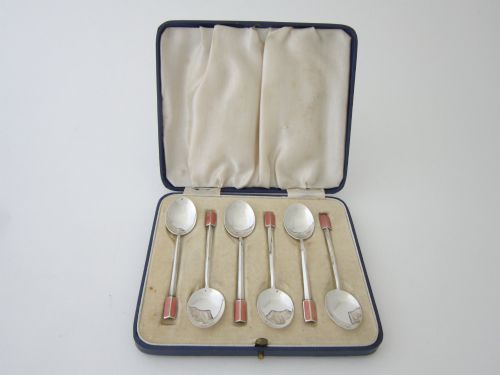
The selections span distinct historical eras, with examples originating from the Victorian period, Edwardian years, and the Art Deco and Mid-Century Modern eras. Many pieces arrive housed in leatherette cases, preserving the original presentation for display or daily service.
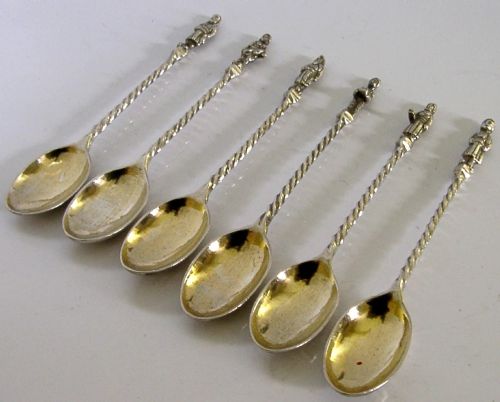
Makers and origins vary widely across the inventory, ranging from British provincial workshops to continental European studios and Ottoman Turkish makers. Forms include plain sterling silver bowls, figural handles, and bright polychrome enamel work applied to the reverse of the bowl or the terminal.
Materials and construction
Solid silver and sterling silver form the primary structural body of these spoons, often shaped through traditional casting and hammering techniques before receiving detailed hand-chasing or engraving. Silver gilt provides a rich golden surface layer over the silver base, adding warmth to the bowls and stems.
Enamelwork frequently decorates the handles or bowls, fused to the metal through intense heat to create glossy geometric patterns or pictorial scenes. Fitted presentation cases utilise textiles such as silk, velvet, and satin to cushion the metalwork, paired with durable leatherette outer shells.
Listings feature solid silver, sterling silver, and silver gilt alongside decorative materials like enamel, velvet, silk, and satin.
Evaluating craftsmanship and condition
The distinction between standard utility flatware and superior examples rests upon the crispness of the hallmarks, the weight of the solid silver, and the finesse of any applied enamel. Thicker gauge metal resists bending during use, maintaining the intended balance of the handle and bowl.
Enamelled pieces achieve higher distinction when the vitreous glass shows no chipping, crazing, or restoration across the complex patterns. Original fitted cases lined in clean silk or velvet elevate the desirability of a matched set compared to loose individual spoons.
David Andersen·Evald Nielsen·Georg Jensen·Liberty and Co·Robert Stebbings·Walker and Hall·Cooper Brothers and Sons
The Vintage Silver Coffee Spoons Glossary
- Hallmark
- Official stamp applied to silver objects indicating the metal standard, assay office, and year of manufacture. These tiny marks provide the definitive date for British and European items.
- Silver-gilt
- Sterling silver that has been coated with a thin layer of gold through electrolysis or fire gilding. This technique provides a rich two-tone effect.
- Demitasse
- A small cup used for serving espresso or strong black coffee, requiring smaller spoons than standard afternoon tea service. These small vessels dictate the miniature scale of the cutlery.
- Enamel
- Powdered glass melted onto a metal surface at high temperatures to produce decorative coloured designs. It appears frequently on twentieth-century pieces.
- Sterling silver
- An alloy consisting of pure silver and other metals, usually copper, to increase durability while maintaining a high purity standard. Most British items adhere strictly to this metal grade.
Vintage Silver Coffee Spoons: Frequently Asked Questions
What is the difference between tea and coffee spoons?
Coffee spoons feature noticeably smaller bowls and shorter handles than standard teaspoons, designed specifically to fit inside demitasse cups.
They occupy less space on a saucer and allow the user to stir espresso or small quantities of black coffee with ease.
Are cased spoon sets meant to be used?
Many cased sets were purchased as presentation gifts and remain preserved in their original velvet or satin linings.
While robust enough for daily dining, careful hand washing protects delicate elements like enamel or silver gilt from harsh detergents.
Why do some spoons have gilt bowls?
Silver-gilt finishes were applied to protect the silver from tarnishing when exposed to acidic beverages and foods.
The golden coating also added an extra layer of visual luxury to decorative sets intended for formal entertaining.