




Enamelled Silver Spoons
Enamelled silver spoons bring together precious metal and glass colour, offering a tactile piece of design from the late nineteenth and twentieth centuries.
Enamelled Silver Spoons
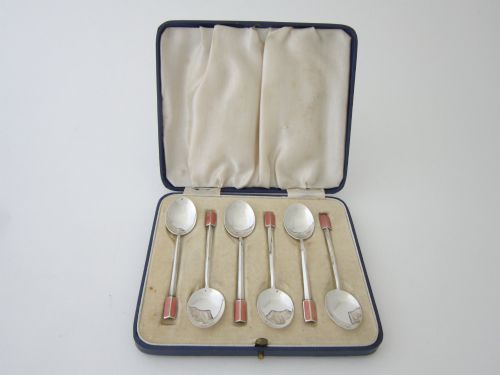
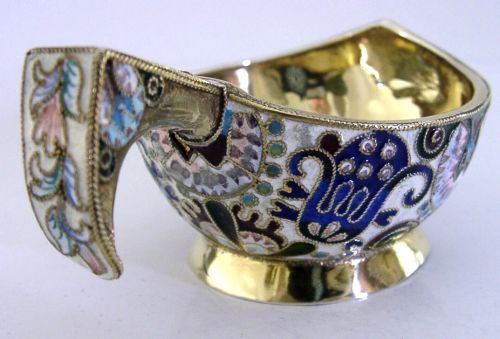
Enamelled silver spoons span individual tea and coffee spoons, cased sets for formal dining, and decorative serving pieces such as kovsh cups. You will most frequently encounter cased sets of six teaspoons or coffee spoons dating from the Art Deco period, often originating from British makers or Scandinavian workshops.
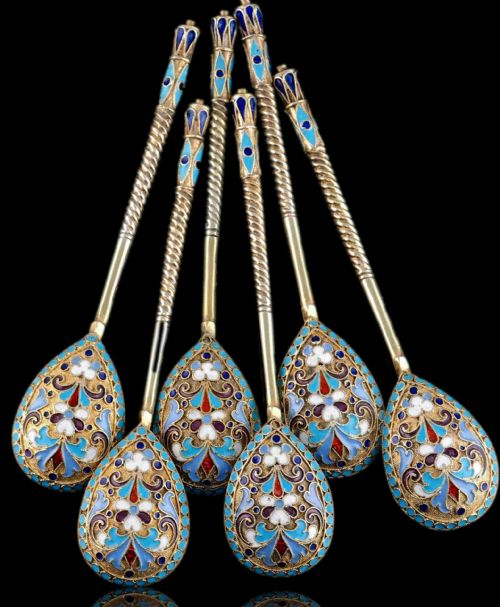
The selection ranges from nineteenth century Russian cloisonne work to mid-century modern Scandinavian designs and British provincial output. Collectors find forms varying from simple card suit motifs to yacht club presentation pieces and intricate floral motifs.
How they were made
Silversmiths formed the bowls and stems from sterling silver or solid silver gilt, sometimes combining them with silver mounted ceramics or velvet and satin lined presentation cases. The metalwork provides a rigid foundation, shaped into teaspoons, coffee spoons, and caddy spoons before the application of decorative elements.
Craftsmen applied vitreous enamel or cloisonne enamel directly to the silver surface, fusing powdered glass under high heat to create coloured panels and patterns. Gold gilt highlights frequently accent the silver structure, enhancing the contrast against the coloured enamel.
Several sets commemorate specific British pastimes, including a dedicated Tamesis sailing club edition and card suit motifs.
What varies in quality
The standard of execution in the enamel work dictates much of the distinction between pieces, particularly in the precision of the cloisonne cells and the smoothness of the fired glass surface. Superior examples maintain crisp geometric lines in Art Deco patterns or intricate detail in Russian imperial pieces without pitting or unevenness in the glaze.
The integrity of the underlying silver or silver gilt and the preservation of original fitted presentation cases influence the overall standing of a set. Maker attribution, such as work associated with David Andersen or Liberty & Co, adds a distinct provenance that separates standard production from notable studio output.
David Andersen·Dmitrii Nikolaevich Nikolaev·Vasily Agafonov·Liberty & Co
The Enamelled Silver Spoons Glossary
- Cloisonne Enamel
- A technique where thin metal wires are soldered to the metal base to form compartments, which are then filled with enamel paste and fired. This method creates detailed cellular patterns across the spoon bowls and stems.
- Silver Gilt
- Silver that has been coated with a thin layer of gold on its surface. This process gives the metal a warm golden hue while retaining a solid silver structure underneath.
- Caddy Spoon
- A short-handled spoon specifically designed for measuring loose tea leaves from a caddy. These items often feature decorative bowls and specialised handles.
- Kovsh
- A traditional Russian boat-shaped vessel used for drinking or serving. Examples in the evidence combine solid silver and enamel work.
- Sterling Silver
- An alloy of silver containing ninety-two point five percent silver and seven point five percent other metals, usually copper, ensuring durability for cutlery.
Enamelled Silver Spoons: Frequently Asked Questions
How should I clean enamelled silver spoons?
Clean the silver elements gently using a soft cloth designed for precious metals, avoiding harsh dips that might damage the vitreous enamel.
Keep moisture away from the joins where the enamel meets the silver frame to preserve the historical material over time.
Were these spoons made for everyday use?
Many sets, particularly the cased British and Scandinavian examples from the twentieth century, were produced for special dining occasions or as presentation gifts.
Their survival in fitted boxes suggests they saw limited practical service and were kept primarily for display or formal tea gatherings.
How do I identify Russian silver enamel spoons?
Look for traditional 84 silver purity marks and cyrillic maker stamps alongside intricate cloisonne wirework patterns.
These nineteenth and early twentieth-century pieces often display richer gilt surfaces and denser floral or geometric enamel palettes than later British designs.
What is the difference between tea and coffee spoons?
Coffee spoons feature shorter stems and smaller bowls designed to fit demitasse cups, whereas teaspoons are slightly longer for standard cups.
Both types share the same decorative enamelling techniques and were frequently produced as matching sets of six.