



Vintage Silver Claret Jug
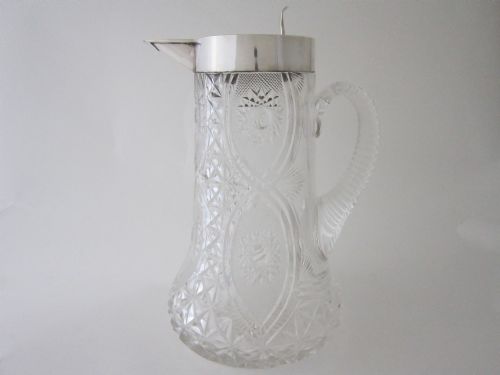
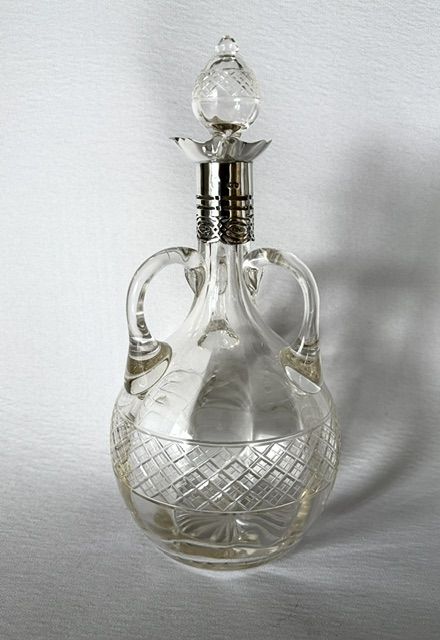
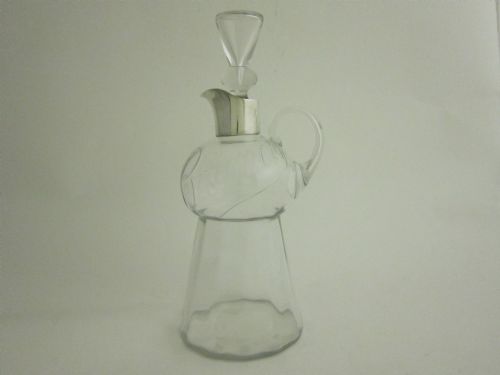
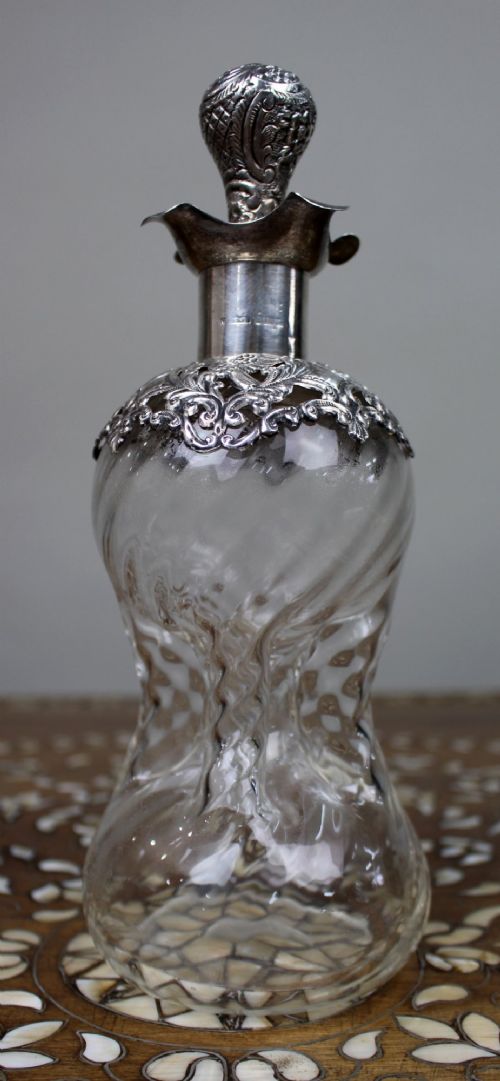
A vintage silver claret jug brings table service from the Victorian, Edwardian and later periods to life with substantial glass and polished metal mounts.
Vintage Silver Claret Jug
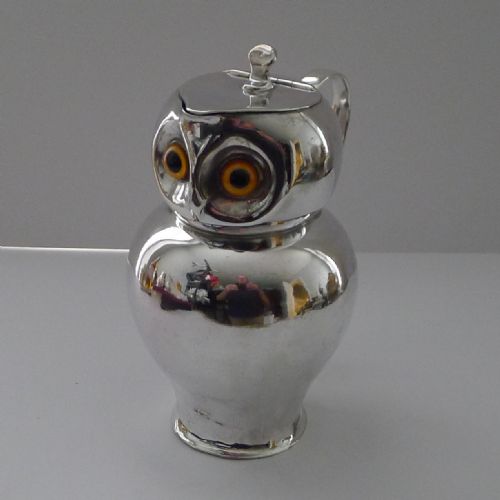
A vintage silver claret jug is a serving vessel designed for wine and water, frequently appearing on this page in Victorian and Edwardian iterations alongside later modernist examples. These forms range from traditional mounted decanters to novelty owl shapes and ice-tube lemonade pitchers, originating primarily from English workshops.
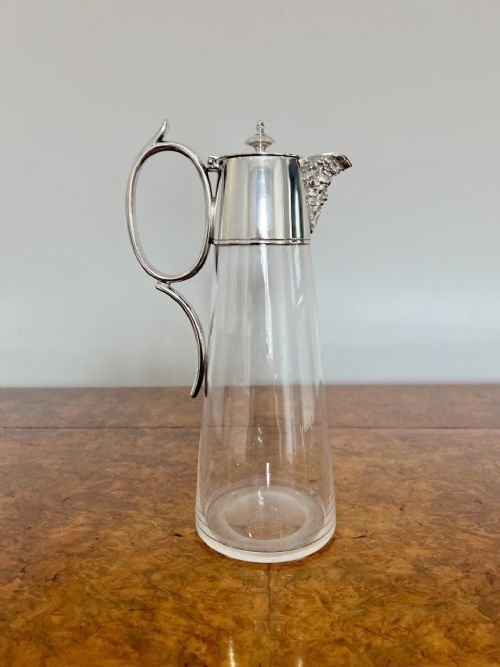
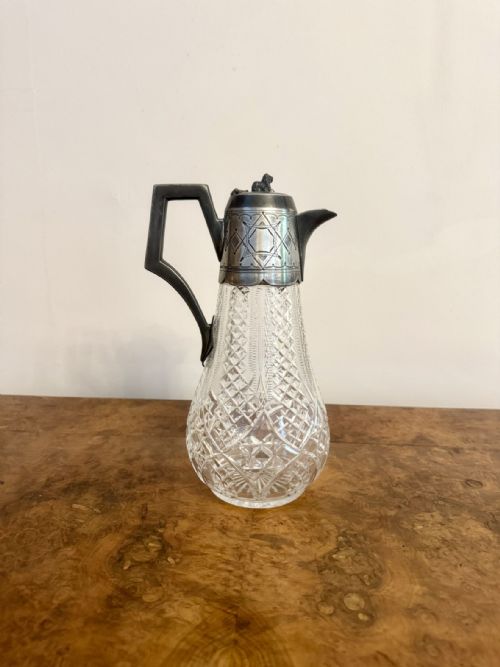
The dominant material combination pairs heavy glass bodies with mounted silver or silver-plated handles, collars, and hinged covers. Buyers encounter everything from plain sterling silver mounts to elaborate Art Nouveau pewter work and cranberry glass bodies.
Object types on this page span claret jugs, decanters, ewers, and water pitchers, reflecting the varied dining and entertaining habits of the nineteenth and twentieth centuries.
Materials and technique
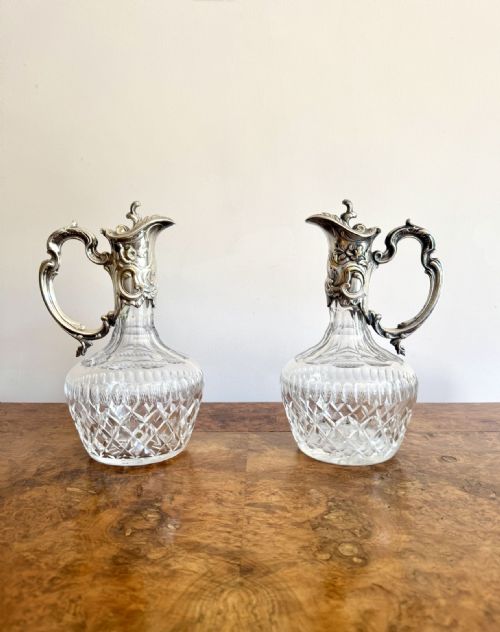
Makers utilised heavy-walled glass and crystal, often deeply cut, etched, or moulded to catch the light during service. These glass vessels were combined with cast and chased silver or silver plate for the mounts, spouts, and hinged lids.
Specialised techniques included silver plating over base metals, pewter casting for Art Nouveau forms, and the integration of functional elements such as internal ice tubes for cooling beverages.
Listings span multiple decades from the 1860s through the mid-twentieth century, combining sterling silver, silver plate, pewter, cut crystal, and cranberry glass.
Evaluating the range
The calibre of a piece depends on the weight and clarity of the glass, the crispness of the cutting or etching, and the substantial nature of the metal mounts. Heavier gauge silver and thick, unblemished crystal elevate an item above simpler moulded glass alternatives.
Design distinction and maker attribution separate standard production wares from exceptional examples, particularly where sculptural mounts like animal heads or fluid Art Nouveau flora are executed with precision.
Mappin and Webb·Archibald Knox for Liberty and Co·Elkington and Co·Tiffany·Hukin and Heath·WMF·Valenti
The Vintage Silver Claret Jug Glossary
- Claret jug
- A specialised pouring vessel created for serving red wine, usually featuring a glass body and a hinged metal cover.
- Silver plate
- A layer of silver fused to a base metal core, widely utilised for mounts and jugs during the Victorian and Edwardian eras.
- Cut glass
- Glass decorated by grinding facets or patterns into the surface using wheels, producing sharp refraction and weight.
- Ewer
- A pitcher with a large spout and a decorative handle, historically used for pouring water or wine.
- Mount
- The metal collar, handle, lip, and lid fitted securely to the neck and body of a glass jug.
Vintage Silver Claret Jug: Frequently Asked Questions
How were these jugs originally used?
These vessels served claret, water, and lemonade at formal dining tables and sideboards, with the hinged lid keeping the contents covered between pours.
Some examples included internal ice tubes to chill beverages without diluting the liquid.
Are these jugs safe for modern dining?
Most of these pieces function well for serving wine and water today, provided they receive careful hand washing to protect the vintage metal mounts and glass.
Strong detergents and mechanical dishwashers can damage silver plate and antique glass surfaces.
How do I tell Victorian from Edwardian pieces?
Victorian examples often favour ornate Rococo Revival styling, heavy cut glass, and elaborate floral engraving on the silver mounts.
Edwardian pieces frequently transition towards lighter proportions, sleeker mounts, and cleaner architectural lines.
What is the difference between silver and silver plate?
Solid silver pieces carry hallmarks indicating sterling quality throughout the metal components of the mount and handle.
Silver-plated items consist of a base metal, such as copper or nickel brass, coated with a thin outer layer of pure silver.