

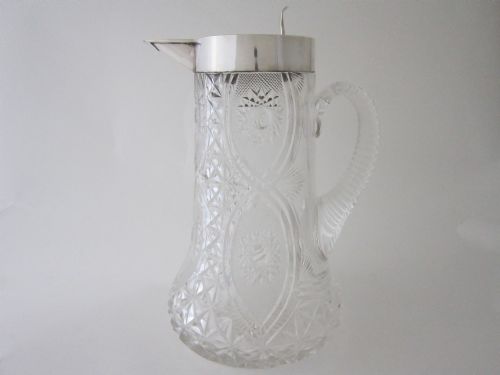
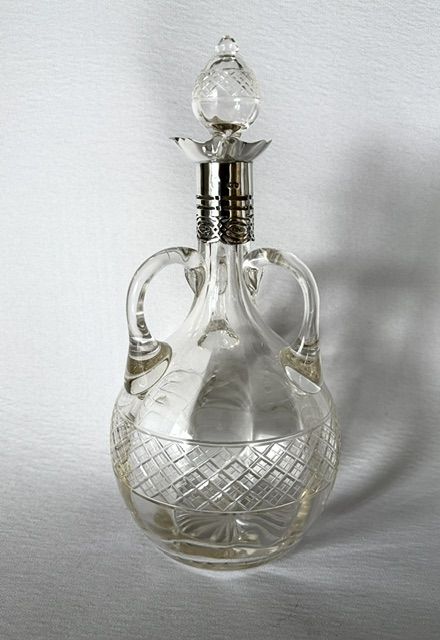
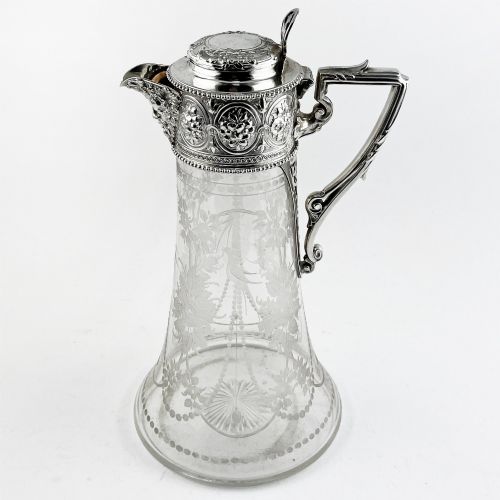
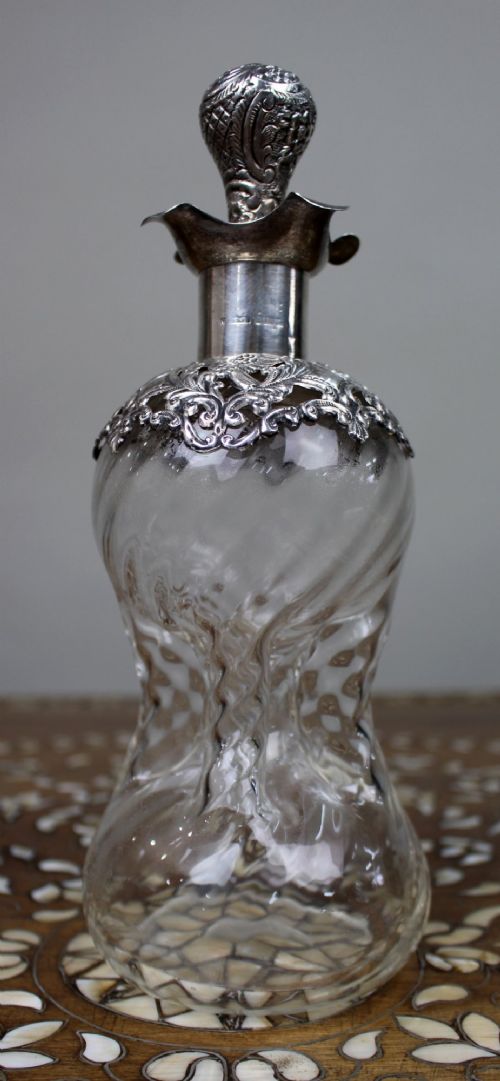
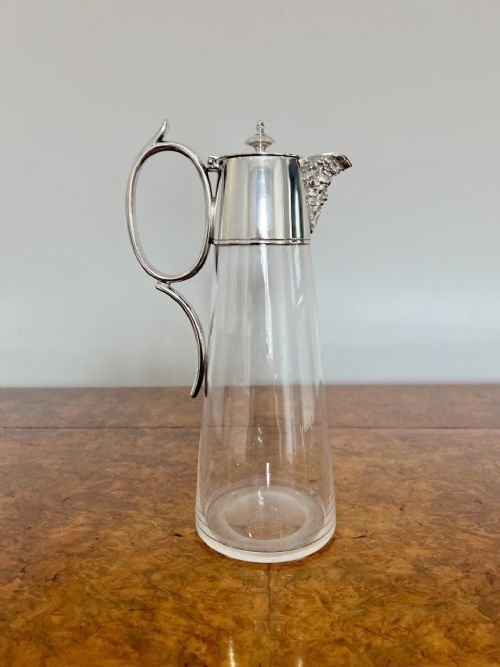
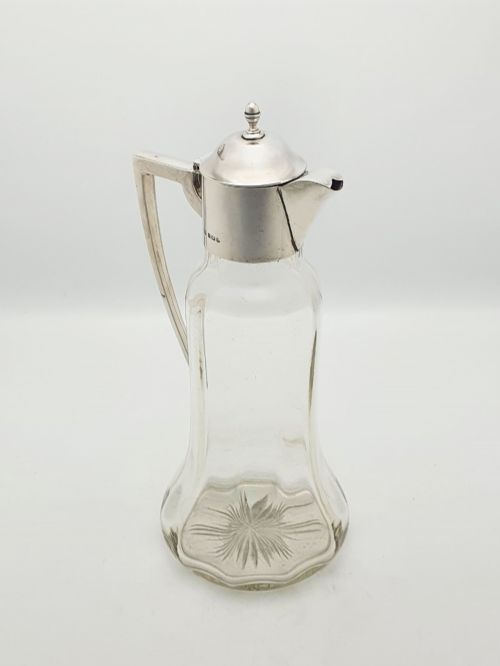
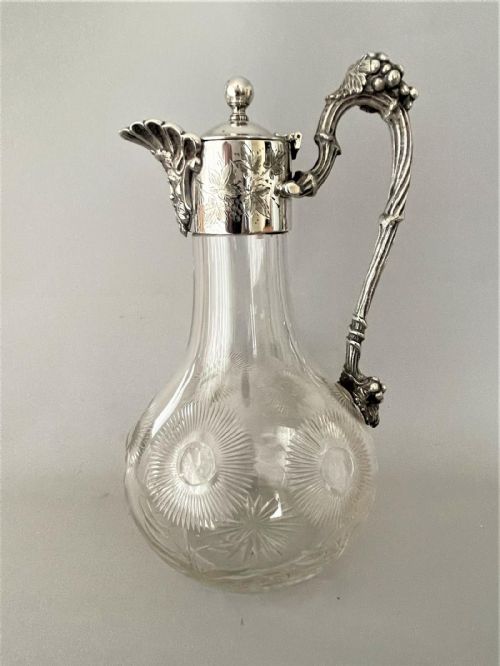
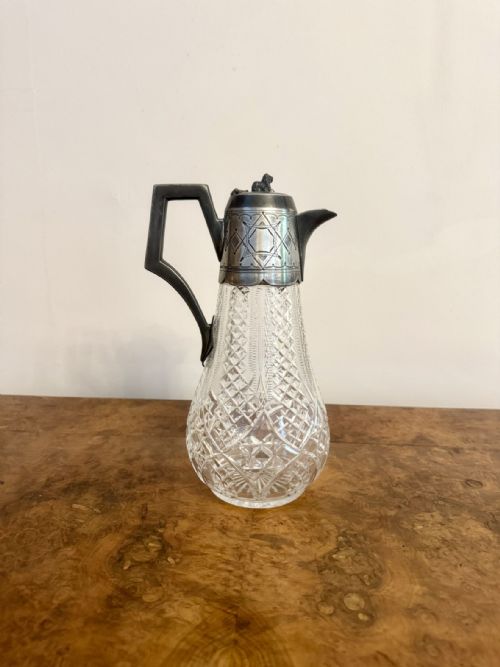
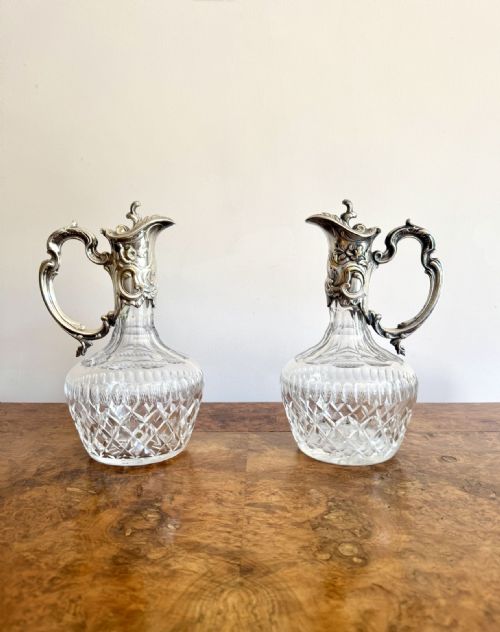


Silver Topped Claret Jug
A silver topped claret jug brings table service to life, pairing clear glass with bright metal mounts for pouring wine.
Silver Topped Claret Jug
A silver topped claret jug combines a glass body with metal mounts, designed for serving wine at the dining table. These serving pieces appear frequently from the Victorian and Edwardian periods, alongside George V and Art Deco examples.
The body of each piece uses glass, cut crystal, or etched glass, often shaped as a decanter, ewer, or pitcher. Mounts consist of a hinged lid, collar, and handle socket attached to the glass vessel.
Victorian and Edwardian variations dominate the selections, ranging from floral engraved sterling silver mounts to plain silver plate. Collectors encounter everything from tall cut glass ewers to smaller whisky noggins.
How They Were Made
Makers formed the vessels from glass or crystal using blowing and cutting techniques, creating heavy panel-cut or etched surfaces that reflect light. Handles and hinged covers were cast or forged from sterling silver or silver plate, then fitted securely around the glass necks.
Metal components often received hand-engraved floral patterns or chased ornamentation, while mounts were secured to the glass body using collars and secure adhesives. Silversmiths worked alongside glassmakers to ensure watertight seals between the heavy crystal bodies and the hinged metal lids.
Some Victorian examples double as whisky noggins, proving that ancestors kept various fortification options close at hand.
What Varies in Quality
The standard of glass cutting determines visual impact, where deep, sharp facets on heavy crystal elevate a piece above simpler pressed glass bodies. Heavier gauge silver or thicker silver plating on the mounts provides greater durability and substance to the handle and lid.
Design complexity separates standard production items from masterworks, particularly when mounts incorporate figural elements like Bacchus masks or specialised Art Nouveau and Arts & Crafts styling. The precision of the hinged mechanism and the seamless fit of the silver collar against the glass show the skill of the original workshop.
Asprey and Co. Ltd·Charles Boyton·Tiffany
The Silver Topped Claret Jug Glossary
- Claret jug
- A specialised pouring vessel designed for serving red wine, featuring a handle, spout, and hinged lid. These items combine glass bodies with decorative metal mounts.
- Sterling silver
- An alloy containing 92.5 percent silver by weight, used for the high-end mounts and lids on better tablewares. British pieces carry hallmark stamps indicating the assay office and year.
- Silver plate
- A base metal foundation coated with a thin layer of silver, offering the appearance of solid silver at a different cost. Many serving vessels from the Victorian era utilise this method.
- Cut glass
- Glass decorated by grinding facets or patterns into the surface using rotating wheels. This technique adds weight and brilliance to the body of the vessel.
- Bacchus mask
- A decorative motif depicting the face of the Roman god of wine, often cast into the silver spout or handle terminal of serving jugs.
Silver Topped Claret Jug: Frequently Asked Questions
What is a silver topped claret jug used for?
These vessels serve table wine during dinner, holding claret or other red varieties ready for pouring into glasses.
The hinged lid keeps the contents protected while allowing smooth one-handed operation at the table.
How do I clean a glass claret jug?
Wash the vessel gently by hand using warm water and mild soap, avoiding abrasive scrubbers that might scratch the crystal.
Keep silver polish away from the glass body to prevent staining the interior or the mounted collars.
How do I date a silver mounted jug?
Sterling silver mounts on British pieces usually feature hallmarks indicating the assay office, standard mark, and date letter.
Stylistic cues like floral engraving or Art Deco geometry also help narrow down the period of manufacture.
Are these jugs safe for serving wine?
Most antique examples function properly for serving wine, provided the glass and internal seals remain intact.
Inspect the collar and handle security before filling to ensure the heavy glass body stays balanced during pouring.