
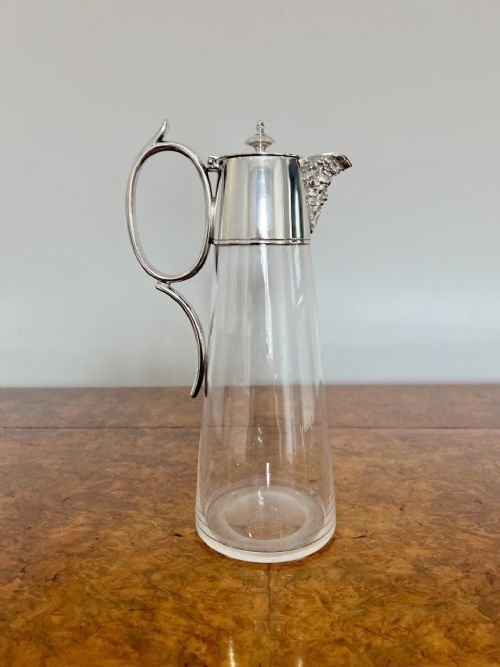
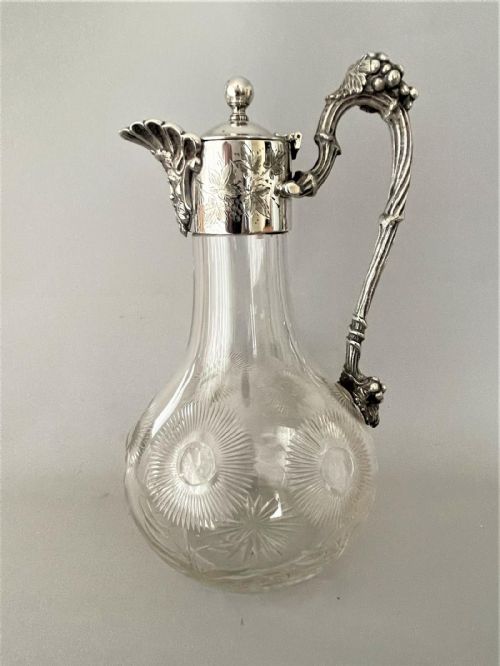

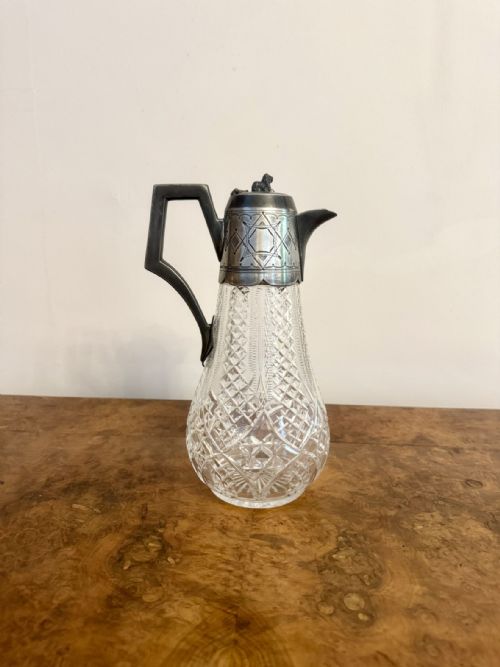
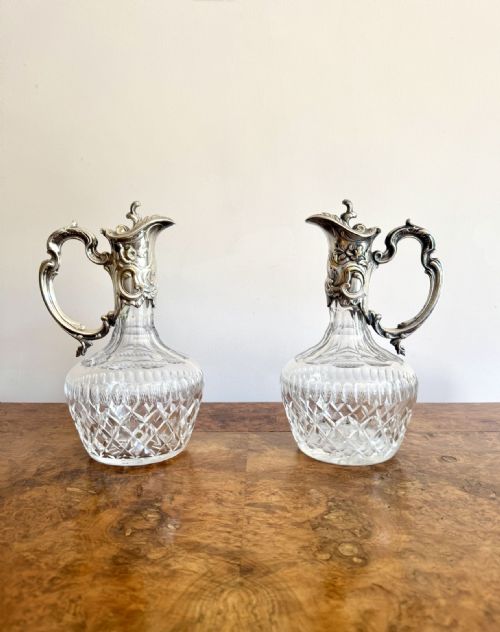


Silver Plated Wine Pitcher
These silver plated wine pitcher selections are handsome Victorian and Edwardian table vessels that bring historic charm and brilliant sparkle to your dining room.

Understanding silver plated wine pitcher examples
When you search for a silver plated wine pitcher, you are looking at nineteenth-century and early twentieth-century table wares designed for serving claret and other table wines. These vessels primarily take the form of claret jugs and decanters that combine metal mounts with glass bodies.
You are most likely to meet Edwardian and Victorian versions on this page, spanning the 1880 period through to 1900. These pieces reflect the formal dining habits of their eras, serving as practical containers and decorative centerpieces alike.
The objects listed range from single jugs to matching pairs, showing how households poured wine during formal meals. Their forms draw upon Victorian and Edwardian design traditions, balancing utility with ornate display.
Materials and construction methods
These pieces combine silver plate with clear glass, cut glass, and cut crystal bodies. The metal components form the mounts, handles, hinged lids, and collars that secure the glass underneath.
Craftsmen shaped the glass through heavy cutting and moulding to catch the light, while the metal portions utilised silver plating techniques over base metals. The mounts are securely fitted to the glass necks, often featuring elaborate spouts and thumbpieces.
Retail Price Guide 2026
Typical UK retail prices for silver plated wine pitcher, calculated from the Sellingantiques database of over a million retail prices indexed since 2003. This retail price guide relies exclusively on Sellingantiques data; no external sources or auction records are used, so the figures do not describe the wider market.
Some Edwardian jugs were built so sturdily that guests could quite safely lean on them during particularly lengthy political debates.
Distinctions in quality
Quality rests upon the crispness of the cut crystal and the weight of the glass body. Heavier, deeply cut crystal vessels sit at the top of the range compared to simpler moulded glass.
The refinement of the silver plated mounts also dictates value, with maker-marked designs and intricate casting showing superior craftsmanship. Plain mounts contrast with elaborate Victorian and Edwardian chased decoration.
Hukin and Heath
The Silver Plated Wine Pitcher Glossary
- Claret jug
- A specialised vessel designed specifically for serving red Bordeaux wine at the dining table. These pieces typically feature a pouring spout and a hinged lid operated by a thumbpiece.
- Silver plate
- A manufacturing method where a thin layer of silver is bonded to a base metal foundation. This technique allowed makers to produce luxurious tableware at a lower cost than solid silver.
- Cut crystal
- High-clarity glass containing lead oxide, cut with sharp geometric or floral patterns. This material offers superior brilliance and weight compared to standard glass.
- Edwardian
- Pertaining to the reign of King Edward VII, spanning the early years of the twentieth century. Design during this period often favored lighter, refined interpretations of earlier styles.
- Victorian
- Relating to the lengthy reign of Queen Victoria during the nineteenth century. Tableware from this era frequently displays heavier, more ornate decorative schemes.
Frequently Asked Questions
What is a silver plated wine pitcher?
A silver plated wine pitcher is a historical serving vessel, commonly referred to as a claret jug, used for pouring wine at the table. These pieces combine a glass or crystal body with silver plated metal mounts and hinged lids.
Originating in the nineteenth and early twentieth centuries, they were essential items for formal dining. Today they serve both decorative and practical functions in the home.
How do I clean my pitcher?
Cleaning requires gentle washing with warm soapy water and a soft cloth to protect the silver plate. Avoid harsh abrasive cleaners that can wear away the silver layer over time.
Dry the metal mounts thoroughly after washing to prevent water spots. The glass body can be polished separately with standard glass cleaner.
Can I use these for serving wine?
These pitchers remain entirely functional for serving wine at modern dinner parties. Their spouts and hinged lids work well for pouring claret and other table wines.
Ensure the interior is thoroughly rinsed before use. Hand washing is mandatory to preserve the historic plating and glass.
How do I date these pieces?
Dating relies on stylistic clues, glass cutting techniques, and any maker marks stamped onto the metal mounts. Victorian examples tend to feature heavier ornamentation, while Edwardian pieces often show lighter styling.
Comparing the specific form and manufacturing details against documented periods helps narrow down the decade of production. Maker stamps provide the most precise chronological indicator.