
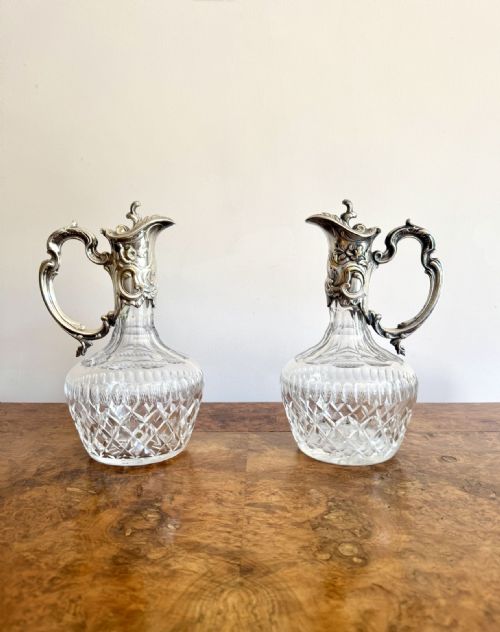


Edwardian Silver Claret Jug
An Edwardian silver claret jug brings table service alive, pairing polished metal mounts with heavy glass bodies.

Edwardian silver claret jug styles and forms
An Edwardian silver claret jug sits at the intersection of formal dining and fine metalwork, serving wine from a decorative vessel. These pieces appear frequently from the Edwardian period alongside earlier Victorian examples.
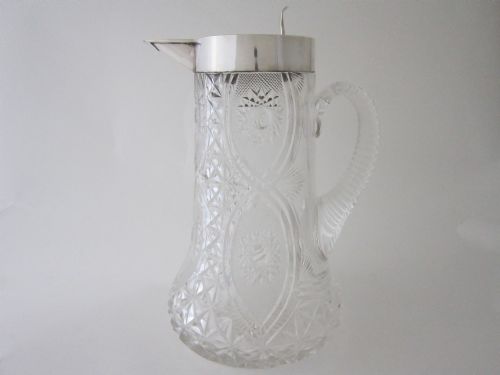
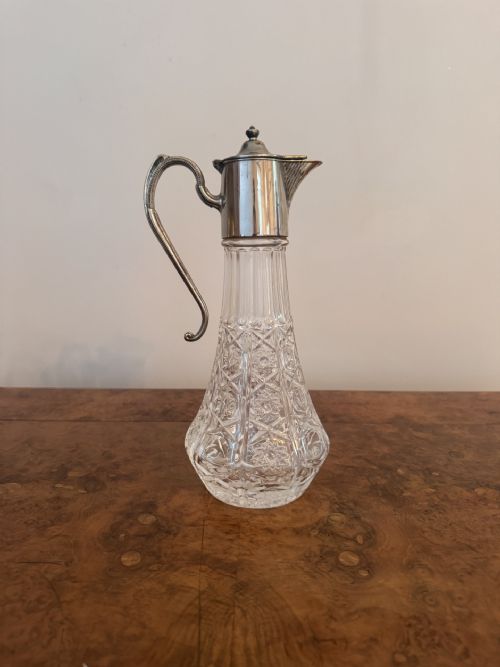
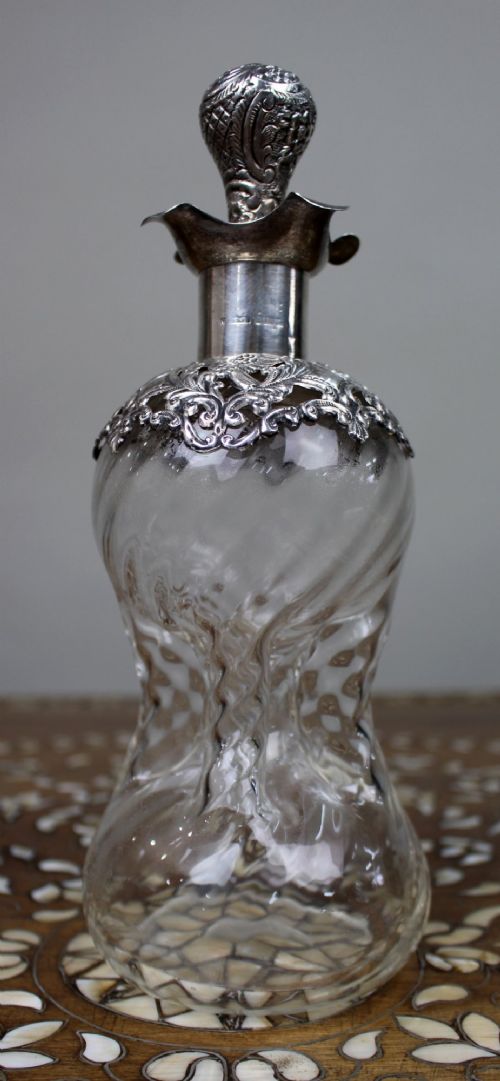
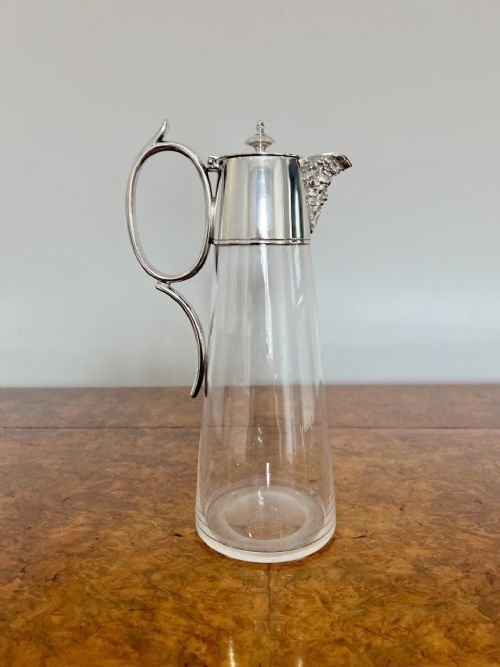
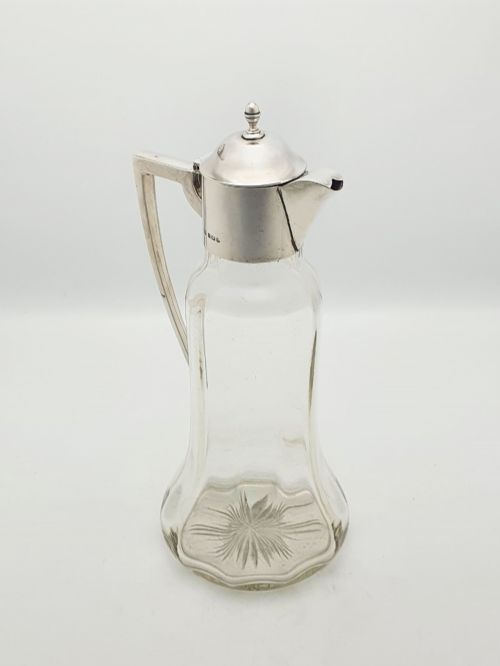
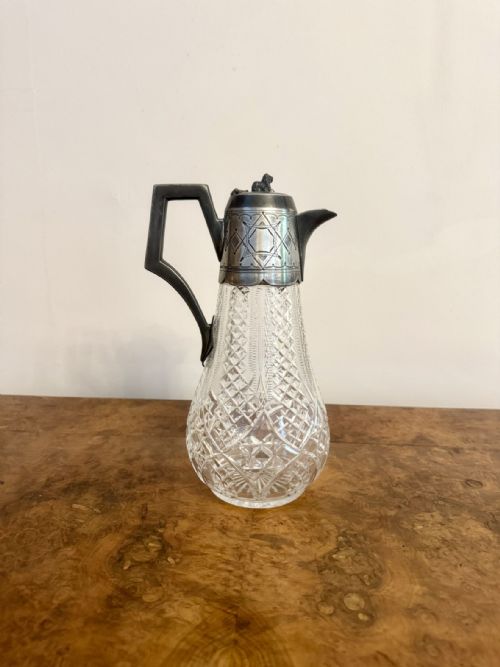
The most common version on this page pairs a cut glass or crystal body with silver or silver-plated mounts. Plain mounts also occur alongside ornate designs.
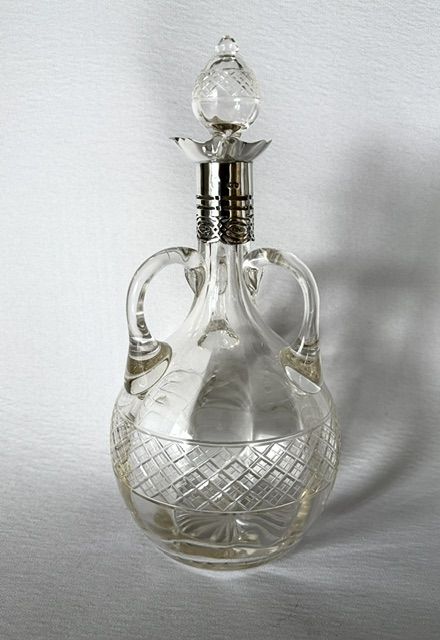
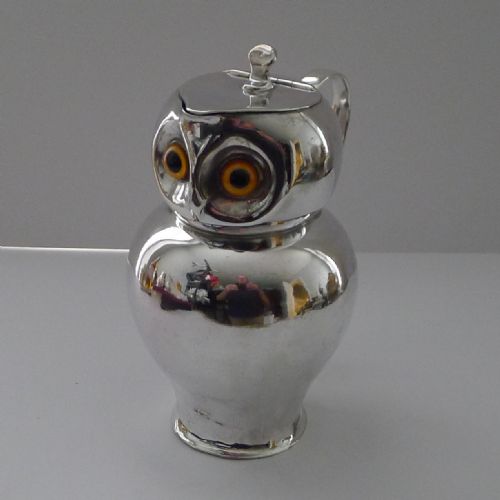
Makers produced these pitchers in forms ranging from standard decanters to specialised vessels like whisky noggins. Surviving pieces sometimes form matched pairs.
Materials and construction
Makers constructed these vessels using glass and metal, combining sterling silver or silver plate with clear glass, cut glass, lead crystal, or etched glass. Some bodies feature green applied ribs or square panelled cutting.
Silversmiths formed the mounts to collar the glass necks, incorporating hinged lids and handles. Hallmarks on sterling examples record the assay office and year of production, such as Birmingham assay marks from the early twentieth century.
Retail Price Guide 2026
Typical UK retail prices for edwardian silver claret jug, calculated from the Sellingantiques database of over a million retail prices indexed since 2003. This retail price guide relies exclusively on Sellingantiques data; no external sources or auction records are used, so the figures do not describe the wider market.
Listings combine Edwardian and Victorian periods with materials including cut glass, sterling silver, and silver plate.
Assessing quality in claret jugs
The weight and clarity of the glass body distinguish finer examples from standard production. Deeply cut patterns or crystal fabrication elevate the piece.
The substance of the metal mount defines the tier of the object. Solid sterling silver mounts with clear hallmarks indicate higher workshop standards than basic silver plate.
Hukin & Heath
The Edwardian Silver Claret Jug Glossary
- Sterling silver
- A silver alloy containing 92.5 percent pure silver by mass, standard for quality British table wares.
- Silver plate
- A layer of silver applied to a base metal core, frequently utilised for large dining pieces.
- Cut glass
- Glass decorated by grinding facets into the surface using a wheel, creating reflective patterns.
- Lead crystal
- Glass containing lead oxide, known for high refractive index and heavy weight.
- Eche
- A wine pitcher, often featuring a spout and handle for pouring at the dining table.
Frequently Asked Questions
How do I date a silver claret jug?
Check the metal mounts for British hallmarked symbols indicating the assay office and year letter.
Style indicators like cut glass patterns also help assign pieces to the Edwardian or Victorian periods.
Are these jugs solid silver or plated?
Evidence shows both sterling silver and silver-plated metalwork across these table vessels.
Examining the mounts reveals hallmarks on solid silver pieces.
What glass types are used?
Makers utilised clear glass, cut glass, lead crystal, and etched glass for the bodies.
Some examples feature decorative elements such as green applied ribs.
Did these pieces come in pairs?
Makers occasionally produced matching pairs of claret jugs for formal dining arrangements.
Single vessels remain the most common configuration seen on the market.