
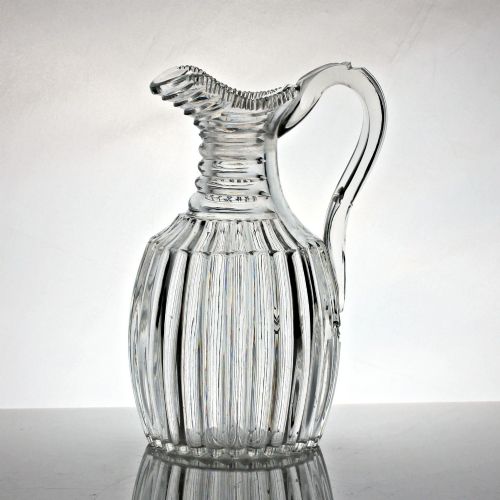
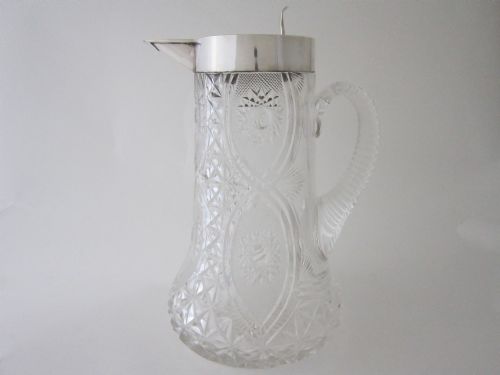
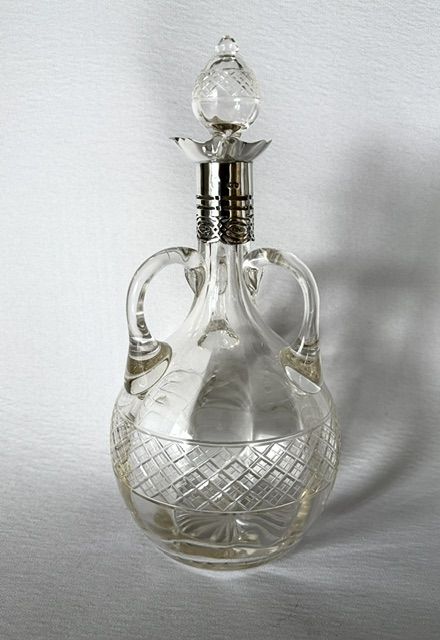
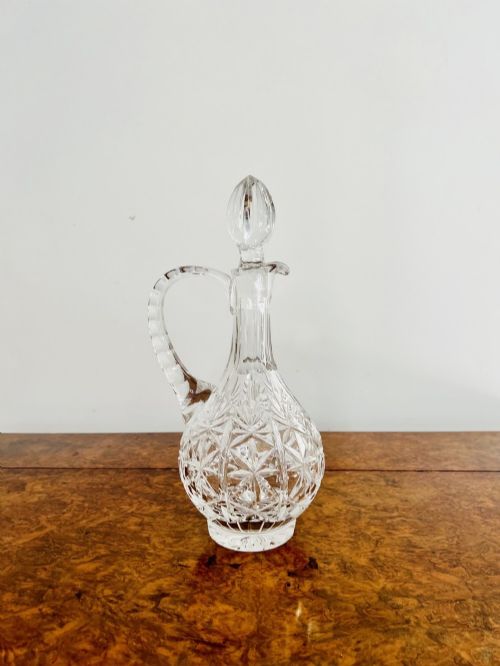
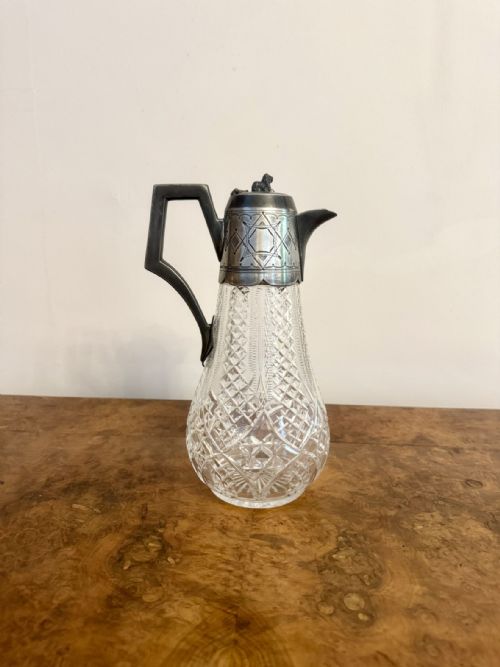
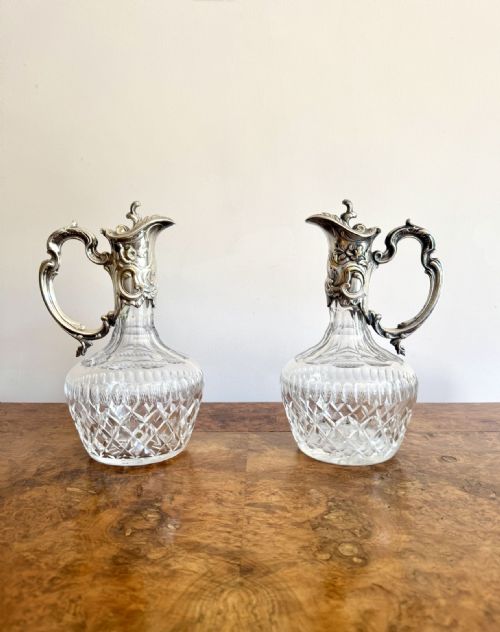


Cut Glass Claret Decanter
These cut glass claret decanters bring Victorian and Edwardian dining tables to life with brilliant crystal and gleaming mounts.
Cut Glass Claret Decanter
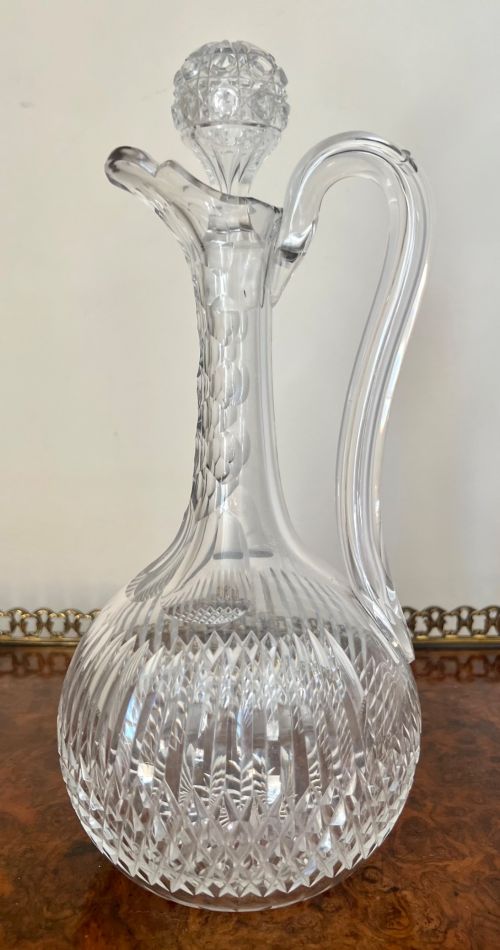
A cut glass claret decanter combines heavy glass vessels with metal mounts to serve wine with style. These pieces span the Victorian, Edwardian, and George V periods, alongside earlier Georgian designs.
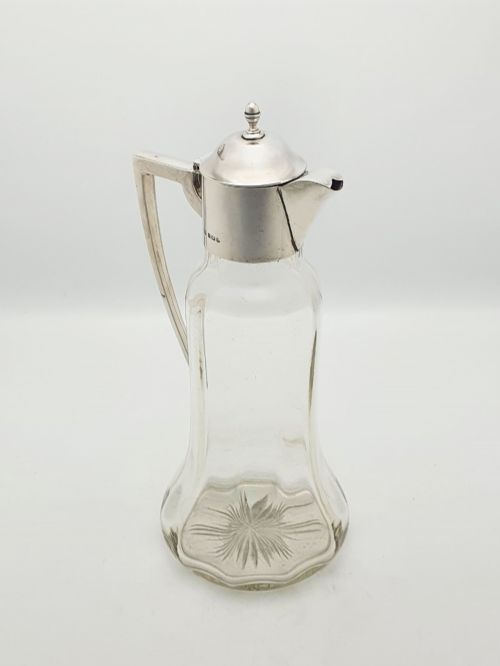
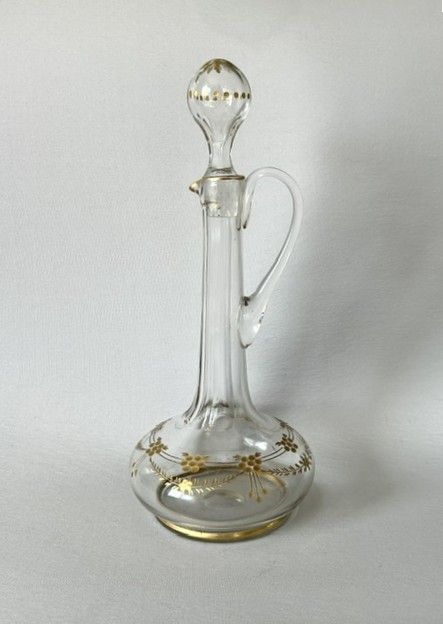
Most examples found here date from the late nineteenth and early twentieth centuries. They appear as claret jugs, ewers, and wine decanters, often fitted with hinged silver or silver plated lids.
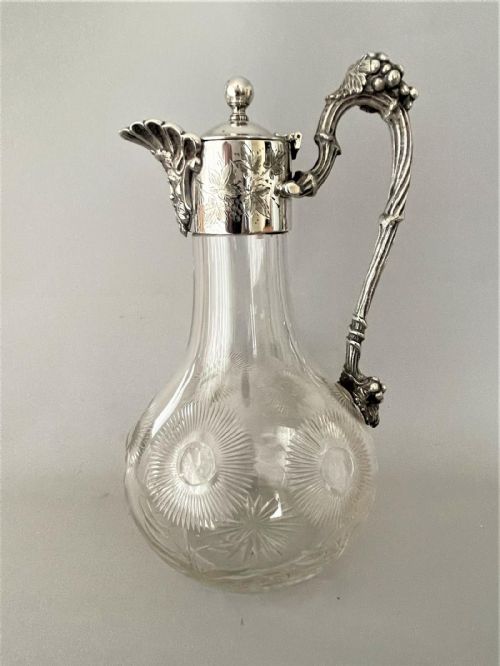
Makers produced these forms in clear cut crystal, cranberry glass, and overlaid Bohemian glass. Many feature integrated ice tubes or engraved motifs such as grapes and dolphins.
How they were made
Artisans shaped the bodies through glassblowing before applying deep wheel cuts and engravings to the surface. This cutting creates the intricate geometric patterns and prisms that catch the light.
Silversmiths then fitted sterling silver or silver plated mounts, collars, and hinged covers to the glass necks. Some specialised pieces incorporated internal ice tubes to keep wine chilled without dilution.
Some Victorian wine jugs feature engraved dolphins swimming across the crystal body.
What varies in quality
The crispness of the glass cutting defines the standard of the vessel, with sharper facets reflecting superior workmanship. Heavier crystal bodies and balanced proportions indicate finer production.
The weight and detail of the silver or silver plate mounts also set pieces apart. Robust hinges, secure handle attachments, and refined chasing on the metal elevate the overall execution.
Mappin and Webb·Richardsons·Tiffany·William Davenport
The Cut Glass Claret Decanter Glossary
- Claret jug
- A specialised pouring vessel designed specifically for serving red wine at the table. These pieces usually feature a handle and a hinged lid.
- Silver plate
- A layer of silver fused to a base metal such as copper or Britannia metal. This technique provided the luxury of silver at a more accessible cost during the Victorian era.
- Ewer
- A large jug with a wide spout and a curved handle, often used for wine or water. They share similar forms with claret decanters from the same periods.
- Cranberry glass
- A rich red glass coloured with gold chloride during production. Makers utilised this striking material for decorative wine decanters and jugs around nineteen hundred.
Cut Glass Claret Decanter: Frequently Asked Questions
How do I date a claret decanter?
Examine the hallmarks on the silver mounts to find the exact assay office and year letter. Stylistic clues such as the depth of the glass cutting and the shape of the handle also point to Victorian or Edwardian origins.
The overall weight and the presence of registration numbers help narrow down the decade of production. Comparing the decorative motifs, such as late Victorian grape engravings, provides further context.
What is an ice tube?
An ice tube is a closed metal cylinder that drops down into the centre of the decanter. It allowed hosts to keep claret cool without letting melting ice water dilute the wine.
These tubes screw into the silver lid assembly and appear on select Victorian and Edwardian serving jugs.
Are these decanters safe for modern wine?
These antique vessels are suitable for serving wine when cleaned properly. Care must be taken with old silver plate and delicate crystal, which require hand washing rather than dishwasher use.
Check the interior for any old sediment and use warm water with bottle brushes to maintain the glass clarity.
How do I tell crystal from glass?
Crystal contains lead oxide, which adds weight, brilliance, and a clear ringing sound when tapped gently. Cut glass without lead content is lighter and refracts light differently.
Most high quality Victorian and Edwardian claret jugs utilise heavy cut crystal to showcase the deep geometric patterns.