

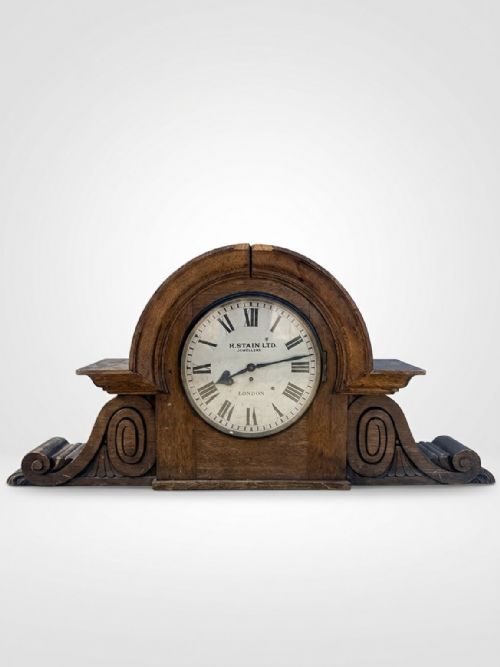


Vintage Shop Display Case
These vintage shop display case options bring authentic commercial heritage into domestic rooms, offering glazed visibility for collections and curiosities.
Vintage Shop Display Case
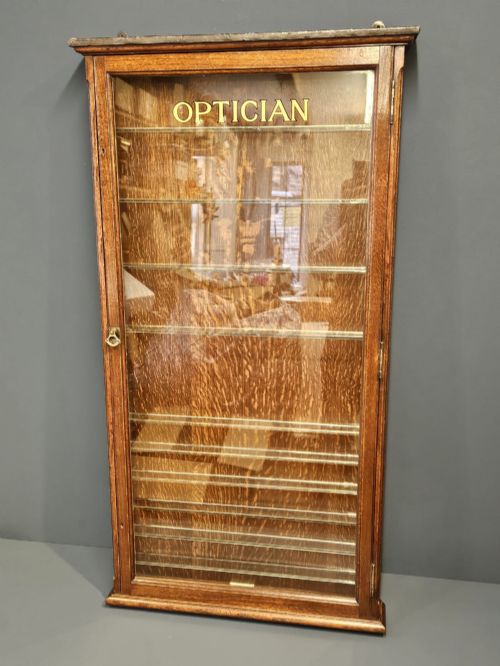
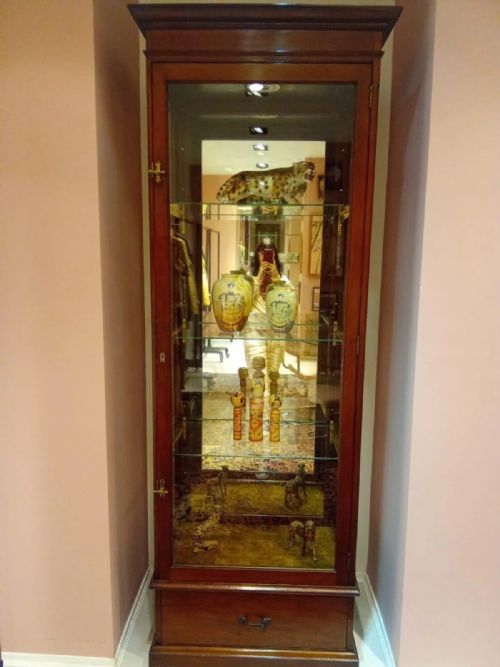
A vintage shop display case serves as a practical enclosure designed originally for retail trade, spanning countertop models to large freestanding counters and tall cabinets. When searching for a vintage shop display case, buyers encounter varied commercial forms originating from the Victorian period through the 1930s. The selection on this page relies heavily on Edwardian and 1920s examples built for pharmacies, confectioners, and general merchants.
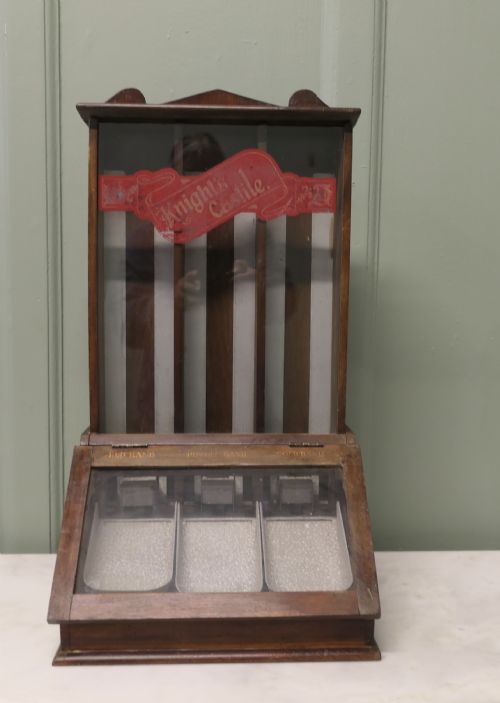
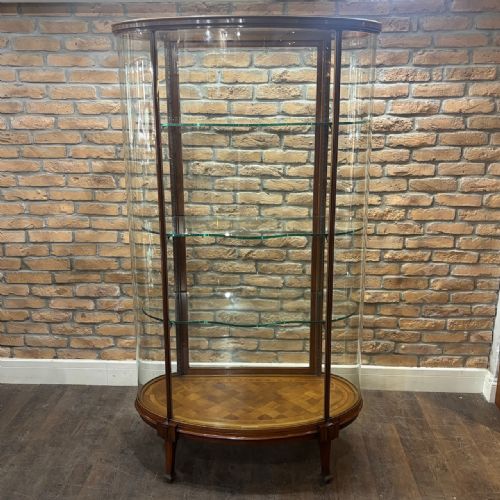
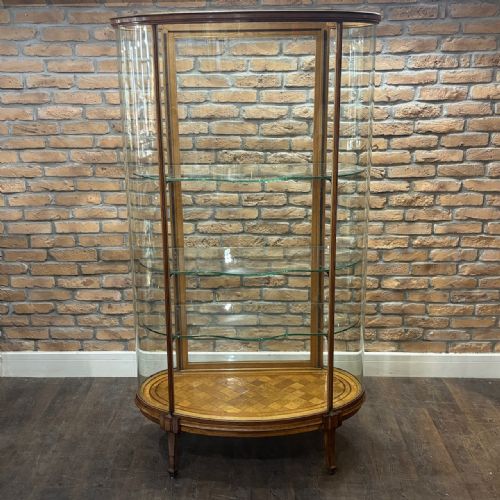
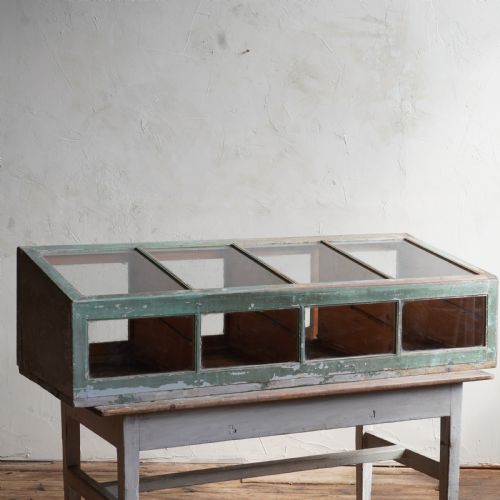
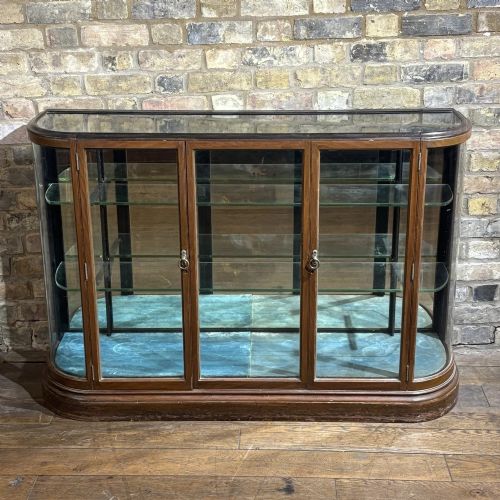
Countertop versions and tabletop display cabinets appear frequently alongside larger mahogany or oak shop display counters and haberdashery units. Many pieces retain original mercantile branding or advertising associations, reflecting their past life in chemists and sweet shops. Construction styles range from simple glazed boxes to bow-end timber frames and aluminium-framed counters from the later 1930s.
Materials and construction
Makers built a vintage shop display case primarily using dense hardwoods like mahogany and oak, paired with extensive glass panels to maximise light and visibility. Brass hardware, mirrored interiors, and ebonised timber finishes provide structural reinforcement and visual contrast in commercial environments. Aluminium framing emerges in later twentieth-century iterations.
Internal joinery incorporates adjustable glass shelves and tight-fitting glazed doors to protect delicate wares from dust and handling. Surviving surfaces often display original hand sign-writing, distressed paint, or polished timber patination accumulated through decades of retail use.
Vintage Shop Display Case Retail Price Guide 2026
Typical asking prices for vintage shop display case among the pieces listed under this phrase on Sellingantiques today, from the lower quarter to the upper quarter. They describe what is for sale here now, not the wider market.
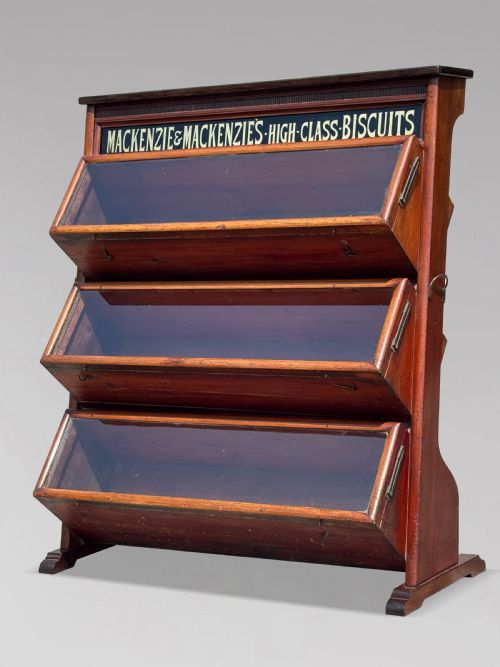
Chocolate and sewing cotton brands left their names permanently glazed into history on these surviving shop counters.
Judging standard and build
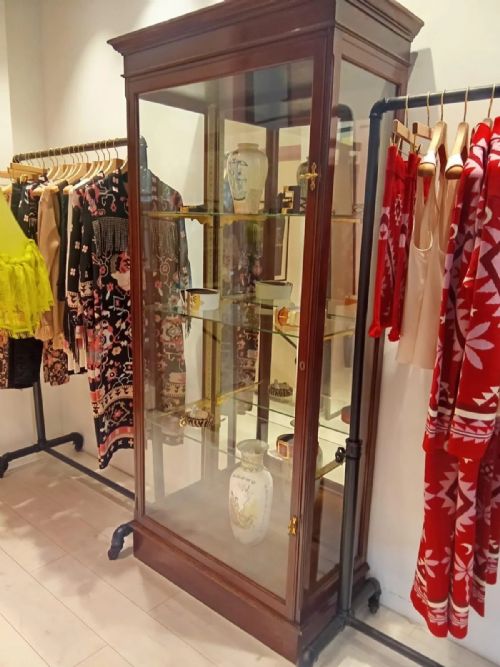
Quality in a vintage shop display case rests upon the integrity of the timber framing, the clarity of the original glass, and the sophistication of the internal fittings. Superior examples utilise solid hardwoods with refined mouldings, robust brass hinges, and well-balanced glazed doors that operate smoothly.
Commercial provenance and maker attribution elevate certain pieces, particularly those bearing original company branding or constructed by notable shopfitters. The proportion of the cabinetry, the presence of mirrored backs, and the survival of original adjustable shelving distinguish standard utility counters from high-end retail furniture.
F. Sage & Co.·Mackenzie's·Fry·Kemps·Chadwick·Ermen & Roby·Cadbury·Rowntree·Saml. Elliott & Sons
The Vintage Shop Display Case Glossary
- Countertop display cabinet
- A smaller glazed enclosure designed to sit upon a shop counter for close customer inspection of goods. These portable units were common in pharmacies and sweet shops.
- Haberdashery cabinet
- A specialised multi-drawer or glazed unit originally utilised for storing and displaying sewing cottons, ribbons, and small textiles. They often feature glass fronts for easy stock identification.
- Bow end
- A curved glass or timber end on a cabinet or counter that softens the rectangular profile and widens the viewing angle. This curved construction requires skilled carpentry.
- Ebonised
- Timber treated with a finish to imitate ebony, providing a deep black appearance popular in decorative arts during the late nineteenth and early twentieth centuries. It gives furniture a sharp, formal outline.
Vintage Shop Display Case: Frequently Asked Questions
How do I date a display case?
Dating relies on timber choices, construction methods, and hardware styles. Edwardian and Victorian pieces often show heavier solid mahogany or oak framing, while 1930s examples introduce lighter metals or streamlined veneers.
Maker plaques, advertising script styles, and lock mechanisms offer further clues to the manufacturing decade.
Can these cabinets hold heavy items?
Most countertop and tabletop models suit lighter curiosities, pocket items, and collections. Freestanding floor counters and large timber cabinets possess sturdier frames designed for heavier retail stock.
Checking the condition and support of internal glass shelves ensures safe placement of denser objects.
Are the glass panels usually original?
Many surviving cabinets retain their original float or cylinder glass panes, which display subtle waviness and minor imperfections. Replacement glass does occur during restoration work to mend historical damage.
Examining the glass under angled light helps reveal replacement panels versus period originals.
How should I clean the timber?
Traditional beeswax or microcrystalline wax maintains the finish of mahogany and oak surfaces without building up heavy residues. Avoid modern silicone sprays that can penetrate dry historic wood.
Gentle dusting with a soft cloth protects original patination and hand sign-writing.