

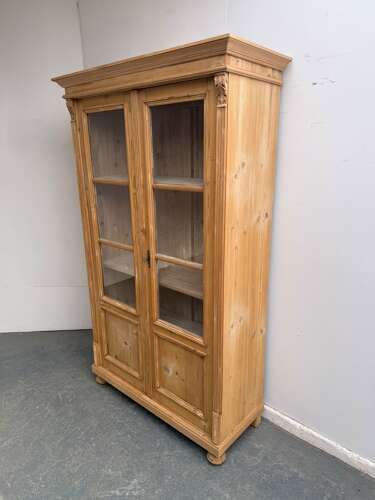
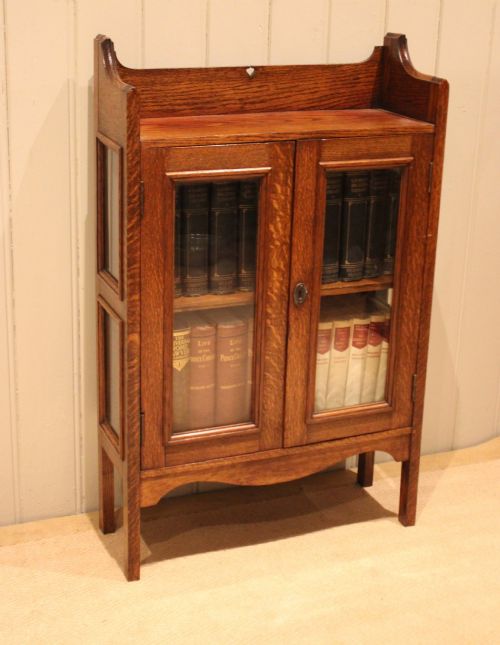
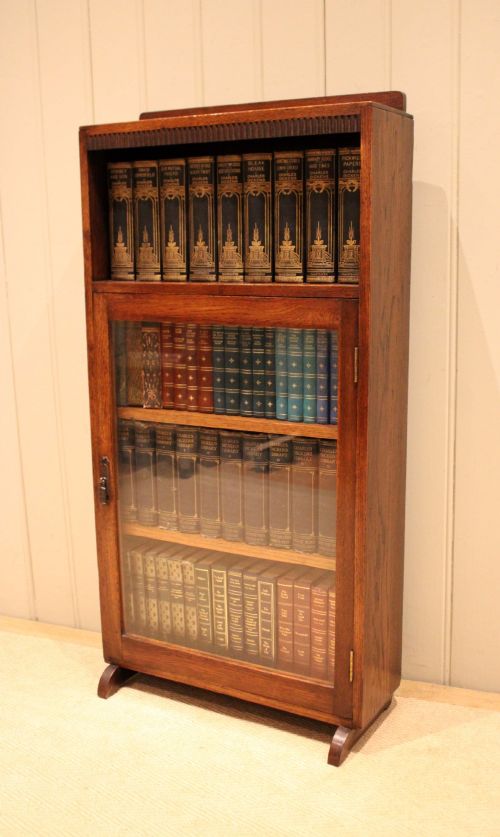
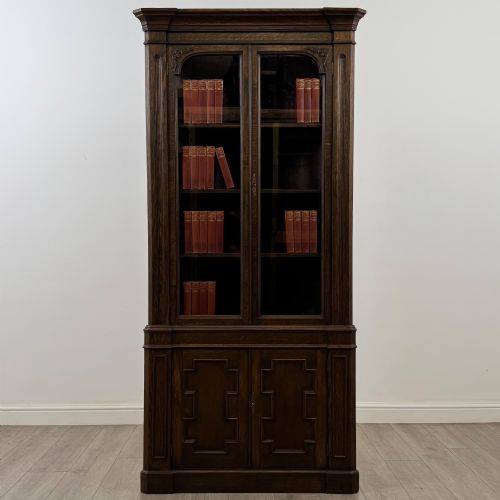
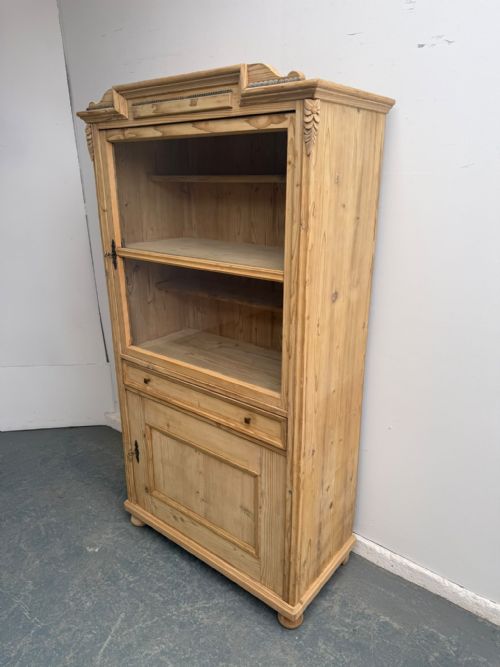
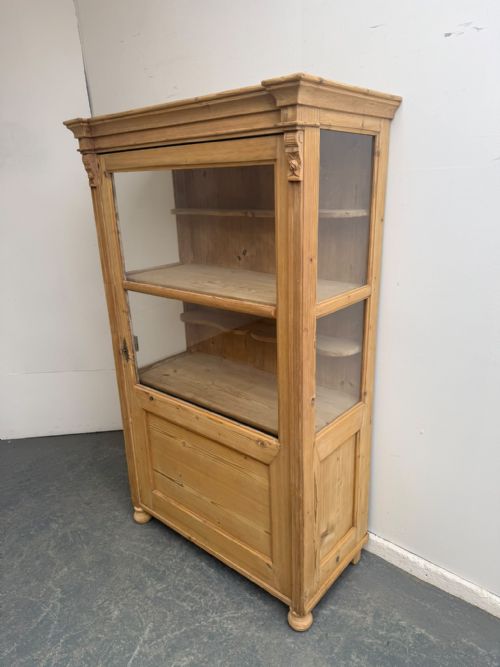
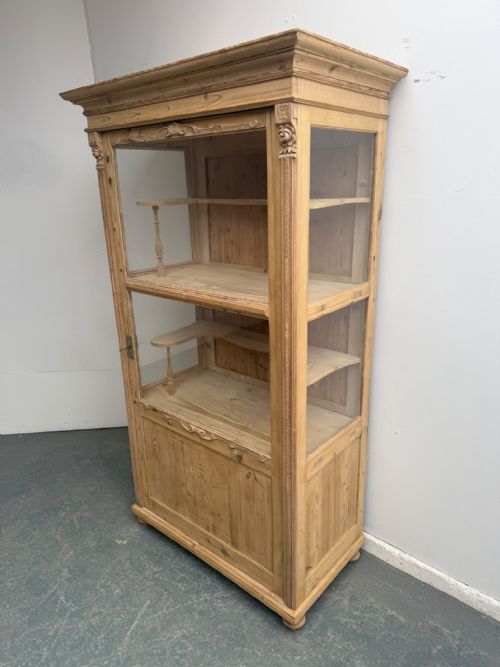


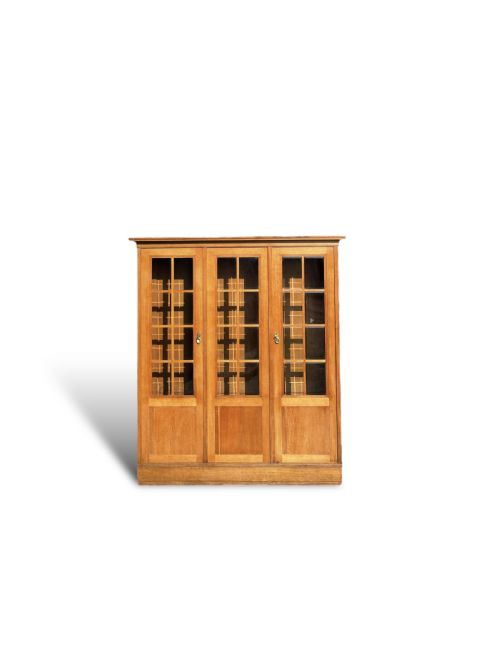


Freestanding Glazed Bookcase
A freestanding glazed bookcase provides versatile upright storage while protecting library volumes behind glass doors.
Freestanding Glazed Bookcase
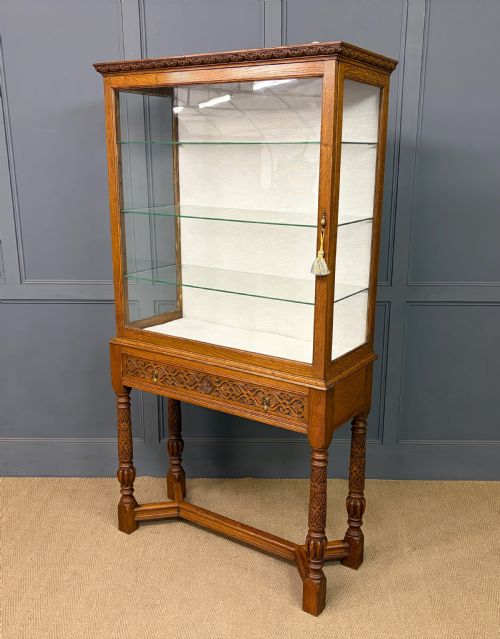
A freestanding glazed bookcase is a piece of cabinet furniture designed to stand independently against a wall while keeping books visible and protected behind transparent panels. These items appear in formats ranging from narrow nineteenth century mahogany designs to wider sectional pieces and corner cupboards.
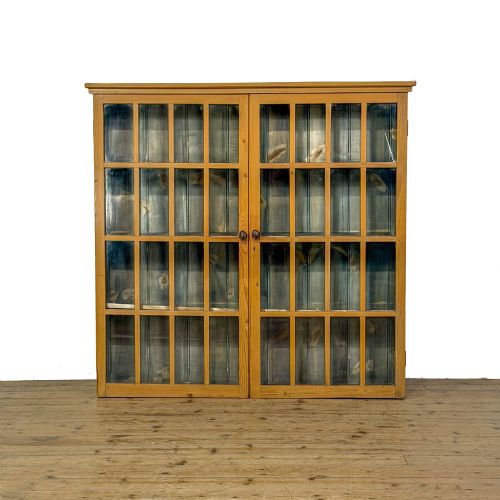
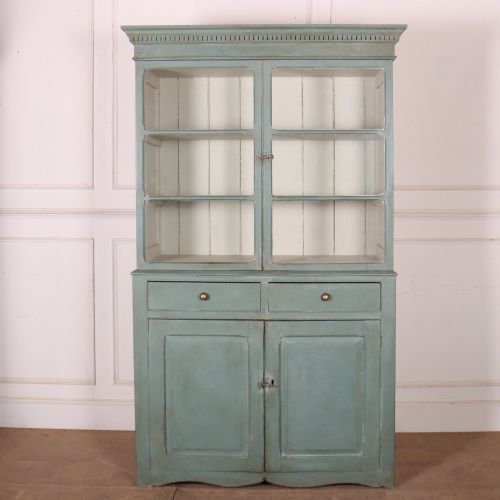
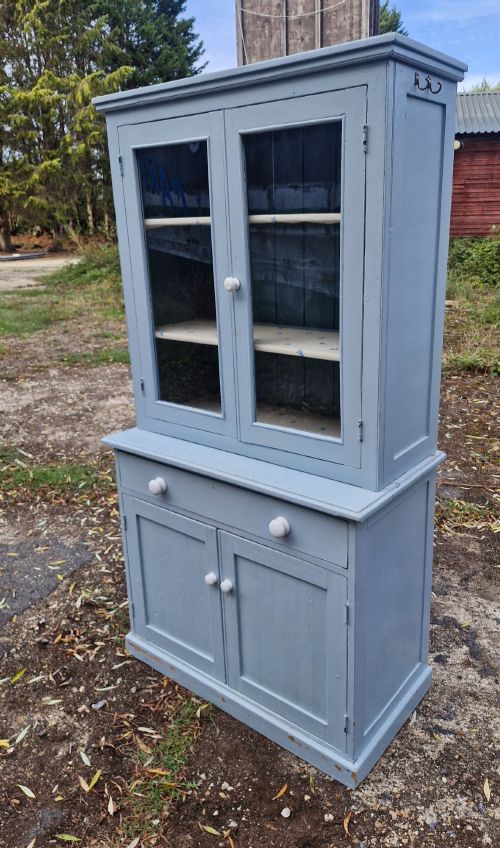
The pieces on this page span several stylistic traditions, including Victorian, Edwardian, Arts and Crafts, and twentieth century interpretations. Alongside dedicated mahogany library editions, the selection includes pine kitchen dressers, painted architectural cupboards, and walnut display cabinets.
Makers such as Heals of London and Laverton of Bristol contribute to the range of refined hardwood examples, whilst regional workshops produce utilitarian variations in pine and pitch pine.
Quality variations
The grade of timber selection and the precision of the cabinet joinery distinguish standard utilitarian cupboards from commissioned library furniture. Finer examples display carefully matched wood grain, delicate inlay work, and well-fitted glazed doors with original brass hardware.
Structural proportions and the integrity of the original glass panels also determine the standing of a piece. Altered surfaces, such as later paint layers applied over older timber, change the finish from its original workshop state.
Freestanding Glazed Bookcase Retail Price Guide 2026
Typical asking prices for freestanding glazed bookcase among the pieces listed under this phrase on Sellingantiques today, from the lower quarter to the upper quarter. They describe what is for sale here now, not the wider market.
One vintage pine cupboard bears a later sign written for Hovis Bread, blending domestic storage with early commercial branding.
Heals of London·Laverton of Bristol
The Freestanding Glazed Bookcase Glossary
- Breakfront
- A cabinet design where the central section projects forward from the flanking wings. This architectural arrangement adds depth and shadow to large library bookcases.
- Cornice
- The ornamental moulding fixed along the top edge of a bookcase. It crowns the upper structure and transitions the vertical sides to the ceiling line.
- Glazed door
- A timber frame enclosing a transparent glass panel. This arrangement allows visibility of the contents whilst shielding books from dust.
- Inlay
- Contrasting strips of wood or shell embedded into the primary timber surface to form geometric or floral patterns. Edwardian mahogany pieces frequently employ this decorative technique.
- Pitch pine
- A resinous softwood variant harvested for durable construction. It yields a pronounced grain pattern visible across nineteenth century shelving units.
Freestanding Glazed Bookcase: Frequently Asked Questions
How do I date a glazed bookcase?
Dating relies on observing timber choices, construction techniques, and stylistic ornament. Earlier pieces often employ solid mahogany or walnut with hand-cut joins, whereas later Edwardian and twentieth-century examples introduce machine-sawn elements and distinct revival motifs.
Hardware inspection also assists, as original brass hinges and locks match the manufacturing period of the carcass. Secondary woods at the back and drawer linings provide further clues regarding the era of production.
Can shelves be adjusted inside?
Many nineteenth-century and Edwardian library bookcases include adjustable shelving supported by wooden ratchets or metal pins. This adaptability accommodates volumes of varying height.
Simpler utilitarian cupboards and regional pine pieces frequently feature fixed internal shelves secured permanently into the carcass sides.
Where should I place a freestanding bookcase?
These cabinets require stable, level flooring away from direct heat sources and strong sunlight to protect timber and glass. Adequate clearance allows the glazed doors to open fully without obstruction.
Placing them against internal walls helps prevent moisture fluctuations that affect antique hardwoods and softer pine structures.
Are the glass panels original?
Original glass panes often display slight surface ripples, minor bubbles, and uneven thickness resulting from historic manufacturing methods. These visual imperfections distinguish period glazing from modern flat float glass.
Examining the putty or wooden glazing beads from the interior reveals whether the panels have been re-secured or replaced over time.