
Mahogany Vitrine
A mahogany vitrine is a glazed display cabinet designed to show precious objects, and choosing one brings fine timber and craftsmanship into a room.
Mahogany Vitrine
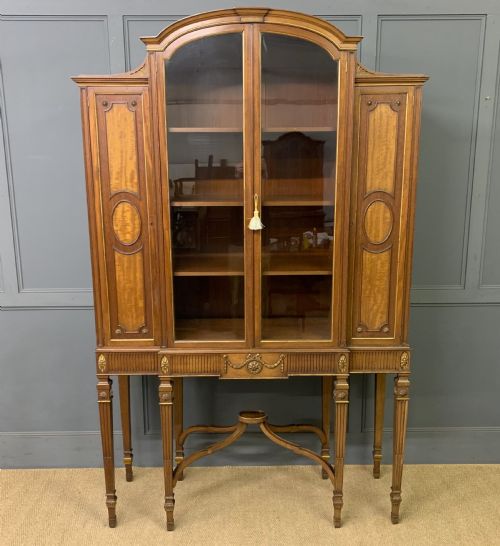
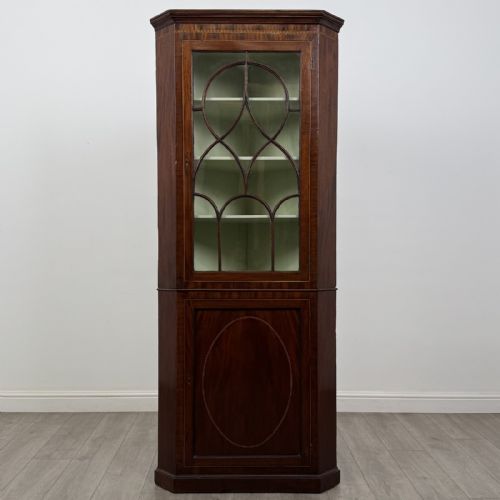
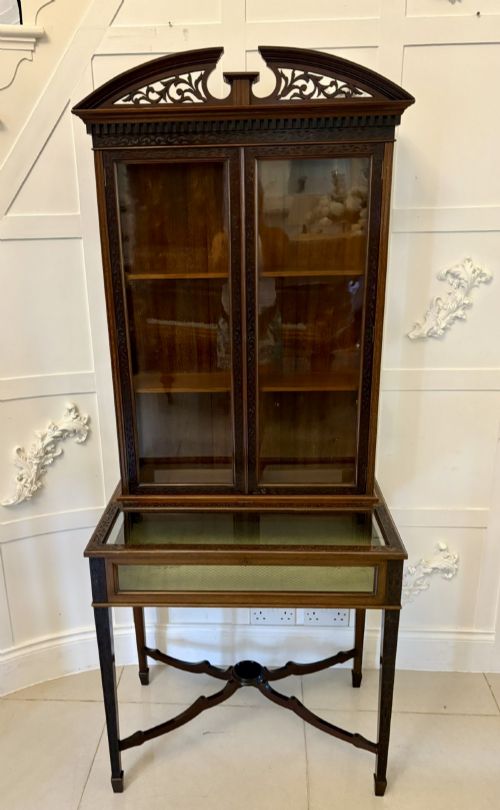
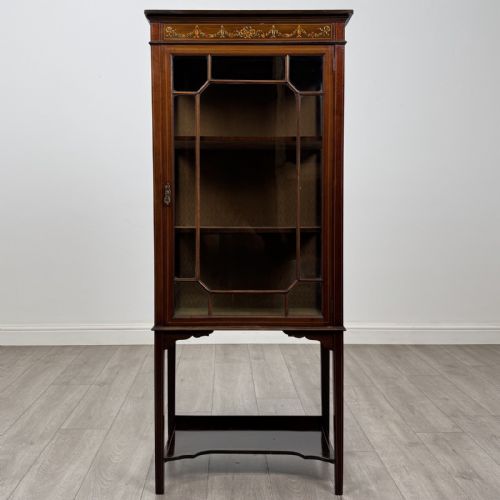
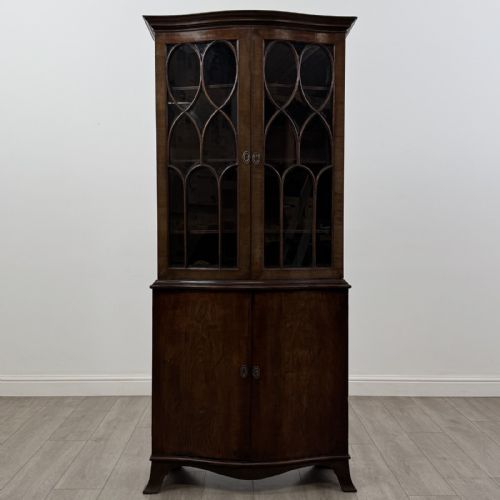
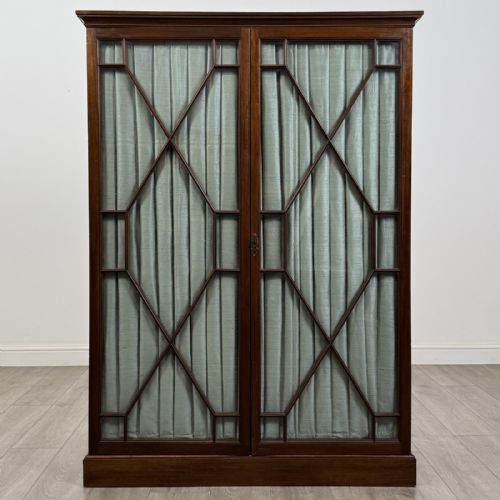
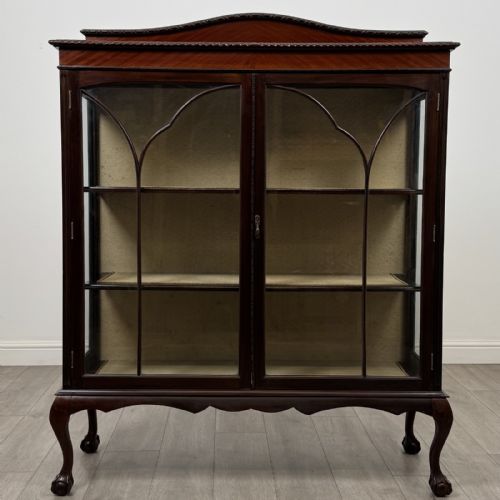
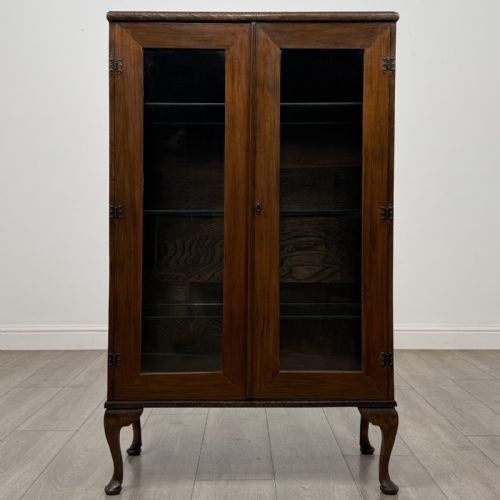
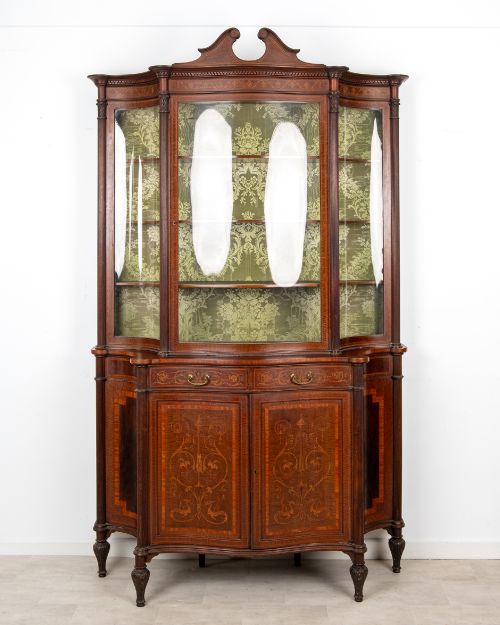
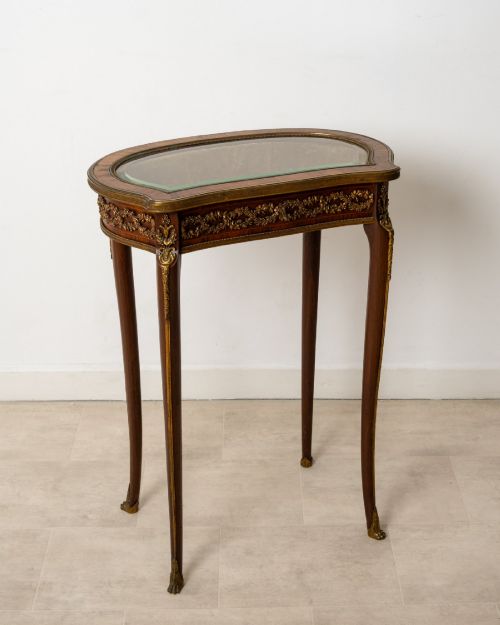
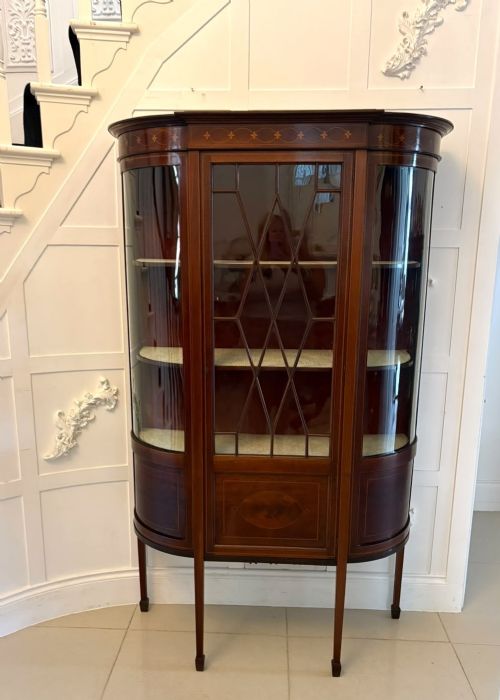
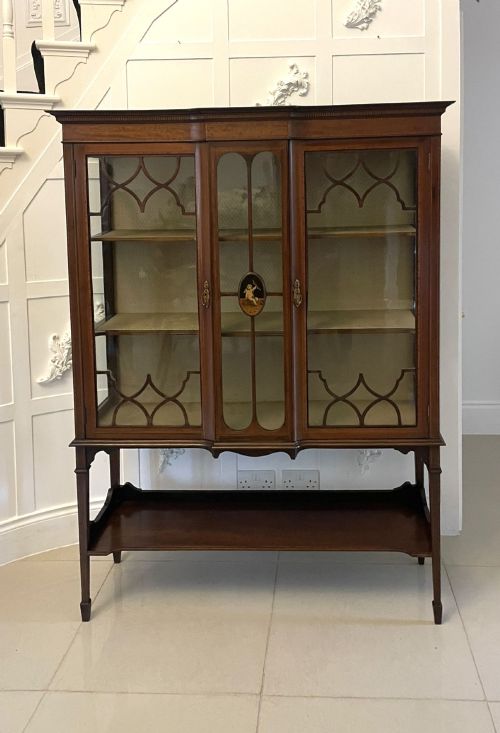
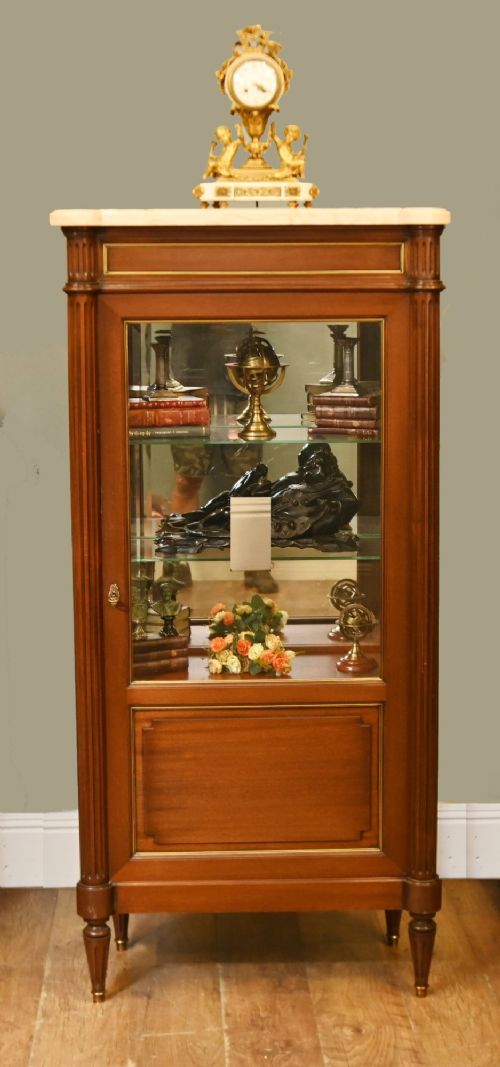
A mahogany vitrine takes several forms across this selection, including freestanding display cabinets, bow-fronted cabinets, corner units, and bijouterie tables with glass tops. These pieces originate from various periods such as the Georgian era, the Victorian epoch, and the Edwardian years.
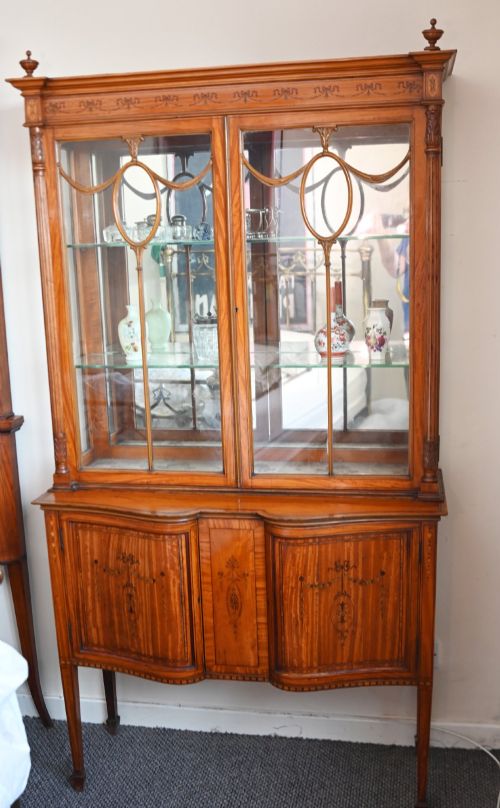
The Edwardian iterations and Sheraton Revival pieces dominate the options encountered here, frequently incorporating delicate satinwood inlay or painted decoration. Buyers also find French influences, including Louis XV and Louis XVI style designs alongside Directoire models.
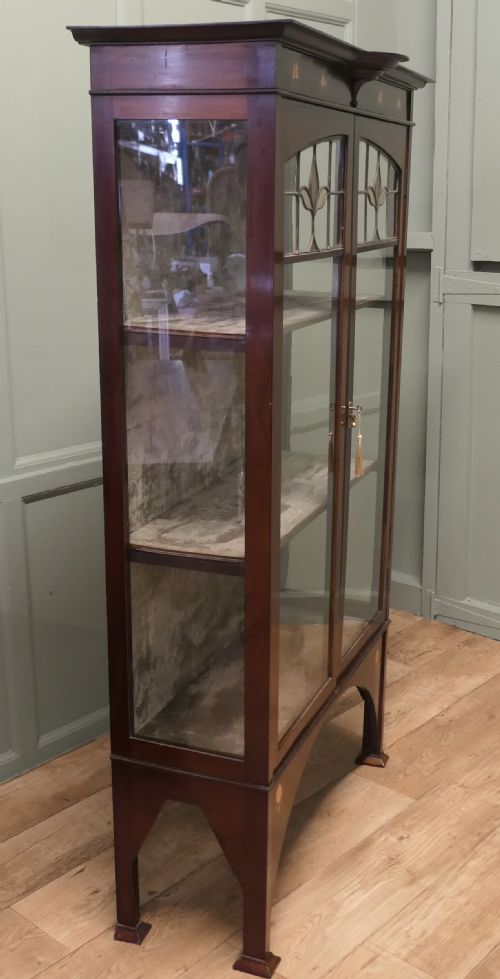
Tall glazed bookcases and smaller wall cabinets expand the category, offering enclosed shelving for ceramics, books, and curiosities. Each variant utilises the rich red-brown tones of mahogany to frame the objects displayed inside.
What varies in quality
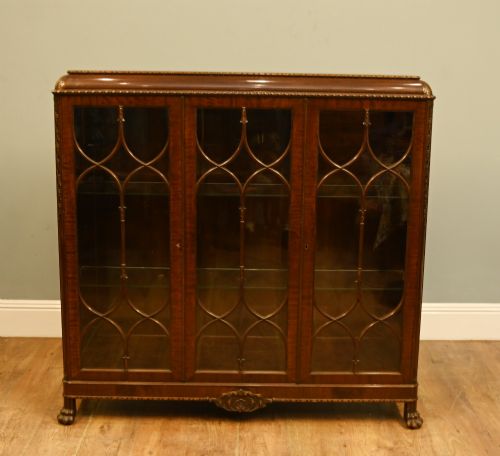
The refinement of the timber and the precision of the inlay set superior examples apart from simpler utilitarian pieces. Crispness in carved details, such as ball and claw feet or astragal mouldings, demonstrates the maker's skill.
The integration of materials like gilt bronze mounts, hand-painted decoration, and original mirror glass distinguishes high-grade workshop output from standard production. Proportions and the careful matching of mahogany grain across the doors dictate the visual balance of the cabinet.
Cabinet forms include serpentine bijouterie tables, breakfront bookcases, and corner units fitted with glass shelves.
Maple & Co·F. Sage & Co·Jas Shoolbred·François Linke
The Mahogany Vitrine Glossary
- Vitrine
- A glass-fronted cabinet or table designed for displaying fine objects and porcelain. These pieces usually feature extensive glazing to maximise light penetration.
- Astragal
- A moulded strip of timber dividing panes of glass within a sash or door. These bars form intersecting geometric patterns across the cabinet front.
- Bijouterie table
- A low display table with a glazed top and compartment designed for holding small ornaments and jewellery. They often stand on slender cabriole legs.
- Satinwood inlay
- A decorative technique using contrasting light-yellow timber veneers inserted into recessed channels within the mahogany surface. This creates geometric borders or floral motifs.
- Serpentine
- A curved line undulating outward in the centre and inward at the sides. This contour appears on the fronts of cabinets and tables to soften rectilinear forms.
Mahogany Vitrine: Frequently Asked Questions
What is the difference between a vitrine and a bookcase?
A vitrine incorporates extensive glass panels on the sides and doors specifically to exhibit decorative objects, whereas a bookcase prioritises timber shelves meant for holding books.
Many examples in this selection blur the distinction by featuring glazed upper doors intended for dual purposes.
Where should I place a mahogany vitrine in my home?
These cabinets suit drawing rooms, dining spaces, or hallways where natural light can pass through the glass panels to illuminate the interior.
Positioning the piece away from direct sunlight protects both the mahogany timber and the objects kept inside from fading.
How do I care for the mahogany timber and glass?
Dust the polished wood surfaces regularly with a soft, dry cloth and apply a quality beeswax sparingly to maintain the natural sheen.
Clean the glass panes with a mild solution, taking care to avoid spraying liquid directly onto the timber or bronze mounts.
How can I identify an Edwardian Sheraton Revival piece?
Sheraton Revival pieces from the Edwardian period typically feature light satinwood inlay, painted neoclassical motifs, and slender tapering legs.
Makers drew inspiration from eighteenth-century designs, combining classical symmetry with the lighter construction methods of the early twentieth century.