



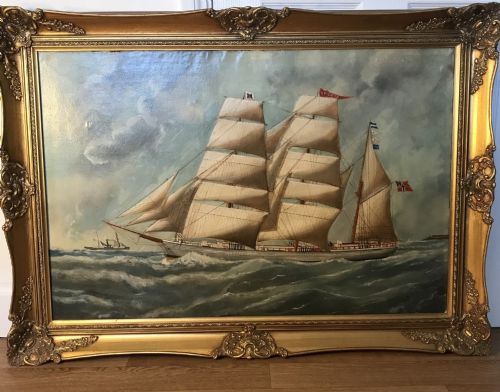
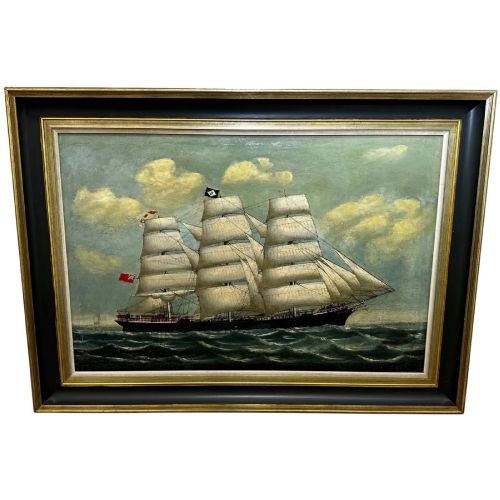
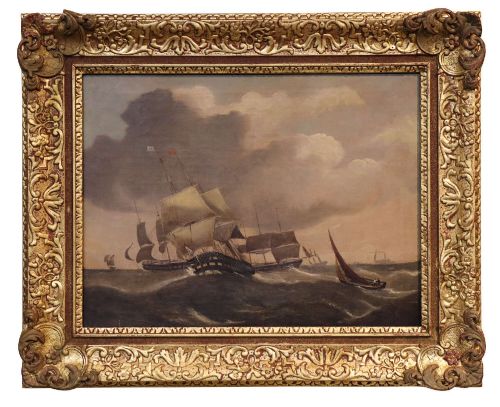
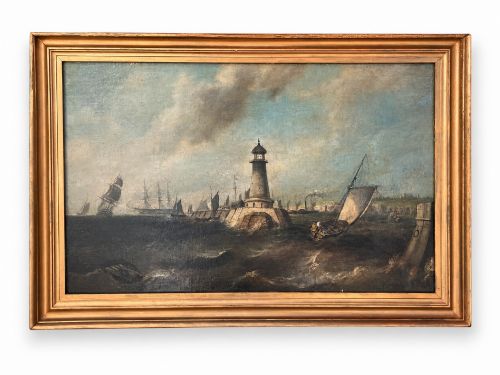
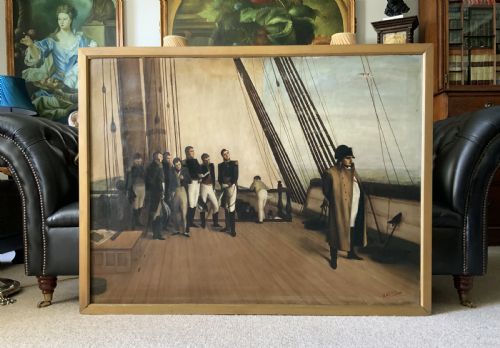
Vintage Ship Oil Canvas
These vintage ship oil canvas works capture centuries of maritime history through detailed brushwork on woven supports.
Vintage Ship Oil Canvas
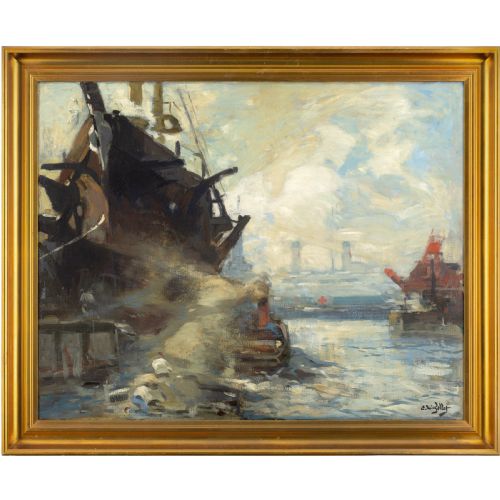
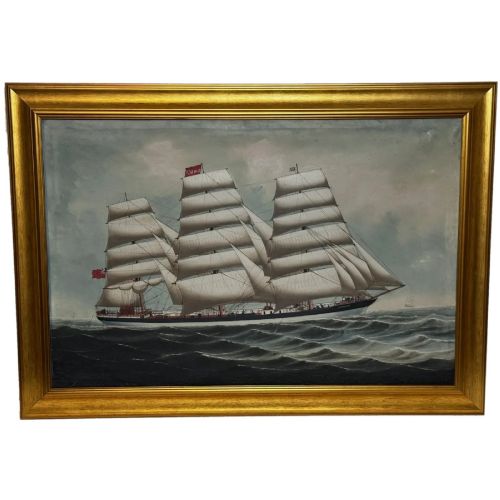
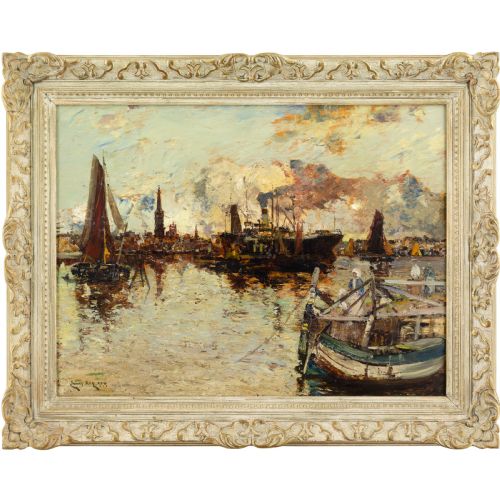
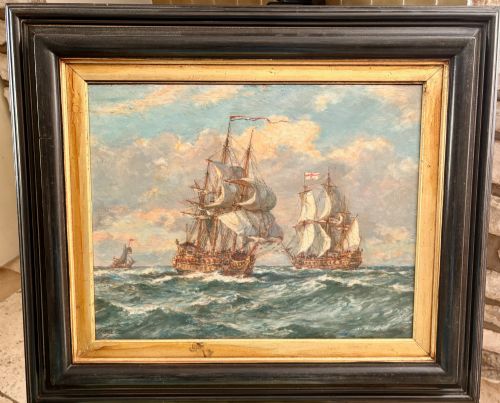
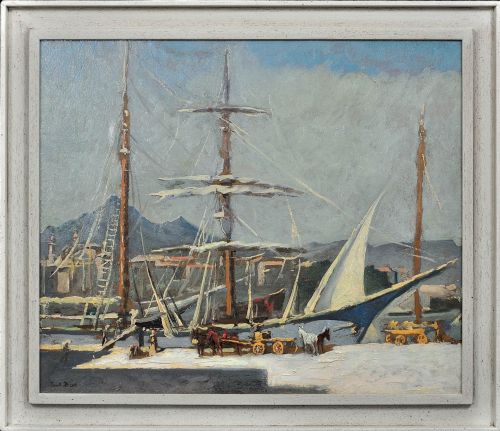
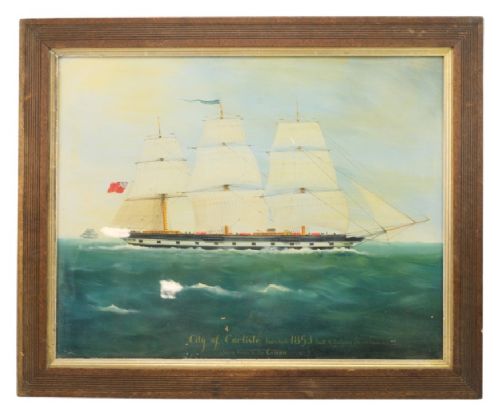
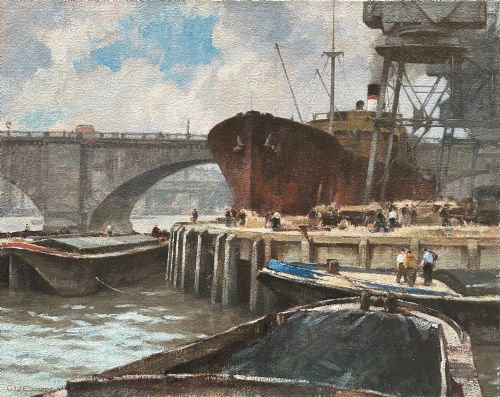
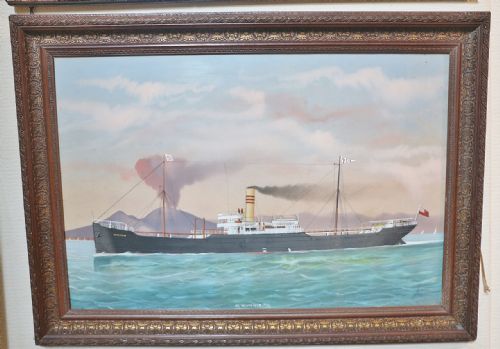
A vintage ship oil canvas represents maritime subjects executed in oil paint upon a stretched fabric support, spanning periods from the Victorian era through the mid-twentieth century. These pieces record naval engagements, commercial barques, coastal scenes, and dramatic shipwrecks in varied conditions at sea.
The versions most commonly met on this page include nineteenth-century and Edwardian depictions of sailing vessels, steamships, and local harbour scenes. Artists often documented specific named vessels, such as historical clippers and wartime cruisers, placing the ships in distinct coastal or open-sea settings.
Materials and Construction
Paintings in this category rely primarily on oil paint applied to woven canvas supports, sometimes paired with wood stretcher frames and decorative gilt or giltwood frames. The ground layer receives pigments mixed with oils to build up the heavy seas, vessel hulls, and atmospheric skies.
Makers utilised gold leaf on specific frame mouldings to enhance the presentation of maritime art, while the canvas itself provides the textured foundation for both fine brushwork and heavy impasto techniques.
Several canvases record dramatic encounters with lighthouses, proving that artists preferred to paint ships dangerously close to the rocks.
Markers of Quality
Quality in these maritime works depends upon the precision of the vessel rigging, the natural movement of the water, and the structural integrity of the canvas and frame. Skilled artists render the specific architectural details of three-masted schooners and steel-hulled ships with anatomical accuracy.
The depth achieved in the depiction of heavy seas and atmospheric weather separates standard decorative works from accomplished maritime art. Superior examples demonstrate a careful balance between the technical rigidity of naval architecture and the fluid dynamism of coastal environments.
Eugène-Louis Gillot·William McAlpine·Reginald Arthur Borstel·James Kay·Bernard Gribble·Paul Bret·Bernard Benedict Hemy·Cyril Walduck Edwards·Lai Fong·Nicholas Condy·Abraham Hulk·George Shaw·Dion Pears·Marie-Edouard Adam·Richard Brydges Beechey·Charles Dixon·Joseph Heard
The Vintage Ship Oil Canvas Glossary
- Canvas
- A heavy woven fabric, typically linen or cotton, used as a support for oil paintings. It is stretched tightly over a wooden frame before painting.
- Giltwood
- Wood that has been covered with a thin layer of gold leaf or gold paint. This finish frequently appears on the antique frames housing maritime art.
- Impasto
- A technique where paint is laid on an area of the canvas in very thick layers. This method stands out in seascapes to render churning water and frothing waves.
- Pierhead painting
- A specific genre of ship portrait created for sailors and shipowners, typically depicting a named vessel arriving at or departing from a specific port.
Vintage Ship Oil Canvas: Frequently Asked Questions
What is a vintage ship oil canvas?
These works are traditional paintings executed in oil on stretched fabric that depict nautical scenes, sailing vessels, and maritime history.
They serve as historical records of naval architecture and ocean travel from past centuries.
How do I identify the period of a ship painting?
Dating relies on the style of the vessel, the clothing of figures on deck, and the framing materials characteristic of specific eras like the Victorian period.
Signatures, titles inscribed on the reverse, and stylistic movements such as impressionism or maritime realism also offer chronological clues.
Where were these maritime paintings created?
Artists produced these works across various European and international ports, often capturing local shipping lanes, coastal lighthouses, and international harbours.
Many pieces document specific trade routes and naval operations tied to British and continental maritime history.
How should I care for an oil painting on canvas?
Protect the canvas from direct sunlight and fluctuating humidity to prevent the paint layers from cracking or the fabric from sagging.
Keep the surface free of dust with a soft, dry brush and avoid using liquid cleaners on the paint or giltwood frame.