







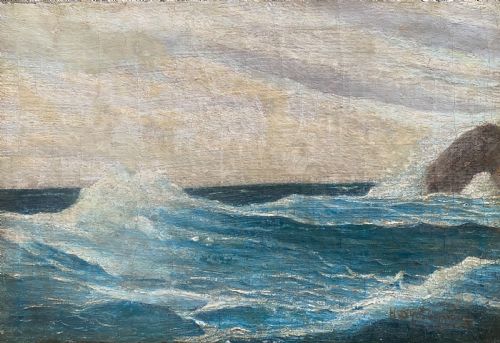
Antique Sea Landscape Art
These pieces of antique sea landscape art capture maritime life and coastal expanses across the nineteenth and twentieth centuries.
Antique Sea Landscape Art
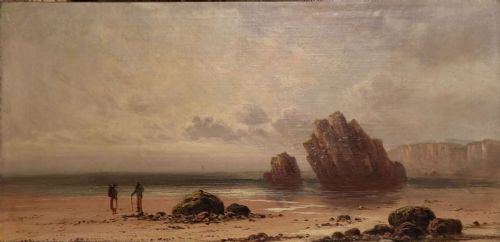
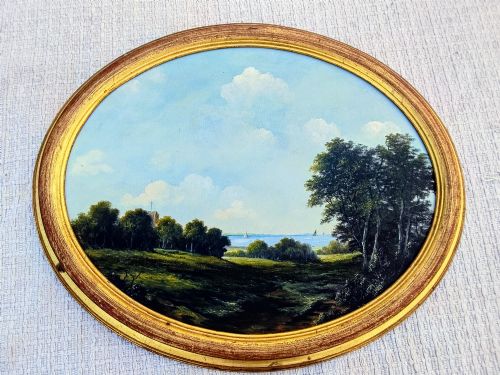
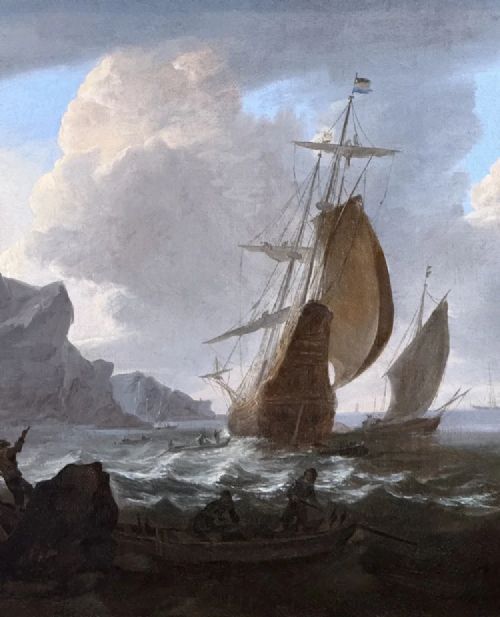
When you search for antique sea landscape art, you find framed works capturing coastal views, rocky shores, and busy harbours through painting.
The most common pieces on this page originate from the Victorian and Edwardian periods, stretching into the early twentieth century.
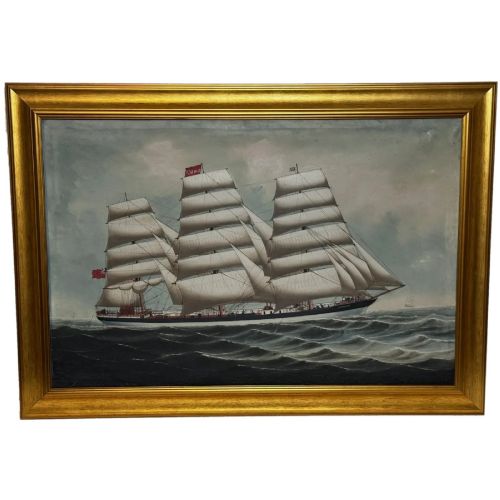
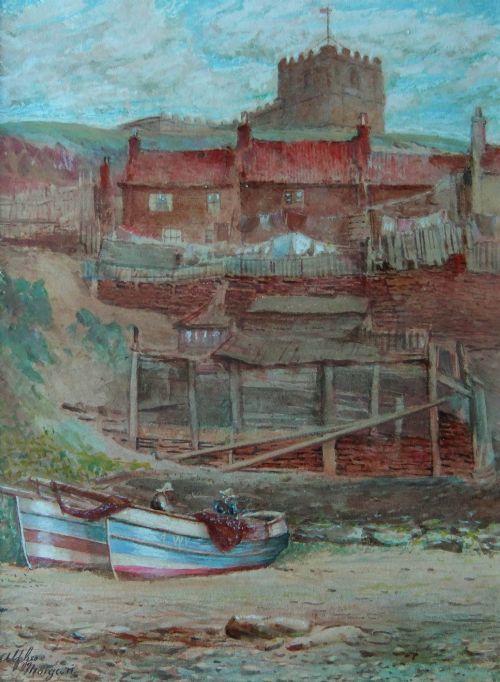
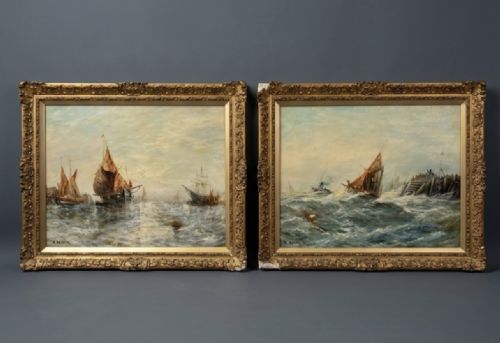
These works typically take the form of watercolours on paper or oil paintings on canvas and wood board, depicting shipping lanes, fishing boats, and quiet coves.
Materials and Techniques
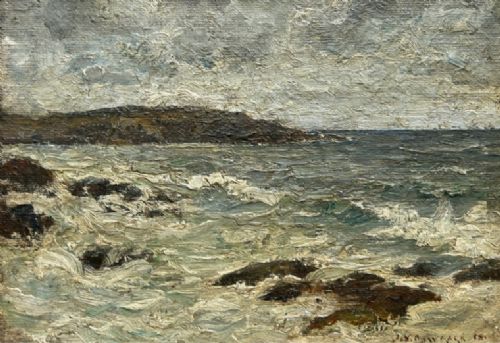
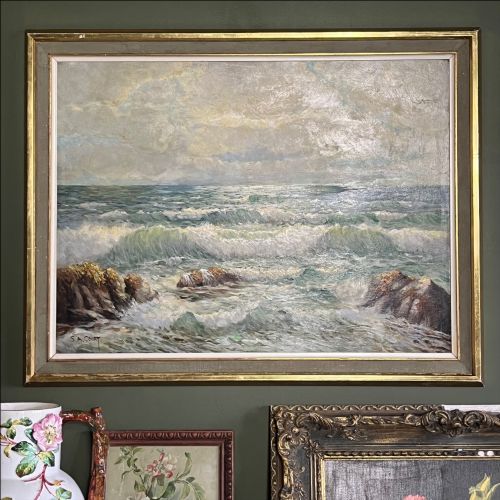
Artists relied primarily on oil paint applied to stretched canvas or wooden boards, often building heavy impasto textures to render churning waves and rocky cliffs.
Watercolour pigment on paper was utilised extensively for lighter coastal scenes, capturing translucent light on harbours and sandy beaches.
Finished paintings were commonly housed in period gilt frames that complemented the maritime subject matter.
Works on this page encompass British Impressionism, Victorian Realism, Post-Impressionism, and modernist European styles.
Assessing Quality
Quality rests upon the artist's handling of natural light, atmospheric conditions, and the restless movement of water.
Superior works demonstrate confident brushwork and precise topographical observation rather than formulaic studio compositions.
The strength of the original framing and the stable condition of the canvas or paper surface also distinguish finer examples.
James Orrock·Reginald Arthur Borstel·John E. Aitken·William Banks Fortescue·Bernard Benedict Hemy·Alfred G. Morgan·John Moore of Ipswich·William Henry Williamson·George Stanfield Walters·Henry Barlow Carter·George F Pennington·Raymond Moritz·Jean-Baptiste Olive·William Lee Hankey·William Tuck·Charles Malfroy·Roger de la Corbiere·Claude Thomas Stanfield Moore·Frederick Stuart Richardson·Thomas Rose Miles·George Hamilton Constantine·Thomas Bush Hardy·Percy Brooke·Arthur Bowmar Porter
The Antique Sea Landscape Art Glossary
- Impasto
- Paint applied thickly to a canvas, standing out in relief from the surface so that the marks of the brush or palette knife remain visible. This technique is often used in maritime scenes to give physical weight and texture to crashing waves.
- Seascape
- A work of art depicting the sea, coastlines, ships, or maritime activities. These subjects gained immense popularity during the nineteenth century alongside the rise of coastal tourism and trade.
- Watercolour
- A paint consisting of colour suspended in a water-soluble vehicle, typically worked on paper. Artists used this medium for its translucent qualities when painting light-filled harbours.
- Gilt frame
- A wooden picture frame coated with gold leaf or a gold-coloured finish. Antique frames provide important contextual evidence regarding the age and display history of a painting.
Antique Sea Landscape Art: Frequently Asked Questions
How should I hang antique maritime paintings?
Hang these works away from direct sunlight and fluctuating heat sources to protect delicate watercolours and oil pigments.
Ensure the wall fixings match the weight of the original wood frames.
Were these paintings created outdoors?
Many artists made preliminary watercolour sketches en plein air to capture transient weather and light conditions accurately.
Finished oil paintings were typically completed later in the studio using these field studies.
How do I identify the period of a seascape?
Examine the style of the clothing worn by figures on the shore and the rigging of the vessels depicted.
Signatures, framing styles, and stretcher construction also offer reliable chronological clues.
What is the difference between marine art and sea landscapes?
Marine art generally focuses on ships, naval battles, and maritime navigation as the primary subject.
Sea landscapes place greater emphasis on the coastal terrain, beaches, cliffs, and atmospheric skies.