


Vintage Sewing Storage Box
These vintage sewing storage box pieces organise needles, threads and notions with period craftsmanship, offering both practical utility and decorative charm for any room.
Vintage Sewing Storage Box
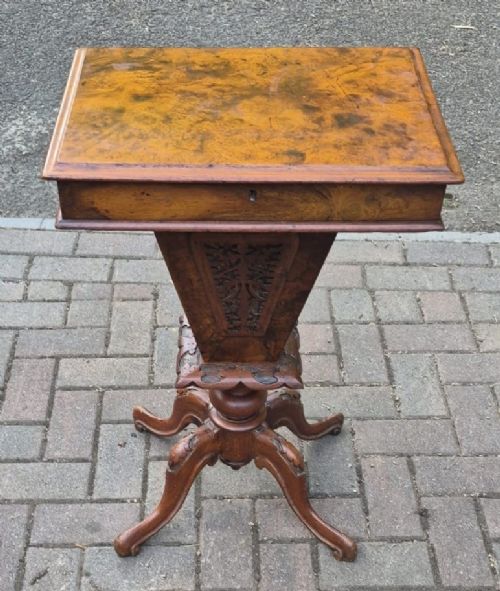
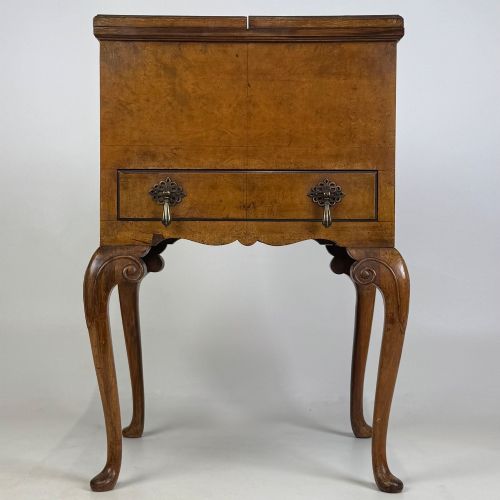
A vintage sewing storage box brings together compact table models and fitted caskets designed to hold sewing gear securely. When searching for a vintage sewing storage box, buyers typically encounter work tables and lidded boxes from the Victorian, Edwardian and later periods.
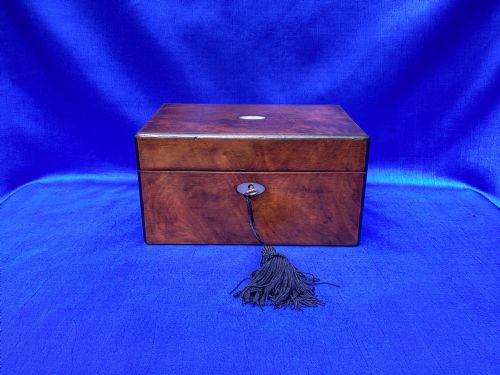
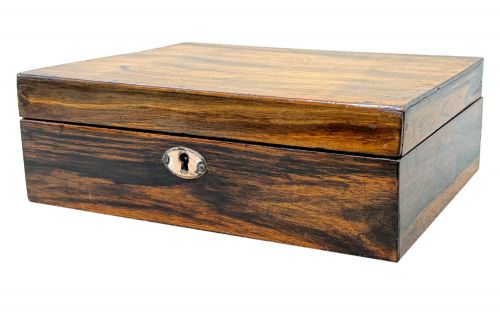
The selection ranges from small rosewood and mahogany tabletop boxes to larger side tables and haberdashery cabinets in walnut and oak. These items combine practical compartments for threads and buttons with refined period aesthetics.
Materials and construction
Cabinet makers utilised dense hardwoods such as rosewood, mahogany, walnut and burr walnut to build durable frames. Surfaces often feature rich wood grains enhanced by traditional polishing techniques.
Decorative details rely on brass hardware, silver stringing and mother-of-pearl inlay. Specialised examples incorporate intricate Tunbridge Ware mosaics or leather coverings to elevate the exterior appearance.
Periods represented in the current selection include Victorian, Edwardian, Regency, William IV and the early twentieth century.
Assessing quality
The standard of a piece rests on the crispness of its woodwork and the integrity of its decorative inlays. Finer examples display precise mother-of-pearl placement and tightly fitted internal compartments rather than simple box construction.
The choice of primary timber significantly dictates the finish, with burr walnut and coromandel sitting at the more decorative end compared to standard oak or plain wood variants.
Waring & Gillow·Chadwick’s Sewing Cottons
The Vintage Sewing Storage Box Glossary
- Work box
- A portable lidded container fitted with compartments for sewing implements, threads and needles. These boxes often sit on tables or desks for easy access during handwork.
- Tunbridge Ware
- A form of decorative woodwork produced in Kent featuring small mosaic patterns made from many different natural coloured woods. Artisans applied these geometric pictures to the lids of boxes and trinket cases.
- Mother-of-pearl
- The iridescent inner layer of certain mollusc shells used by makers to cut thin decorative pieces for inlay. It creates contrasting highlights against dark rosewood and walnut surfaces.
- Haberdashery
- Items connected to sewing, tailoring and dressmaking, including buttons, ribbons, threads and needles. Display cases and cabinets for these goods were used in shops or domestic sewing rooms.
Vintage Sewing Storage Box: Frequently Asked Questions
What is a vintage sewing storage box used for?
These boxes were originally designed to keep sewing tools, threads, pins and fabrics neatly organised in one portable or stationary place. Today they serve both as functional storage for craft supplies and as decorative accent furniture.
Their internal trays and small compartments make them equally suitable for holding modern sewing notions, jewellery or small desk accessories.
How do I date a sewing box?
Dating relies on identifying the prevailing wood styles, hardware types and construction methods associated with specific decades or reigns. For instance, heavy use of rosewood with mother-of-pearl inlay often points towards the mid-nineteenth century.
Later pieces from the twentieth century tend to feature simpler oak or mahogany frames and altered internal layouts suited to changing domestic habits.
Are sewing tables different from sewing boxes?
Sewing tables are standalone pieces of furniture featuring built-in storage compartments or hanging fabric bags beneath the tabletop. Sewing boxes are typically smaller, portable containers designed to sit on top of a desk or table.
Both forms served the same fundamental purpose of keeping needlework accessible in the parlour or drawing room.
How do I care for a wooden sewing box?
Maintenance involves keeping the wooden exterior away from direct sunlight and sudden humidity changes to prevent the timber from warping. Regular dusting with a soft, dry cloth helps preserve the polished finish.
Occasional application of appropriate wax feeding can maintain the lustre of rosewood, walnut and mahogany surfaces without harming delicate inlays.