




Inlaid Wooden Workbox
An inlaid wooden workbox is a fitted receptacle for sewing implements, cherished for its intricate surface decoration and ingenious compartmentalised interior.
Inlaid Wooden Workbox
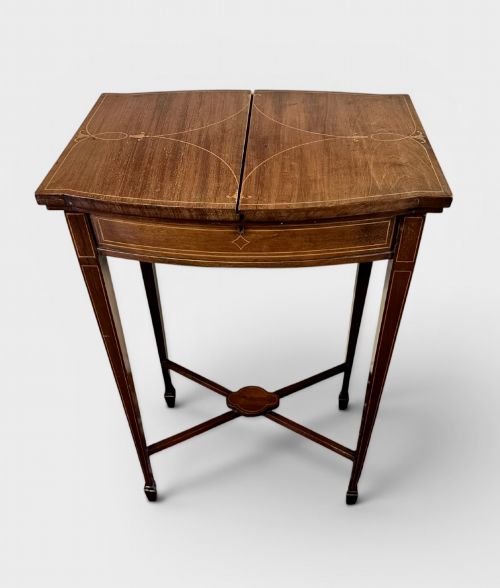
An inlaid wooden workbox is a portable chest or stationary table designed to hold threads, needles, and sewing tools, appearing across the Georgian, Regency, Victorian, and Edwardian periods.
The versions most commonly met here range from compact tabletop caskets in rosewood and walnut to larger freestanding sewing tables featuring hinged lids and fitted interiors.
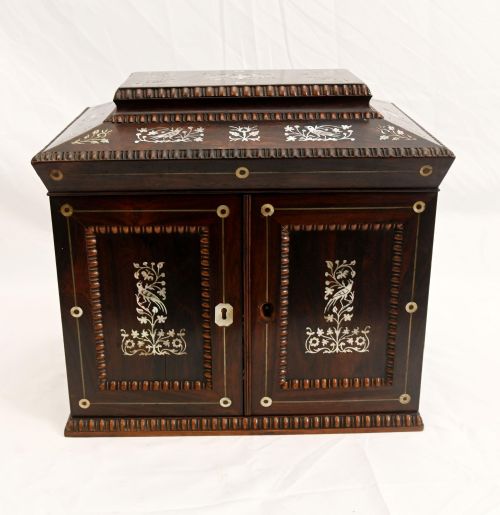
Makers utilised decorative motifs such as mother-of-pearl, bone, boxwood, and brass stringing to embellish surfaces across various regional styles including Tunbridge Ware and Italian Sorrento work.
How they were made
Cabinet makers constructed the foundational carcase from dense hardwoods like mahogany, rosewood, walnut, and satinwood, often selecting figured veneers for visual depth.
Intricate surface patterns were achieved by recessing contrasting woods, mother-of-pearl, bone, and brass into the timber, fixed with animal glues and polished to a smooth finish.
Inlaid Wooden Workbox Retail Price Guide 2026
Typical asking prices for inlaid wooden workbox among the pieces listed under this phrase on Sellingantiques today, from the lower quarter to the upper quarter. They describe what is for sale here now, not the wider market.
Styles represented include Regency, Georgian, Victorian, Edwardian, Tunbridge Ware, and Sorrento Ware.
What varies in quality
The standard of an inlaid wooden workbox rests on the precision of the marquetry and the integrity of the fitted interior compartments.
Superior examples display tightly joined mitres, dense hardwood grains, and intact internal trays with working locks and original silk linings.
The Inlaid Wooden Workbox Glossary
- Inlay
- A technique where pieces of contrasting material are embedded into a recessed wooden surface to form a decorative pattern. This defines the primary visual appeal of these boxes.
- Marquetry
- Veneers applied to a carcase in elaborate pictorial or geometric designs. It differs from simple inlay by covering the entire surface.
- Tunbridge Ware
- A specialised form of woodwork originating in Kent, featuring tiny blocks of coloured wood assembled into mosaic designs. These geometric patterns often depict local landmarks or floral motifs.
- Sarcophagus
- A box shape characterised by a domed or stepped lid sloping outward towards the base, frequently seen on Regency and Victorian examples. This form provides greater internal depth for fitted trays.
- Stringing
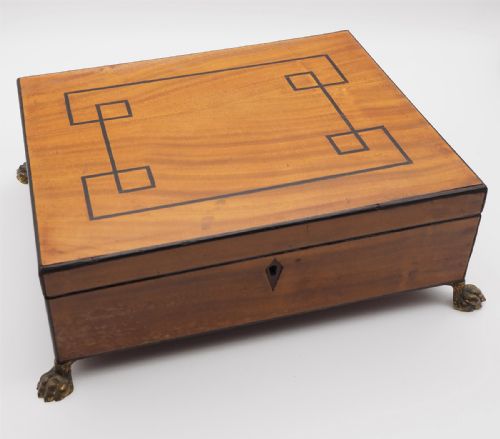
- Thin lines of contrasting wood or metal inlaid into the surface to create geometric borders. It frames the panels of many Regency and Victorian pieces.
Inlaid Wooden Workbox: Frequently Asked Questions
What was a workbox used for?
These boxes served as portable repositories for sewing equipment, storing threads, bobbins, needles, and thimbles in dedicated compartments.
Ladies kept them in drawing rooms to organise needlework and delicate craft projects.
How do I date a workbox?
Dating relies on timber choices, hardware styles, and overall form, moving from Georgian mahogany to Regency rosewood and late Victorian walnut.
Internal lift-out trays and paper linings also offer clues to the decade of manufacture.
Are these boxes difficult to maintain?
Routine care involves keeping timber away from direct heat sources and maintaining stable humidity levels to protect delicate veneers.
Application of appropriate wax preserves the polished finish of the wood and inlaid elements.
What is Sorrento ware?
Sorrento ware refers to decorative olive wood items inlaid with intricate mosaic figures and floral designs, originating from Italy.
These pieces often appear among nineteenth-century examples on this marketplace.