


Victorian Haberdashery Box
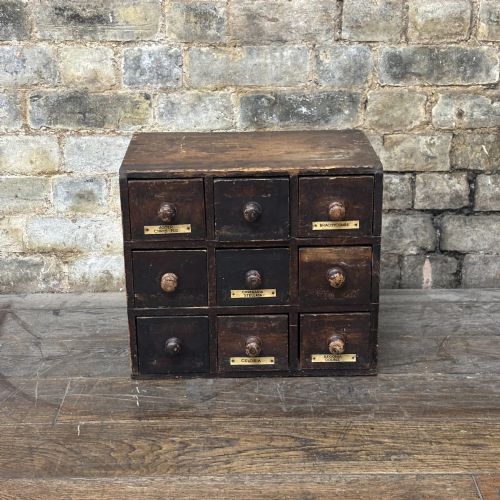
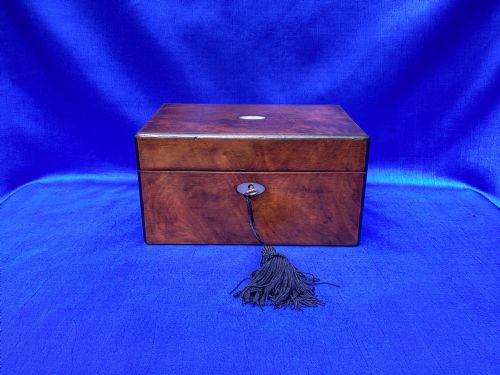
A Victorian haberdashery box organises small sewing materials and commercial notions with the neat compartmented design that collectors prize.
Victorian Haberdashery Box
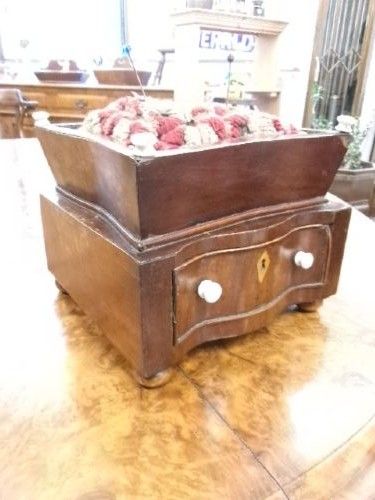
A Victorian haberdashery box encompasses domestic sewing boxes alongside small countertop display cases and trade cabinets used for selling cottons and buttons. These pieces emerge from the nineteenth century into the Edwardian era, spanning household work boxes and commercial shop storage.
The domestic forms include fitted sewing boxes lined for threads and needles, while commercial variants feature glass panels or branded labels to present sewing cottons and millinery tools to customers.
Mahogany, oak, and pine form the structural carcass of these items, often detailed with brass hardware, mother-of-pearl inlay, and silk linings.
Materials and construction
Cabinet makers utilised dense hardwoods like mahogany and coromandel-wood for domestic boxes, frequently employing precision dovetail joints and internal lift-out trays. Decorative techniques include Tunbridge Ware mosaic patterns and mother-of-pearl inlay set flush into the wooden surfaces.
Commercial display cases combine timber frames with glazed panels and brass handles, designed to withstand frequent use on shop counters. Smaller items incorporate cast brass, nickel, and pierced sterling silver for sewing etuis, cotton holders, and button sets.
A nineteenth-century rotary hat iron for millinery work shares space with delicate sterling silver button sets.
Distinctions in quality
Quality rests in the precision of the internal fittings, the complexity of the cabinetwork, and the preservation of original fabric linings and glass panels. Pieces featuring intricate Tunbridge Ware or careful coromandel-wood veneers represent higher levels of nineteenth-century craftsmanship.
Commercial cases demonstrate quality through original branded signage, sound glass, and robust framing that survives from active retail environments. The retention of original fitted trays and matched sewing accessories elevates an example above plain utility storage.
Chadwick’s Sewing Cottons·Ermen & Roby·McDonald's
The Victorian Haberdashery Box Glossary
- Tunbridge Ware
- A form of British woodwork characterised by tiny mosaic tiles formed from naturally coloured woods to create pictorial or geometric designs. This technique decorates the lids of select nineteenth-century boxes.
- Etui
- A small ornamental case used for holding needles, scissors, and other small sewing implements. These portable containers appear in brass and other metals.
- Coromandel-wood
- A dense, heavily figured exotic timber with dark brown and black grain patterns. Cabinet makers utilised this luxury material for high-end nineteenth-century work boxes.
- Haberdashery
- The retail trade associated with selling small articles of dress, sewing items, and buttons. Cabinets and display cases served this commercial function.
Victorian Haberdashery Box: Frequently Asked Questions
What is a Victorian haberdashery box used for?
These pieces store sewing threads, needles, buttons, and small textile tools within dedicated compartments and trays.
Commercial versions served shopkeepers as countertop display cases to showcase cottons and haberdashery wares to customers.
How do I date a Victorian haberdashery box?
Dating relies on timber choices, construction methods, and hardware styles that align with the nineteenth century through the Edwardian period.
Commercial display cases often bear maker marks or trade labels from cotton manufacturers active during the Victorian and Edwardian eras.
Are these boxes suitable for modern sewing storage?
The internal partitions and lift-out trays provide practical organisation for contemporary threads, needles, and small craft supplies.
Display cabinets function well in modern interiors for exhibiting small collections while keeping items protected behind glass.
What woods were used for these boxes?
Cabinet makers built the primary carcase using mahogany, oak, pine, and exotic coromandel-wood.
Secondary woods and veneers were selected to provide stable structures and decorative surfaces suitable for domestic and commercial settings.