



Vintage Serving Credenza
A vintage serving credenza gathers the dining room together, offering deep drawers and wide tops for service.
Vintage Serving Credenza
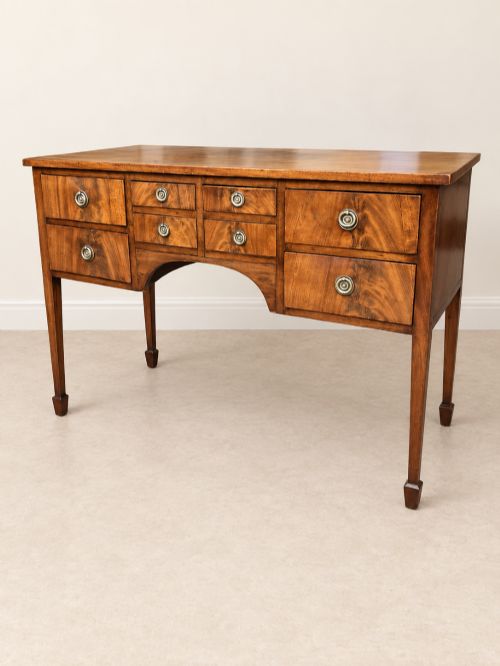
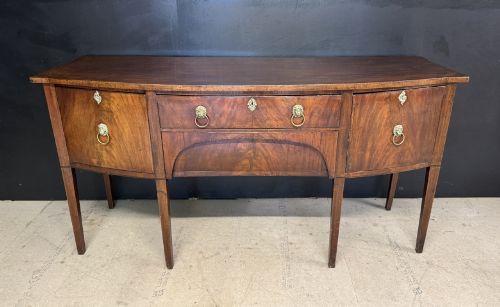
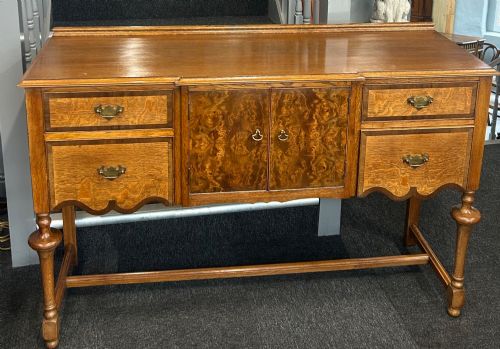
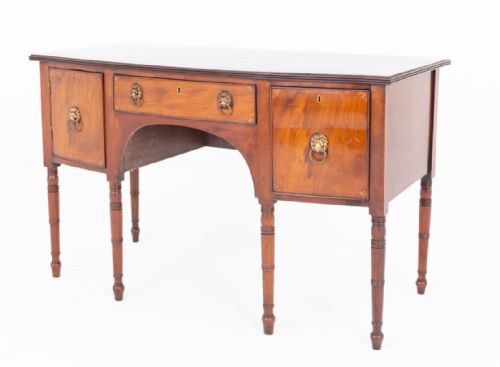
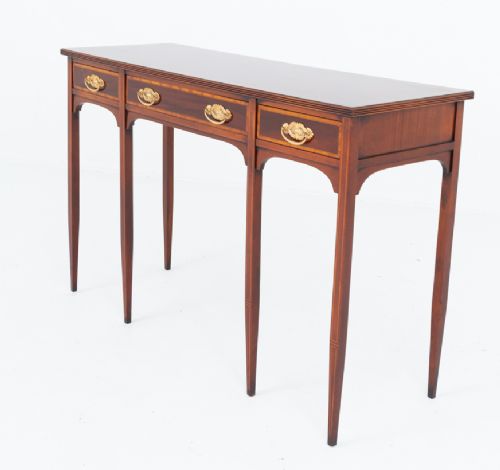
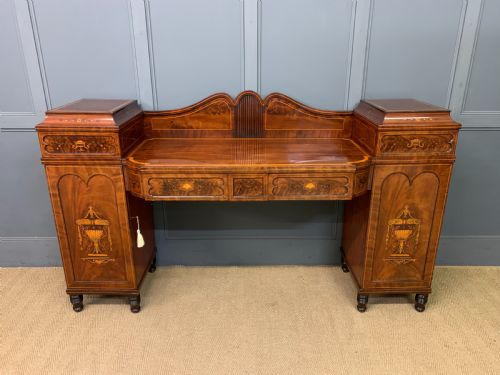
A vintage serving credenza encompasses large dining room storage pieces, most frequently encountered as mahogany sideboards from the Georgian and Regency periods or burr walnut designs from the 1930s. These pieces provide generous surface space for serving food alongside enclosed cupboards and drawers for dining linen and silver.
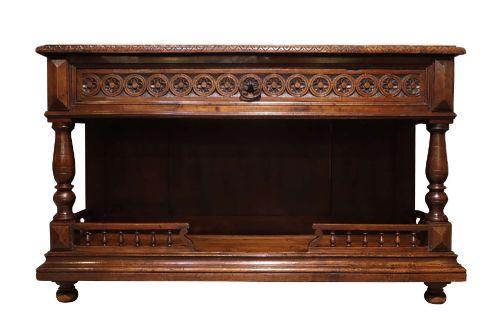
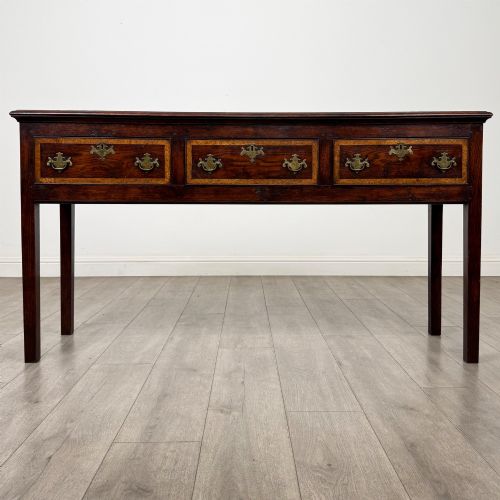
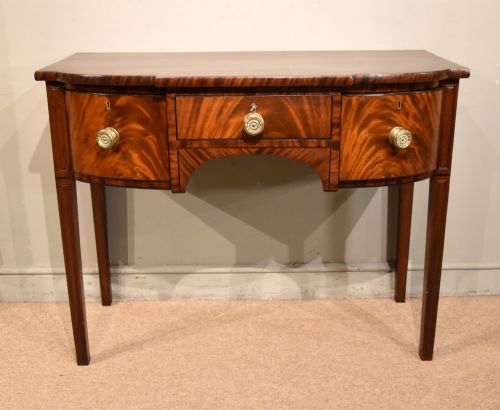
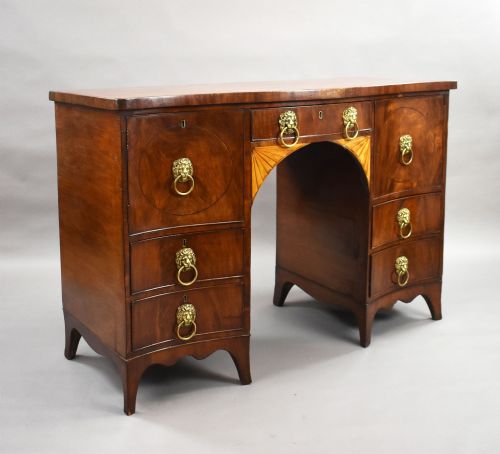
The selection ranges from 18th-century oak dresser bases and bow-fronted George III examples to Edwardian inlaid servers and Art Deco walnut cabinets. Mahogany and burr walnut dominate the forms, frequently embellished with boxwood stringing or satinwood inlay.
Buyers will find that the traditional sideboard and server designations merge under this search, uniting formal dining room furniture built for display and practical service across several centuries of British and continental design.
Materials and construction
Makers utilised solid timbers alongside figured veneers, selecting mahogany, oak, and walnut as structural bases while applying burr walnut and flame mahogany to door panels and drawer fronts for visual contrast.
Inlay work relied on contrasting fine woods such as satinwood and boxwood, set into the primary timber in geometric lines or classical motifs, while brass handles and gallery rails provided functional hardware.
Listings span multiple centuries, uniting 18th-century oak dresser bases with 1930s Art Deco burr walnut cabinets by makers such as Epstein.
Distinctions in craftsmanship
Superior examples demonstrate careful timber selection, where flame mahogany or burr walnut veneer is matched symmetrically across drawer fronts and cabinet doors to create continuous patterns.
Fine construction reveals itself in the integration of secondary woods within drawer linings, the crispness of inlaid stringing, and the weight of original brass fittings rather than later replacements.
Harry And Lou Epstein·George Hepplewhite
The Vintage Serving Credenza Glossary
- Bow front
- A cabinet front that curves outward in a convex arc, commonly seen on Georgian and Regency sideboards to soften the room's angles.
- Serpentine front
- A furniture front characterised by a central convex curve flanked by concave sections, requiring advanced woodworking skill.
- Stringing
- Thin lines of contrasting wood inlaid into the surface of a piece to create decorative borders and panels.
- Pedestal sideboard
- A form featuring a central serving table flanked by separate pedestals or cupboards, popular in the late 18th century.
Vintage Serving Credenza: Frequently Asked Questions
What is a serving credenza used for?
These pieces function as dining room servers that provide a wide top surface for laying out food and drinks during meals. Below the surface, enclosed cupboards and deep drawers hold serving dishes, cutlery, and table linens.
Historically, they sat against the dining room wall to assist hosts in service before the widespread use of side tables. Today, they serve a similar role while anchoring the design of a formal or casual dining space.
How do I date a mahogany sideboard?
Dating relies on combining the overall silhouette, leg design, and secondary timber characteristics. Georgian and Regency pieces often feature tapered legs or classical brass mounts, while Victorian examples show heavier proportions.
Later Edwardian and Art Deco pieces introduce distinct veneer choices, such as burr walnut, alongside cleaner geometric lines that depart from 18th-century conventions.
Are these credenzas suitable for modern dining rooms?
Their substantial surface area and deep internal storage make them practical additions to contemporary homes. They accommodate modern tableware while introducing rich wood grain and historical character to a room.
Placing them in a hallway or living room also works well, provided the floor space allows for the depth of the cabinet and the swing of the cupboard doors.
What is the difference between a sideboard and a server?
Servers tend to be smaller or more compact variations designed primarily for holding dishes during a meal. Sideboards often incorporate a greater number of drawers and larger cupboards for comprehensive storage.
Both terms frequently overlap in antique listings, describing the same overarching category of dining room furniture built for service and display.