




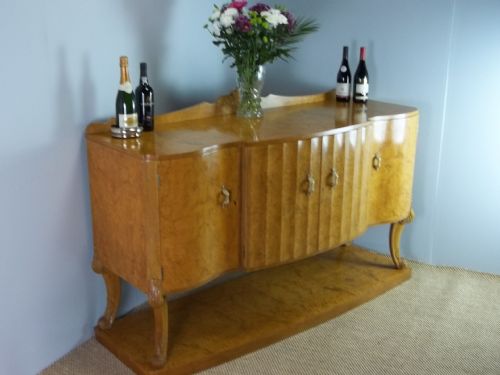

1920s Art Deco Server
A 1920s art deco server is a striking statement piece that brings period elegance and practical surface space to a dining room.
1920s Art Deco Server
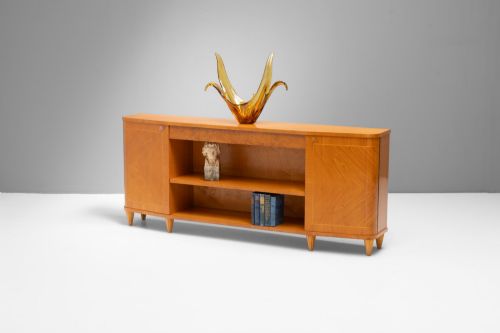
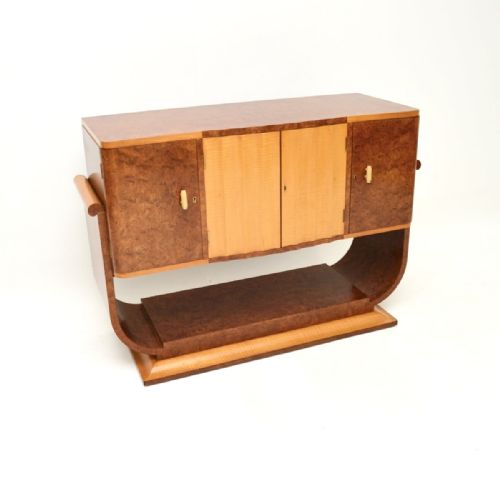
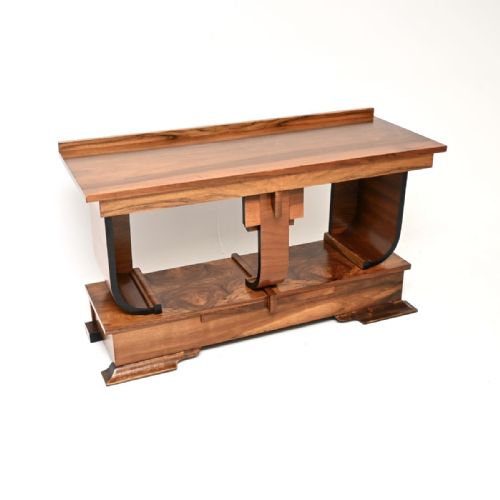
When you search for a 1920s art deco server, you encounter substantial dining furniture designed for serving and storage during the interwar years. These forms emerge primarily as sideboards, side cabinets, and console tables from the 1920s and 1930s.
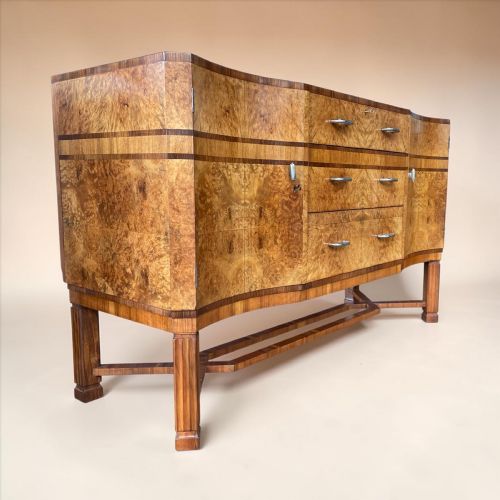
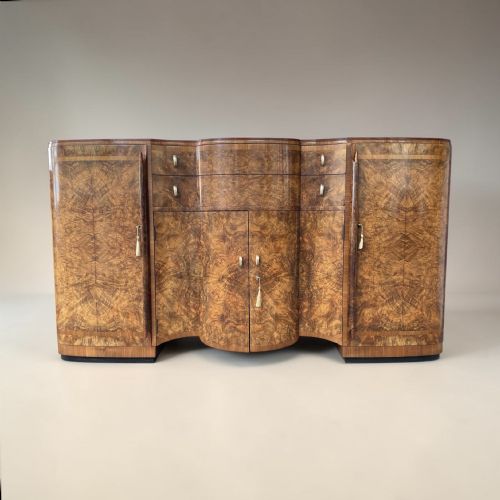
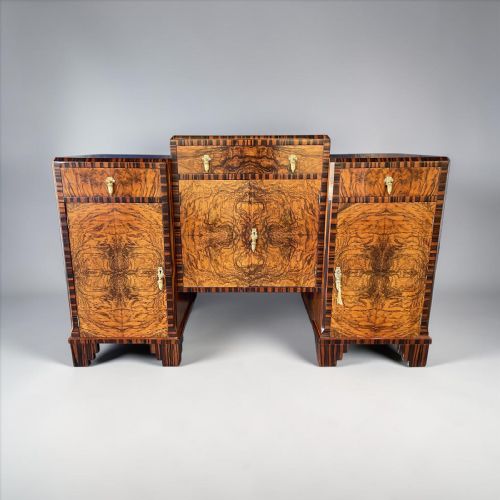
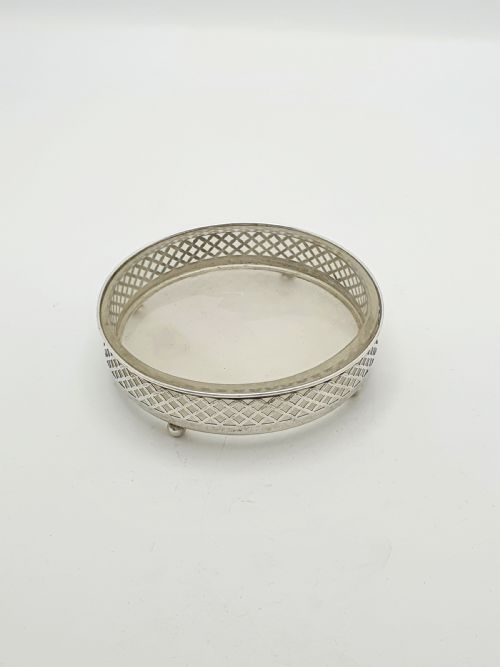
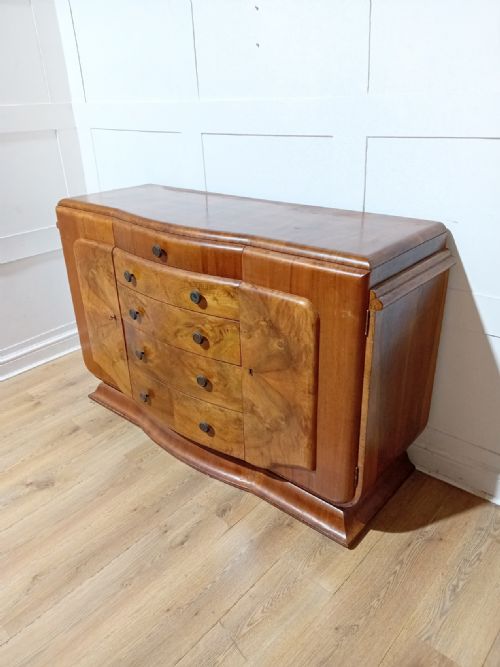
The version you are most likely to meet on this page is a walnut or burr walnut sideboard, reflecting the dominant timber choices of the period. Alongside these large case pieces, smaller serving items such as silver butter dishes and glass serving trays also appear.
Geographic origins span British, Swedish, French, and American workshops, showing how international designers interpreted the modern aesthetic. Pieces range from the restrained geometry of Swedish Grace to the lavish grain patterns of Parisian furniture.
Materials and construction
Cabinet makers utilised rich timbers such as burr walnut, figured walnut, flame birch, sycamore, and limed oak to create striking visual patterns across wide drawer fronts and cabinet doors. These veneers were carefully matched to display natural grain movement.
Metal accents in brass and sterling silver provide contrast to the warm timber surfaces, appearing on handles, hinges, and decorative mounts. Silver-plated elements and starburst glass also feature on smaller tabletop serving pieces from the era.
The listings on this page span the 1920s and 1930s, featuring both large dining sideboards and small tableware items in silver and glass.
Assessing quality and execution
Quality rests upon the selection and bookmatching of timber veneers, where superior examples display symmetrical, highly figured grain across the entire front elevation. Lesser pieces rely on plain timbers without deliberate pattern placement.
The integration of hardware and secondary woods reveals the maker's hand, distinguishing standard commercial production from workshop pieces designed by named cabinet makers.
Maurice Adams·Heals of London·Harry And Lou Epstein·Elkington And Company
The 1920s Art Deco Server Glossary
- Art Deco
- A design style characterised by sleek geometric shapes, stylised motifs, and modern industrial materials that dominated the interwar period. It succeeded Art Nouveau with a more streamlined and symmetrical approach.
- Burr Walnut
- A prized wood harvested from the wart-like growth on a walnut tree, producing intricate, swirling grain patterns. Cabinet makers used it as a decorative veneer on prominent furniture surfaces.
- Swedish Grace
- A sophisticated neoclassical design movement preceding strict functionalism in Sweden during the 1920s. It combined classical proportions with pared-down modern details.
1920s Art Deco Server: Frequently Asked Questions
What is a 1920s art deco server?
A 1920s art deco server is a functional piece of dining furniture built during the interwar period, designed to hold serving dishes, cutlery, and glassware.
These items range from large wooden sideboards and console tables to smaller silver-plated trays and mustard pots used at the dining table.
How do I identify Swedish Grace style?
Swedish Grace furniture dates from the 1920s and bridges classical forms with early modernism. It tends to show cleaner lines and lighter timbers than heavier art deco pieces.
Look for restrained ornamentation and balanced proportions that reflect Scandinavian craftsmanship of that decade.
What woods were used for servers?
Makers favoured walnut, burr walnut, and flame birch for their decorative grain patterns. These timbers were often applied as veneers over sturdy secondary woods to create striking visual effects.
Sycamore and limed oak also appear, offering lighter tonal options for dining room interiors.
Where were these pieces made?
Production was international, with workshops across Britain, France, Sweden, and America contributing to the style. Parisian makers often used exotic woods like macassar ebony, while British firms focused on figured walnut.
Silver items typically originated from established silversmiths in Birmingham and other manufacturing hubs.
How do I care for burr walnut?
Burr walnut veneer requires protection from direct sunlight and excessive heat to prevent the wood from drying out or fading. Regular dusting with a soft, dry cloth preserves the polished finish.
Apply a traditional wax polish occasionally to nourish the timber and maintain its natural lustre.