


Art Deco Dining Room Sideboard
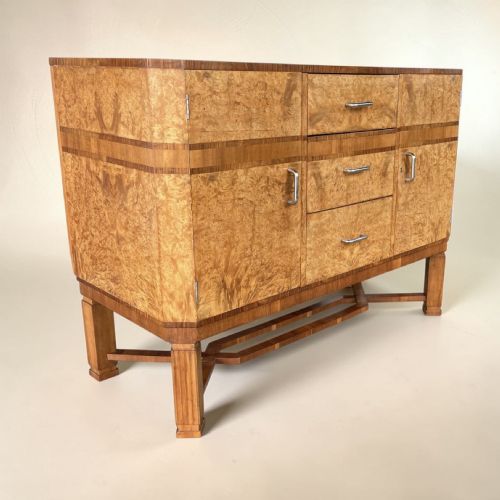
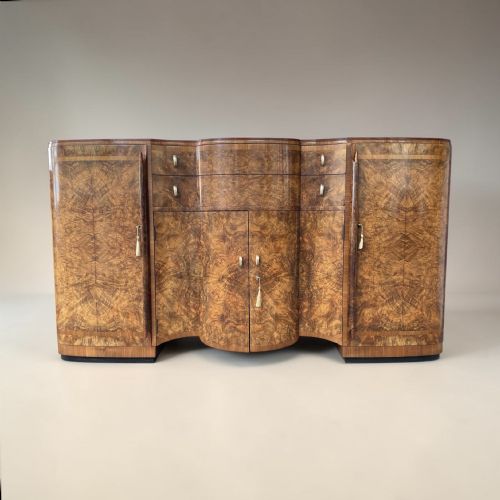
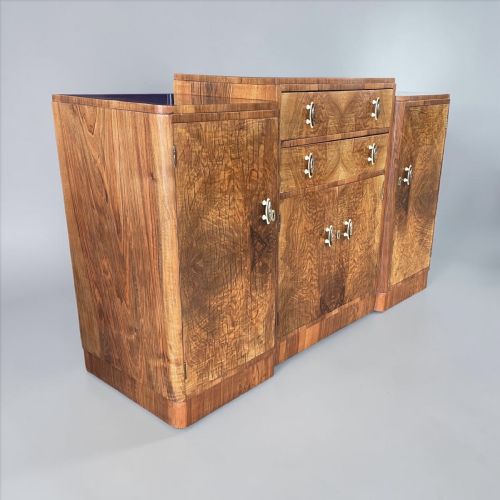
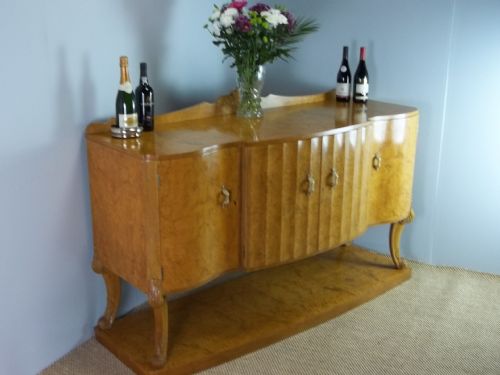
An art deco dining room sideboard anchors a period interior with bold geometry and rich timber grain.
Art Deco Dining Room Sideboard
When you search for an art deco dining room sideboard, you find low, commanding case pieces built for formal entertaining and storage during the interwar years. These items emerge chiefly from the nineteen twenties and nineteen thirties, bringing substantial presence to a dining space.
The versions you meet most frequently on this page take the form of sideboards, side cabinets, and serving tables. Many incorporate distinct architectural shapes like double bow fronts or include fitted cocktail cabinets designed for period hospitality.
Origins span British workshops and French ateliers, showing regional variations in proportion and finish. English makers favour figured walnut veneers while continental examples introduce exotic hardwoods such as calamander, macassar, and ebony.
How they were made
Cabinet makers construct these pieces using solid timber frames overlaid with choice veneers, primarily burr walnut and plain walnut. The grain is carefully selected and matched across the doors and drawers to create symmetrical patterns.
Metal mounts in brass provide contrast against the polished wood surfaces. Certain pieces integrate glass panels or display sections within the cabinetry to balance heavy wooden mass with lighter display areas.
Materials documented across the inventory include burr walnut, walnut veneer, calamander, macassar, ebony, brass, and glass.
What varies in quality
The distinction between standard production and top tier pieces rests on the selection and matching of veneer figure. Master workshops choose burr walnut and Macassar ebony with striking natural patterns that sweep continuously across the front of the cabinet.
Construction detail also separates the ordinary from the exceptional, visible in the precision of curved double bow fronts and the integration of specialised internal fittings. Named makers and accredited cabinet houses command attention through superior joinery and considered proportion.
Maurice Adams·Epstein·Hamptons of Pall Mall London·Harry And Lou Epstein
The Art Deco Dining Room Sideboard Glossary
- Burr walnut
- A figured wood grain taken from the wart or burl of a walnut tree. It yields swirling, organic patterns highly prized in twentieth century cabinet making.
- Bow front
- A convex, outwardly curved cabinet front. It softens rigid rectangular lines and requires skilled carpentry to execute cleanly.
- Calamander
- A heavy, durable exotic timber with dark brown and fawn stripes. It appears on continental dining furniture of the period.
- Macassar ebony
- A dense, dark wood featuring warm brown or yellowish streaks. French ateliers utilise this material for high status dining suites.
Art Deco Dining Room Sideboard: Frequently Asked Questions
What is an art deco sideboard used for?
These large cabinets serve to store tableware, linen, and dining accessories while providing a surface for serving food during meals.
Many examples also incorporate dedicated sections for bottles and glassware, doubling as cocktail cabinets for entertaining guests.
How do I date an art deco sideboard?
Pieces originate primarily from the nineteen twenties and nineteen thirties. Stylistic cues like double bow fronts and specific veneer choices help pinpoint the era.
Maker stamps or labels inside drawers provide definitive chronological markers when present.
Where were these sideboards made?
Production spans British workshops and French ateliers. English cabinet makers often worked in London, while continental pieces arrived from French designers.
Each region favoured distinct timbers, with French makers utilising macassar and ebony alongside walnut.
How do I care for a walnut sideboard?
Keep the timber away from direct heat sources and strong sunlight to prevent the walnut veneer from drying or fading. Regular polishing with a suitable wax maintains the deep lustre of the polished wood surface.