

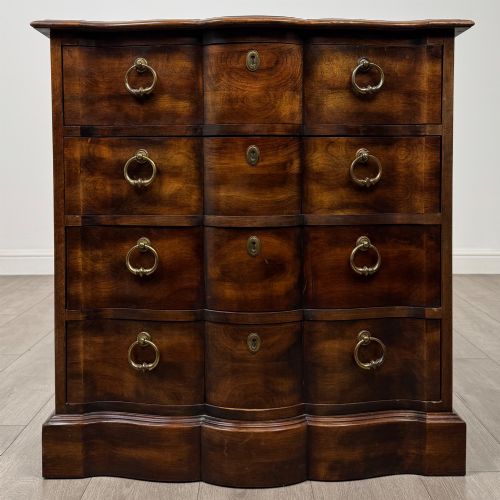
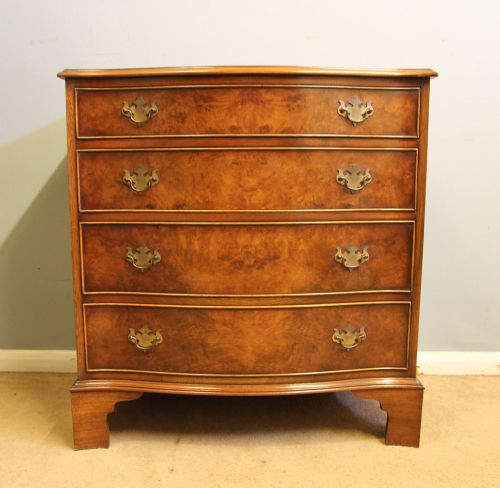
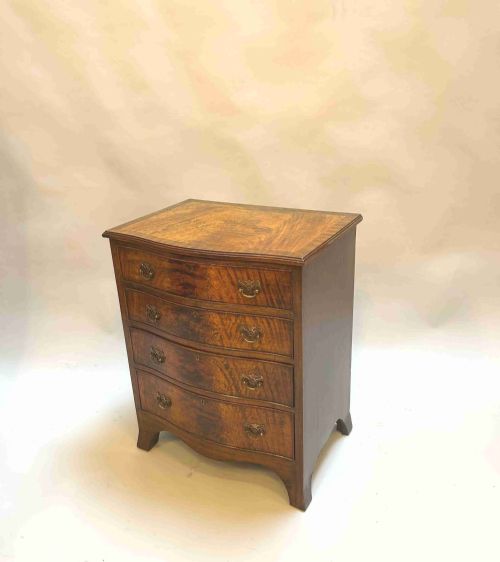
Vintage Serpentine Chest
A vintage serpentine chest brings fluid, undulating curves to a room, offering practical storage wrapped in distinctive craftsmanship.
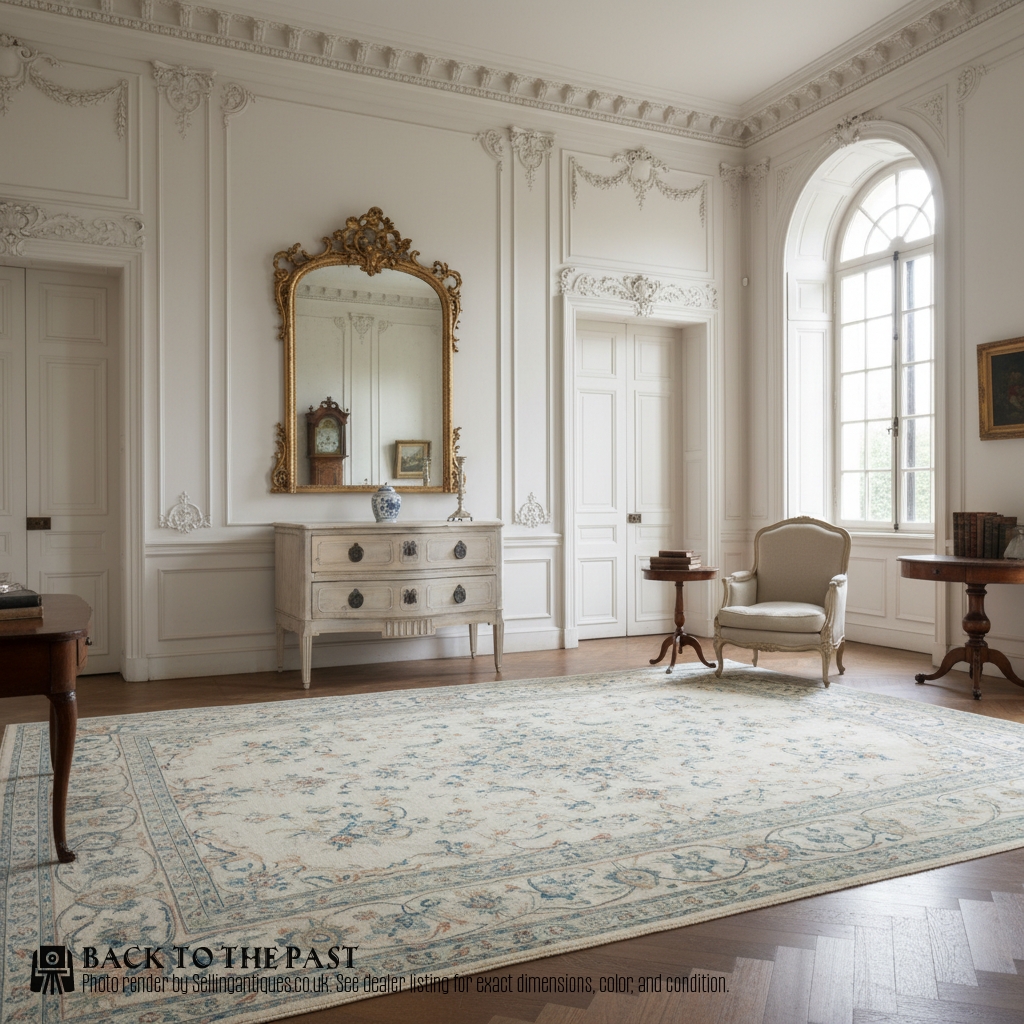
Vintage Serpentine Chest
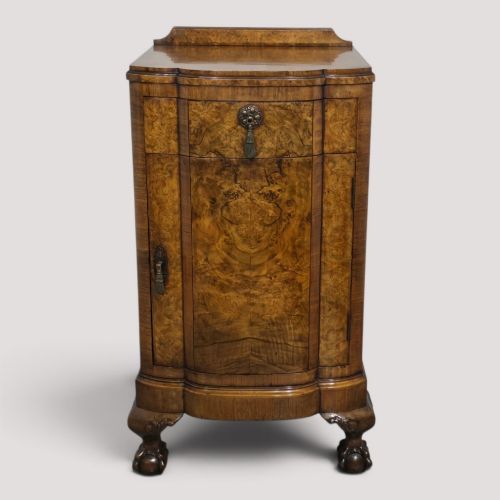
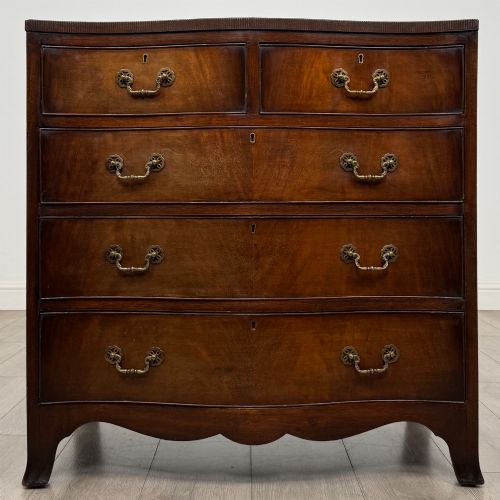
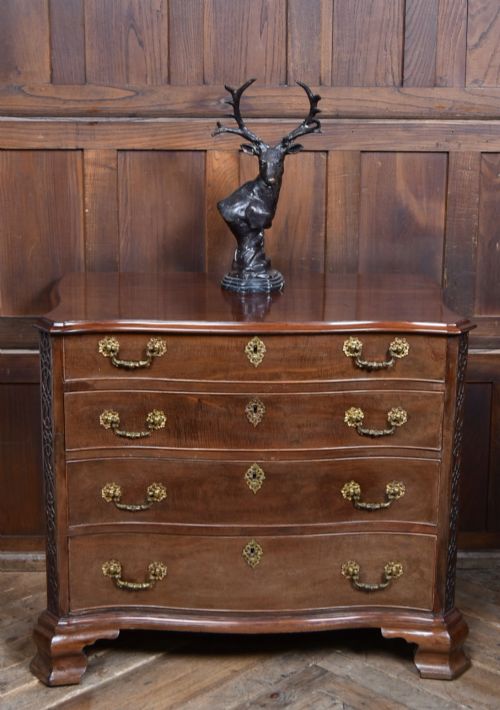
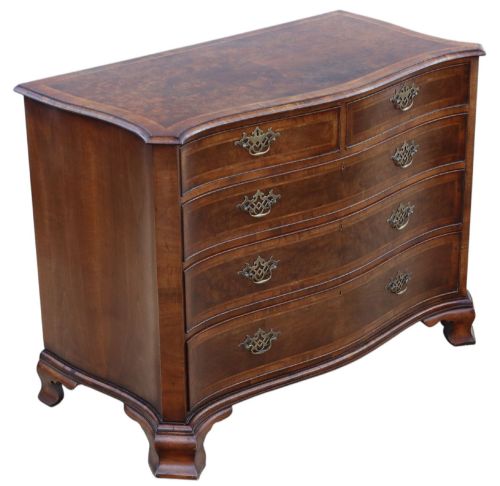
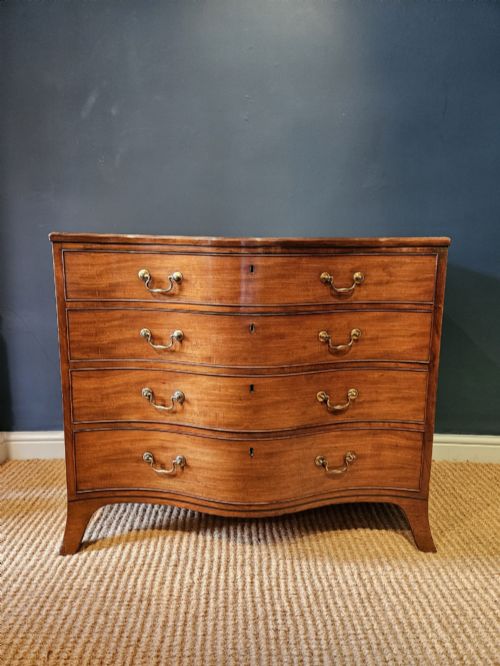
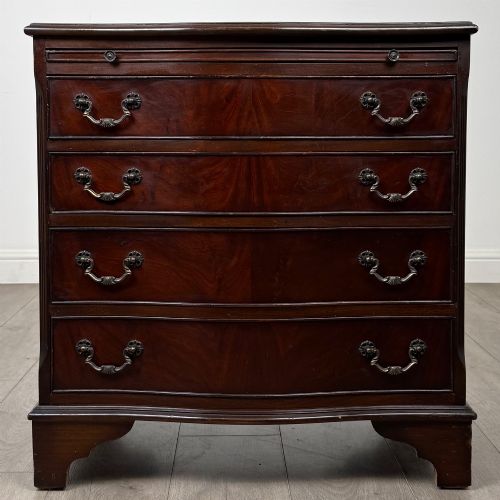
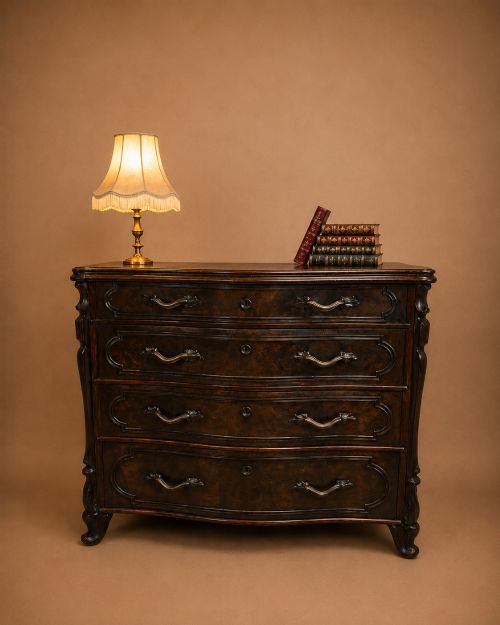
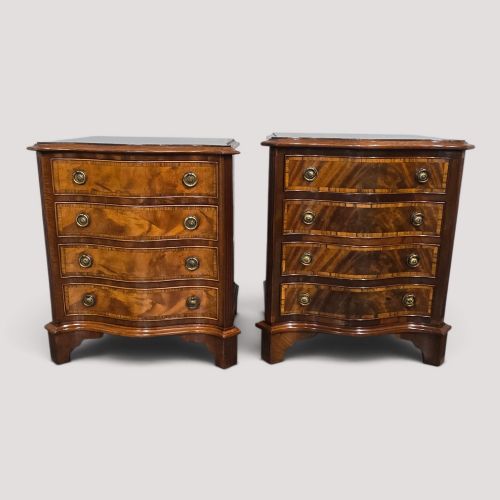
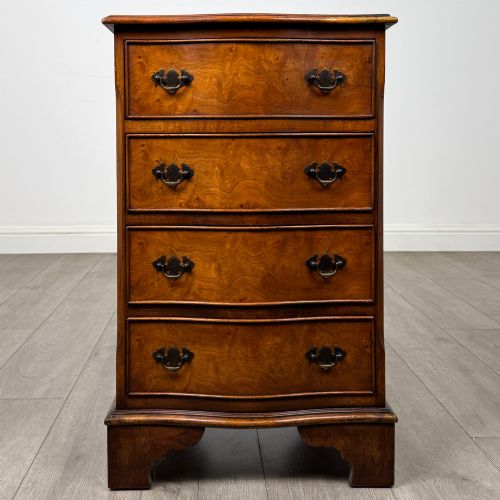
A vintage serpentine chest presents a distinctive sweeping front profile, curving outward at the centre and inward at the sides, or vice versa. These pieces primarily function as chests of drawers, commodes, or bedside cabinets, providing deep storage behind a decorative facade.
Most examples encountered here date from the Georgian period through to the twentieth century, including revival pieces from the Edwardian era. Alongside standard drawer configurations, variations such as tallboys, chests on chests, and bureau bookcases appear across the selection.
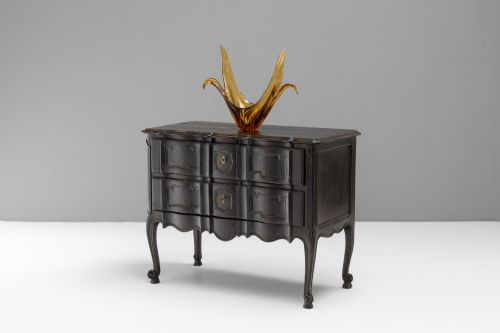
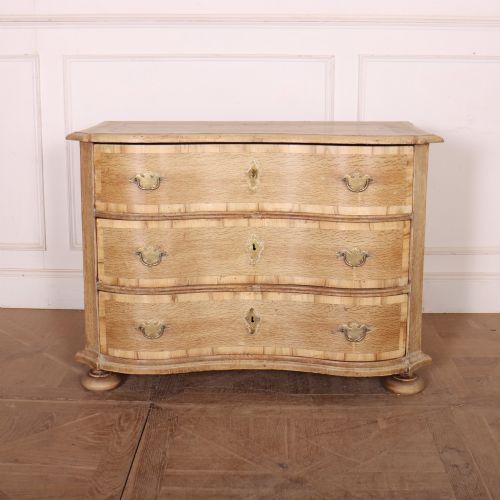
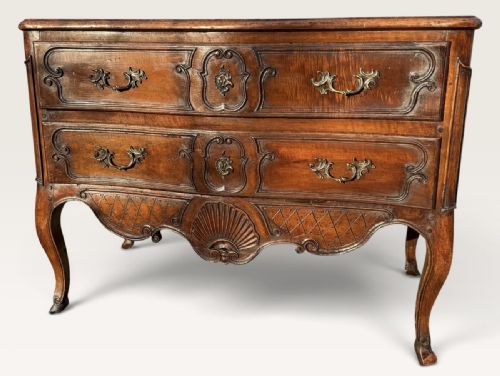
Origins span British workshops alongside continental European pieces, notably French, Austrian, German, and Swedish commodes. This international variety introduces diverse regional timbers and decorative motifs to the traditional serpentine form.
Factors of Quality
The sophistication of the timber figuring dictates much of the visual merit, particularly where book-matched burr walnut or intricate marquetry patterns follow the difficult curves of the drawer fronts. Smoother transitions in the wave-like front indicate superior carpentry, as shaping a serpentine line demands precision to maintain drawer alignment.
Secondary detailing separates standard production from finer examples, evident in the choice of solid brass hardware, the crispness of hand-cut dovetails within the drawers, and the integration of sliding writing brushes or fitted compartments.
Listings feature pieces spanning the eighteenth century through the 1930s, utilising mahogany, walnut, burr walnut, and marble.
The Vintage Serpentine Chest Glossary
- Serpentine
- A furniture front characterised by a convex centre flanked by concave curves, creating a wave-like contour. This shape requires advanced carpentry skills to execute correctly on drawers and cabinet doors.
- Commode
- A low chest of drawers or cabinet, frequently of French or continental origin. The term often describes decorative chests featuring marble tops and marquetry.
- Burr Walnut
- Timber taken from the wart-like growth on a walnut tree, yielding highly ornamental swirling grain patterns. Cabinet makers prized this wood for veneering prominent drawer fronts.
- Crossbanding
- A narrow strip of veneer laid around the border of a panel with the grain running perpendicular to the central piece. This technique frames the primary wood and adds visual contrast.
- Tallboy
- A tall chest of drawers, often built as one chest stacked upon another. It maximises vertical storage capacity while maintaining a compact floor footprint.
Vintage Serpentine Chest: Frequently Asked Questions
How do I clean a burr walnut surface?
Dust regularly with a soft, dry cloth to prevent dirt accumulation on the delicate veneer. Apply a quality beeswax periodically to nourish the timber and maintain a natural sheen.
Avoid using modern liquid polishes or placing the chest near direct heat sources, which can dry out and crack the old wood.
Are these chests suitable for modern bedrooms?
Their modest depth and varied proportions allow these chests to fit easily into contemporary hallways, bedrooms, or living spaces. They provide substantial drawer space while functioning as focal points of decorative interest.
Pairing a antique chest with modern surroundings highlights the warmth of the aged timber and the fluidity of the curved design.
How can I distinguish Georgian from revival pieces?
Georgian pieces display eighteenth-century construction methods, including hand-cut dovetails and native timber usage consistent with the period. Revival pieces, common from the Edwardian era onwards, often utilise machine-sawn elements and standardised hardware.
Examining the secondary woods inside the drawers helps clarify the actual age of the piece.
What is the purpose of a marble top?
Marble tops on continental commodes provided a durable, stain-resistant surface for washing and placing water jugs. They add considerable weight to the furniture and introduce a contrasting colour palette against the timber body.
These stone slabs are usually removable, resting directly on the top frame of the cabinet.