



Neoclassical Painted Commode
A neoclassical painted commode brings architectural restraint and luminous surface colour to an interior, offering practical storage through balanced proportion.
Neoclassical Painted Commode
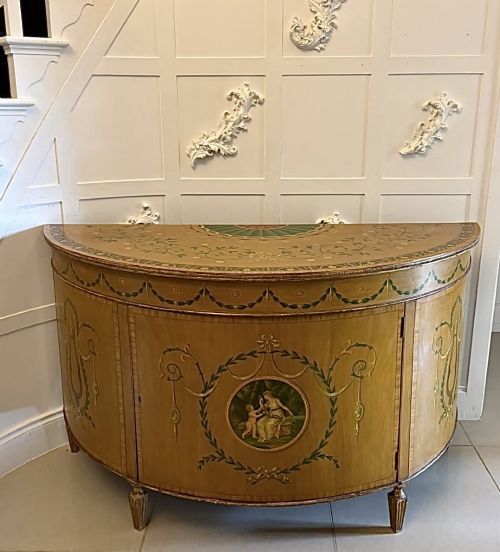
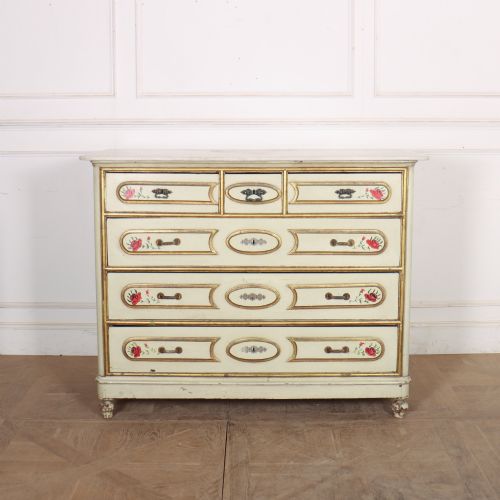
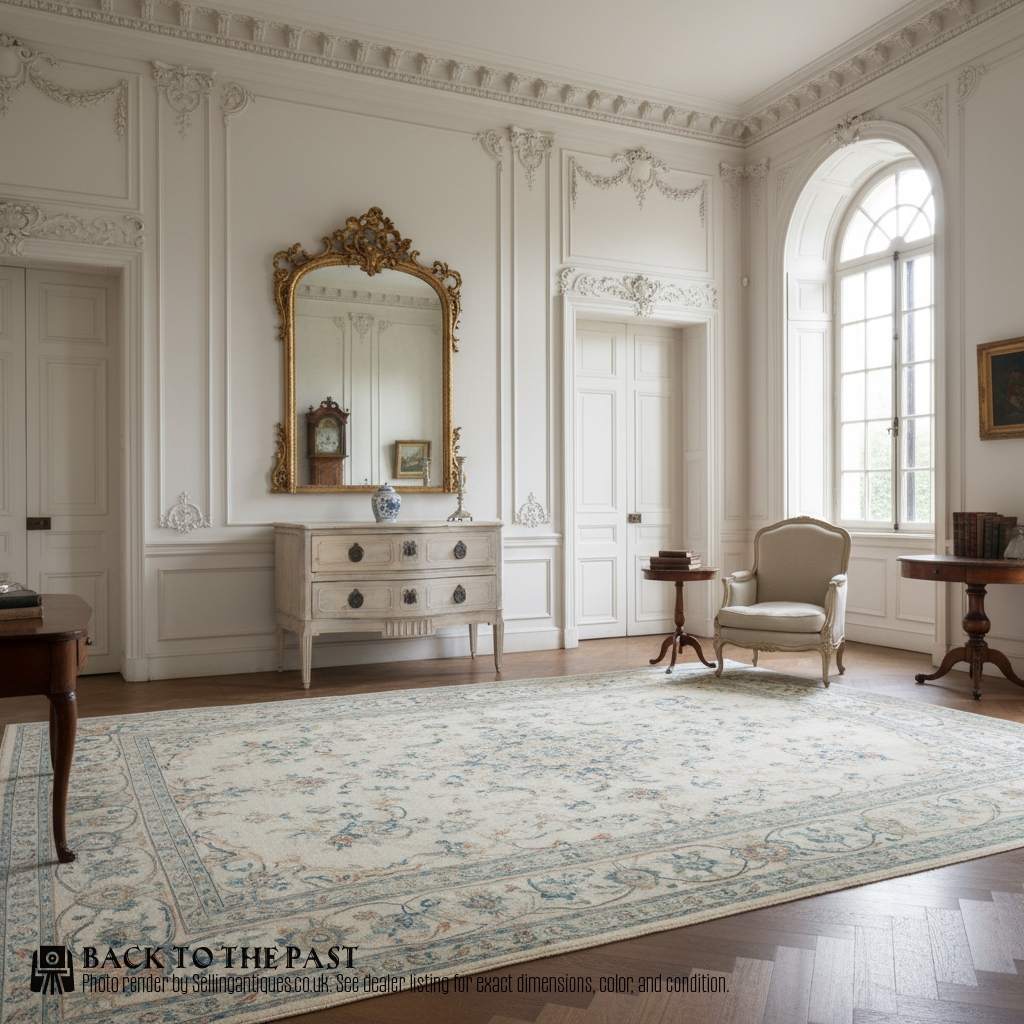
When you search for a neoclassical painted commode, you encounter substantial case furniture designed with classical symmetry, fluted lines, and restrained ornament. These pieces function primarily as storage chests of drawers for bedrooms and reception rooms.
The selections span the eighteenth and nineteenth centuries, originating from Swedish workshops, French provincial centres, and Italian studios. Swedish examples often display bright or dark painted finishes, while Italian pieces frequently feature serpentine fronts and marble tops.
Most items on this page date from the nineteenth century, including pairs of chests and single commodes reflecting Gustavian, French Empire, and Italian neoclassical styles. The form consistently maintains a low, rectangular profile topped with wood or stone surfaces.
Materials and construction
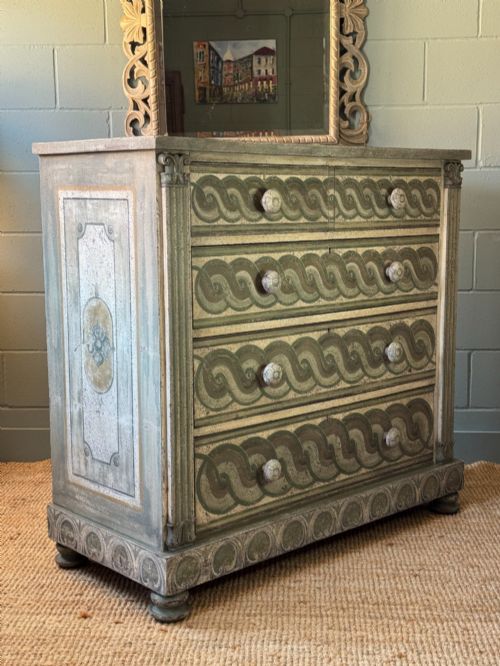
Carpenters built the carcasses using timber such as pine and oak, applying paint directly to the wooden surfaces to create layered, decorative finishes. Workshops employed iron or brass hardware for drawer pulls, key escutcheons, and structural mounts.
Italian iterations incorporate heavy marble tops fitted precisely to serpentine wooden frames, whilst Swedish pairs utilise hand-applied paint over pine and timber. Joinery relied on traditional framing methods suited to supporting stone and solid wood components.
Neoclassical Painted Commode Retail Price Guide 2026
Typical asking prices for neoclassical painted commode among the pieces listed under this phrase on Sellingantiques today, from the lower quarter to the upper quarter. They describe what is for sale here now, not the wider market.
The inventory includes matched pairs of nineteenth-century Swedish chests alongside single Italian serpentine commodes.
Understanding quality
Quality rests in the precision of the timber joinery and the integrity of the original painted surface rather than decorative excess. Finer pieces demonstrate careful proportion in their drawer arrangements and fluid curves along serpentine fronts.
The distinction between standard examples and superior work lies in the handling of the painted finish and the integration of fitted marble tops. Pieces retaining untouched period paint surfaces outrank later repainted items in historical interest.
The Neoclassical Painted Commode Glossary
- Commode
- A low chest of drawers designed for domestic storage, originating in France during the seventeenth century. The form evolved to serve both utilitarian and decorative functions in formal rooms.
- Serpentine front
- A furniture facade shaped with a central convex curve flanked by two concave curves. This contour requires advanced carpentry to construct and fit accurately.
- Gustavian
- The Swedish interpretation of neoclassical design, characterised by light colour palettes, simplified classical motifs, and functional restraint. It emerged during the reign of Gustav III.
- French Empire
- A heavy, classical style spanning the late eighteenth and nineteenth centuries, drawing motifs from ancient Rome and Egypt. Furniture from this period employs strong architectural lines.
Neoclassical Painted Commode: Frequently Asked Questions
Can I place a marble top commode in a hallway?
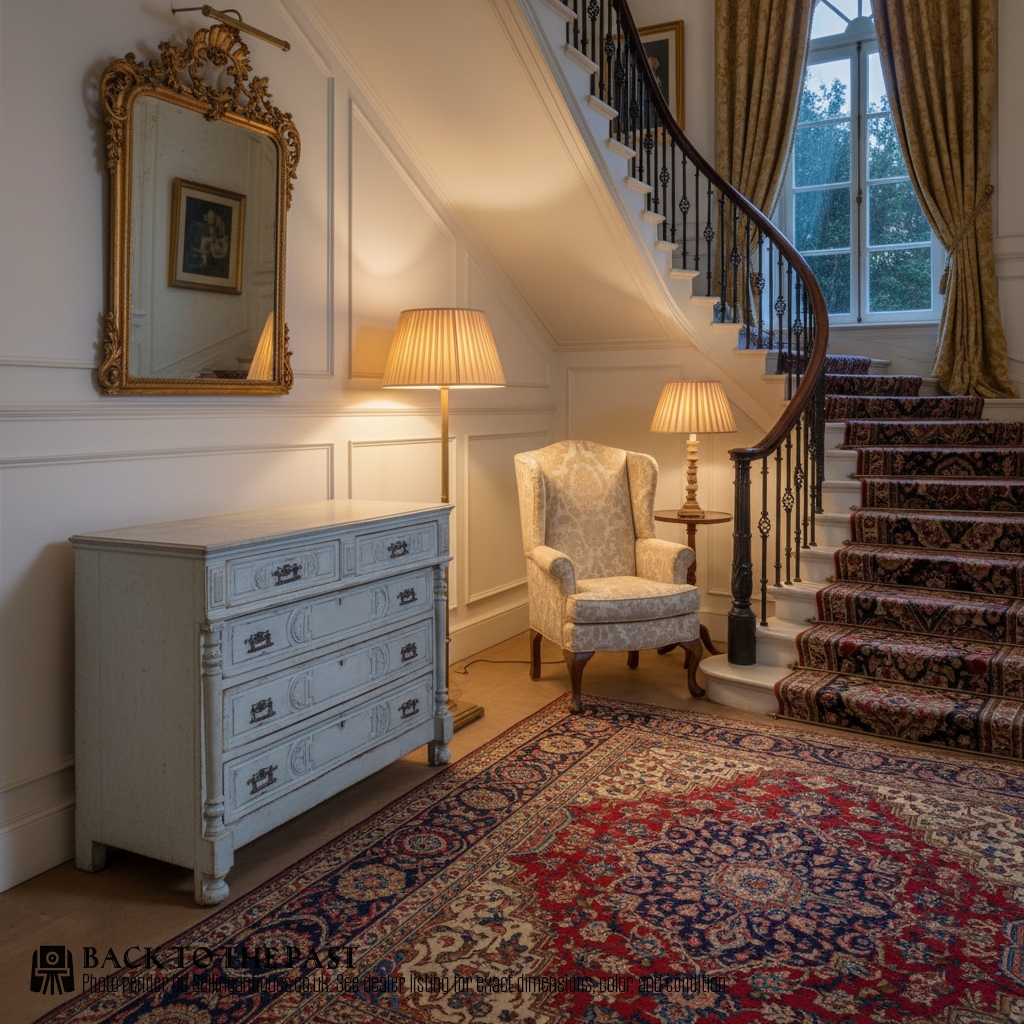
A marble top commode makes a striking entrance piece because the stone surface withstands daily placement of keys and decorative objects. Ensure the floor is level to support the weight of the stone.
Protect the timber base from heavy foot traffic by positioning the chest firmly against a wall. The stone provides a durable landing surface for everyday items.
What is the difference between Swedish and Italian commodes?
Swedish pieces tend to feature lighter painted finishes, including black or pale tones, with pared-back neoclassical detailing. They reflect the Gustavian aesthetic of functional simplicity and bright rooms.
Italian commodes often incorporate serpentine fronts and fitted marble tops, displaying a more sculptural approach to form. Their painted or wood surfaces lean towards classical architectural drama.
Are painted commodes sturdy enough for daily use?
These pieces were built from solid timber like oak and pine to withstand generations of domestic storage. The structural framing remains robust despite centuries of age.
Drawers slide within timber runners that require occasional waxing rather than mechanical repair. Treat the painted exterior with care to preserve the decorative finish during normal use.