
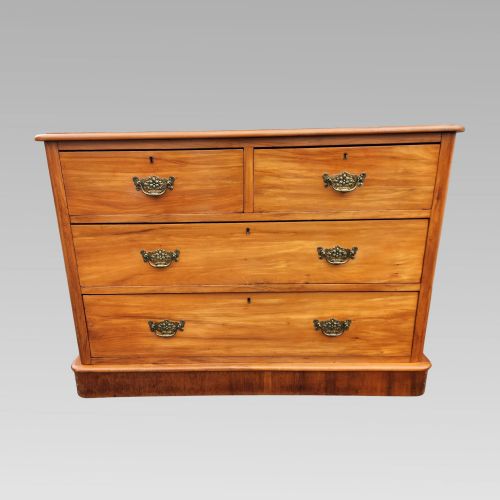
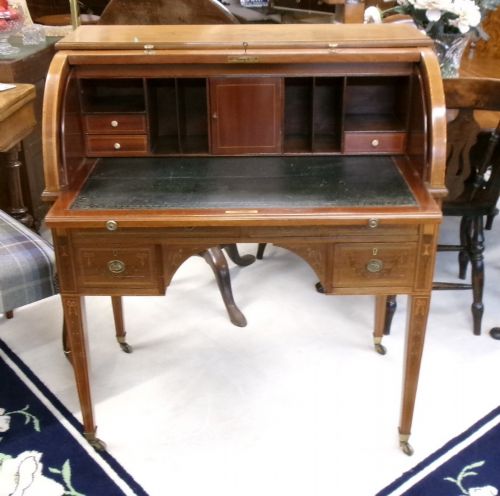
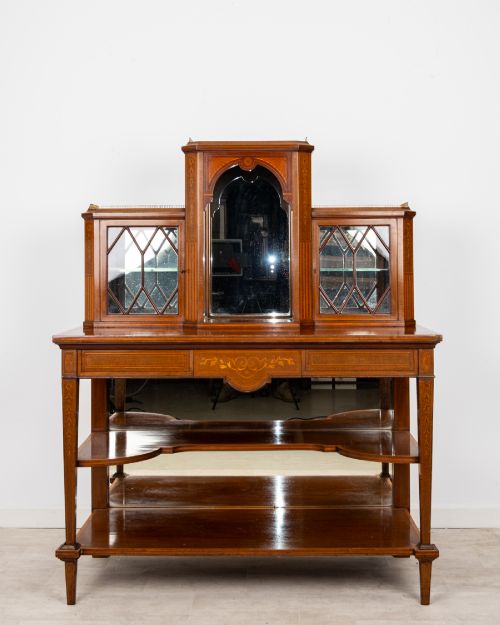
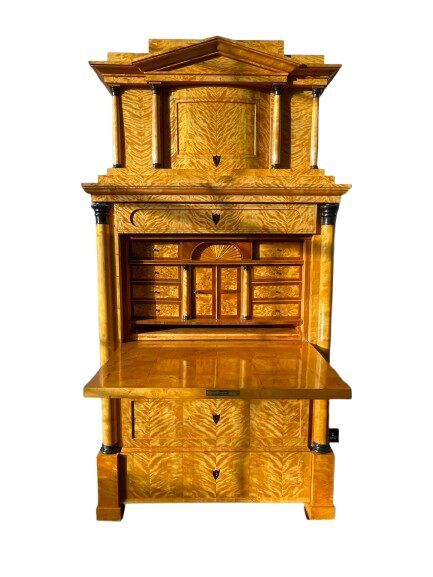
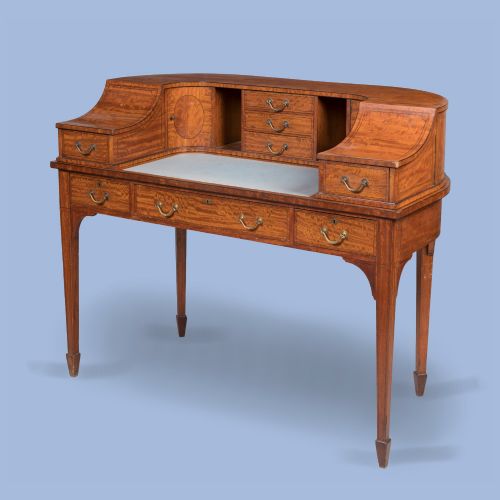
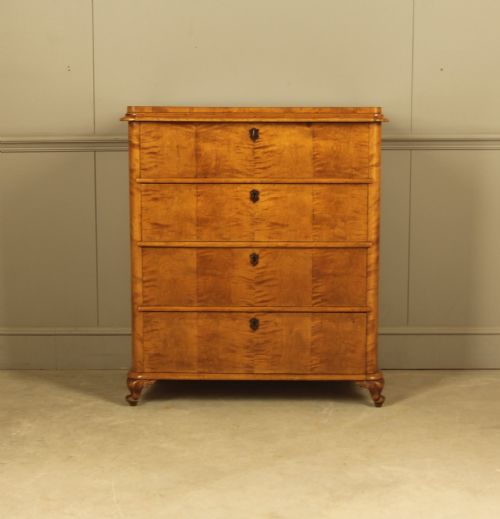


Vintage Satinwood Bureau
A vintage satinwood bureau brings warm timber tones and clever writing compartments into a room, offering a practical workspace wrapped in period elegance.
Vintage Satinwood Bureau
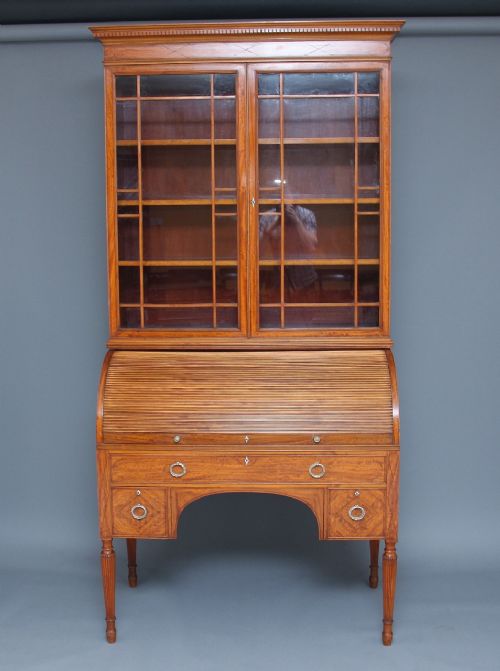
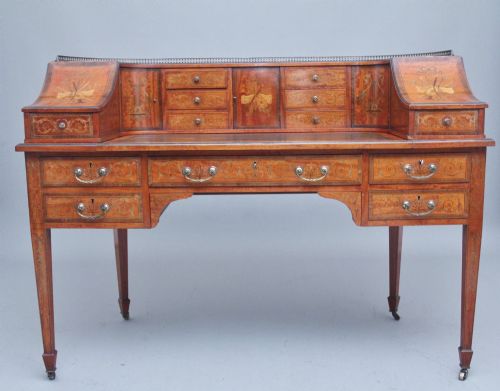
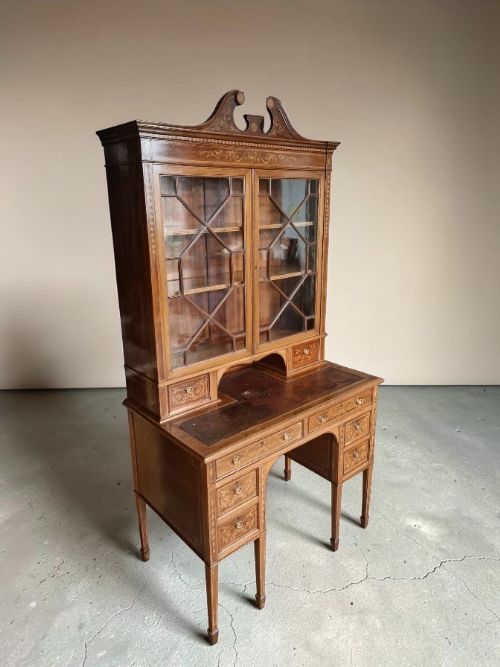
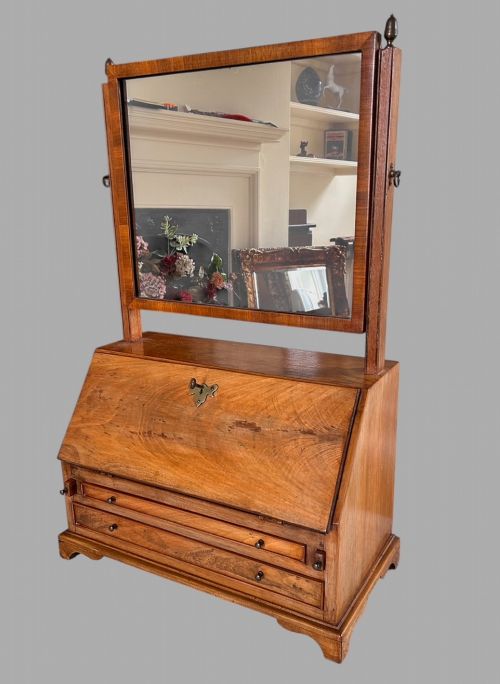
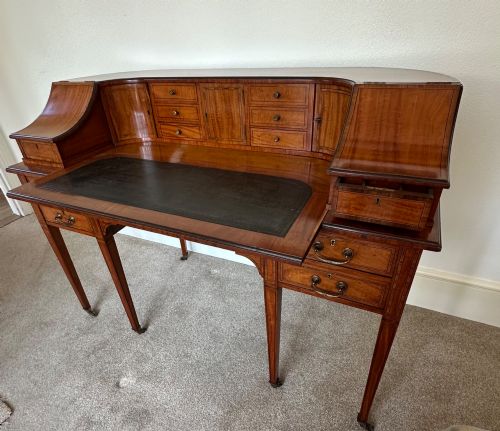
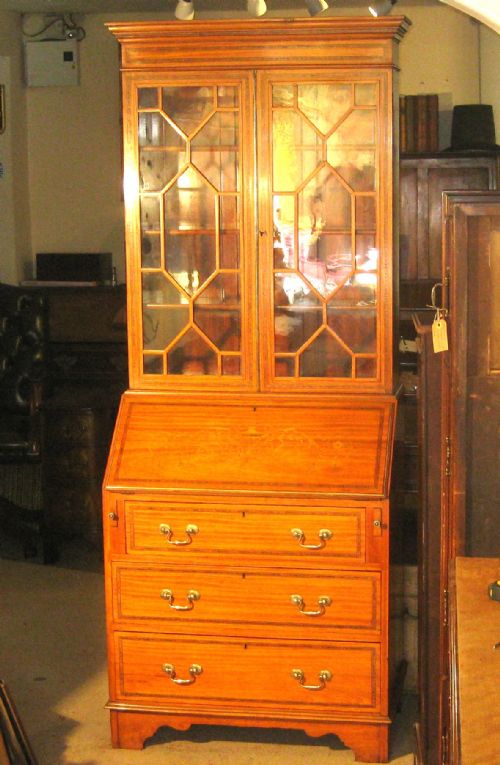
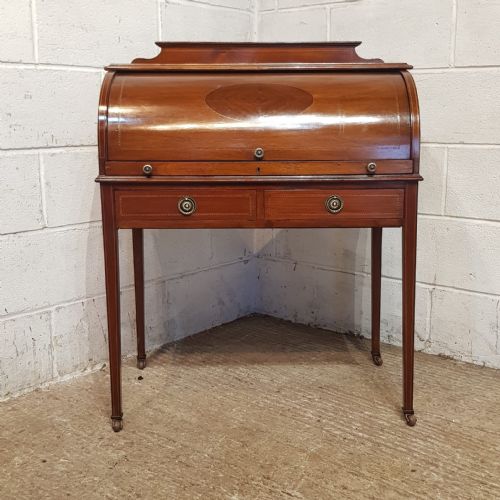
A vintage satinwood bureau is a writing cabinet defined by pale, figured wood and fitted writing drawers, frequently encountered from the Edwardian period or the nineteenth century. These pieces range from compact table-top versions to grand bureau bookcases and sophisticated Carlton House desks.
The materials span solid timbers and carefully applied veneers, with mahogany and pine often serving as the structural base underneath satinwood facades. Additional elements such as leather writing surfaces, brass handles, and glass doors appear across the surviving pieces.
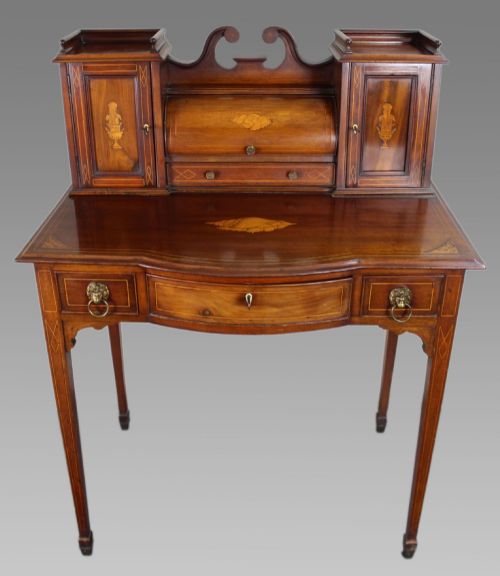
Makers and designers drew heavily on Georgian and Sheraton Revival idioms, incorporating delicate line inlay and marquetry into everyday domestic furniture. Buyers searching for a vintage satinwood bureau will find desks designed for the drawing room, boudoir, or study.
What varies in quality
The refinement of the timber selection and the precision of the marquetry define the upper tier of these writing desks. Finely figured satinwood grain, balanced crossbanding, and well-executed hand-painted details separate ambitious cabinet work from standard production.
Internal engineering, such as the smooth operation of cylinder tops, barrel fronts, and compartmentalised stationery drawers, marks the distinction between workshop levels. Original brass hardware and intact leather inserts further distinguish the finer survivals.
Some Edwardian desks hide secret stationery wells beneath sliding panels, rewarding those who explore every compartment.
James Shoolbred of London·Maple and Co
The Vintage Satinwood Bureau Glossary
- Satinwood
- A hard, durable tropical timber known for its golden colour and satiny sheen. It is sliced into veneers or used in solid form for fine cabinet making.
- Bureau
- A desk equipped with a sloping lid or a falling front that opens to reveal pigeonholes and small drawers. The term often describes writing cabinets with enclosed storage.
- Carlton House desk
- A distinctive horseshoe-shaped writing desk with a raised superstructure of small drawers and compartments curving around the back and sides. This form gained popularity during the Georgian period and saw revival in Edwardian workshops.
- Crossbanding
- A decorative border of veneer laid around the edges of a panel so that the grain runs at right angles to the central piece. It frames the primary wood to create a finished border.
- Marquetry
- The art of applying pieces of veneer to a structure to form decorative patterns and pictorial designs. Craftsmen combine different woods to achieve contrasting tones.
Vintage Satinwood Bureau: Frequently Asked Questions
How do I care for satinwood furniture?
Satinwood benefits from placement away from direct sunlight and rapid temperature fluctuations to prevent veneer lifting. Regular dusting with a soft, dry cloth preserves the polished surface.
Applications of appropriate wax polish nourish the timber without building up heavy residues that dull the natural golden grain.
What is the difference between a bureau and a bureau bookcase?
A standard bureau combines a writing desk with a set of lower drawers beneath a sloping fall-front. A bureau bookcase adds a glazed shelving unit or cabinet to the top section.
Both forms utilise satinwood facades and marquetry inlay, but the bookcase version offers vertical display space alongside the enclosed writing compartment.
How can I tell an Edwardian piece from an 18th-century piece?
Edwardian interpretations often display lighter structural framing, machine-sawn secondary timbers, and specific Sheraton Revival design motifs. Eighteenth-century originals tend to feature hand-cut joinery, deeper patination, and heavier construction.
Examining drawer linings, hardware fixings, and internal construction methods helps clarify the period of manufacture.