
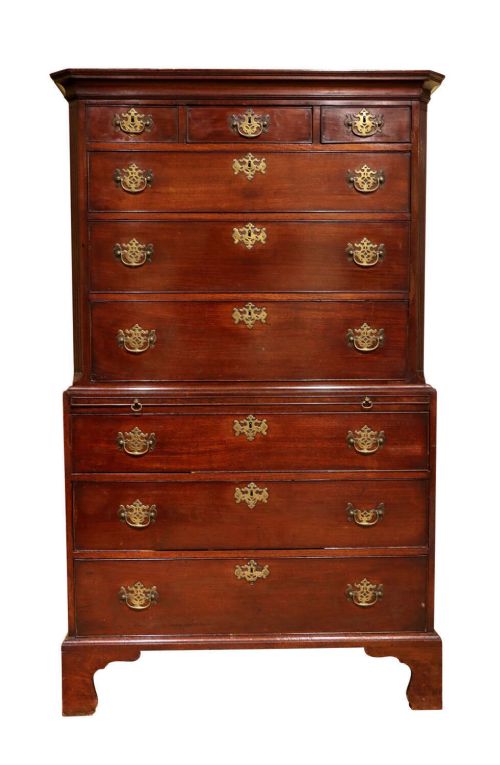
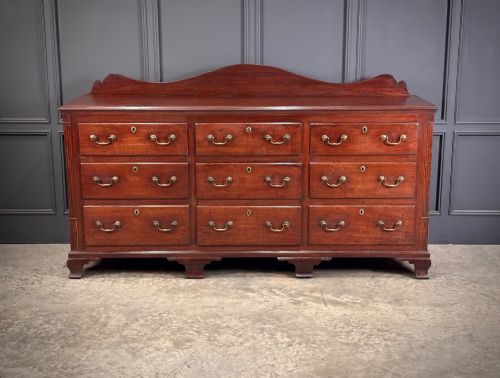
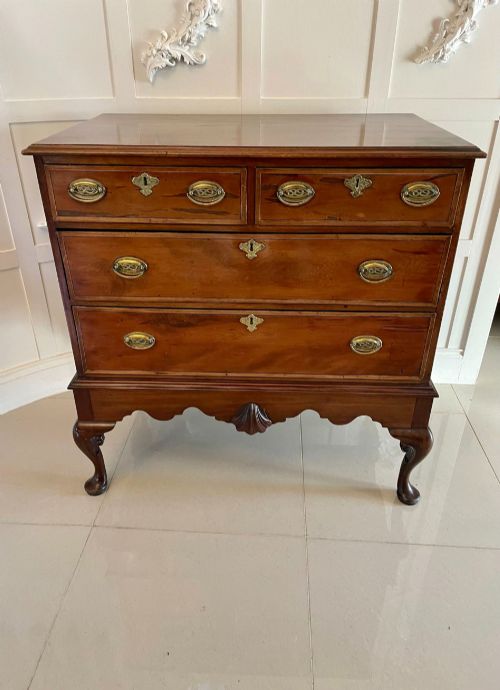
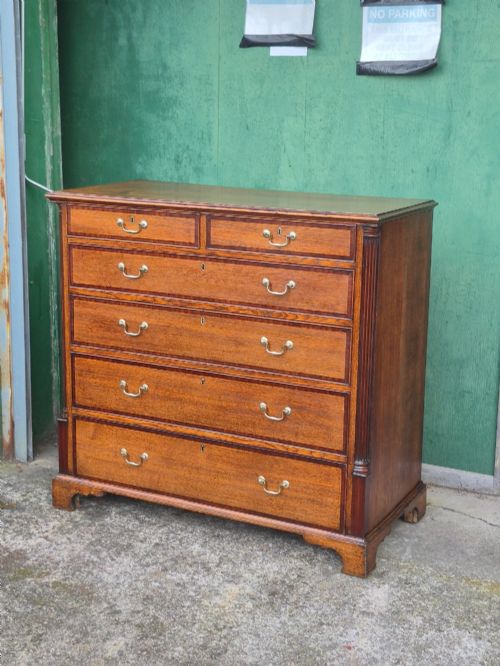
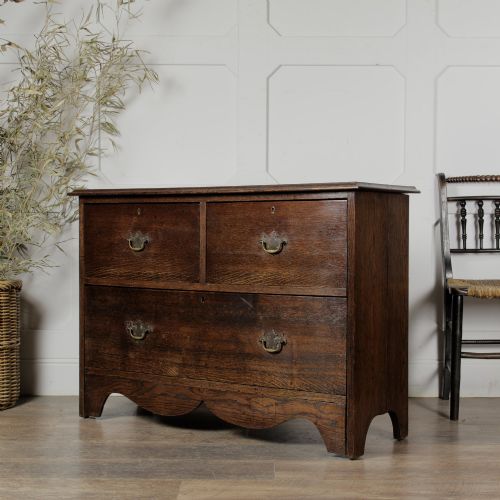
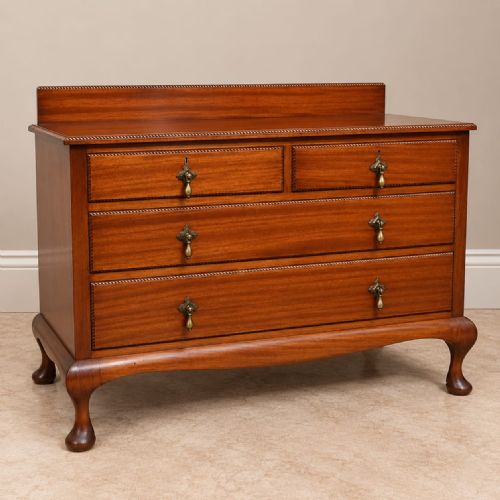
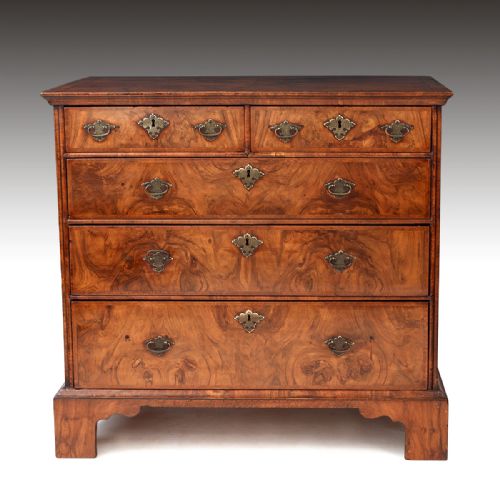
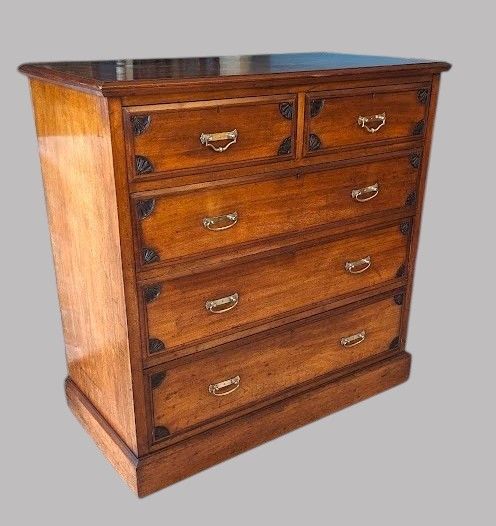
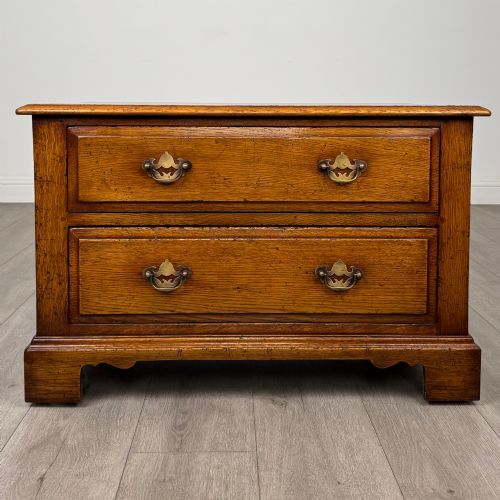
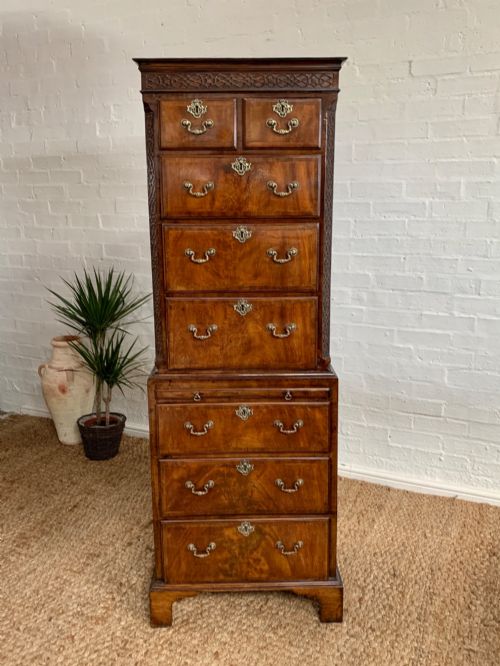
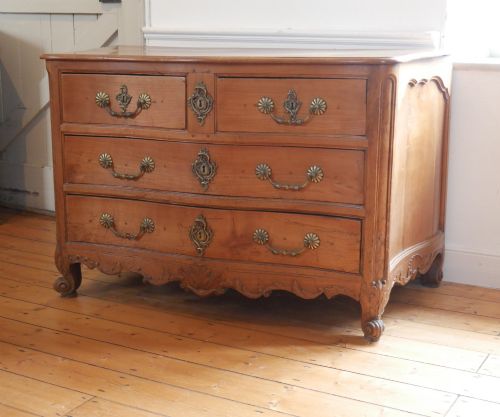
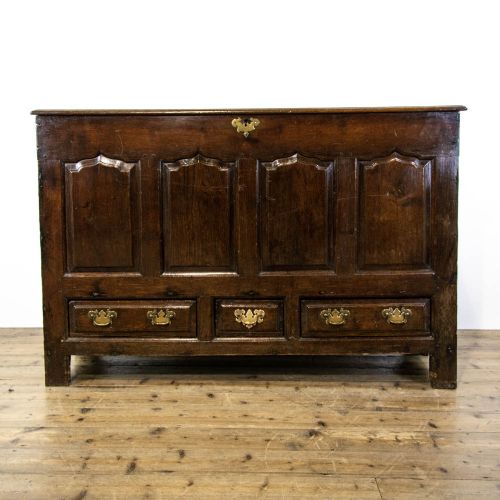
Carved Brass Handle Chest
A carved brass handle chest brings together substantial timber and refined metalwork, offering practical storage with distinct period character.
Carved Brass Handle Chest
Buyers encounter numerous regional and formal variations, ranging from simple oak pieces of the seventeenth century to elaborate George III mahogany chests on stands. The form adapts through successive styles, accommodating changing domestic needs while retaining metal hardware.
Examples span simple country house storage to formal Georgian case furniture, displaying the shifts in proportion and timber selection across British and continental workshops.
What varies in quality
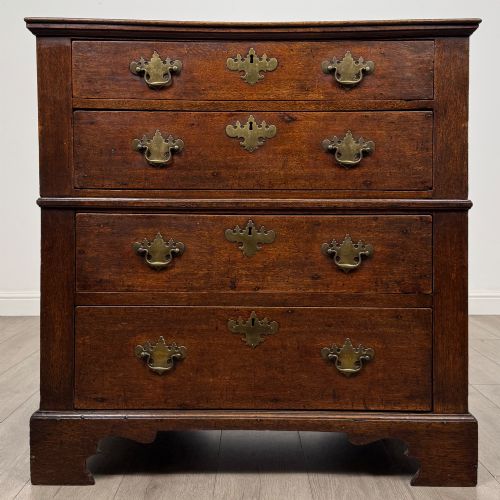
Quality rests in the crispness of the timber carving, the integrity of the secondary woods, and the presence of original brass handles. Pieces retaining their initial mountings and undisturbed drawer linings hold greater historical weight.
The sophistication of the joinery and the selection of figured veneers distinguish standard utility items from high-style specimens like serpentine commodes and chests on stands.
Mule chests earned their curious name because they were hybrid beasts, half trunk and half drawer chest.
The Carved Brass Handle Chest Glossary
- Chest on chest
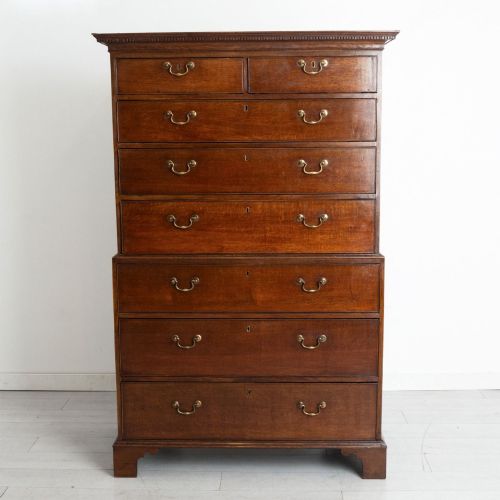
- A tall storage unit formed of two stacked sections, where a smaller upper chest sits upon a larger base. Also known as a tallboy.
- Mule chest
- A storage chest featuring one or more drawers at the base beneath the primary lid compartment. These pieces bridge the transition between traditional coffers and modern drawer chests.
- Commode
- A low chest of drawers originating in French cabinet-making, frequently featuring serpentine fronts and decorative veneers. The term denotes a decorative storage unit rather than sanitary furniture.
- Blind fret cornice
- A carved ornamental band applied to the upper moulding of a case piece, showing intricate geometric patterns without piercing the wood through. This detail appears frequently on high-grade eighteenth-century case furniture.
- Geometric mouldings
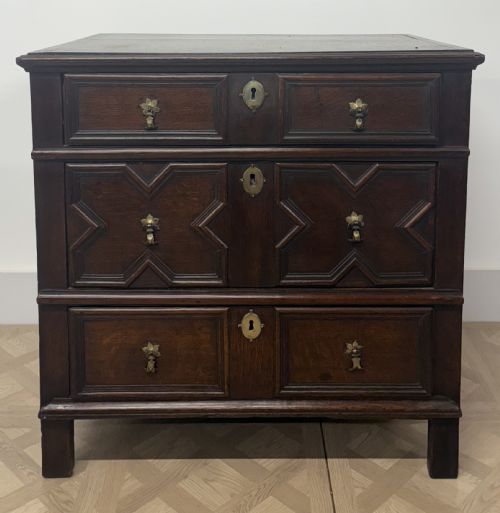
- Raised wooden bars applied in rectilinear or panelled patterns across drawer fronts, characteristic of seventeenth-century joinery. These decorations create texture and depth on otherwise plain timber surfaces.
Carved Brass Handle Chest: Frequently Asked Questions
What is a carved brass handle chest?
A carved brass handle chest is a wooden storage piece featuring decorative metal drawer pulls and handles, spanning periods from the seventeenth century to the early twentieth century.
These items encompass various forms including tallboys, mule chests, and standard chests of drawers fashioned from timbers like oak, mahogany, and walnut.
How do I identify seventeenth-century chests?
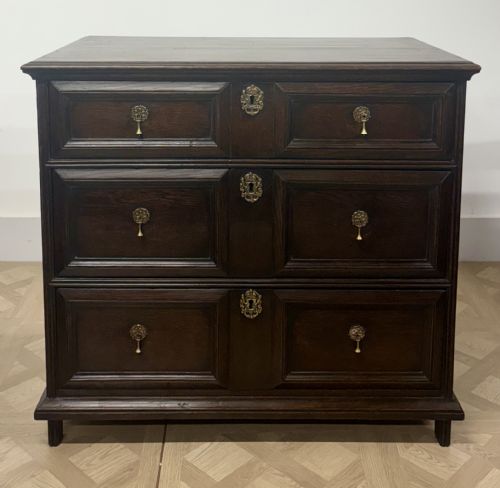
Seventeenth-century examples typically utilise solid oak construction, often displaying geometric mouldings, panelled sides, and heavy proportions.
Makers of this era employed pegged joinery and hand-carved details before the widespread adoption of exotic veneers in later decades.
Where were these chests used?
These pieces served primary storage functions in bedrooms, dressing rooms, and formal chambers of period houses.
Larger forms provided linen and garment storage, while smaller lowboys and dressing chests functioned in private sitting spaces.
How do I care for antique timber?
Maintain antique timber furniture by placing it away from direct heat sources and sudden humidity changes to prevent wood splitting.
Apply traditional wax sparingly and polish with a soft cloth to preserve the finish without building up chemical residues.