

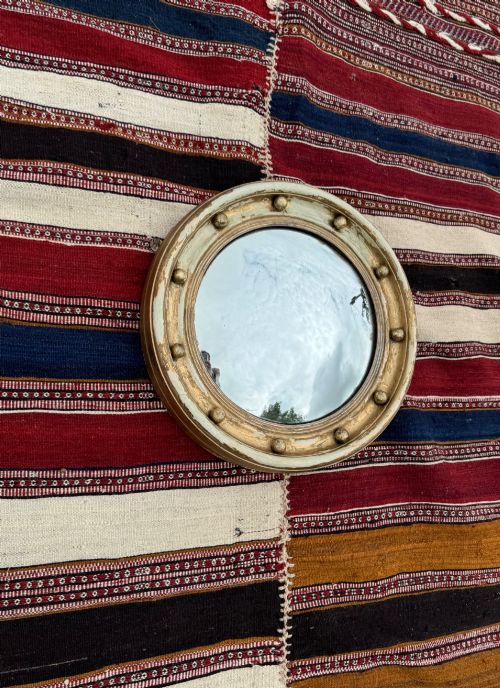


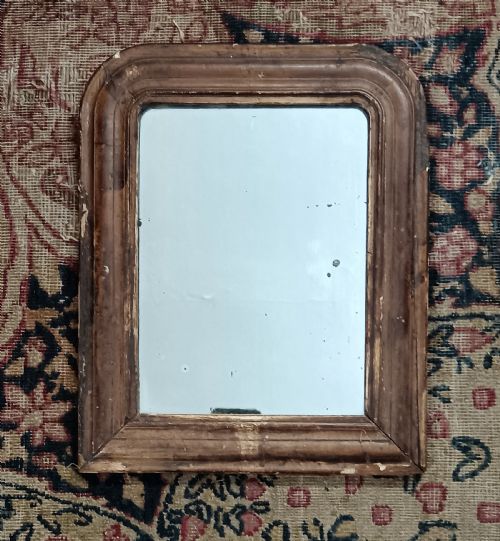


Vintage Round Wall Mirror
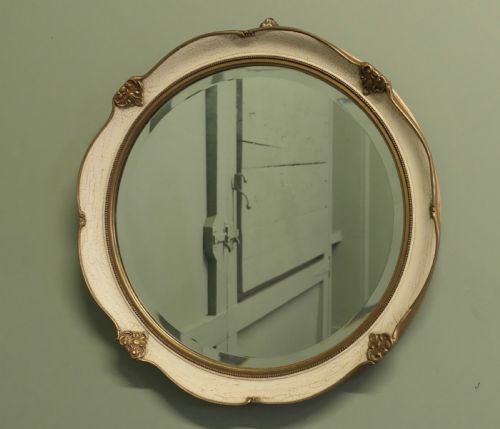
A vintage round wall mirror brings depth and reflected light to a room, ranging from simple convex portholes to ornate gilt frames.
Vintage Round Wall Mirror
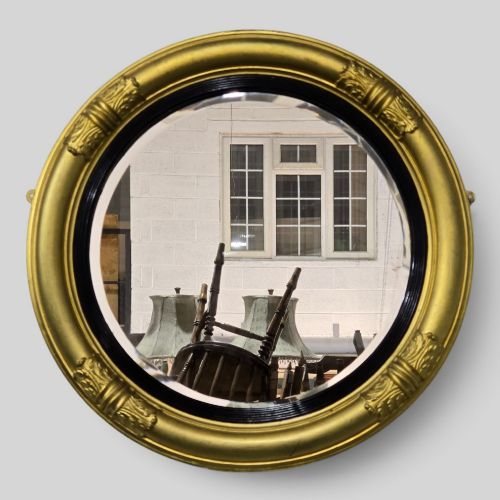
A vintage round wall mirror appears in various historical iterations, spanning the nineteenth century through to the art deco period of the nineteen-thirties. Buyers searching for a vintage round wall mirror frequently encounter convex designs, heavy giltwood frames, and circular plates housed in wood, brass, or copper.
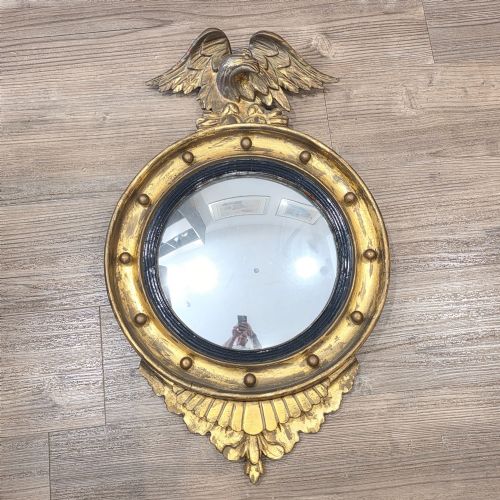
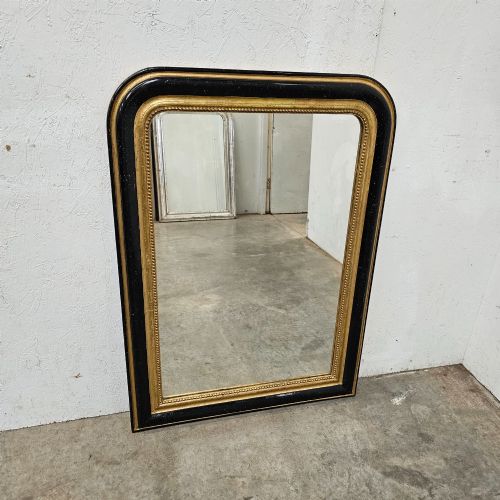
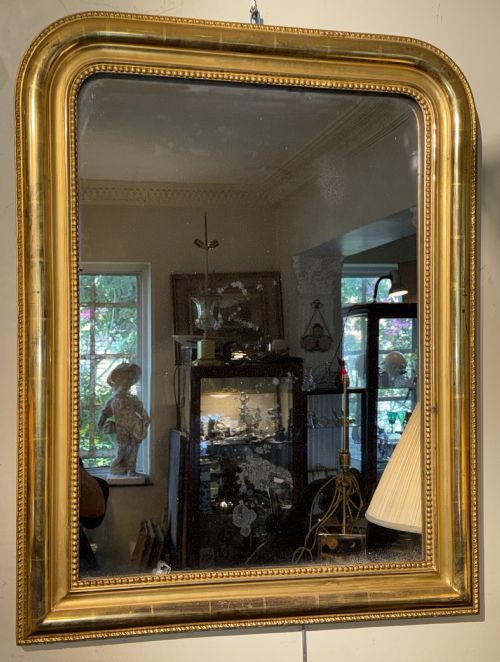
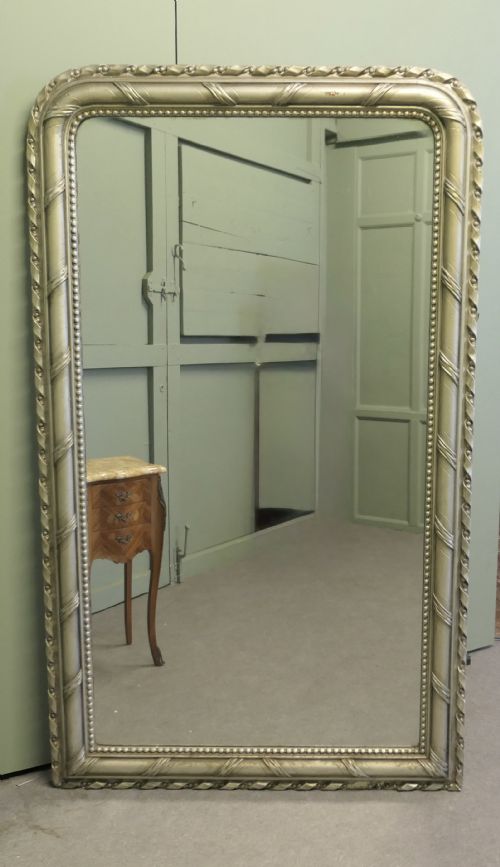
The nineteenth century yields prominent examples including regency convex pieces, often surmounted by eagles or detailed moulding, alongside Victorian porthole designs. French louis philippe pieces and twentieth-century art deco circular mirrors also populate the selection, bringing distinct regional interpretations to the circular wall hanging format.
Makers and craftsmen utilised diverse materials to shape these objects, resulting in formats that serve functional purposes in hallways and living spaces alike. From simple mahogany and oak surrounds to elaborate gilt and gesso creations, each period brings characteristic proportions and frame depths to the mirror plate.
Materials and construction
Wood forms the primary structural base for many frames, frequently built from mahogany, oak, or ebonised timber, and occasionally finished with applied gesso ornaments. Carved giltwood and silver gilt examples apply thin layers of gold leaf or metallic paint over prepared wooden substrates to achieve a reflective, luminous surface.
Glass production dictates the character of the mirror plate itself, with older pieces displaying foxed surfaces or bevelled edges shaped by hand. Subsidiary elements utilise brass, copper, and alabaster, while specialised convex plates bend reflections to capture wide angles of a room.
Materials employed across the selection include giltwood, gesso, brass, copper, alabaster, and ebonised wood.
Assessing quality and execution
The depth of carving and the crispness of applied gesso ornamentation separate standard production from superior craftsmanship. Finer frames exhibit hand-carved detailing on wood and gilt surfaces rather than simplified moulded compositions.
The preservation of the original mirror plate contributes significantly to an object's character. Plates showing natural foxing or original bevels retain a distinct visual depth compared to modern replacements.
The Vintage Round Wall Mirror Glossary
- Convex mirror
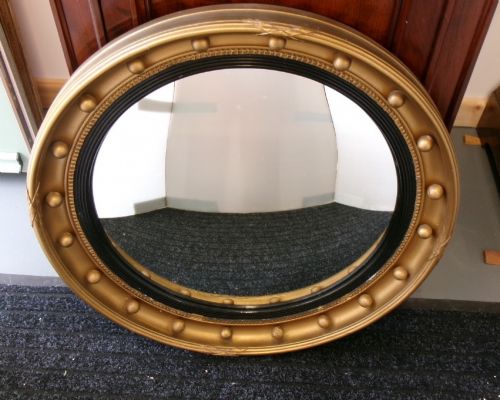
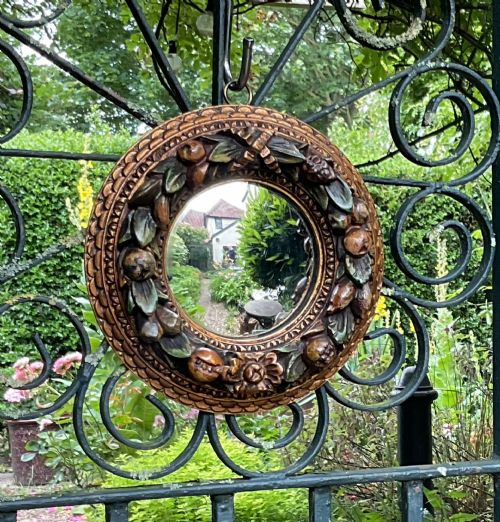
- A circular mirror with a bulging, rounded glass surface that creates a wide-angle reflection of the interior space. These are often framed by ornate giltwood with ball accents.
- Foxing
- Age-related spots and discoloration within the silvered backing of a mirror plate. This natural oxidation process occurs over decades.
- Gesso
- A plaster-like mixture applied to wood frames to create a smooth surface for gilding or intricate moulding. It allows for sharp decorative relief.
- Giltwood
- Wood carved and coated with gold leaf or metallic gilt finish. It provides a bright, reflective border popular in regency and victorian interior design.
- Louis Philippe
- A French nineteenth-century style characterised by restrained elegance and often featuring softly rounded upper corners or circular proportions. These frames rely on simple sight lines rather than heavy ornamentation.
Vintage Round Wall Mirror: Frequently Asked Questions
How do I hang a heavy convex mirror safely?
Heavy convex frames require secure wall anchors fixed directly into masonry or solid wooden studs. The substantial weight of giltwood and thick glass demands robust weight-bearing hardware.
Professional mirror hangers often utilise split cleats or heavy-duty D-rings rated for the specific load. Ensure the wall structure can support the outward pull of the hanging wire or brackets.
What is a sorcerer mirror?
A sorcerer mirror is an alternative name for a convex mirror, historically used to monitor guests or light levels across a room from a single vantage point. The curved glass gathers a panoramic view of the interior.
These pieces gained popularity during the regency and Victorian eras as both optical curiosities and decorative focal points. Their distinct spherical distortion sets them apart from flat wall mirrors.
How should I clean antique mirror glass?
Clean antique mirror plates gently using a soft microfibre cloth and a mild, ammonia-free glass cleaner. Avoid spraying liquid directly onto the glass to prevent moisture seeping behind the silvering.
Apply the cleaner to the cloth rather than the plate itself, especially around aged edges where foxing is present. Careful maintenance preserves the fragile interface between the glass and the original backing.
How can I date a circular wall mirror?
Dating relies on examining the construction techniques of the frame, the backing boards, and the characteristics of the glass plate. Regency and Victorian pieces often feature hand-turned wooden frames, while nineteen-thirties art deco designs display geometric simplicity.
Inspect the nails, screws, and fixings holding the mirror together, as older iron or brass fasteners differ from modern replacements. The presence of original gesso work and hand-bevelled edges further aids in period attribution.