




Circular Bevelled Wall Mirror
A circular bevelled wall mirror delivers clean geometry and deep reflection, bringing light and focus to a room without crowding the wall.
Circular Bevelled Wall Mirror
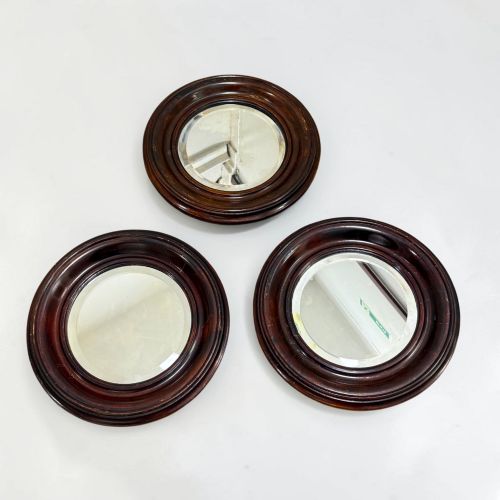
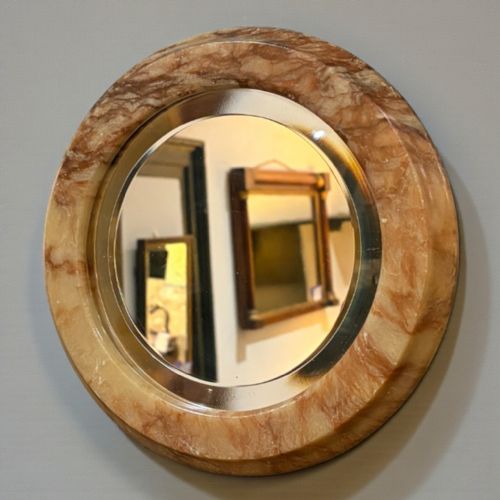
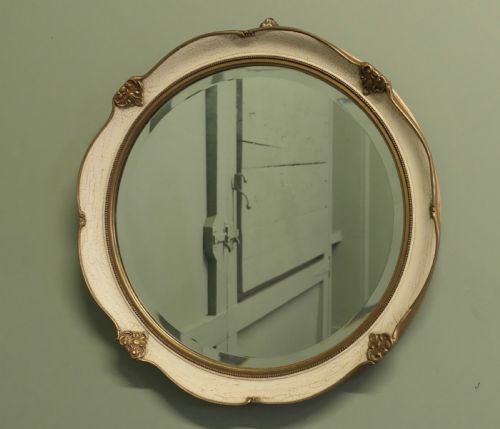
A circular bevelled wall mirror takes several distinct forms across the periods, appearing in the rigorous geometric lines of Art Deco design alongside earlier Edwardian and Victorian iterations. Buyers seeking a circular bevelled wall mirror will find pieces framed in wood, brass, gesso, and chrome, spanning the early twentieth century back to nineteenth century examples.
The selection includes specialised variations such as French round etched designs, alabaster frames, and even combined mirror clocks from the interwar decades. While the inventory leans heavily toward the nineteen-twenties and nineteen-thirties, earlier Georgian and Victorian traditions also emerge through cast brass and giltwood interpretations.
How they were made
Makers constructed these frames using timber such as mahogany and giltwood, or cast solid brass and metal components to hold the heavy glass plates securely. Gesso ornamentation and gilt finishes added decorative depth to wooden structures, whilst chrome and silvered glass defined the later modernist aesthetics.
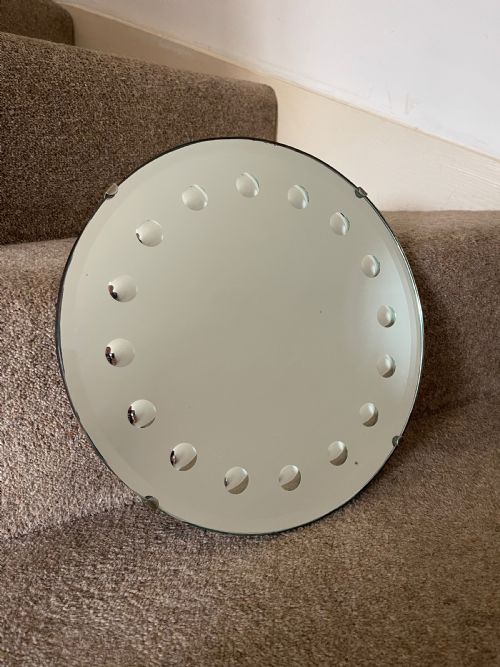
The defining characteristic across these examples is the bevelled edge of the mirror glass itself, ground at a precise angle to refract light and create a finished border. Etched decoration upon the glass surface also appears in French Art Deco pieces, requiring steady handwork by skilled glaziers.
Some interwar wall mirrors doubled as working clocks, ensuring you could check the time whilst admiring your reflection.
What varies in quality
Quality rests upon the crispness of the casting in metal frames and the depth of the carved detail in wooden or gesso specimens. Superior examples display clean joinery, original silvering with minimal degradation, and a bevelling that shows sharp, even angles without distortion.
The integrity of the materials dictates the tier of the piece, distinguishing mass-produced commercial items from finely cast brass or hand-etched French works. The weight and stability of the frame relative to the glass plate further indicate the standard of manufacture.
The Circular Bevelled Wall Mirror Glossary
- Bevel
- An angled edge ground along the perimeter of the mirror glass. This technique creates a prismatic border that catches the light and adds visual depth to the reflection.
- Gesso
- A plaster-like mixture applied to wooden frames as a base for gilding or painting. It allows for intricate moulded relief work before the final finish is applied.
- Silvered glass
- Glass coated on the rear surface with a reflective metallic compound. Older mercury or silver applications develop natural ageing spots known as foxing over decades.
- Overmantle
- A large mirror designed to hang above a fireplace mantelpiece. These pieces often feature broader frames to anchor the visual weight of a hearth.
Circular Bevelled Wall Mirror: Frequently Asked Questions
Where should I hang a round mirror?
These pieces suit entrance halls, living rooms, and bedrooms where their circular form softens the rectilinear lines of surrounding furniture. They function effectively above sideboards, console tables, or mantelpieces to draw light across the space.
Ensure the wall fixings match the weight of the frame, particularly for heavy brass or mahogany pieces that require secure mounting to support the glass plate safely.
How do I date an antique mirror?
Dating relies upon examining the construction methods of the frame, the backing boards, and the characteristics of the glass itself. Stylistic indicators such as Art Deco geometry or Victorian brass casting provide clear chronological markers.
Inspect the fixings and screws used at the rear, as hand-cut components or early slot-head screws often point toward nineteenth-century or Edwardian origins.
What is foxing on old glass?
Foxing refers to the small dark spots and speckles that develop within the silvered backing of antique mirrors over time. This natural oxidation occurs as air interacts with the reflective coating through microscopic gaps.
Many collectors value moderate foxing as proof of age and authenticity, provided it does not obscure the primary reflection entirely.