



Edwardian Round Mirror
An edwardian round mirror brings circular harmony to a room, offering convex glass, carved giltwood frames and rich mahogany surrounds.
Edwardian Round Mirror
When you search for an edwardian round mirror, you are looking at circular wall glass produced around the turn of the twentieth century, alongside related convex and carved pieces from nearby periods. The examples found here span Edwardian work, Victorian origins and later revivals, taking forms from simple wooden frames to heavily gilded circular designs.
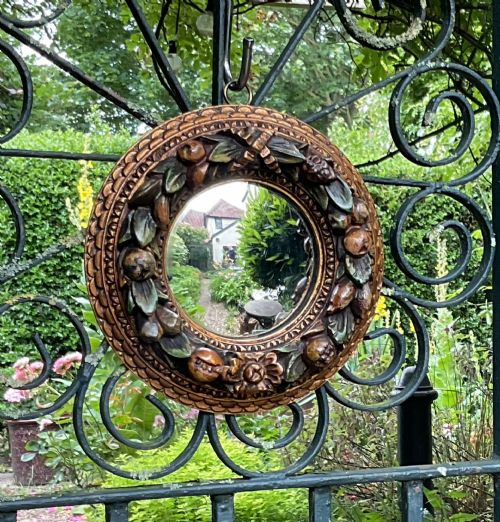
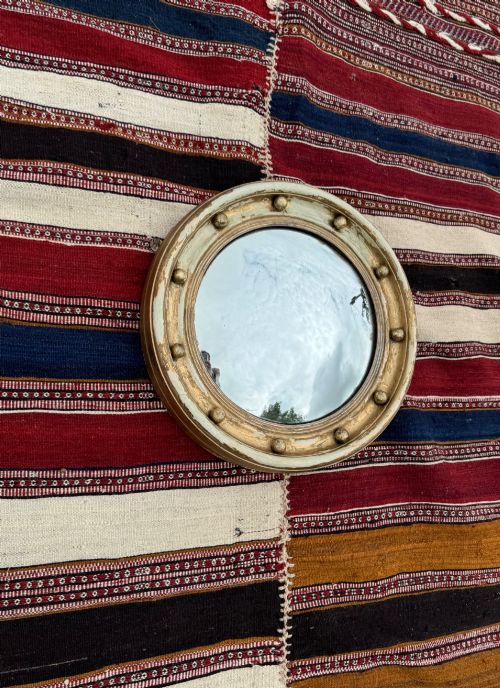
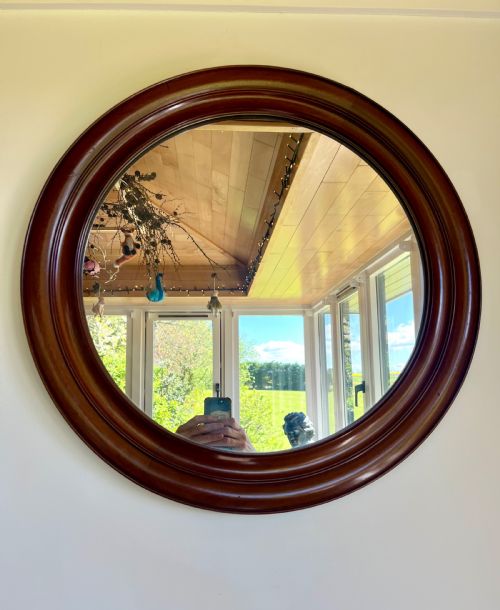
The most common pieces on this page are Edwardian round gilt mirrors and convex glass frames dating from nineteen hundred. Buyers also encounter mahogany surrounds, copper Art Nouveau frames with bevelled glass, and oak and gesso Gothic designs.
Beyond domestic wall mirrors, the selection includes related circular forms such as Butler's mirrors and mirror plateaus. Occasional architectural salvage and fairground panels appear, expanding the range of circular glass available to collectors.
How they were made
Makers built these frames using carved wood, mahogany, oak and ebonised wood, often applying gesso to create crisp relief ornament before gilding the surface. Giltwood and plain gilt finishes dominate the traditional circular frames.
Alternative materials include copper, particularly in Art Nouveau pieces, alongside specialist mirror glass such as bevelled plates and curved convex surfaces. Etched decoration appears on select plates to add pattern to the glass itself.
Listings feature periods from the nineteenth century through nineteen twenty, alongside Edwardian styles, Regency revivals and Arts and Crafts designs.
What varies in quality
The standard of carving and the application of gesso determine the definition within the frame mouldings. Crisp, deep relief work on giltwood and carved wood stands apart from softer, simpler moulding profiles.
The quality of the mirror plate itself, whether flat bevelled glass or curved convex glass, defines the optical finish. Original silvering and clean plate edges preserve the character of these circular pieces.
The Edwardian Round Mirror Glossary
- Convex glass
- Curved mirror glass that projects outward, often called a butler's mirror plate. It provides a wide-angle reflection of the interior.
- Gesso
- A plaster-based mixture applied to wood frames before gilding. It allows craftsmen to carve intricate relief details.
- Giltwood
- Timber coated with gold leaf or gilt finish. This material reflects light effectively in period rooms.
- Bevelled glass
- Mirror plate with an angled edge ground down around the perimeter. This catches light and adds depth to the glass.
- Butler's mirror
- A circular convex mirror historically placed to monitor a dining room. The curved glass captures the entire space in miniature.
Edwardian Round Mirror: Frequently Asked Questions
Where should I hang a round mirror?
These circular pieces suit mantelpieces, hallways and living room focal points where their shape breaks up linear wall furniture.
They bounce light across smaller spaces and pair well above sideboards or console tables.
How do I date an edwardian mirror?
Dating relies on frame materials, construction methods and style markers like Art Nouveau copper work or heavy gesso ornamentation.
Comparing the backing boards, fixings and glass bevelling to known period examples confirms the era.
Are these mirrors heavy?
Weight varies depending on the timber frame, gesso depth and the thickness of the glass plate.
Larger giltwood and mahogany pieces require secure wall fixings suited to their substantial build.