
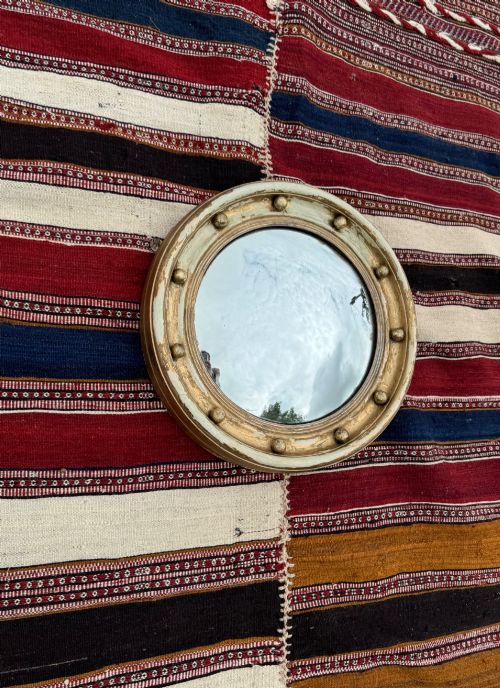


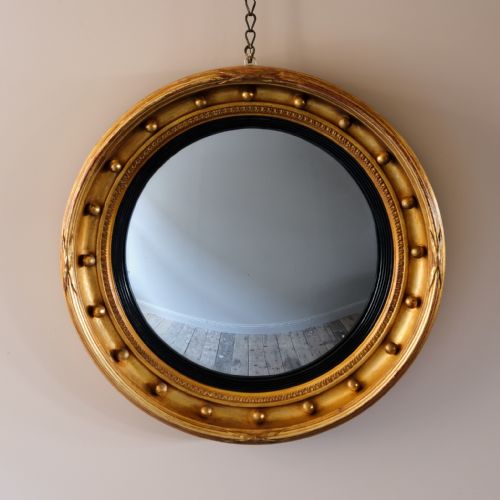


Decorative Convex Mirror
A decorative convex mirror distorts the room in a dark, gleaming curve that draws the eye across any wall.
Decorative Convex Mirror
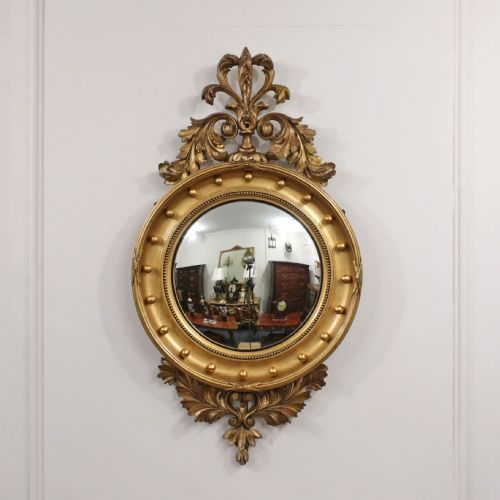
A decorative convex mirror bends reflections across a curved glass plate, offering a wide, circular view of an entire interior space. These pieces appear most frequently in Regency, Victorian, and early twentieth-century forms, often housed in heavy round frames.
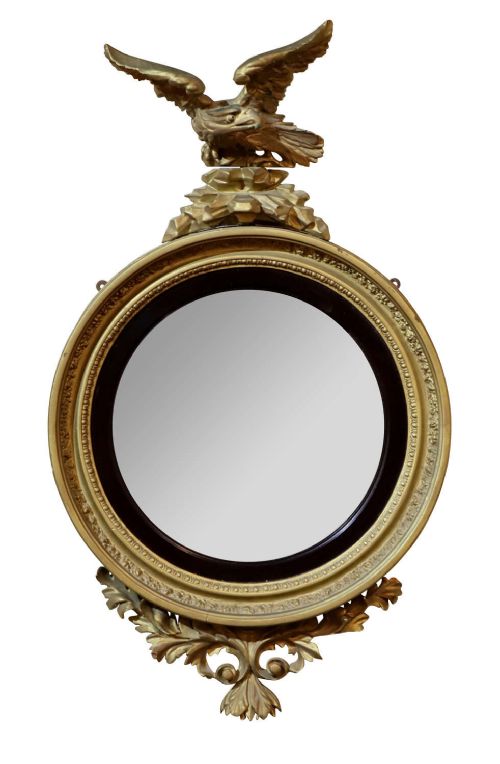
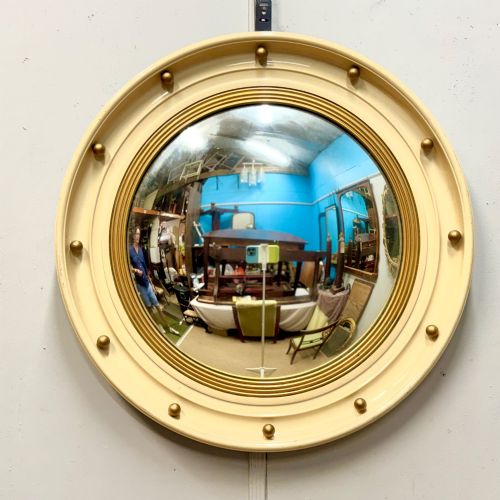
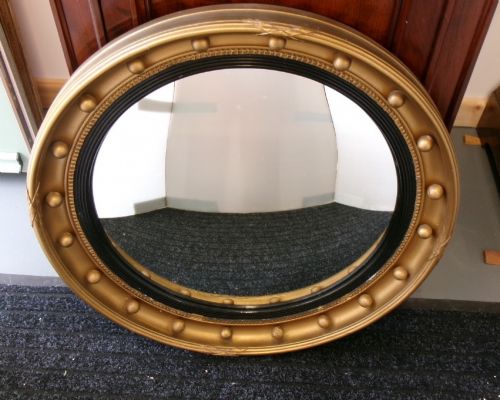
The materials and styles span from classic giltwood and ebonised wood to painted finishes and gilt gesso. Many examples feature circular wooden frames, sometimes accented with an eagle surmount or styled as porthole and sorcerer mirrors.
How they were made
Makers shaped heavy timber and applied layers of gesso before gilding or painting the circular frames. Convex glass plates were cast and silvered to fit snugly within the wooden surrounds, often protected by an ebonised inner slip.
Finishes range from polished giltwood to matte paint and ebonised wood. Details such as carved eagles and decorative mouldings were fixed to the top or integrated directly into the timber frame.
Decorative Convex Mirror Retail Price Guide 2026
Typical asking prices for decorative convex mirror among the pieces listed under this phrase on Sellingantiques today, from the lower quarter to the upper quarter. They describe what is for sale here now, not the wider market.
Sorcerer mirrors were once thought to ward off dark spirits by trapping them in their bulging glass.
What varies in quality
The depth of the carving and the crispness of the giltwood separate standard examples from finer works. Original gilding and well-preserved gesso show superior handcrafting compared to later painted replacements.
The clarity and age of the convex glass contribute significantly to the character of the piece. Substantial wooden frames with intact decorative details like eagle surmounts indicate a higher tier of manufacture.
The Decorative Convex Mirror Glossary
- Convex glass
- A curved glass plate that bulges outward to create a wide-angle reflection of the surrounding room. This form was traditionally used to oversee large spaces.
- Giltwood
- Wood coated with a thin layer of gold leaf over gesso. This finish creates a bright, reflective surface characteristic of formal wall mirrors.
- Ebonised slip
- A dark, black-painted inner moulding positioned between the mirror glass and the outer frame. It adds visual depth to the composition.
- Eagle surmount
- A carved wooden bird figure mounted at the top of the mirror frame. Such ornaments were popular on Regency and Victorian wall mirrors.
- Sorcerer mirror
- An alternative name for a convex mirror, traditionally associated with magical or protective domestic objects. The curved surface distorts perspective in a striking manner.
Decorative Convex Mirror: Frequently Asked Questions
Where should I hang a decorative convex mirror?
These pieces suit reception rooms, halls, and lounges where the wide reflection captures natural light and movement.
Position the mirror at eye level to make the most of the curved perspective.
How do I identify a Regency convex mirror?
Regency examples frequently feature giltwood frames with reeded ebony slips and carved eagle crests at the top.
The materials and construction methods align with early nineteenth-century cabinetmaking practices.
What is a porthole mirror?
A porthole mirror is a round convex glass set within a deep, heavy frame resembling a ship window.
This style gained popularity during the Victorian era for domestic interiors.
How do I care for antique giltwood?
Dust the surface gently with a soft, dry brush to protect the delicate gold leaf and gesso layers.
Avoid liquid cleaners and moisture, which can damage the historic finish.