



Vintage Porcelain Centrepiece Bowl
These vintage porcelain centrepiece bowl examples range from eighteenth-century punch bowls to Edwardian lustre pieces designed to command a dining table.
Vintage Porcelain Centrepiece Bowl
A vintage porcelain centrepiece bowl serves as a dramatic focal point, taking the form of large decorative bowls, punch bowls, comports, and jardiniere planters. The selection spans the eighteenth, nineteenth, and early twentieth centuries, encompassing Victorian, Edwardian, Art Nouveau, and Art Deco aesthetics.
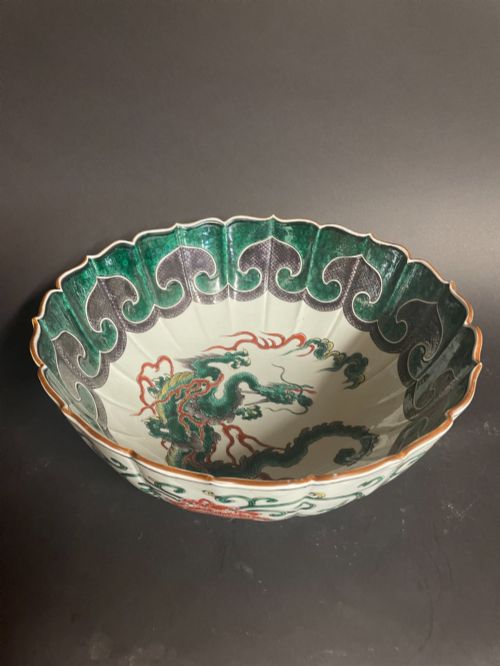
Makers from English factories, continental European kilns, and Japanese workshops produced these pieces for grand dining rooms and display tables. Collectors encounter everything from Japanese Imari wares and Chinese export punch bowls to elaborate German figural porcelain with applied flowers and putti.
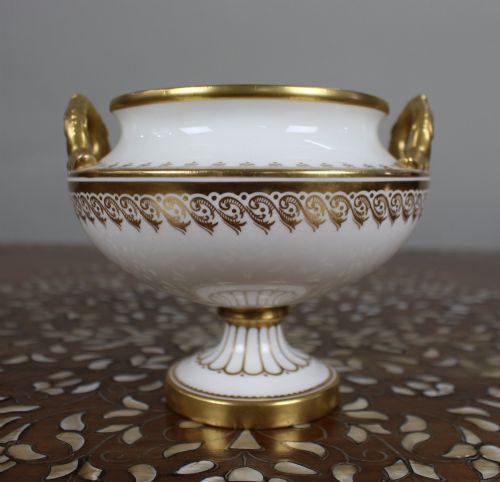
The utility of these vessels stretches from holding fruit and flowers to standing alone as monumental decorative objects. Forms include scallop edges, octagonal geometries, two-handled urns, and openwork baskets reflecting Rococo Revival and Neoclassical tastes.
Materials and Construction
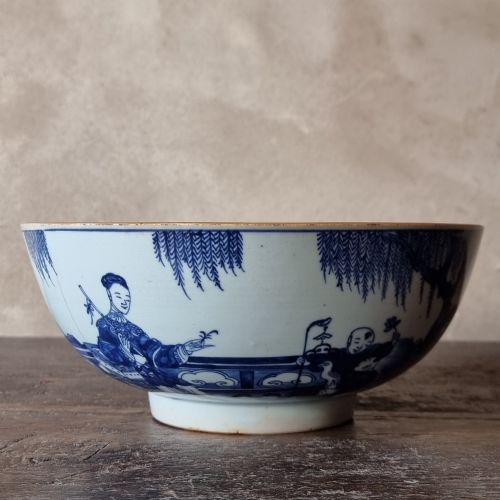
Potters shaped these vessels using ceramic clay, porcelain, earthenware, and ironstone, applying fluid glazes before high-temperature firing. Many surfaces feature hand-painted cobalt blue motifs, polychrome enamels, and intricate landscape views.
Makers enriched the porcelain bodies with gold leaf, gilt, and heavy gilding to highlight moulded details and rims. Elaborate centrepieces incorporated applied three-dimensional elements such as roses, musical putti, and pierced galleries.
The selection includes Japanese Imari wares, English lustre bowls, and continental figural centrepieces with applied putti.
Factors That Distinguish Quality
The standard of a piece rests upon the crispness of the moulding and the ambition of the hand-painting. Superior examples display finely detailed brushwork, precise gilding, and intricate modelled figures rather than simple printed transfers.
Scale and complexity also define the better specimens, where monumental size combines with labour-intensive techniques like openwork lattice, applied floral clusters, or specialist lustre glazes.
Wedgwood·Royal Worcester·Royal Doulton·Meissen·Mason·Kinkozan·Rockingham
The Vintage Porcelain Centrepiece Bowl Glossary
- Imari
- A traditional Japanese style of porcelain decorated in underglaze blue, iron red, and gold. These pieces often feature dense floral and panel designs.
- Lustre
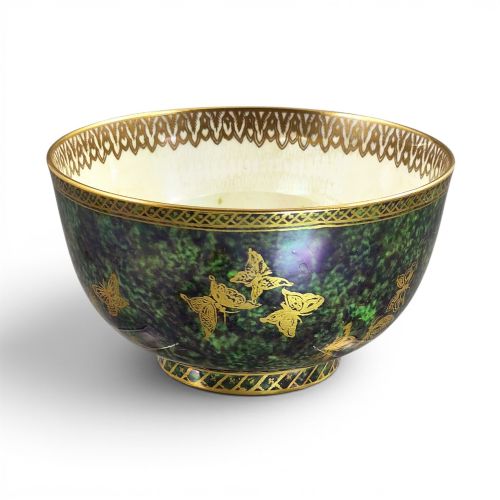
- A type of ceramic glaze containing metallic oxides that produce an iridescent, glowing surface effect. Wedgwood pieces by Daisy Makeig-Jones utilise this technique extensively.
- Putti
- Depictions of plump, winged infant figures, frequently modelled in high relief on nineteenth and twentieth-century continental centrepieces. They often scramble among applied floral garlands.
- Comport
- A decorative raised dish or bowl used for serving fruit or sweetmeats on a formal dining table. They frequently stand on an integral pedestal or foot.
- Ironstone
- A heavy, durable type of earthenware patented in the nineteenth century to imitate true porcelain. It provides a robust body for large bowls and comports.
Vintage Porcelain Centrepiece Bowl: Frequently Asked Questions
What distinguishes an 18th century punch bowl?
Eighteenth-century punch bowls were manufactured primarily for communal drinking at social gatherings, often featuring deep basins and wide rims to accommodate ladles. Chinese export and continental European examples from this era frequently display hand-painted cobalt blue or polychrome motifs.
These pieces were built with heavy walls to withstand frequent use during lively assemblies. Today, they function principally as decorative table centrepieces or display vessels.
How do I identify Japanese Imari porcelain?
Japanese Imari porcelain is characterised by a distinct palette dominated by cobalt blue, burnt orange or iron red, and abundant gold leaf details. The decoration typically covers the surface in intricate floral, geometric, and panel patterns.
Items from the nineteenth century onward often display rich variations in the quality of the gilding and the weight of the porcelain body.
What are Fairyland Lustre bowls?
Fairyland Lustre bowls are decorative ceramic vessels produced by Wedgwood from designs by Daisy Makeig-Jones during the early twentieth century. They showcase fantastical scenes involving goblins, phoenixes, and mystical landscapes set against vibrant mottled orange, green, or dark grounds.
The appeal of these items lies in their complex chemical glaze effects and imaginative narrative storytelling across the ceramic surface.
How were figural centrepieces used?
Figural centrepieces featuring putti, musical figures, and applied roses served as ornamental showpieces for dining tables and drawing rooms during the Victorian and Edwardian periods. They were designed to catch the eye and display the technical skill of continental potteries.
Because of their delicate applied elements, such as individual ceramic petals and projecting limbs, these vessels required careful placement away from high-traffic areas.