
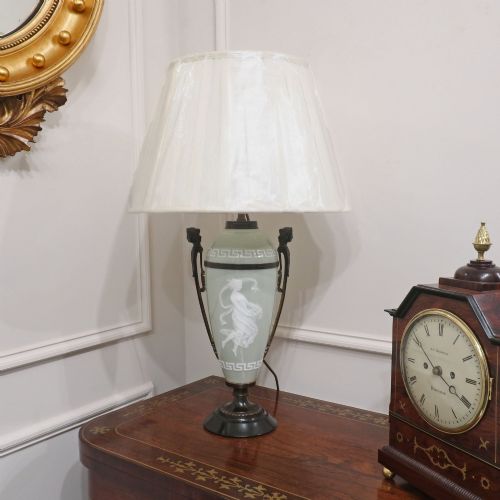
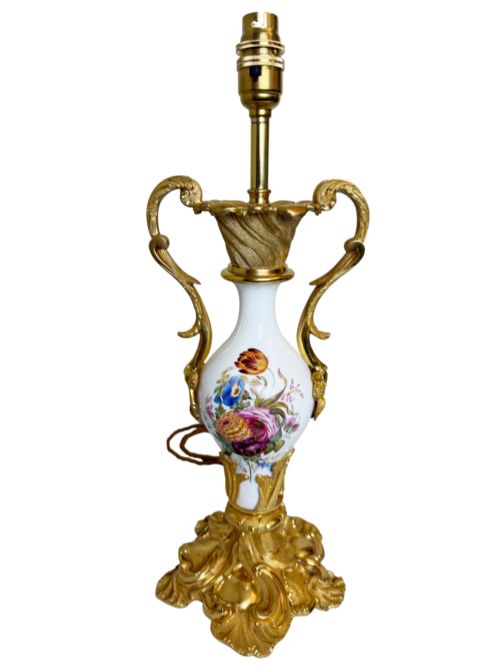
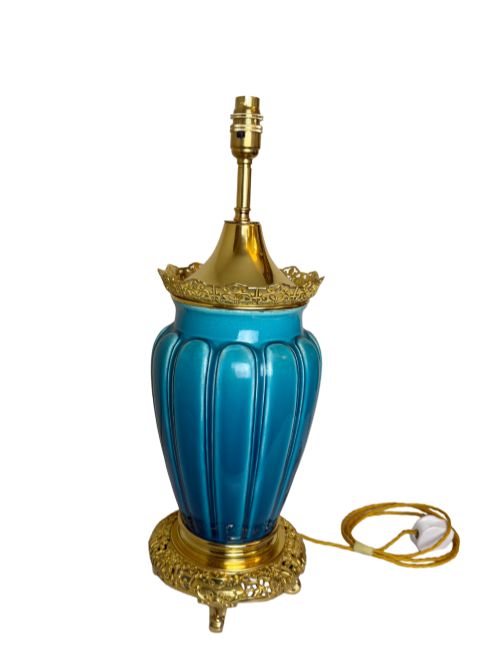
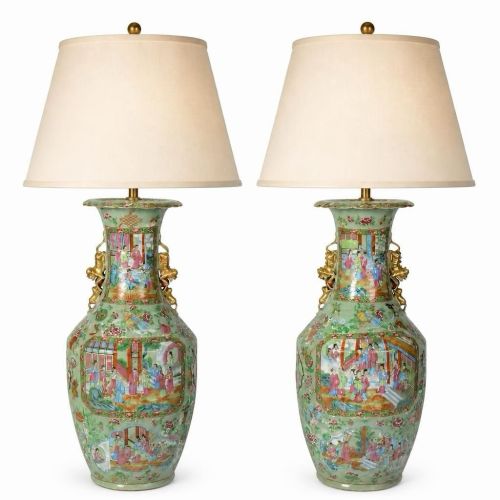




Vintage Porcelain Bedside Lamps
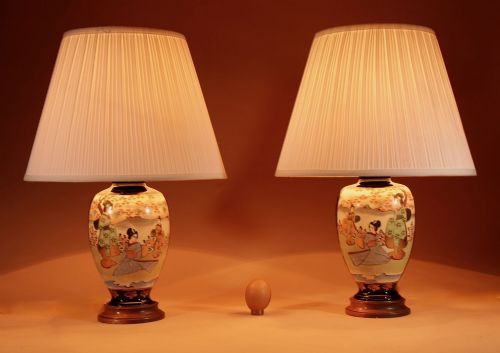
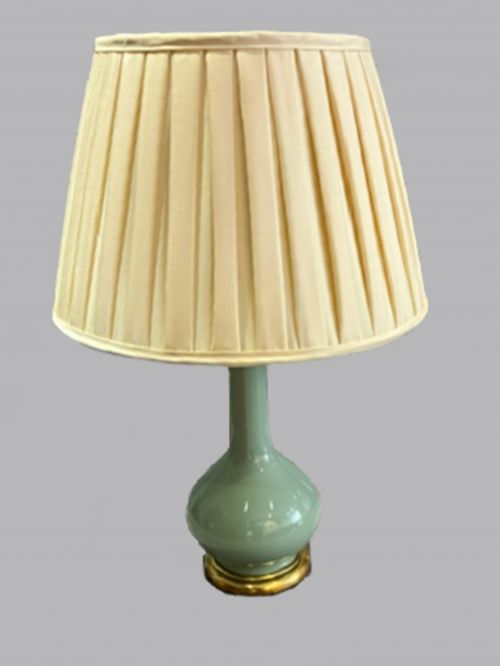
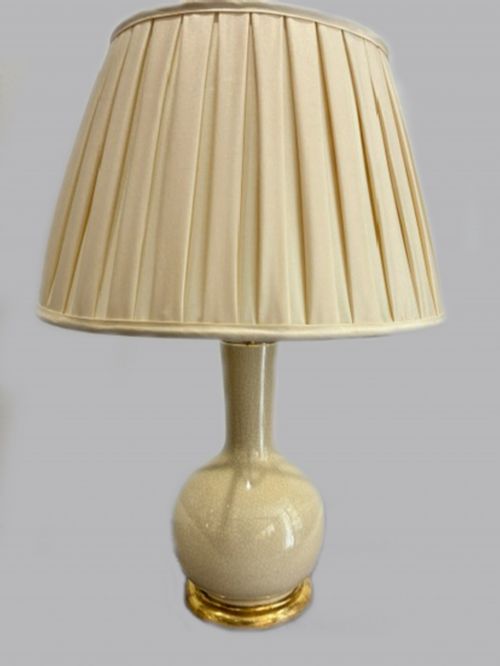
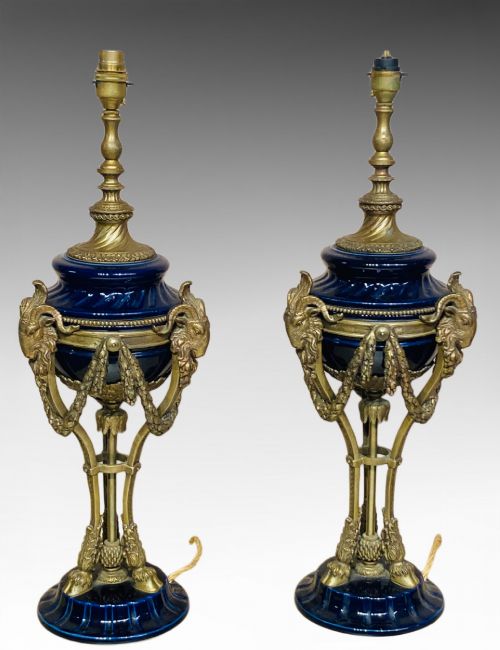
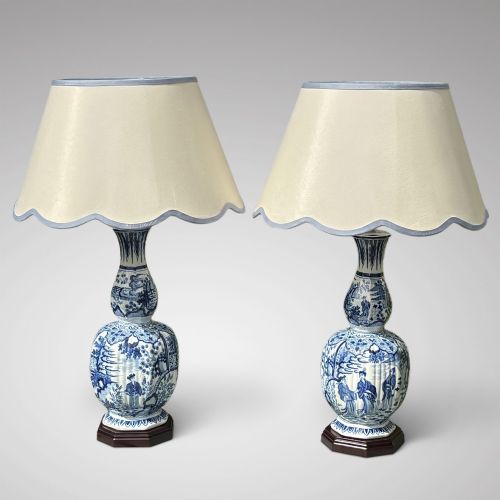
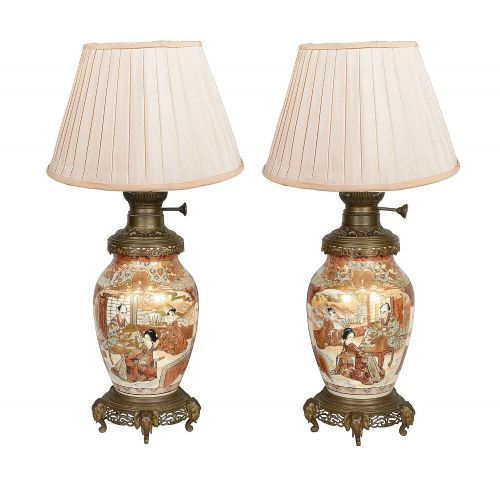
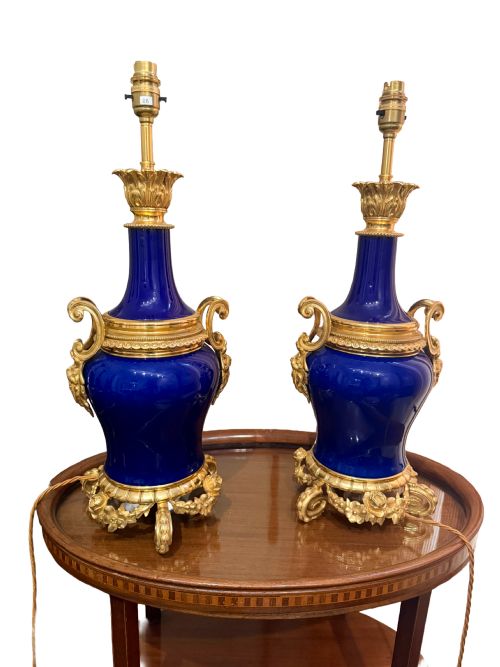
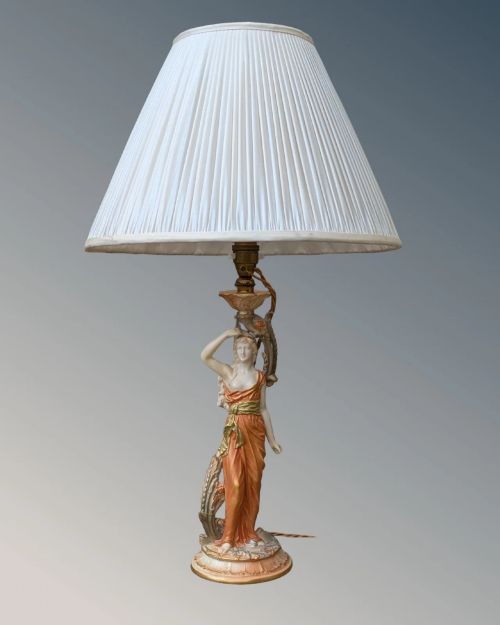
These vintage porcelain bedside lamps bring tactile glaze, hand-painted motifs and cast metal mounts to a bedroom table.
Vintage Porcelain Bedside Lamps
Vintage porcelain bedside lamps combine utility with decorative ceramic bodies sourced from European factories and Asian kilns. When searching for vintage porcelain bedside lamps, buyers encounter diverse forms ranging from nineteenth-century Chinese ginger jars and Japanese Satsuma vases to French Paris ware and German porcelain figures converted into table lighting.
The selection spans various historical periods, with nineteenth-century pieces sitting alongside early twentieth-century examples from the 1920s, 1930s, and 1940s. Many units arrive as matched pairs, utilising classic motifs such as blue and white prunus blossom, famille verte, and neoclassical revival styles.
How they were made
Makers shaped porcelain bodies on the potter's wheel or in moulds before applying glazes, enamels, and pate-sur-pate decoration, often firing the pieces multiple times to fix delicate colours. Artisans then mounted these ceramic vessels onto cast metal bases made from brass, bronze, or ormolu.
Metal collars, handles, and mounts were secured with pins or screws, while wiring ran through drilled bases or bespoke brass fittings. Lamps frequently pair porcelain with fabric or silk shades, occasionally complemented by gilt toleware and beaded details.
Materials paired with porcelain include brass, bronze, wood, silk, and enamel.
What varies in quality
Quality rests in the crispness of the porcelain body, the depth of the glaze, and the intricacy of the hand-painted details. Finer pieces display sharply defined facial expressions on figural lamps, precise enamel work on floral patterns, and thick, clean gilding that resists rubbing.
The quality of the metal mountings dictates overall weight and balance, with heavy cast bronze or ormolu trim providing greater stability than thin brass pressings. Matched pairs sharing identical kiln firing results and symmetrical hand-painted scenes command greater appreciation than assembled pairs.
Royal Worcester·Sitzendorf·Ernst Bohne Sohn·Gien·Sevres
The Vintage Porcelain Bedside Lamps Glossary
- Ormolu
- Gilt bronze mounted onto furniture, clocks, and lamps. This decorative technique involves applying a gold-mercury amalgam to bronze before heating.
- Satsuma
- Japanese earthenware or porcelain featuring a crackle glaze decorated with polychrome enamels and gilt. These wares often depict traditional figures, birds, and floral landscapes.
- Pate-sur-pate
- A method of ceramic decoration where relief designs are built up using layers of liquid porcelain slip. This technique creates a cameo effect against a contrasting coloured ground.
- Cloisonné
- Metalwork technique where enamel is applied within compartments created by soldering flat metal wires to a base. The piece is then fired and polished smooth.
- Blanc de Chine
- White porcelain produced in Dehua, China, known for its milky glaze and lack of surface decoration. The term translates simply from French as white from China.
Vintage Porcelain Bedside Lamps: Frequently Asked Questions
How do I date a porcelain lamp?
Dating relies on factory marks stamped or painted on the base, combined with stylistic clues from the glaze and metal mounts. Nineteenth-century pieces often show hand-thrown irregularities and mercury gilding.
Twentieth-century examples transition to cleaner mould work and modern wiring components. Comparing the mounting style to known furniture periods helps narrow down the decade.
Are these lamps supplied as pairs?
Many listings feature balanced pairs of lamps, particularly those converted from Chinese ginger jars or Japanese Satsuma vases. Matched pairs share identical height, glaze tones, and hand-painted motifs.
Single lamps also appear frequently, often taking the form of figural subjects, owl designs, or column standards.
Can I replace the lampshade safely?
Replacing the lampshade is straightforward provided the new shade matches the harp or shade carrier fitting. Standard bridge or spider fitters suit traditional harp assemblies found on vintage lighting.
Silk and fabric shades diffuse the light effectively while balancing the visual weight of the porcelain base.
How do I clean antique porcelain?
Clean the porcelain body using a soft, dry cloth or a feather duster to remove surface dust. Stubborn grime on glazed surfaces requires a damp cloth with mild soap, avoiding unglazed biscuit porcelain.
Keep moisture away from metal mounts and electrical components to prevent tarnishing and wiring damage.