
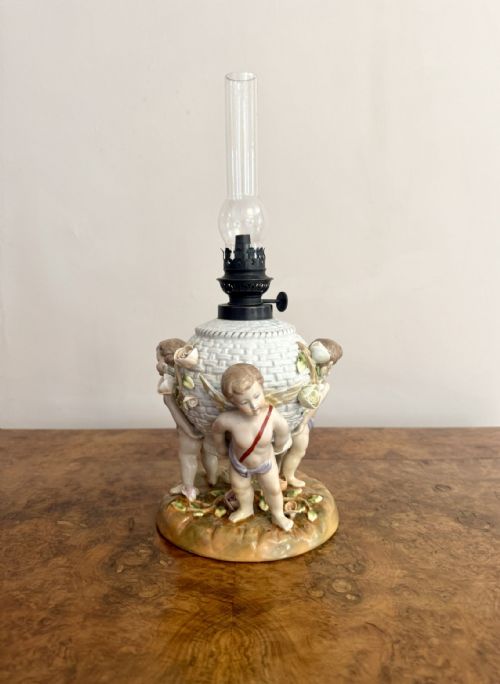


Cherub Porcelain Table Lamp
A cherub porcelain table lamp brings nineteenth-century figural charm and soft illumination into a room through moulded ceramic figures combined with metal mounts.
Cherub Porcelain Table Lamp
A cherub porcelain table lamp combines sculptural ceramic figures with functional lighting, drawing on nineteenth-century and early twentieth-century manufacturing traditions. These pieces take the form of table lamps and converted oil lamps, often featuring winged putti alongside vases or floral stems.
The pieces on this page span Victorian, Rococo Revival, and Louis XVI styles, originating primarily from French and German workshops. Makers such as Sitzendorf, Meissen, Sevres, and Schierholz are represented through porcelain bodies paired with brass, ormolu, gilt bronze, and glass.
Buyers will most frequently encounter nineteenth-century examples and items from around nineteen hundred, ranging from single table lamps to matched pairs. Many started life as oil lamps before receiving later electrical fittings and shades of fabric or gilt toleware.
How they were made
The foundation of each cherub porcelain table lamp is hard-paste or soft-paste ceramic, shaped by hand or in moulds to create the rounded limbs and expressive faces of the figures. Painters then applied polychrome enamels, cobalt blue, and gilt highlights before a final kiln firing.
Mounts and structural collars utilise cast metals including brass, ormolu, gilt bronze, and gilt metal to secure the porcelain bodies to heavy bases of onyx or metal. Textile components like fabric shades and beaded fringes complete the construction of surviving examples.
Watch out for cheeky porcelain cherubs trying to hold up entire lighting columns like tiny, winged Atlas figures.
What varies in quality
Quality in a cherub porcelain table lamp rests upon the modelling of the ceramic figures and the crispness of the hand-painted details. Finer pieces display delicate facial expressions, subtle flesh tones, and intricate floral appliques rather than flat or heavily simplified glazes.
The distinction between standard production and exceptional work also lies in the metal mounts and secondary materials. Heavy cast ormolu, gilt bronze, and polished onyx bases demonstrate superior workshop standards compared to simpler brass components.
Sitzendorf·Meissen·Sevres·Schierholz
The Cherub Porcelain Table Lamp Glossary
- Ormolu
- Gilded bronze used for decorative mounts and decorative trim on nineteenth-century furnishings and lamps. This technique creates a rich golden finish that contrasts with glazed porcelain.
- Sitzendorf
- A German porcelain factory known for figural work and decorative wares. Pieces from this manufacturer often feature detailed modelling and colourful hand-painted decoration.
- Rococo Revival
- A nineteenth-century design style emulating the asymmetry and scrollwork of the eighteenth-century French movement. It frequently incorporates cherubs, C-scrolls, and naturalistic floral motifs.
- Bleu Celeste
- A bright turquoise blue enamel ground colour famously utilised by the Sevres porcelain manufactory. It provides a striking backdrop for gilt bronze mounts.
- Toleware
- Painted or lacquered sheet metal used historically for trays, canisters, and lamp shades. In these listings, it appears on French shade structures paired with beadwork.
Cherub Porcelain Table Lamp: Frequently Asked Questions
What periods do these lamps come from?
The pieces span the nineteenth century and the early twentieth century, with items dated across the Victorian era, the eighteen-eighties, eighteen-nineties, and up to nineteen twenty.
Design influences range from French Rococo Revival to Louis XVI style, reflecting the decorative tastes of European porcelain houses during those decades.
Were these lamps originally oil lamps?
Several examples on this page began as oil lamps before being converted to accept electrical fittings and modern bulbs.
This conversion history is common for nineteenth-century lighting, where original fonts and burners were adapted to suit domestic electricity while retaining the decorative ceramic base.
How do French and German pieces differ?
French pieces often incorporate neoclassical Louis XVI styling or elaborate gilt toleware and ormolu mounts, associated with makers like Sevres.
German production, particularly from factories like Sitzendorf, Meissen, and Schierholz, frequently leans into ornate Rococo Revival moulding featuring cherubs intertwined with floral oil lamp bodies.
What materials support the porcelain bodies?
The ceramic figural columns rest upon sturdy bases and utilise structural mounts made from brass, glass, gilt bronze, ormolu, and natural onyx.
Shades constructed from fabric and beaded glass elements are also paired with the metalwork to complete the overall assembly of the table lamp.