
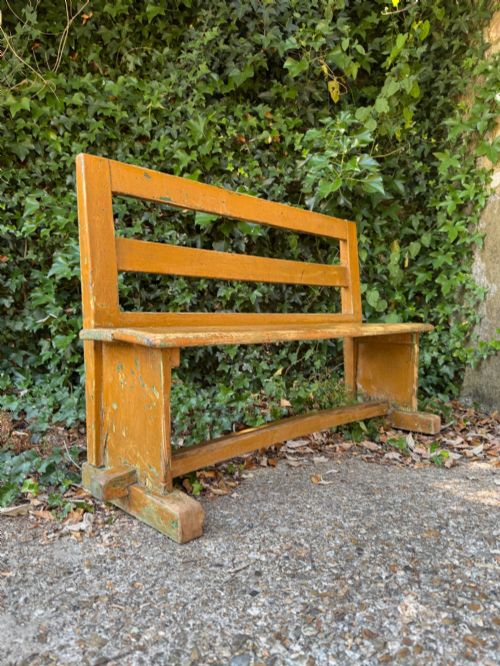
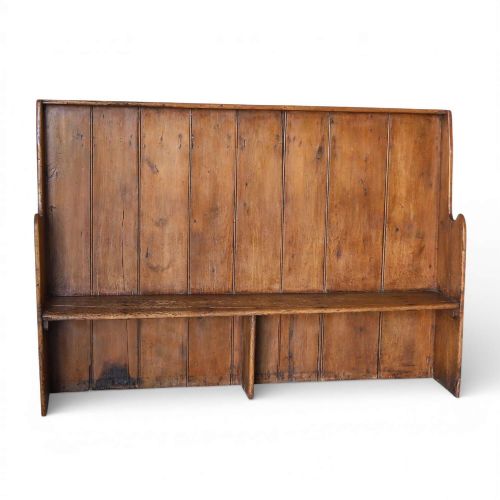
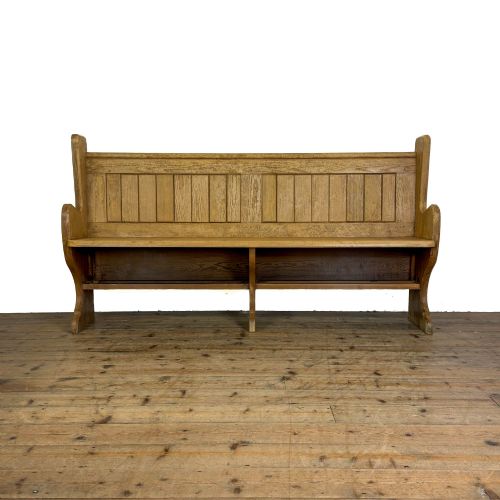
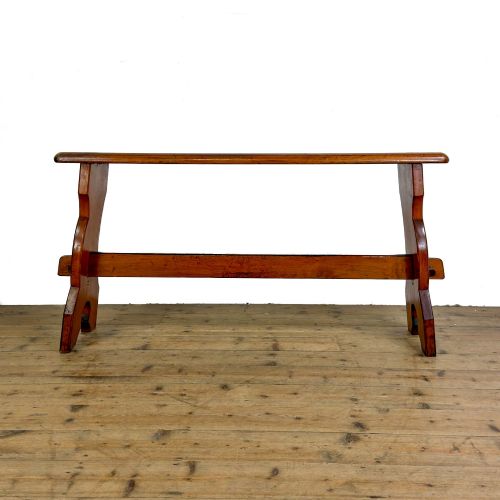

Vintage Pine Pew
These vintage pine pew options bring honest utilitarian character and warmth to a hallway, kitchen or dining space.
Vintage Pine Pew
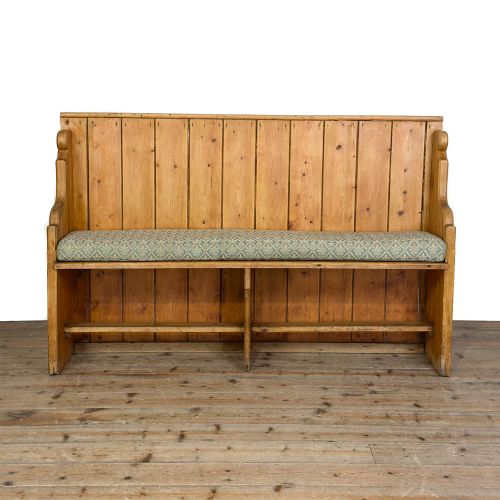
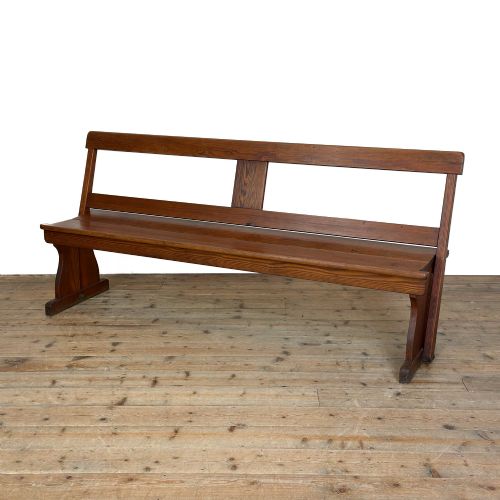
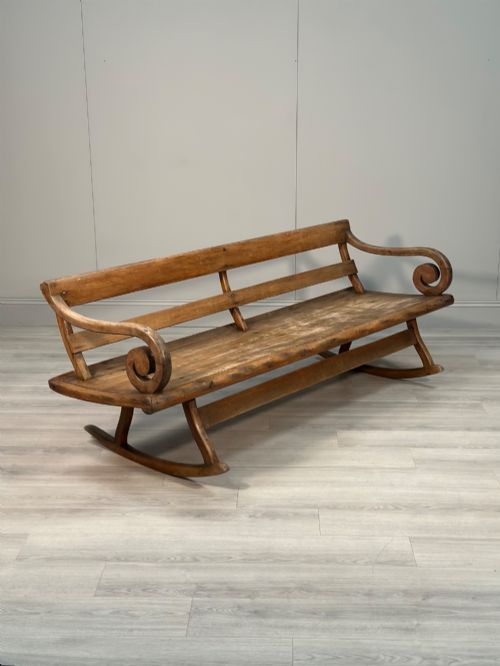
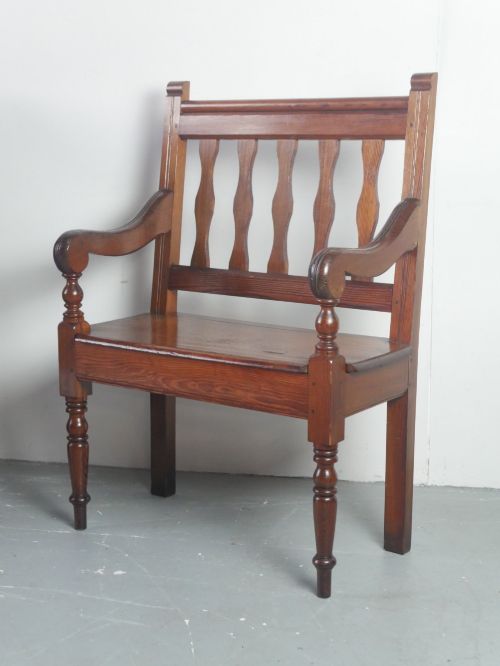
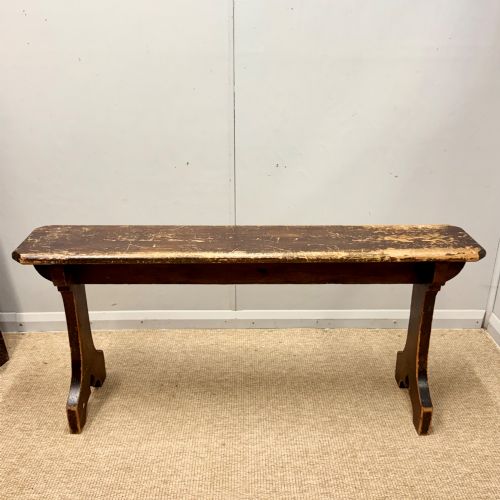
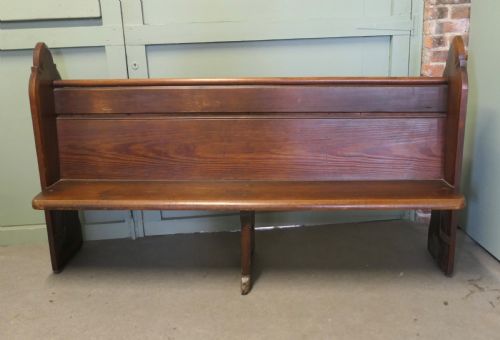
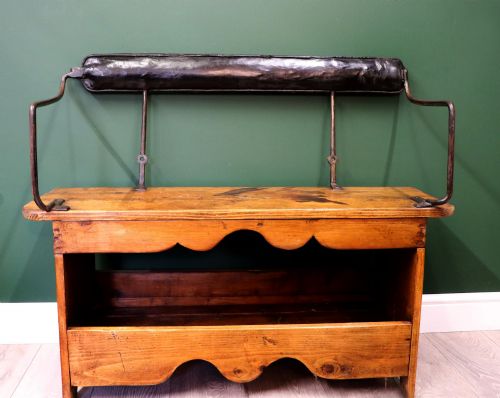
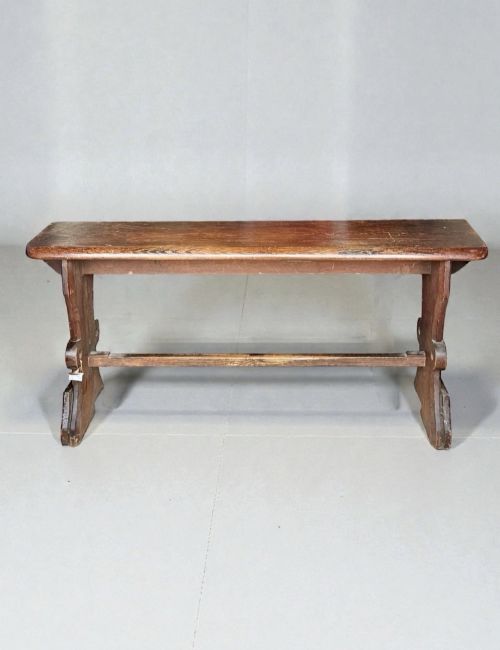
A vintage pine pew is a sturdy wooden seat rooted in ecclesiastical, domestic or institutional origins. When you search for a vintage pine pew, you encounter forms ranging from simple church benches to high-back settles and flip-over chapel seating.
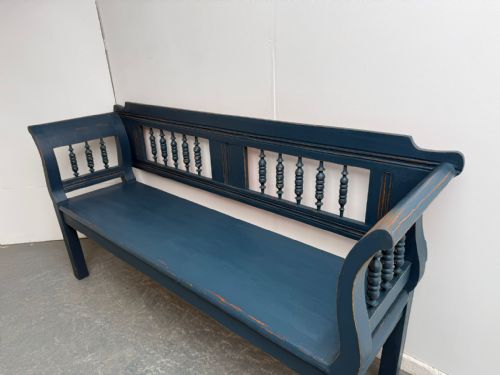
The pieces on this page span the nineteenth century through the Edwardian era, taking stylistic cues from English, French, Austrian, Hungarian and Scandinavian country traditions. You meet everything from plain school benches to painted tavern seating and pitch pine church pews.
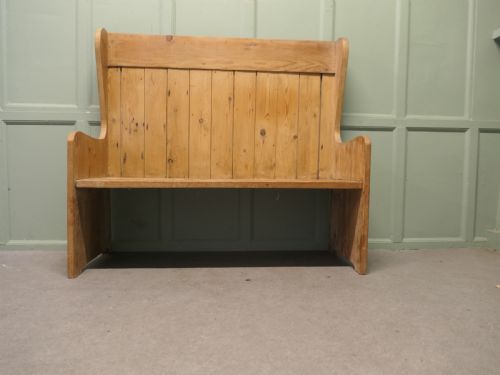
Settles with high backs and enclosed sides provide shelter from draughts in domestic interiors, while chapel and church pews offer linear timber seating designed for communal spaces. Many examples display the practical utility of public houses, railways and places of worship.
Materials and construction
Makers relied primarily on pine and pitch pine, supplemented by timber boards, iron brackets and occasional cast iron elements. Structural integrity came from solid wood construction built to withstand heavy daily use in public buildings and homes.
Surfaces were finished with wax, left in their natural state or coated in paint, sometimes showing patination from decades of wear. Elements like spindles, turned legs and fabric upholstery appear on specific regional and domestic variations.
Regional styles span English, French, Austrian, Hungarian and Scandinavian country traditions.
Assessing quality and character
Quality rests in the integrity of the timber, the honesty of the construction and the depth of the patination built up over generations of use. Original paint finishes or honey brown waxed surfaces elevate a piece above later interventions.
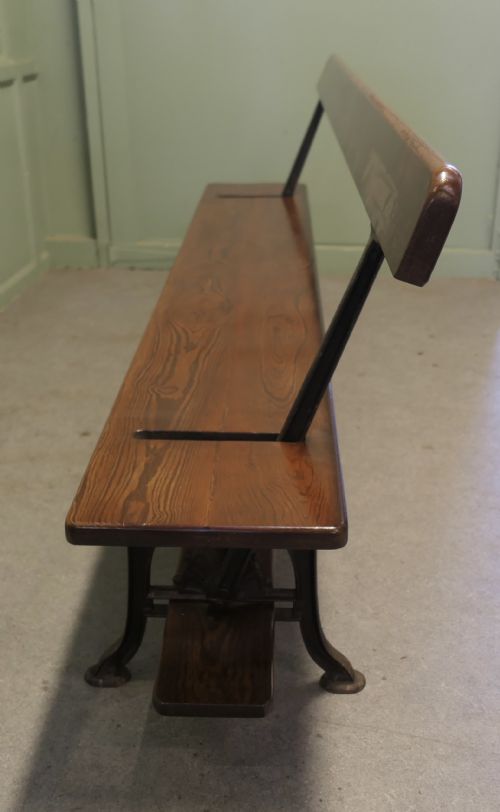
Proportion and scale dictate desirability, with neat hall benches and exceptionally long dining formats offering distinct placement options. Retained institutional markings or specialised mechanisms, such as reversible tram seats or flip-over chapel backs, add functional interest.
The Vintage Pine Pew Glossary
- Settle
- A wooden bench with a high back, solid wooden arms and often an enclosed base designed to keep out draughts. These pieces frequently served beside the hearth in traditional domestic settings.
- Pitch pine
- A dense, resinous softwood with a pronounced grain pattern utilised for heavy-use ecclesiastical and institutional furniture. It offers superior durability compared to softer varieties of timber.
- Flip-over bench
- A dual-directional seat featuring a movable backrest that pivots to face either direction. This clever mechanism saw service in railway carriages, trams and chapels.
- Patina
- The surface sheen and colour acquired by timber through age, handling, waxing and exposure to light. This visual depth develops naturally over decades of continuous use.
- Ecclesiastical furniture
- Pieces specifically constructed for religious buildings, including churches, chapels and vestries. Such items encompass church pews, organist benches and clergy seating.
Vintage Pine Pew: Frequently Asked Questions
Where do these pews originate?
The listings include pieces from English, French, Austrian, Hungarian and Scandinavian traditions. They originated in churches, chapels, schools, public houses and domestic halls.
Origins often dictate the construction style, ranging from painted continental settles to sturdy pitch pine church seating.
How do I use a high-back settle?
High-back settles were originally designed to block cold draughts in unheated hallways and fireside spaces. Today, they function effectively in dining areas or entryways.
Their enclosed sides create a distinct sense of enclosure and provide practical back support.
How do I care for waxed pine?
Waxed pine surfaces benefit from occasional applications of natural beeswax to nourish the timber. Avoid placing them near direct heat sources to prevent the wood from drying out.
Regular dusting with a soft cloth preserves the existing honey brown patination.