


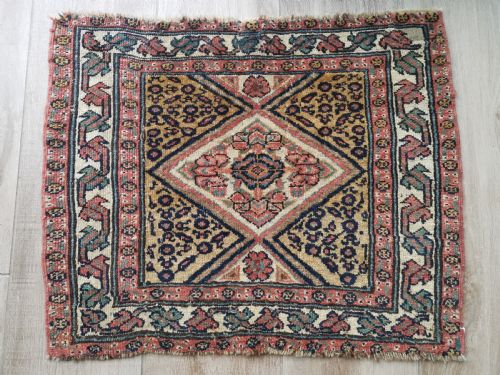


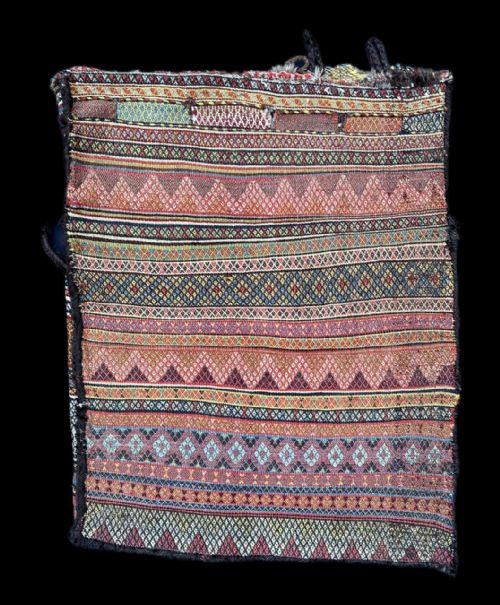


Vintage Persian Saddlebag Face
These vintage persian saddlebag face pieces are woven tribal fragments brought down from the mountains and tents to serve as striking wall art.
Vintage Persian Saddlebag Face
A vintage persian saddlebag face is a textile fragment salvaged from nomadic equestrian baggage, most frequently encountered here as panels or half-bags originating from the nineteenth century up to nineteen hundred.
Makers include tribal groups such as the Afshar, Shahsavan, Qashqa'i, Luri, Heriz, Jaf, and Kurdish weavers operating across regions from Fars Province to Western and North-West Persia.
The surviving examples range from sumac khorjin and storage bags to complete saddle bags retaining plain weave backs, showcasing traditional tribal designs.
Materials and construction methods
Weavers utilised hand-spun wool combined with cotton foundations, employing natural dyes to achieve the rich colour palettes seen across these tribal textiles.
Construction techniques include flat-woven sumac work alongside pile-woven surfaces, finished with plain weave backs on complete bags or sturdy borders on cut fragments.
Vintage Persian Saddlebag Face Retail Price Guide 2026
Typical asking prices for vintage persian saddlebag face among the pieces listed under this phrase on Sellingantiques today, from the lower quarter to the upper quarter. They describe what is for sale here now, not the wider market.
Materials recorded across these textiles consist exclusively of wool, cotton, and natural dyes utilised in hand-spun applications.
Distinguishing quality in tribal bag faces
The grade of wool directly influences the tactile appeal, with lustrous and luminous fibres setting superior examples apart from standard weaves.
Crispness of tribal design execution, such as large boteh motifs or geometric panels, separates master weavers from simpler utilitarian production.
The Vintage Persian Saddlebag Face Glossary
- Bag face
- The decorative front panel of a nomadic saddlebag, separated from the back and preserved as a textile or small rug.
- Sumac
- A flat-weave technique where coloured weft threads wrap around warp threads, producing a textured surface with durability.
- Khorjin
- The traditional Persian term for a double saddlebag used by nomads for transport and storage.
- Boteh
- An ancient almond or paisley motif representing a floral shoot or cypress tree, frequently utilised in tribal designs.
- Nomad
- A member of a community that moves with livestock from seasonal pasture to pasture, creating utilitarian textiles for daily transit.
Vintage Persian Saddlebag Face: Frequently Asked Questions
What is a vintage persian saddlebag face?
A vintage persian saddlebag face is the decorative front of a nomadic utility bag that has been preserved as a textile fragment. These pieces showcase traditional tribal artistry from nineteenth-century Persia.
Collectors mount these panels on walls or display them as small rugs to appreciate the historic weaving traditions.
How were these bags used originally?
Nomadic tribes utilised these double bags strapped across pack animals for storing household goods and personal belongings during seasonal migrations. The robust wool construction protected contents from weather and daily wear.
Over time, as bags wore out or split, the decorative faces were salvaged and kept for their aesthetic value.
How do I hang a bag face?
Textile conservators often recommend stitching a cotton sleeve to the reverse and sliding a flat wooden batten through it to distribute weight evenly. Alternatively, specialist velcro mounting systems secure fragments without puncturing the historic wool.
Avoid hanging textiles in direct sunlight to protect the natural dyes from fading.
How do I identify tribal origins?
Specific wool qualities, dye palettes, and structural characteristics point toward particular tribal groups like the Afshar or Shahsavan. Motif structures and regional weaving habits help attribute pieces to areas such as Fars Province or Western Persia.
Comparing knotting density and border patterns provides further clues to a piece's provenance.