


Vintage Persian Living Room Rug
These heavy hand-knotted floor coverings bring warmth and history to a vintage persian living room rug scheme.
Vintage Persian Living Room Rug
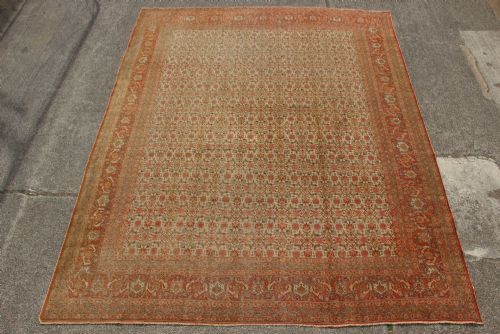
A vintage persian living room rug typically takes the form of a large room-size carpet or area rug originating from weaving centres across Persia, spanning the late nineteenth century to the mid-twentieth century. Buyers searching this phrase meet substantial woollen furnishings designed for heavy domestic use, often bearing traditional regional patterns.
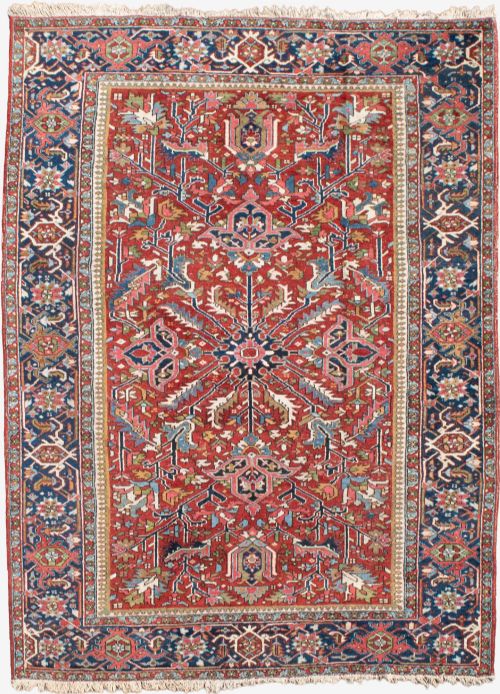
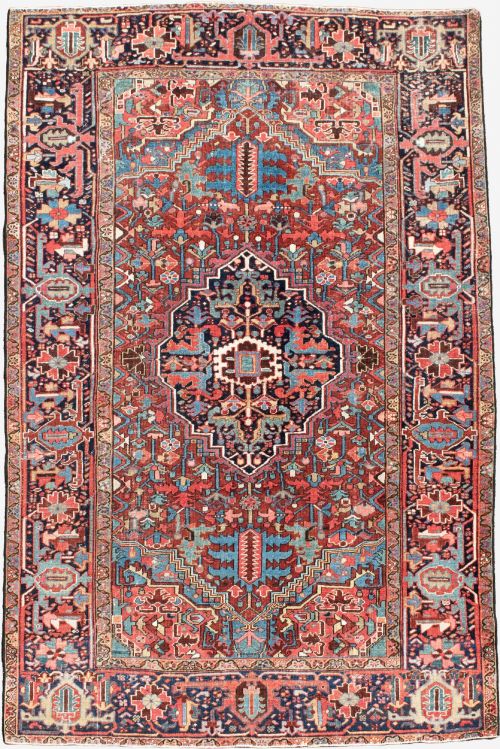
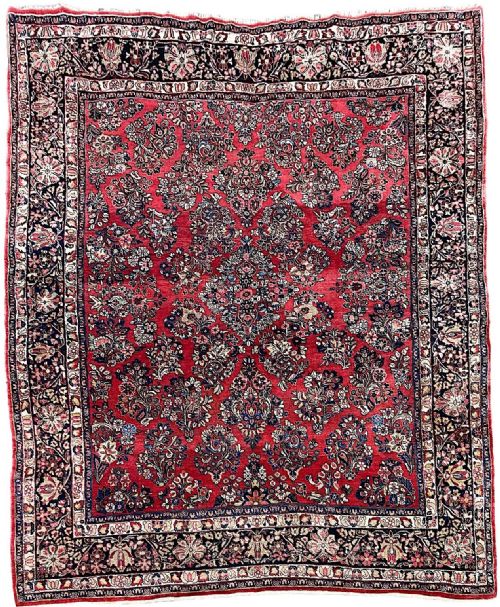
The selection includes specific regional types such as Heriz, Tabriz, Sarouk, Kashan, Kirman, and Qum carpets. These pieces range from tribal formats to formal room-size carpets, spanning dates from the 1870s up to the 1940s.
Materials and construction
Construction relies primarily on wool piles hand-knotted onto cotton foundations, occasionally incorporating silk elements in specific city rugs like Kashan or Qum pieces. The knotting technique binds the pile firmly to the warp and weft threads, creating a durable textile designed to withstand decades of foot traffic.
Dyers utilised natural and early synthetic colourants to achieve the soft pastel shades, rich reds, and deep blues characteristic of these carpets. The interplay of wool and cotton gives each piece its structural weight and distinct tactile handle.
Listings feature pieces spanning several decades, from the 1870s through to the 1940s, primarily woven from wool and cotton.
Distinctions in standard
Quality separates along the precision of the knotting, the fineness of the wool, and the complexity of the regional design. City-woven carpets like Tabriz or Qum often display intricate floral motifs and higher knot densities, whereas tribal pieces such as Heriz or Hamadan showcase bolder geometric structures.
The harmony of the palette and the integrity of the original foundation heavily influence the overall standing of a piece. Original dimensions and well-preserved edges indicate a higher standard of survival from the weaving period.
The Vintage Persian Living Room Rug Glossary
- Heriz
- A rug type originating from north-west Persia known for bold geometric medallions and durable construction. These carpets typically feature robust wool suited for heavy residential placement.
- Tabriz
- A city rug style from northern Persia characterised by fine knotting and elaborate floral or pictorial compositions. They often incorporate classical medallion designs executed in soft or contrasting palettes.
- Sarouk
- A Persian weaving originating from the central region, celebrated for dense structures and stylised floral sprays. They frequently employ soft pastel tones or deep rose grounds.
- Boteh
- A traditional teardrop or paisley motif representing a floral spray or cypress tree. This ancient symbol appears frequently across various Persian and tribal rug designs.
- Warp
- The stationary vertical threads stretched on the loom that form the structural skeleton of the carpet. The pile knots are tied around these longitudinal foundation threads.
Vintage Persian Living Room Rug: Frequently Asked Questions
How do I choose the right size for my space?
Measure your room dimensions carefully, ensuring you leave an adequate border of exposed floor around the perimeter of the rug. Room-size carpets generally anchor the central seating arrangement while allowing furniture legs to rest partly or fully upon the wool surface.
Consider the scale of your living area relative to the dimensions listed in the titles, ranging from compact formats to large four-metre room carpets. Proper clearance prevents the rug from overwhelming the proportions of the furniture.
How should I care for a wool pile carpet?
Vacuum the rug regularly using low suction without a rotating brush bar to prevent pulling the hand-knotted pile. Professional cleaning suited for antique textiles maintains the integrity of the wool and cotton foundation.
Keep the rug out of direct, prolonged sunlight to protect the natural and plant-based dyes from fading over time. Rotating the piece every year ensures even wear patterns across high-traffic areas.
What is the difference between Heriz and Tabriz carpets?
Heriz carpets feature strong geometric medallions and sturdy, coarse wool designed for hard-wearing domestic utility. Their designs rely on bold, rectilinear patterns rather than curved lines.
Tabriz carpets originate from a major urban weaving centre and exhibit finer knot counts with intricate, curved floral motifs. They often display sophisticated medallion layouts and city-workshop precision.
Are these carpets suitable for heavy traffic areas?
Traditional hand-knotted wool carpets were built specifically for durability and daily residential use. The dense pile and robust cotton foundations absorb friction effectively.
Using a quality underlay beneath the rug prevents slipping and reduces internal fibre abrasion from hard flooring. This simple addition extends the working life of older carpets in busy rooms.