


Ivory Floral Oriental Carpet
An ivory floral oriental carpet brings centuries of textile tradition into a room through intricate patterns and dyed natural fibres.
Ivory Floral Oriental Carpet
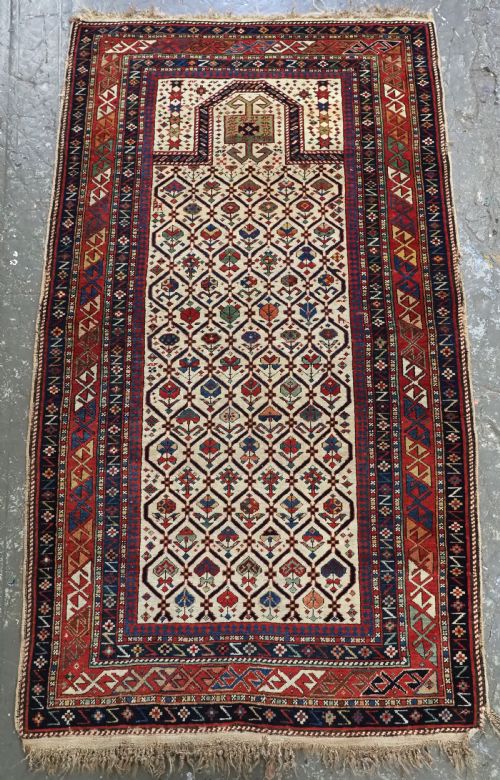
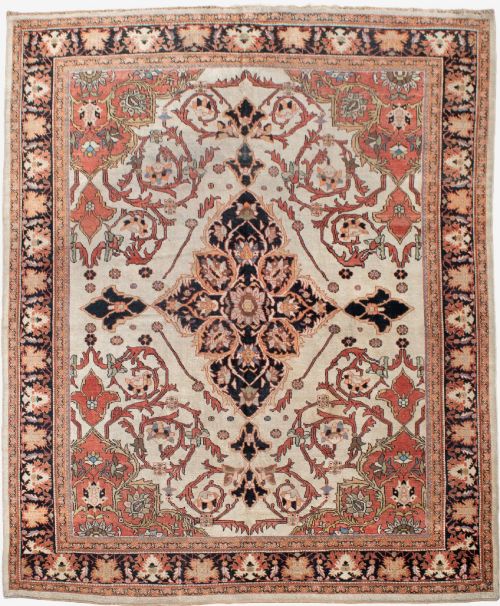
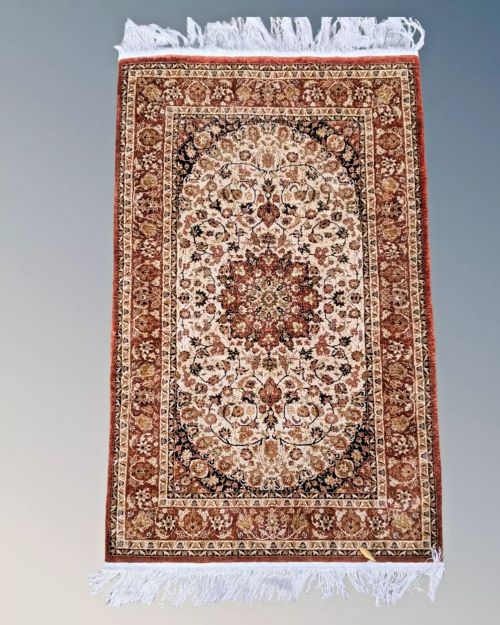
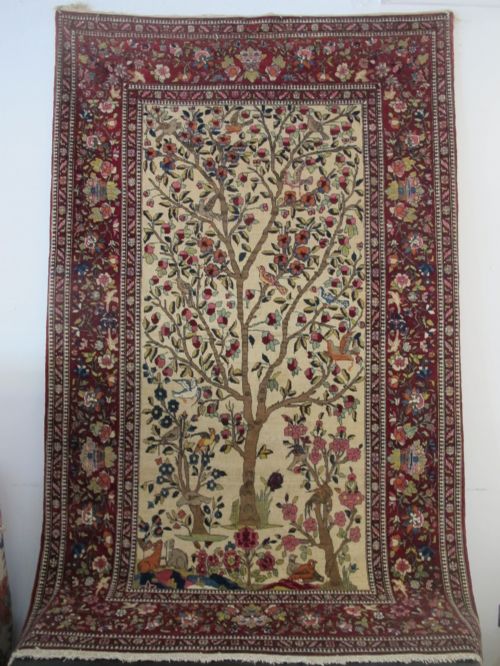
An ivory floral oriental carpet combines a pale neutral background with botanical motifs drawn from weaving traditions across Persia, the Caucasus, Kashmir, and China. These textiles appear in formats ranging from small prayer rugs to large room-size carpets woven between the mid-nineteenth century and the interwar period.
Buyers seeking this phrase encounter regional weaves such as Mahal, Tabriz, Isfahan, Qum, and Shirvan items. The palette centres on ivory or cream fields that set off intricate floral lattices, medallion layouts, and blossoming vines.
The selection ranges from country house carpets with substantial dimensions to finely knotted city rugs. Each piece reflects the specific aesthetic of its origin, whether the geometric floral lattice of Caucasian prayer formats or the fluid curves of Persian city workshops.
Materials and construction
Makers constructed these textiles predominantly using wool foundations and pile, occasionally incorporating cotton for warp and weft threads to ensure structural stability. Selected pieces utilise silk highlights or consist entirely of silk pile to achieve finer detail and a lustrous surface.
Weavers knotted the fibres by hand onto vertical looms, employing asymmetrical or symmetrical knot configurations depending on the regional tradition. Natural dye stuffs provided the diverse palette seen across the ivory fields and floral borders.
Several carpets feature whimsical butterflies fluttering among the floral lattice on the ivory ground.
Evaluating quality and execution
Knot density and the precision of the botanical drawing govern the refinement of the piece. Higher-quality examples display crisp execution in complex floral lattices and smooth curves within medallions.
The choice of materials also divides the range, particularly where weavers introduced silk highlights to accentuate specific motifs against the wool pile. The handling of natural dyes creates depth in the ivory ground and surrounding colours that persists across decades.
Ahmadi·Ziegler
The Ivory Floral Oriental Carpet Glossary
- Medallion
- A central ornamental motif dominating the field of the carpet. It typically repeats geometric or floral forms derived from architectural and manuscript sources.
- Prayer rug
- A smaller format textile featuring a mihrab or niche design at one end. Historically utilised for individual devotional use.
- Warp
- The vertical foundation threads stretched tightly on the loom before weaving begins. Weft threads pass horizontally through these to secure the knots.
- Pile
- The dense surface layer of cut yarn that forms the visible and tactile part of the carpet. This element absorbs the wear of foot traffic over generations.
- Lattice
- An open grid pattern formed by intersecting bands, vines, or floral stems across the field. This structure organises the secondary motifs within the design.
Ivory Floral Oriental Carpet: Frequently Asked Questions
How do I clean an antique carpet?
Professional specialist cleaning is essential for these textiles to protect the natural fibres and dye stability. Routine maintenance involves gentle suction vacuuming without a beater bar.
Water and standard domestic detergents cause permanent damage to wool and silk piles. Consultation with a textile conservator ensures proper long-term care.
Where should I place a room-size carpet?
Large room-size carpets anchor seating arrangements in principal reception spaces or dining rooms. Placing them away from direct, harsh sunlight prevents uneven fading of the natural dyes.
Using a quality underlay prevents slipping and cushions the foundation threads against hard flooring. This simple addition extends the working life of the wool or silk pile.
How are regional styles identified?
Regional attribution relies on specific combinations of knotting technique, palette, and botanical motifs. For instance, Caucasian prayer rugs often display geometric floral lattices on ivory grounds, while Isfahan carpets favour refined curvilinear designs.
Border arrangements and the choice of secondary colours provide further clues to origin. Comparing the weave structure on the reverse side confirms these regional traits.
What does a prayer niche signify?
The pointed arch or mihrab design indicates a prayer rug intended to direct the user toward a specific orientation during devotion. These formats usually measure on a smaller scale suited for individual placement.
Beyond their original function, the composition creates a striking focal point with symmetrical floral arrangements. The ivory ground variants highlight these architectural arches clearly.