
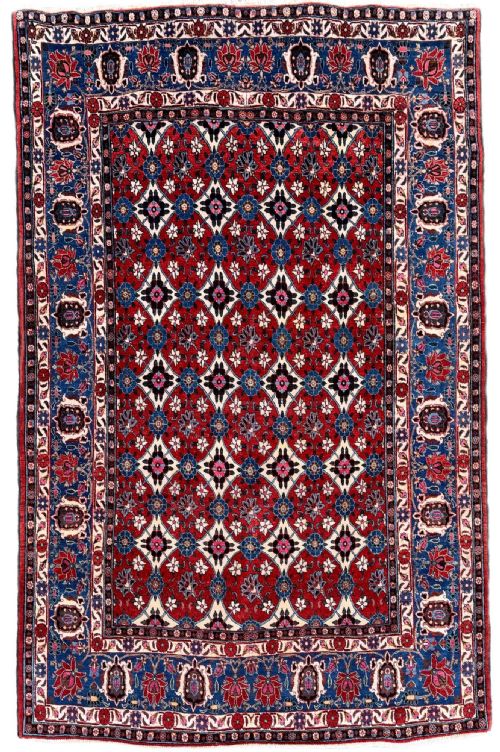


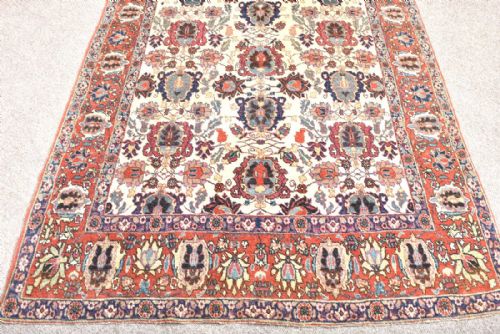
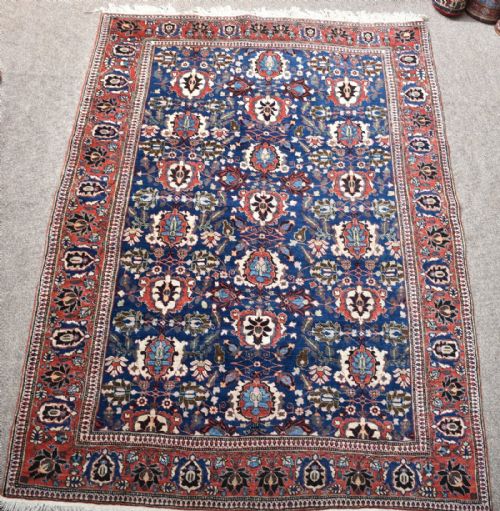
Wool Veramin Area Rug
These wool veramin area rug pieces are woven floor coverings built to bring traditional Persian character to an interior.
Wool Veramin Area Rug
A wool veramin area rug is a woven textile originating from Persian workshops, appearing in formats from compact floor pieces to substantial carpets. These floor coverings are primarily classified under Persian traditional and Persian tribal styles, reflecting centuries of regional weaving heritage.
The pieces listed on this page span the early decades of the twentieth century, specifically covering items dated between nineteen ten and nineteen thirty. Buyers encounter both smaller rugs and larger carpets, including examples featuring a distinctive mid blue ground.
What varies in quality
Quality differences among these woven pieces lie in the precision of the knotting and the crispness of the traditional design execution. Finer examples display greater intricacy in pattern definition and a more uniform surface tension across the cotton foundation.
The condition of the wool pile and the depth of colour saturation also distinguish finer specimens from standard examples. Pieces with well-preserved pile and distinct ground hues demonstrate superior longevity and visual impact.
The Wool Veramin Area Rug Glossary
- Pile
- The upright loops or cut strands of yarn that form the usable surface of a rug. This component bears the brunt of foot traffic and defines the tactile feel of the textile.
- Foundation
- The underlying grid of warp and weft threads that supports the decorative pile knots. Cotton is commonly utilised for this structural framework in Persian weaving.
- Warp
- The vertical foundation threads stretched tightly on the loom before weaving begins. All subsequent knots and horizontal wefts build upon this initial framework.
- Weft
- The horizontal threads passed alternately over and under the warp threads to secure the rows of knots. This process binds the structure together firmly after each row is completed.
Wool Veramin Area Rug: Frequently Asked Questions
How do I clean a vintage wool rug?
Professional dusting and specialist low-moisture cleaning protect the delicate fibres of older Persian textiles. Regular gentle vacuuming without a rotating brush prevents dirt accumulation.
Avoid soaking the cotton foundation or exposing the wool to harsh chemical detergents. Professional intervention ensures the dyes remain stable and the weave stays intact.
Are these rugs suitable for high traffic?
Traditional wool construction provides natural resilience that withstands moderate daily movement in residential spaces. Placing a quality underlay beneath the textile prevents slipping and reduces fibre friction against hard floors.
Heavier traffic areas benefit from regular rotation to distribute wear evenly across the surface. This practice preserves the condition of the pile over many years of use.
How do I date a Veramin rug?
Dating relies on stylistic markers, structural analysis, and documentation associated with early twentieth-century Persian weaving. Pieces from the nineteen tens and nineteen thirties often exhibit specific colour palettes and traditional motif arrangements.
Examining the wear patterns, edge finishes, and materials offers further clues regarding the age of the textile. Comparing these attributes with established examples helps confirm the period of origin.
Where should I place an area rug?
Living rooms, dining spaces, and studies provide ideal environments to showcase the traditional patterns of a Persian carpet. Positioning the textile centrally anchors the room furniture and adds warmth to hardwood or stone floors.
Keeping the textile away from direct, prolonged sunlight protects the natural dyes from premature fading. Balanced placement enhances both the visual harmony of the interior and the longevity of the weave.