
Vintage Paraffin Lighting
Vintage paraffin lighting brings warmth through brass columns and coloured glass fonts.
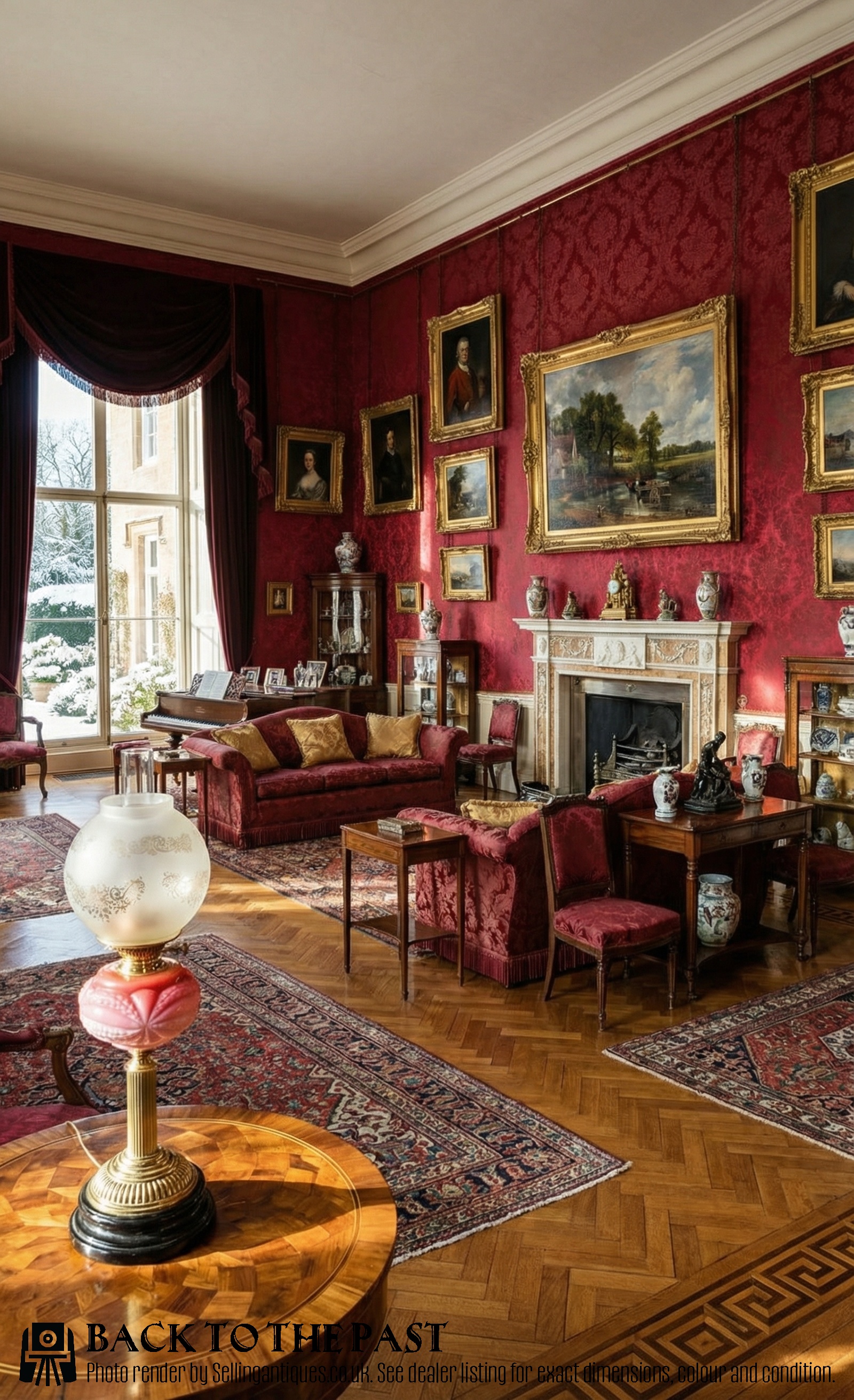
Vintage Paraffin Lighting
Vintage paraffin lighting encompasses oil lamps, table lamps, hanging ceiling lights and replacement shades spanning the Victorian and Edwardian eras. Buyers searching for vintage paraffin lighting typically encounter brass column oil lamps fitted with glass fonts and contrasting shades.
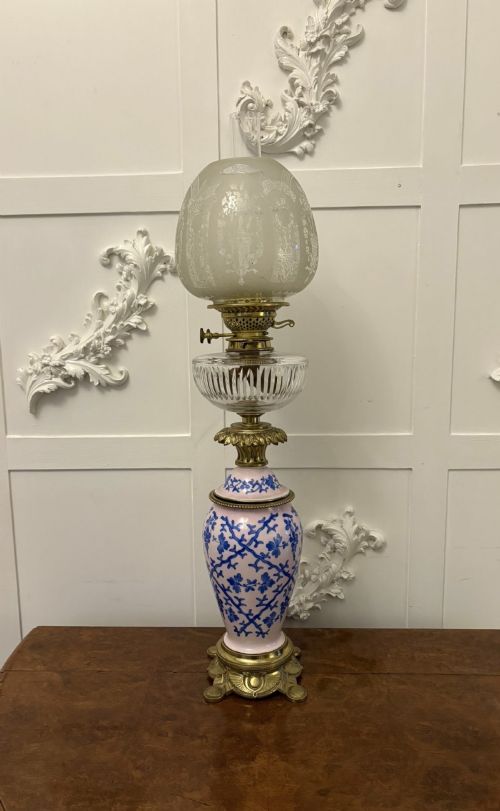
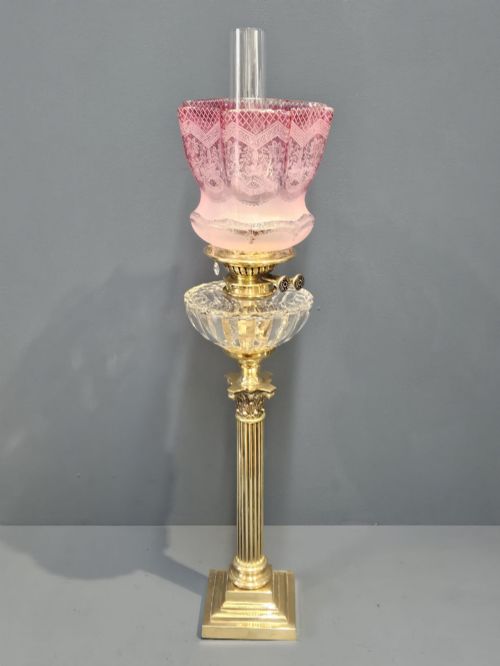
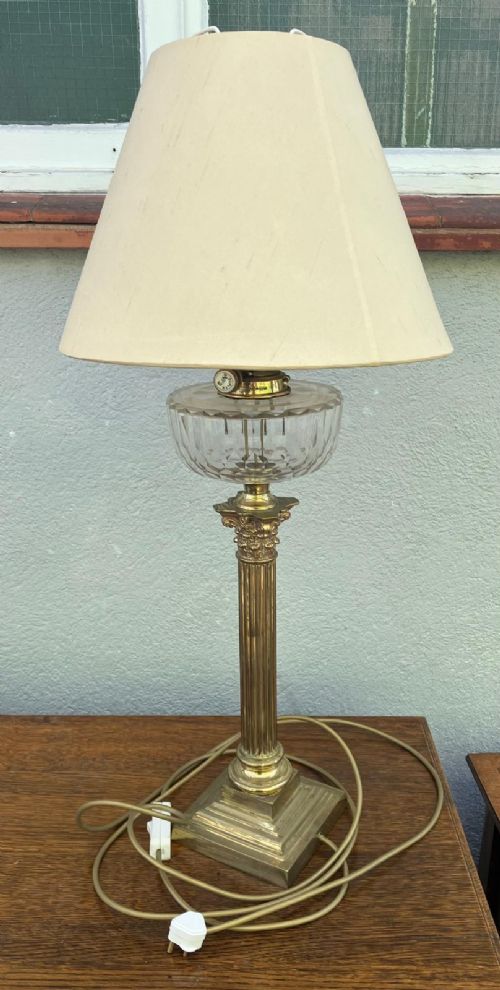
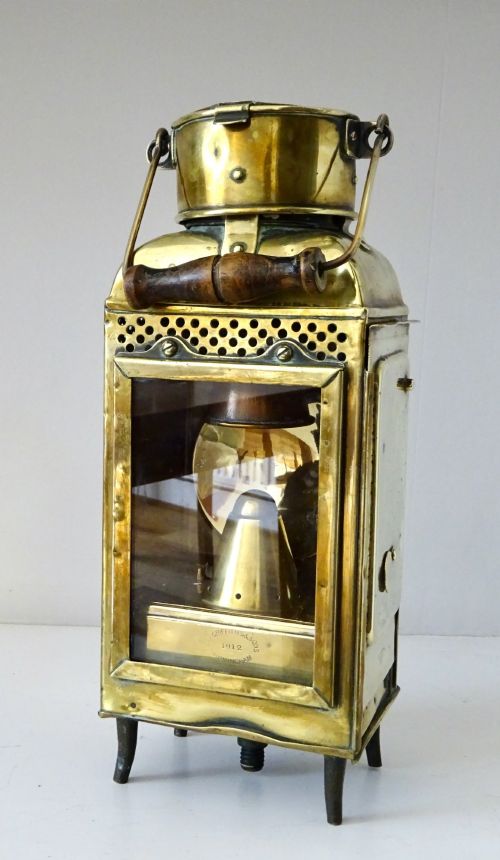
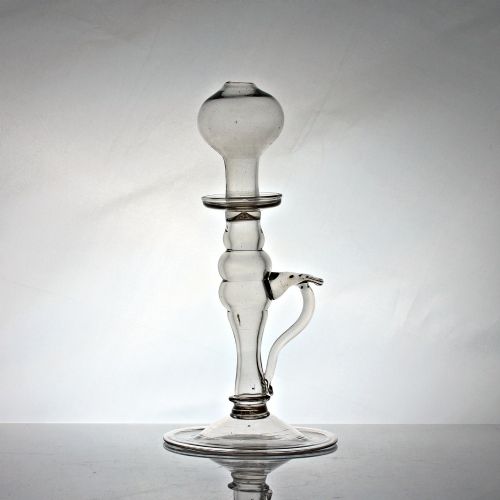
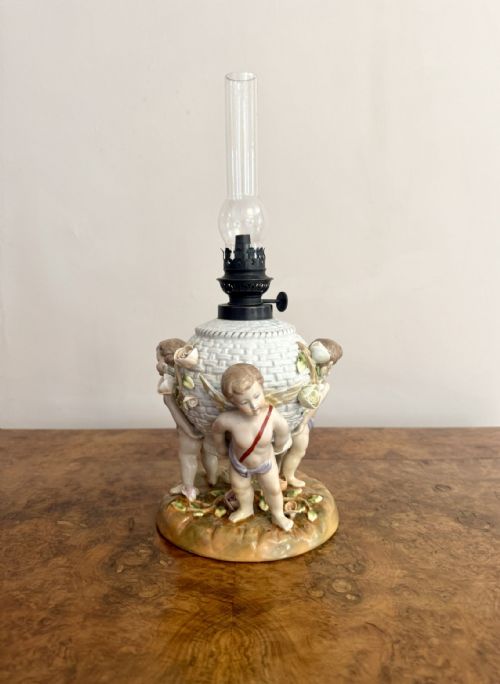
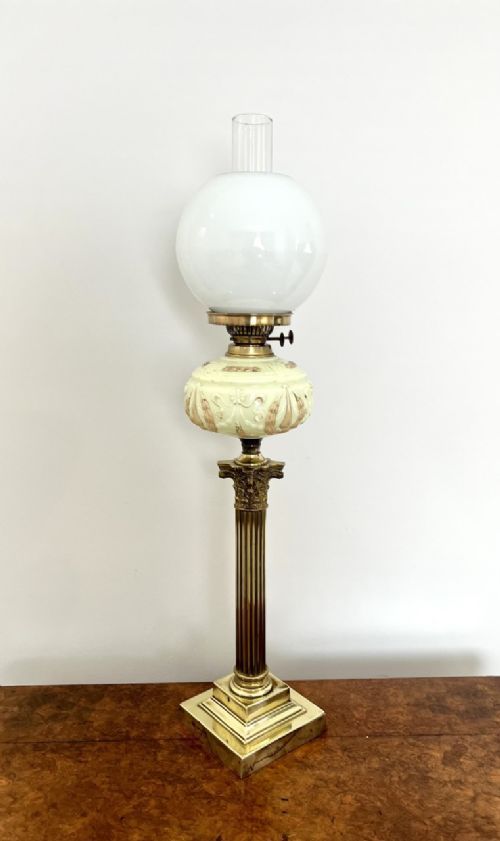
The selections on this page draw predominantly from late nineteenth century and early twentieth century production. Forms range from classical Corinthian columns to figural porcelain bodies and simple utilitarian bracket heaters.
Materials and Construction
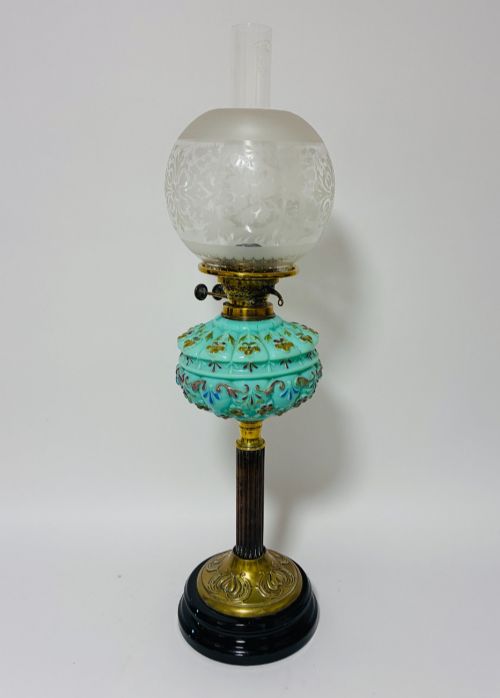
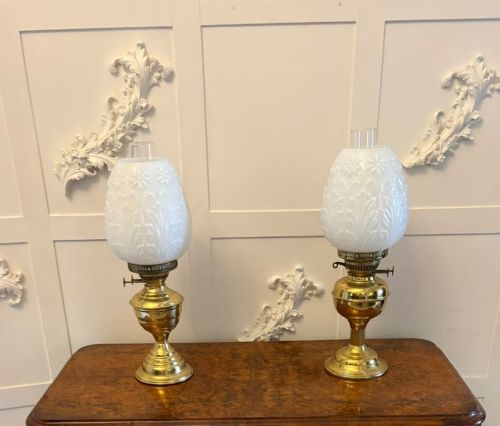
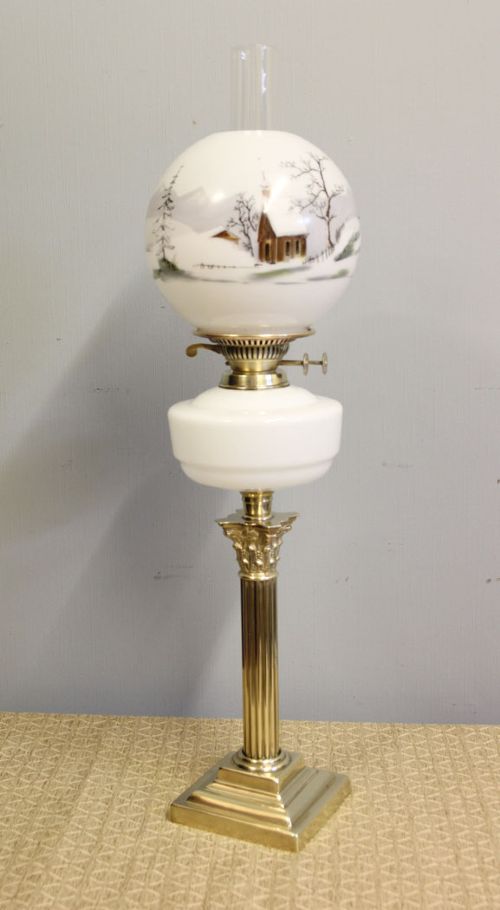
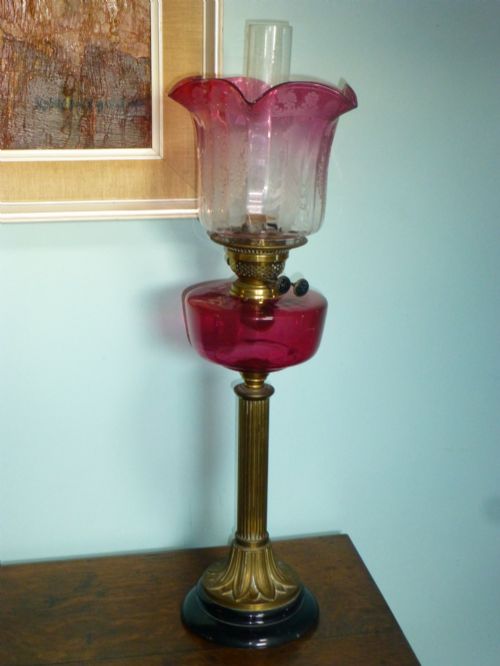
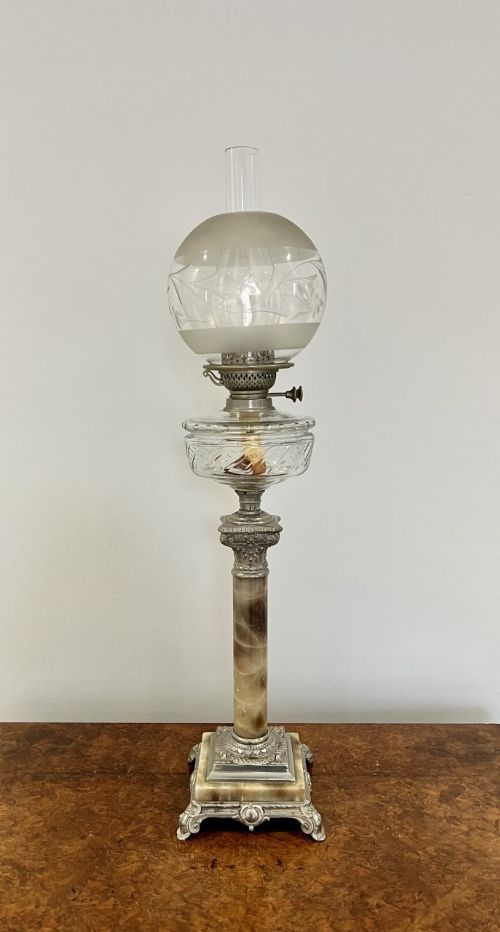
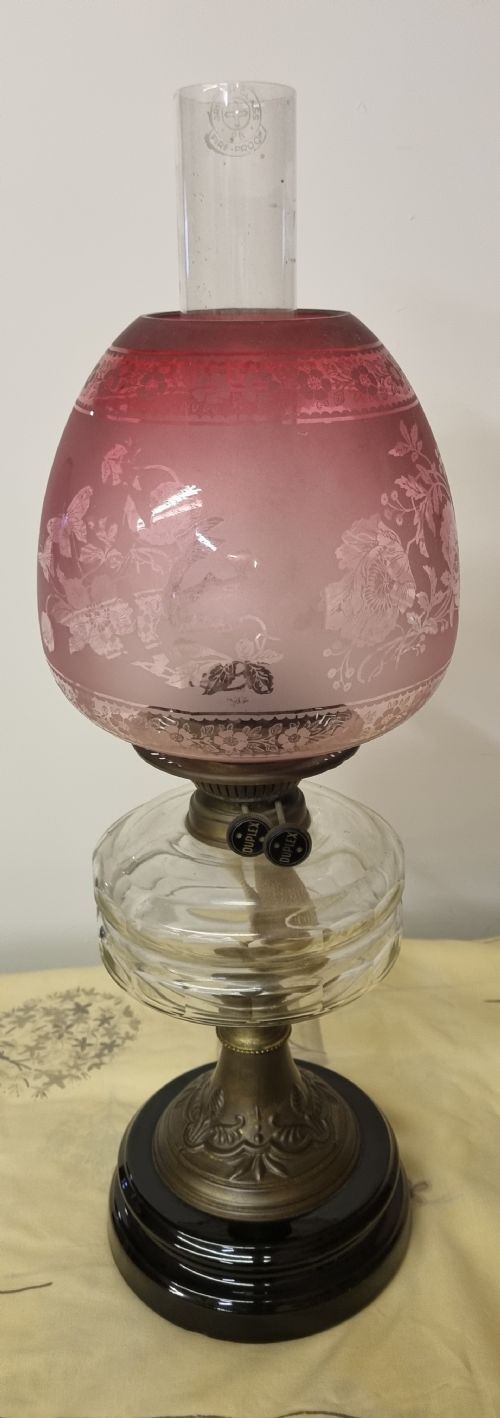
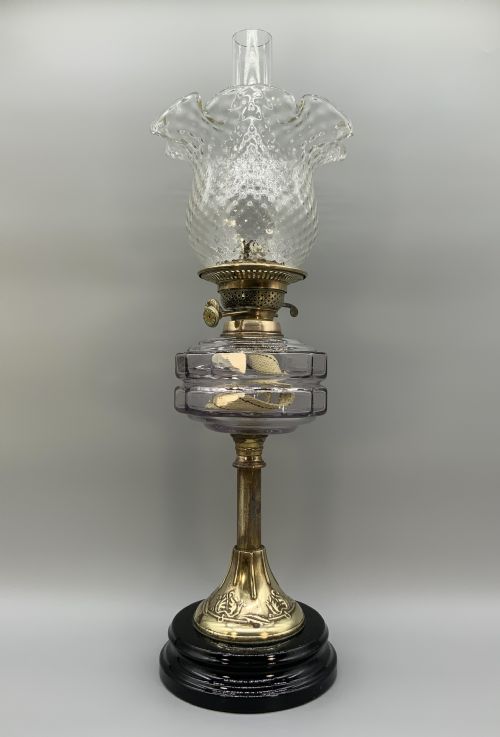
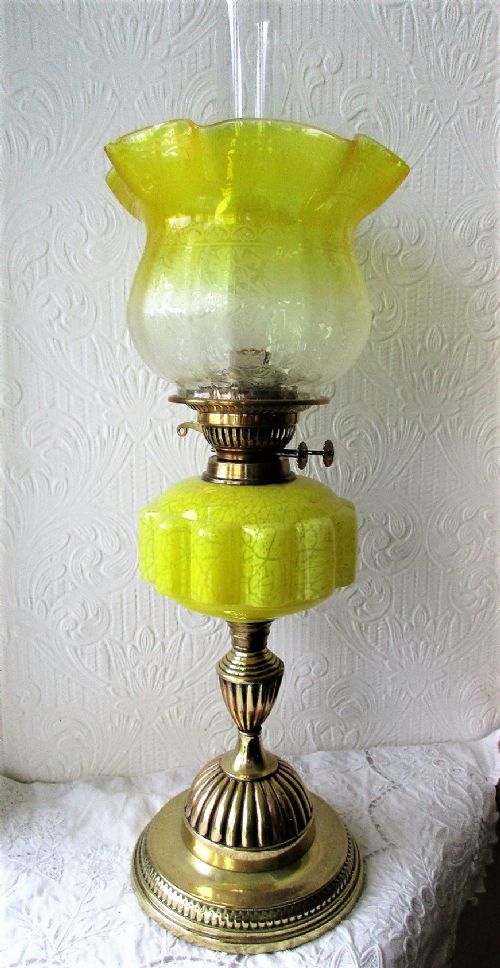
Manufacturers combined cast and spun brass for the structural columns and burners, pairing them with heavy ceramic or glass fonts. Many pieces incorporate opaline, cranberry or cut glass shades that diffuse the burner light.
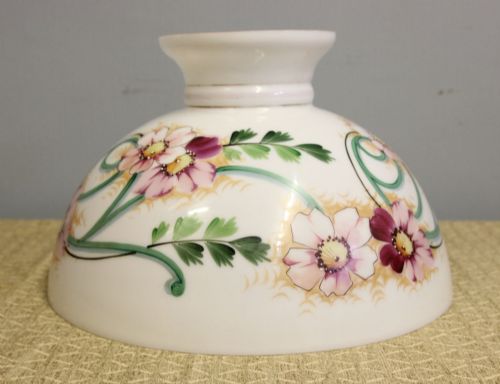
Makers utilised specialised burner mechanisms such as the duplex system to increase luminosity. Hand-blown shades often feature hand-painted botanical motifs or etched glass patterns.
Listings feature brass, opaline glass, and porcelain materials spanning the Victorian, Edwardian, and Art Nouveau periods.
Markers of Quality
Quality rests upon the weight of the cast brass base and the crispness of classical column detailing. Finer examples exhibit heavy gauge metalwork and substantial glass fonts without interior bubbles.
The artistic execution of the glass shade separates standard production from superior items. Hand-painted decoration, cased cranberry glass and etched tulip profiles indicate higher workshop standards.
Eli Griffiths And Sons·Gustave Serrurier Bovy·Wild And Wessel
The Vintage Paraffin Lighting Glossary
- Duplex burner
- A double-wick burner mechanism designed to produce a significantly brighter flame than single-wick variants. These systems appear frequently on larger nineteenth-century table lamps.
- Font
- The reservoir that holds the paraffin oil beneath the burner assembly. Fonts are frequently cast in coloured, cut or painted glass as well as porcelain.
- Opaline glass
- An opaque, milky-white glass often used for lamp shades to soften and diffuse the light output. It gained widespread popularity during the Victorian period.
Vintage Paraffin Lighting: Frequently Asked Questions
How do I identify a Victorian oil lamp?
Victorian oil lamps frequently utilise brass Corinthian columns, heavy ceramic bases, or etched glass fonts. They often incorporate maker marks on the metal burner thumbwheels.
Later Edwardian versions tend to display simpler lines or softer Art Nouveau influences. Examining the weight of the metal and the style of the glass shade helps confirm the production period.
What is a duplex burner?
A duplex burner uses two parallel flat wicks housed side by side under a single gallery. This engineering doubles the surface area of the flame to provide increased illumination.
These burners require matching double-width wicks and specialised chimneys to control the combustion air flow correctly.
Are replacement shades available for these lamps?
Period lamps frequently encounter shade breakages over their lifespan, making matched or replacement globes common. Collectors look for fitments that match the gallery diameter and period aesthetic.
Opaline and cranberry glass shades from the late nineteenth century remain available to complete incomplete table and hanging lamps.
How were hanging oil lamps used?
Hanging paraffin lamps provided central illumination for rooms before domestic electricity became widespread. Counterweight pulley systems allowed users to lower the fixture safely for filling and trimming.
Ceiling lights often featured wide opaline shades to cast light downward across dining tables and parlours.