



Victorian Glass Reservoir Lamp
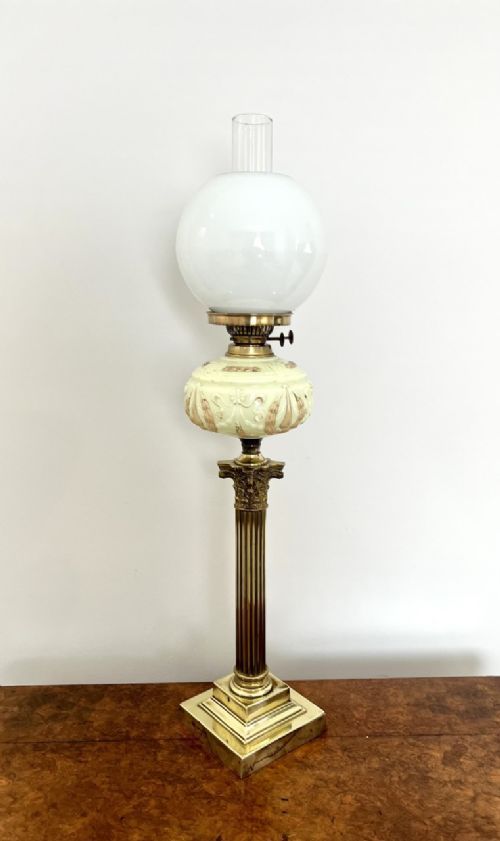
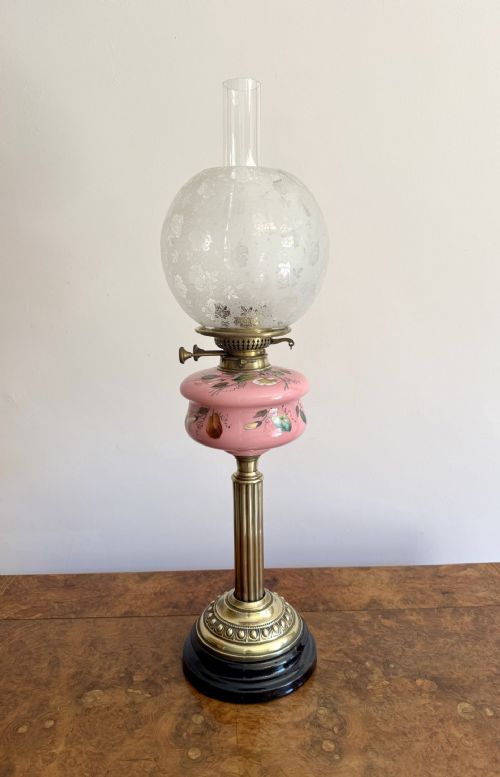
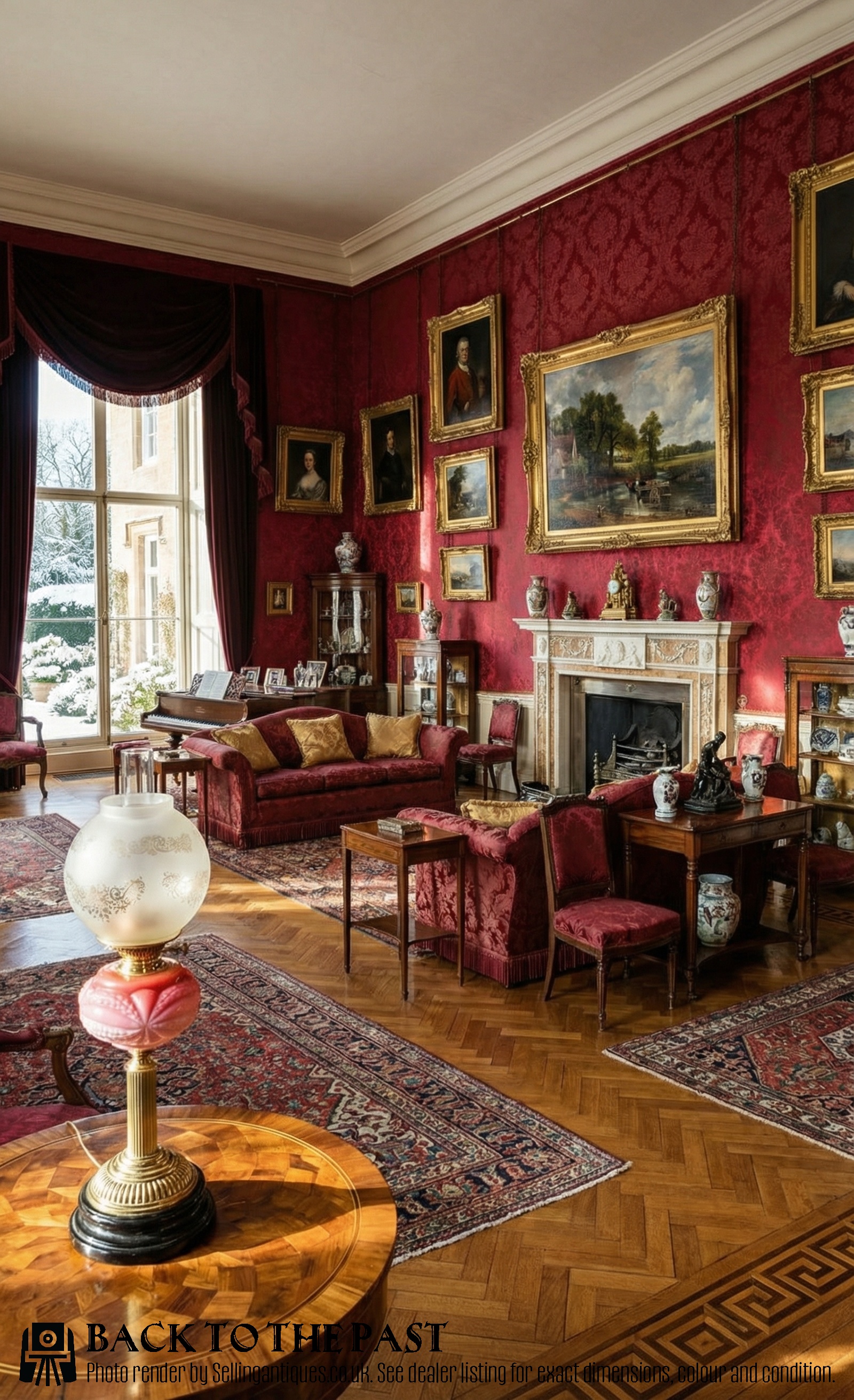
A victorian glass reservoir lamp brings the warm weight of the nineteenth century into a modern room, marrying heavy brass or ceramic bases with coloured or cut glass fonts designed for domestic illumination.
Victorian Glass Reservoir Lamp
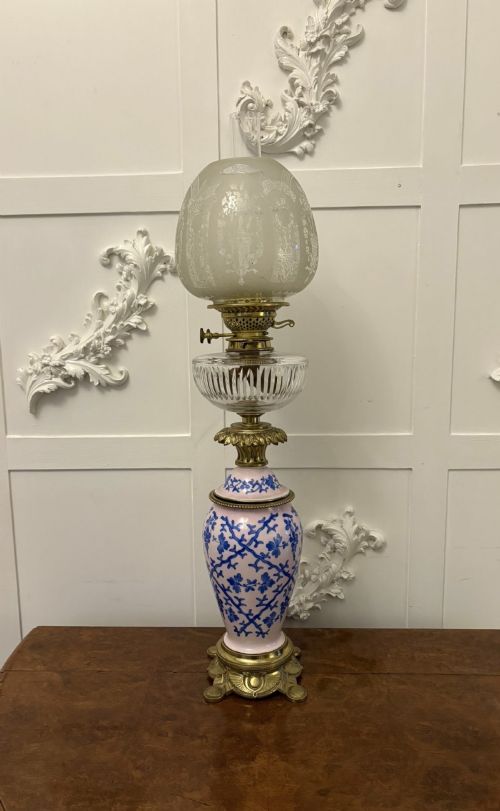
A victorian glass reservoir lamp combines a sturdy metal or ceramic base with a translucent vessel designed to hold burning oil. The pieces gathered here span from the mid nineteenth century through to the early twentieth century, reflecting the domestic lighting technology of the era.
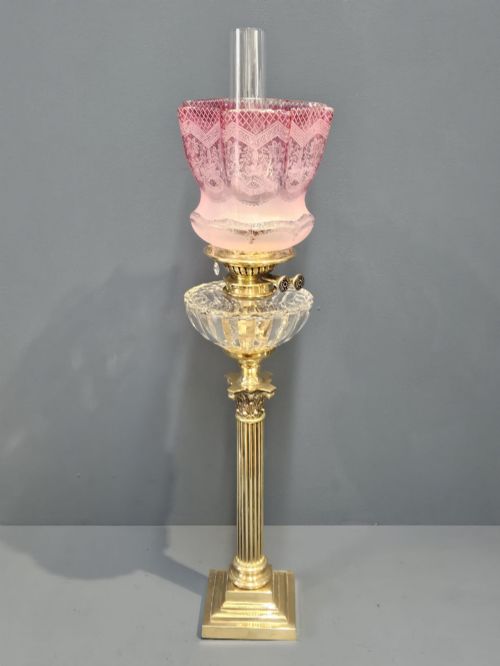
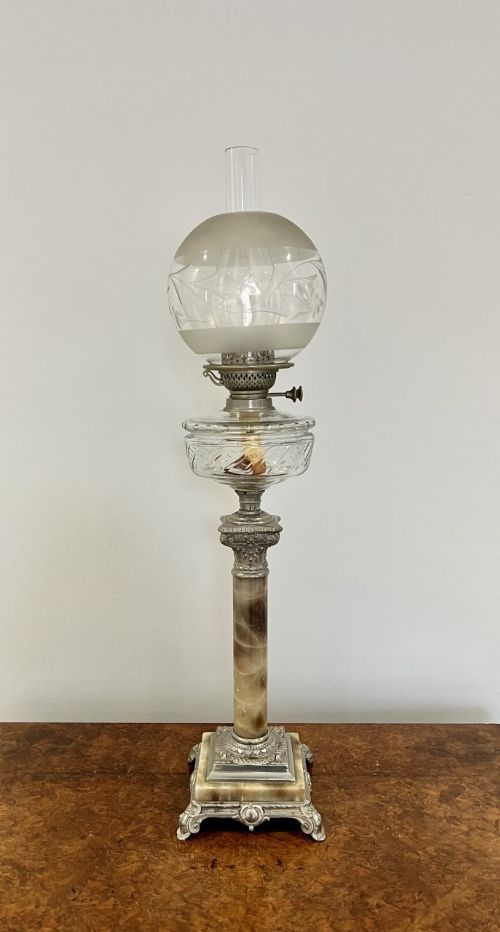
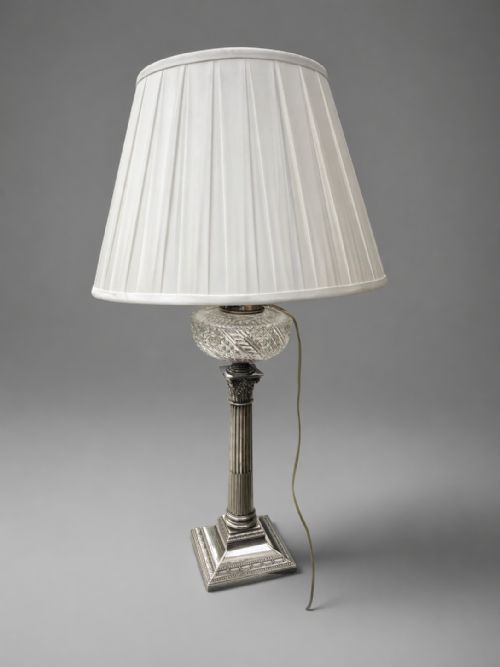
The version you are most likely to meet on this page pairs a brass or silver plated column with a coloured glass font, often topped with a fabric or glass shade. Examples range from simple cottage table lamps to grand Corinthian columns and elaborate Art Nouveau creations.
Makers and retailers such as Hinks, Messenger and Harrods are represented among the stock, alongside British made pieces from the Victorian and Edwardian periods. The forms function primarily as table lamps or oil lamps, with several examples converted for modern electrical use.
Materials and construction
Brass, bronze and silver plate form the structural columns and bases, often cast and chased with classical or floral motifs. These metal components provide the necessary heft to support the upper weight of the glass fuel vessel.
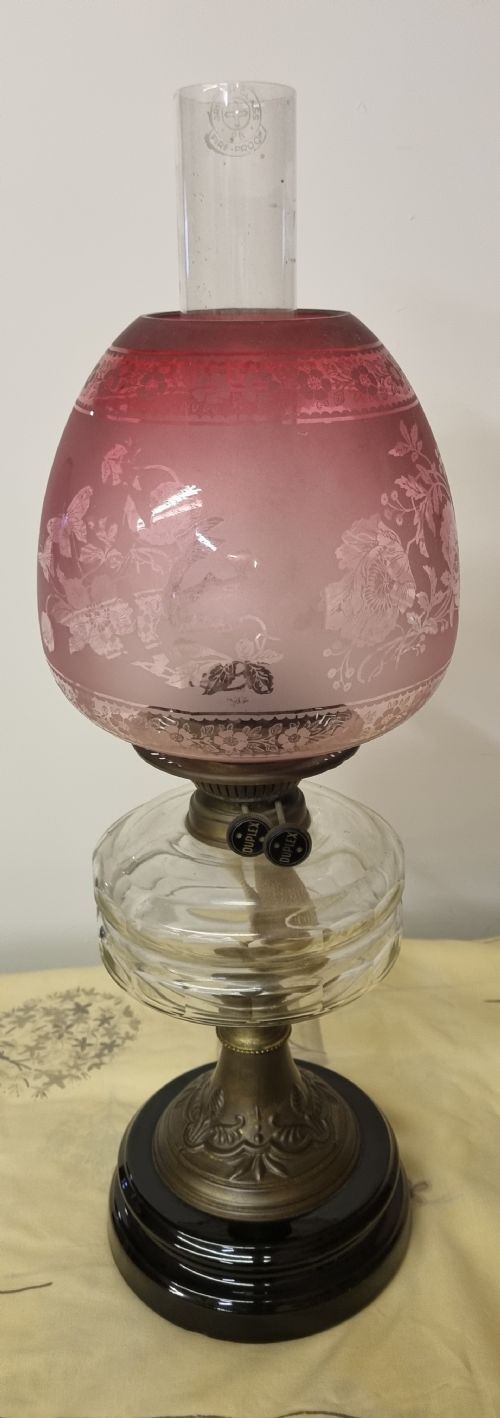
Glass fonts utilise clear, cut, moulded or coloured glass, including distinctive ruby, cranberry, pink and green shades. Ceramic and onyx elements appear in combination with the glass and metal, anchored by black glass or stepped metallic bases.
Victorian Glass Reservoir Lamp Retail Price Guide 2026
Typical asking prices for victorian glass reservoir lamp among the pieces listed under this phrase on Sellingantiques today, from the lower quarter to the upper quarter. They describe what is for sale here now, not the wider market.
Listings feature brass, silver plate, copper, onyx, ceramic and glass, spanning the Victorian, William IV and Edwardian periods.
Judging the range
The distinction between ordinary and exceptional examples rests upon the crispness of the casting in the brass columns and the depth of hand cutting in the glass reservoirs. Finer pieces display sharper reeding on Corinthian capitals and heavier, more resonant metalwork.
The integration of materials also dictates standing, where combinations of silver plate, onyx, coloured satin glass and decorative ceramic fonts demonstrate greater ambition from the maker than simple brass and clear glass configurations.
Hinks of Birmingham·Messenger·Harrods·Young
The Victorian Glass Reservoir Lamp Glossary
- Reservoir
- The bowl or container that held the paraffin or lamp oil before it fed to the burner. This component is frequently fashioned from coloured, cut or moulded glass.
- Font
- An alternative term for the oil reservoir bowl sitting atop the lamp column. It often contrasts in colour with the base, appearing in shades of blue, green, pink or ruby.
- Corinthian column
- A classical architectural column style featuring ornate acanthus leaves at the capital. Many nineteenth century brass table lamps adopt this formal order.
- Peg lamp
- A smaller oil lamp fitted with a narrow peg at the base designed to drop directly into an existing candlestick or wall sconce rather than standing independently.
- Duplex burner
- A double wick burner mechanism common on larger nineteenth century lamps that produced a brighter flame. It required a wider gallery to hold the matching chimney and shade.
Victorian Glass Reservoir Lamp: Frequently Asked Questions
How do I light a victorian glass reservoir lamp?
Most of these lamps have been converted for modern electrical use, meaning they switch on via a standard cord rather than burning oil. For unconverted examples, you lift the glass chimney and shade to access the cotton wick inside the burner.
Fill the glass reservoir with a clean burning paraffin or lamp oil, allow the wick to absorb the liquid for several minutes, and then apply a match to the top of the wick.
Are these lamps safe to use on a modern table?
The structural weight of brass bases and thick glass reservoirs makes them remarkably stable for everyday placement on sideboards or large tables. Their heavy metal feet prevent accidental tipping during normal use.
If the piece retains its original oil burner mechanism rather than an electrical conversion, ensure the wick is trimmed flat and keep it away from drafts.
How do I clean a coloured glass font?
Wash the glass reservoir using warm water and a mild dish soap, supporting the weight of the piece carefully with both hands. Avoid harsh scouring pads that might scratch the surface of moulded or satin glass.
Dry the glass thoroughly with a lint free cloth before reuniting the font with its brass or ceramic column base.
How can I tell a Victorian lamp from an Edwardian one?
Victorian examples often lean towards heavy brass Corinthian columns, rich ruby or cranberry glass fonts, and ornate neoclassical detailing. The materials are robust and the proportions generous.
Edwardian pieces, dating towards the turn of the twentieth century, sometimes introduce lighter onyx bases, softer pastel glass tones, and emerging Art Nouveau floral lines.