



Silver Corinthian Column Lamp
A silver corinthian column lamp brings classical proportion and reflective weight to a room, drawing on ancient architectural motifs adapted for domestic lighting.
Silver Corinthian Column Lamp
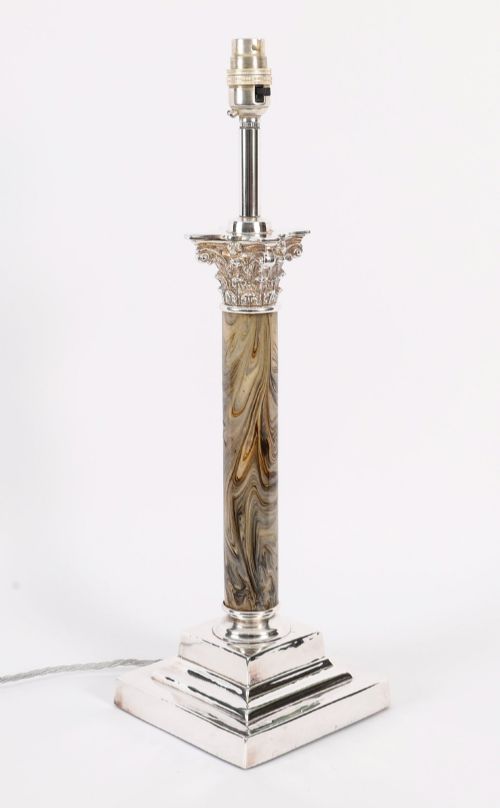
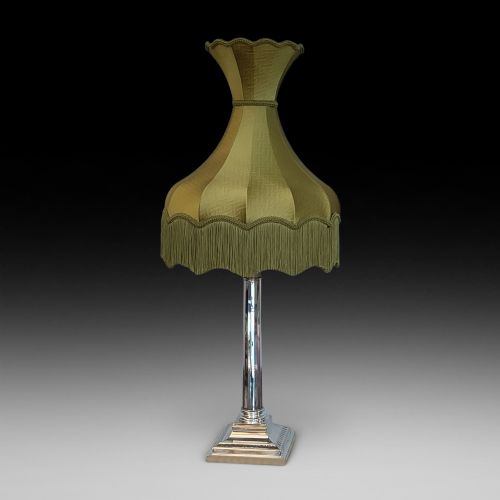
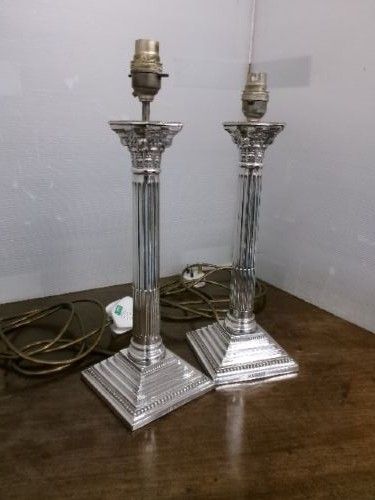
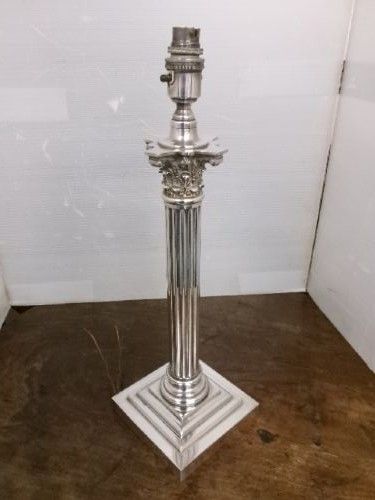
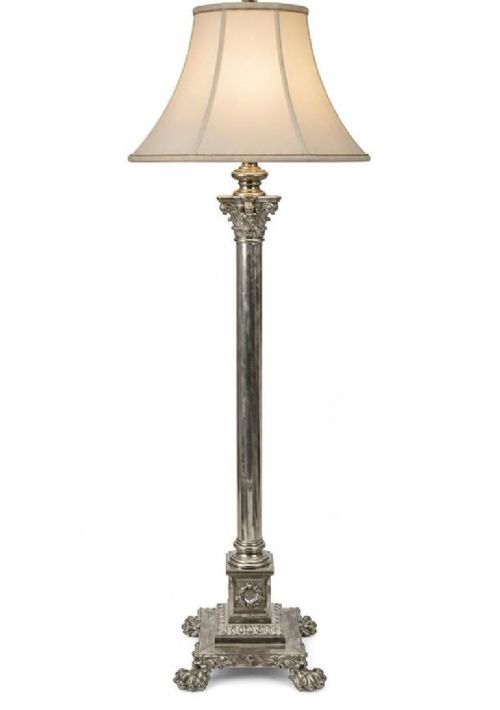
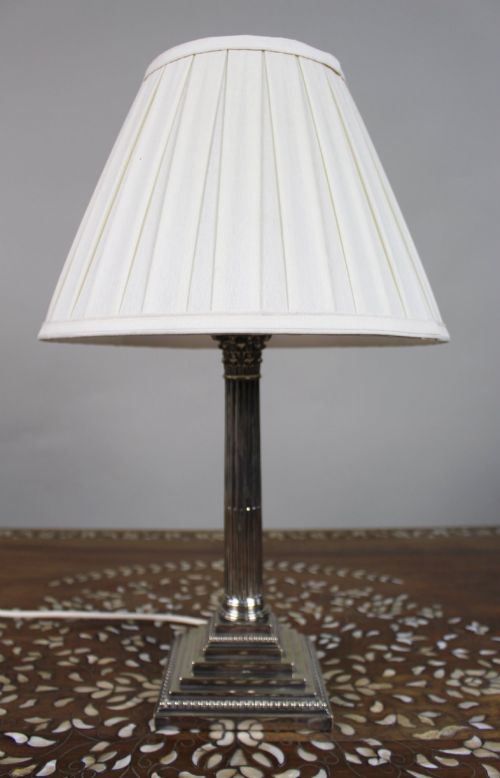
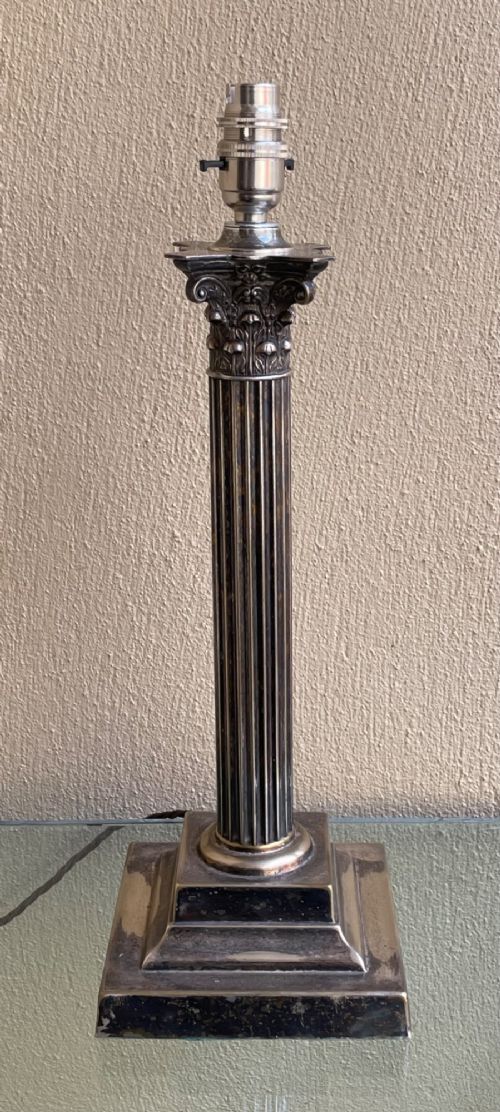
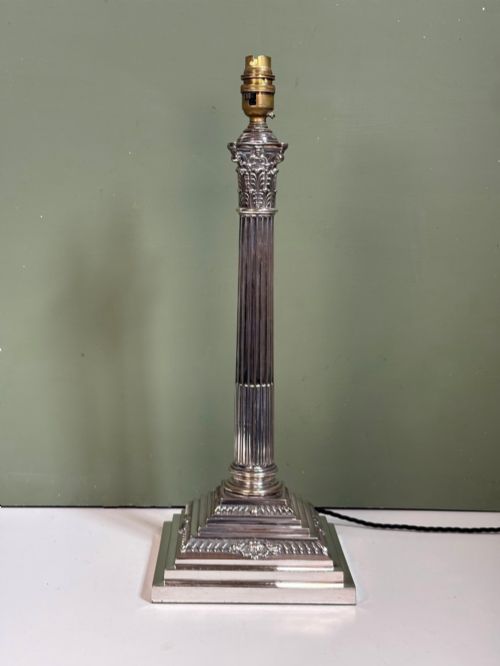
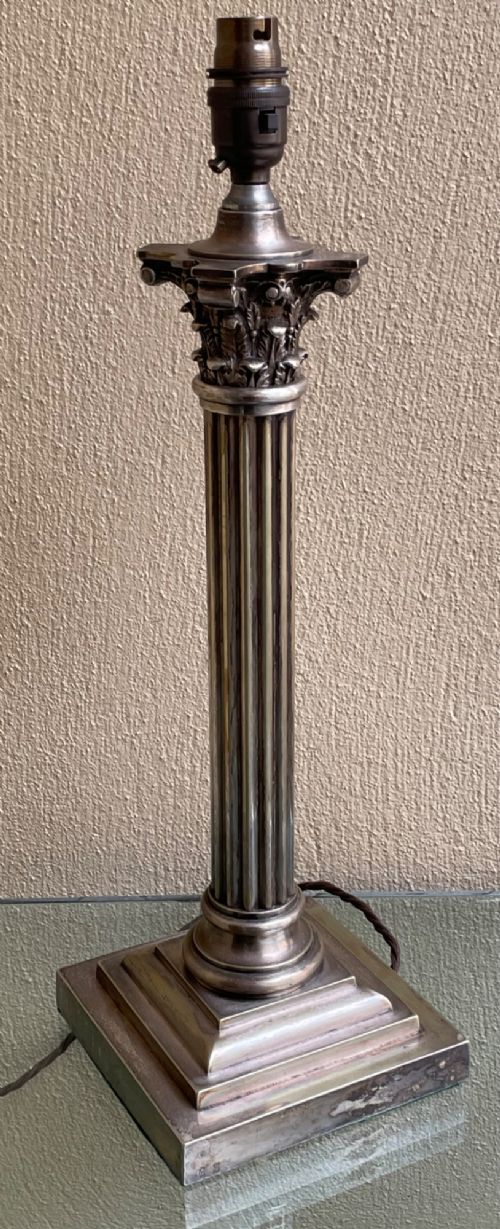
A silver corinthian column lamp takes its primary design cue from classical architecture, specifically translating the ornate acanthus-leaf capitals and fluted shafts of antiquity into interior lighting. These pieces emerge predominantly from the Victorian and Edwardian periods, stretching from the late nineteenth century into the early twentieth century.
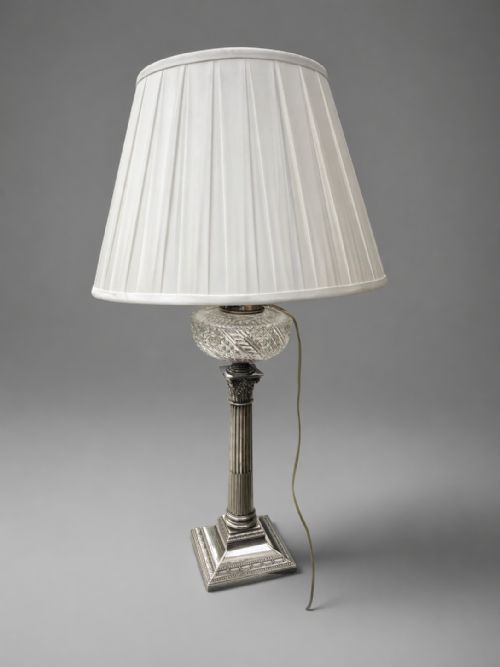
The dominant format on this page is the table lamp, though taller floor-standing variations and former oil-burning configurations adapted for electricity also appear. The majority rely on silver plate over a base metal, though solid sterling silver iterations surface alongside examples incorporating glass, cut glass, glass beads, and brass elements.
Materials and construction methods
Makers constructed the core structural columns from robust metals like brass or base alloys, providing the substantial weight required for stability on a table or floor. These columns were then coated using electroplating techniques or fabricated from solid sterling silver.
Detailing often included cast architectural elements such as stepped plinths, lion's paw feet, and intricate capitals with distinct acanthus leaves. Many pieces began life as oil lamps before undergoing later conversion to electricity, retaining reservoirs and burners transformed into lamp fittings.
Silver Corinthian Column Lamp Retail Price Guide 2026
Typical asking prices for silver corinthian column lamp among the pieces listed under this phrase on Sellingantiques today, from the lower quarter to the upper quarter. They describe what is for sale here now, not the wider market.
Listings span the Victorian and Edwardian eras, utilising silver plate, sterling silver, brass, and cut glass.
Distinguishing quality across the range
Quality rests upon the crispness of the casting in the capital and the thickness of the silver application over the underlying metal. Sharply defined acanthus leaves and well-proportioned fluting separate superior pieces from softer, worn examples.
The choice of base materials and structural additions, such as weighted stepped bases or cast lion's paw feet, alters the presence and balance of the object. Maker attribution through stamps adds another layer of distinction, pointing to established silversmiths and retail houses.
Goldsmiths and Silversmiths Company·Walter Latham And Son·Palmer And Co·Mappin And Webb
The Silver Corinthian Column Lamp Glossary
- Capital
- The topmost member of a column, featuring carved acanthus leaves and scroll details that define the Neoclassical style.
- Fluting
- The shallow, vertical grooves running down the cylindrical shaft of the column, emulating classical stone architecture.
- Electroplate
- A process where a thin layer of silver is bonded to a base metal using an electrical current, common in Victorian manufacturing.
- Stepped base
- A multi-tiered square or rectangular plinth supporting the column, designed to anchor the lamp firmly to a surface.
- Sterling silver
- An alloy containing a high proportion of pure silver, hallmarked to indicate compliance with strict compositional standards.
Silver Corinthian Column Lamp: Frequently Asked Questions
Were these always electric lamps?
Many examples originated as oil lamps during the Victorian era before being converted to run on electricity in later decades.
This conversion process typically involved replacing the burner mechanism with a bulb holder while keeping the original column and reservoir intact.
How do I identify an Edwardian piece?
Edwardian items generally date from the early twentieth century and often exhibit lighter proportions alongside cut glass components.
Assay office hallmarks on solid silver versions help pinpoint the exact year of manufacture.
Are solid silver columns heavy?
Solid sterling silver versions possess a reassuring heft, though many plated variants achieve similar stability through weighted interior bases.
The substantial weight prevents the tall column from tipping easily when placed on a side table or desk.
Where should I place this lamp?
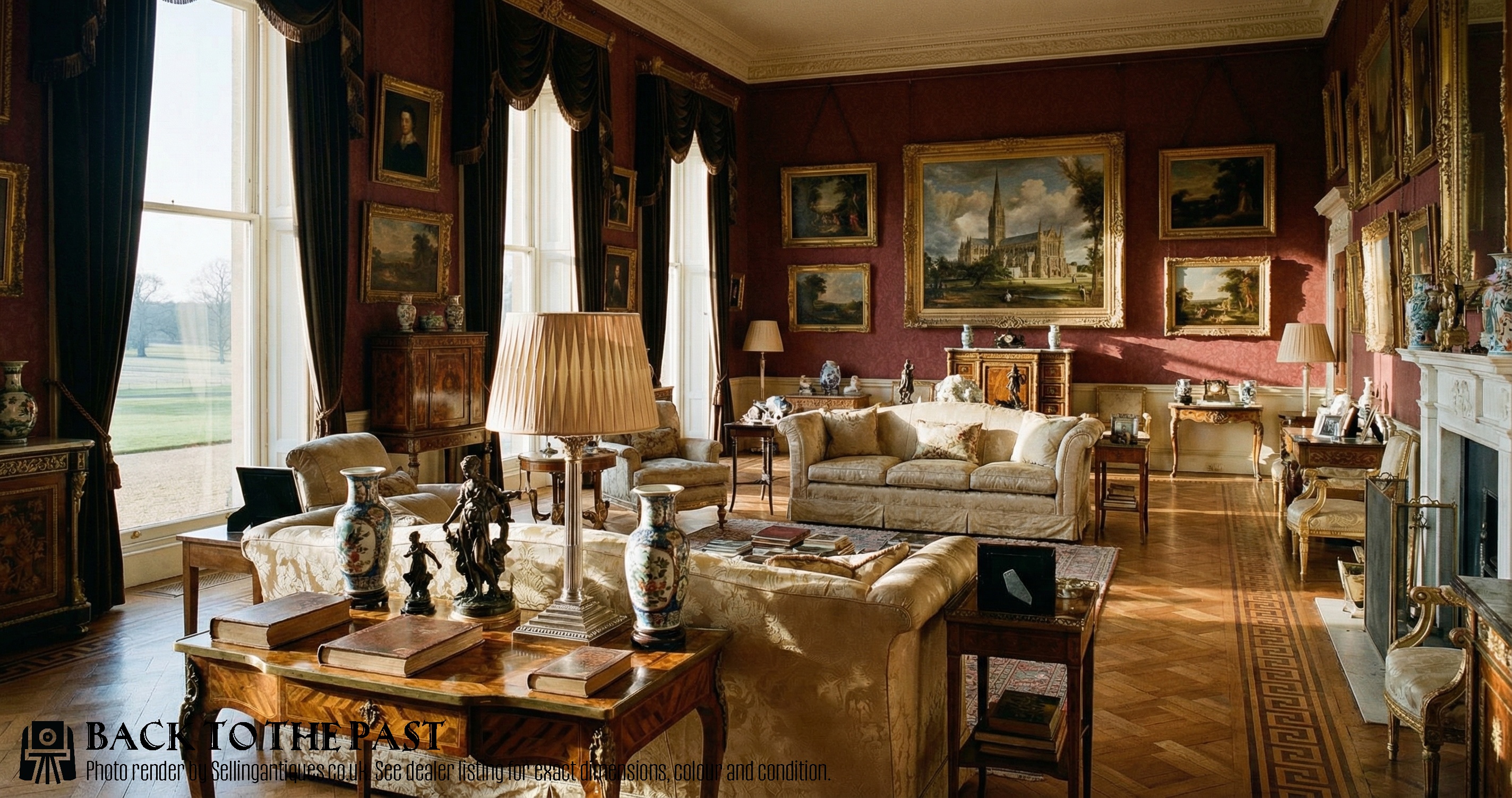
The formal Neoclassical design suits traditional reception rooms, studies, or hallways where classical architectural elements are already present.
Their reflective surfaces also bounce natural light around darker corners of a room.