


Vintage Paper Rack
A vintage paper rack gathers loose journals, folios and sheets in freestanding or tabletop forms.
Vintage Paper Rack
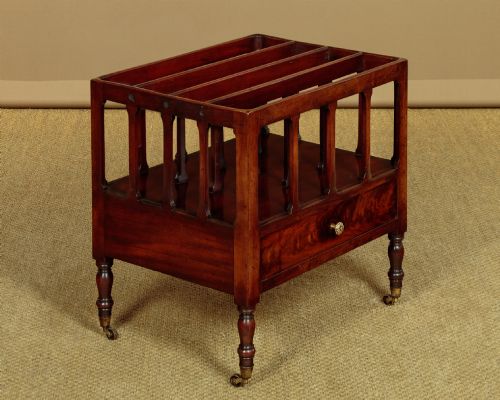
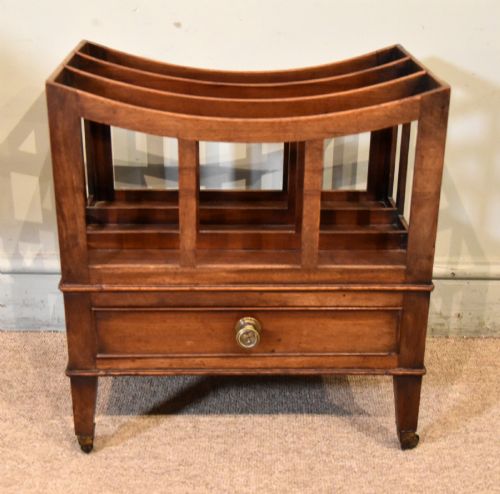
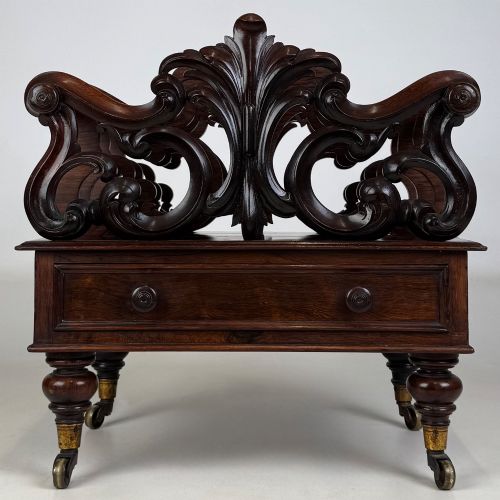
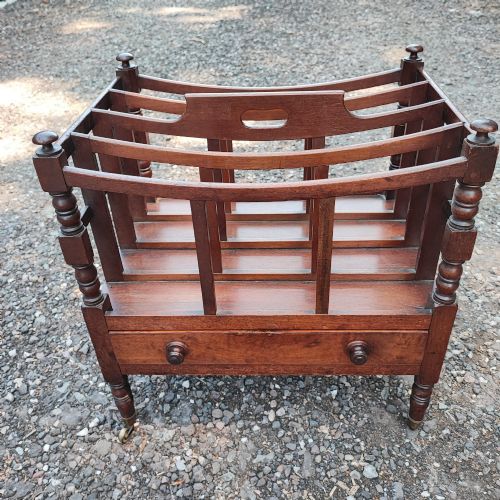
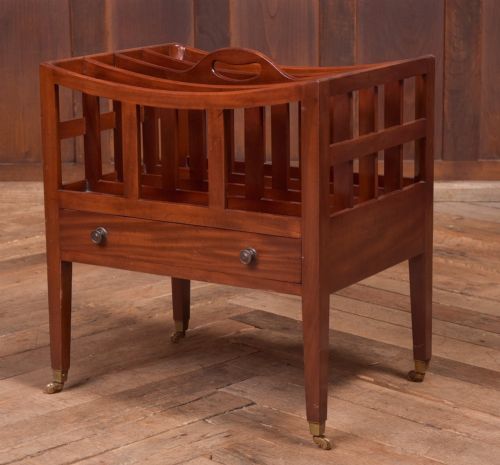
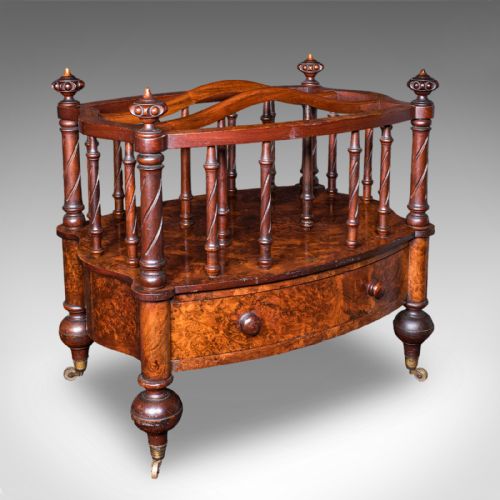
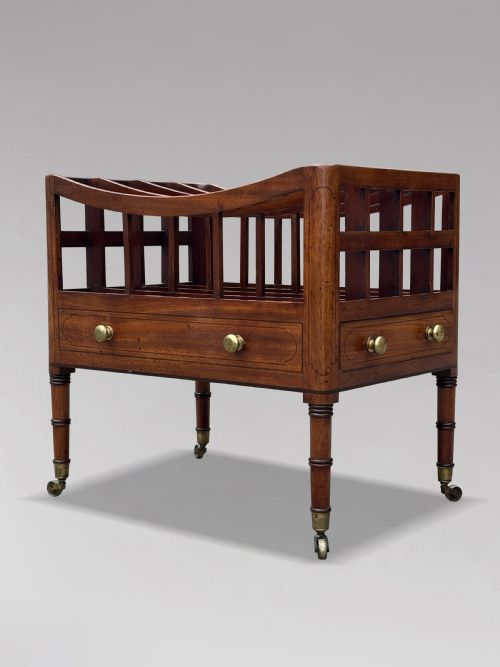
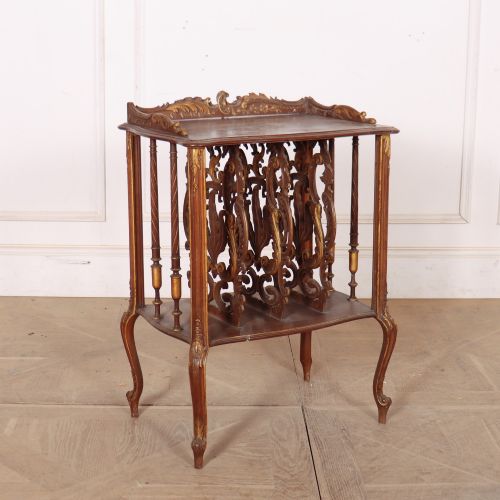
A vintage paper rack covers items designed to organise periodicals, letters and folios, frequently taking the form of a freestanding canterbury or a desk tidy. These pieces range from Georgian and Regency eras through to the Edwardian period and the 1920s.
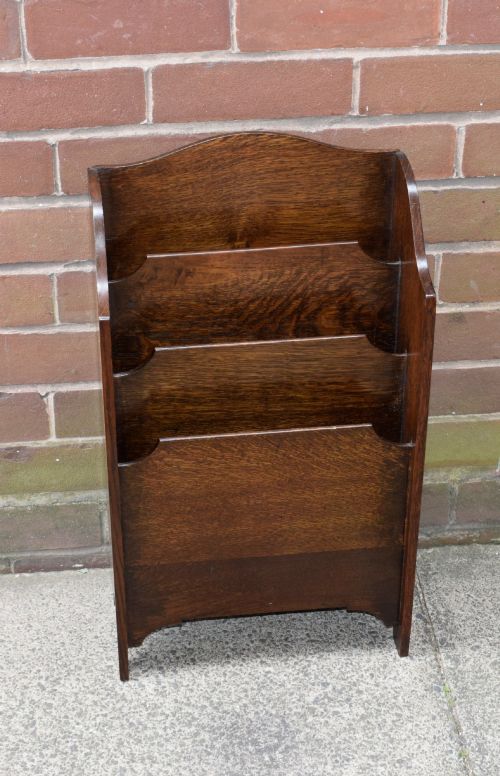
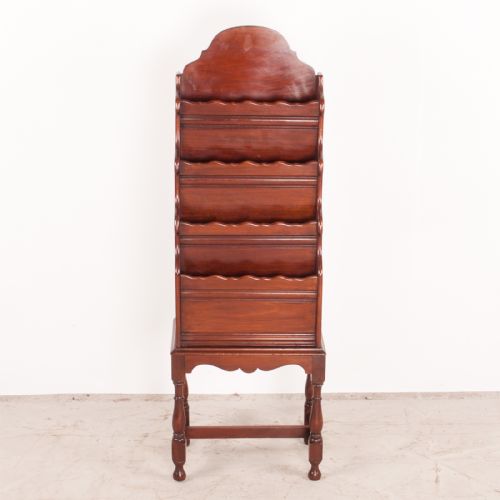
The most common format on this page is the traditional canterbury, built with slatted partitions to hold newspapers or sheet music upright, often supported on low legs or castors. Alongside these sit desktop letter organisers, stationary boxes, and revolving stands.
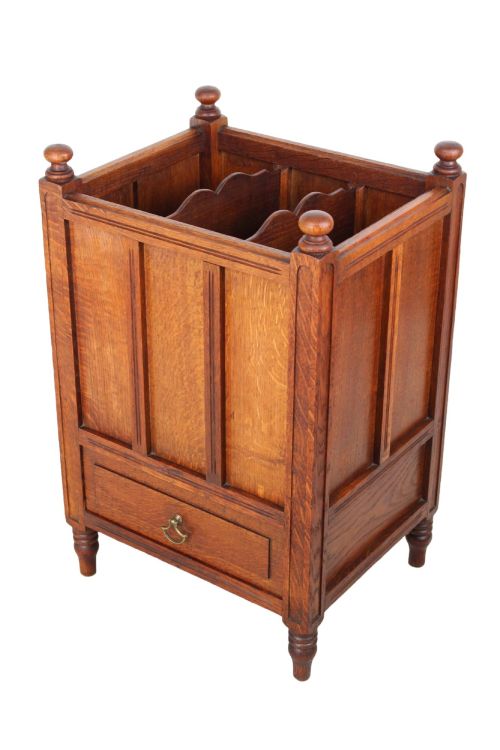
Materials span dense hardwoods and metals, connecting domestic living rooms and studies across the nineteenth and early twentieth centuries. Buyers encounter both refined parlour pieces in rosewood and sturdier utility items in oak.
Assessing Craftsmanship
Quality rests in the selection of timber and the precision of the joinery, particularly where the vertical dividers meet the base frame. Selected veneers, figured burr walnut, and rich rosewood figure prominently in finer examples.
The presence of secondary details, such as turned legs, applied carvings, or integrated drawers, separates standard utility pieces from elevated parlour furniture. Metal stands depend on the weight of the brass or copper gauge and the crispness of any chased decoration.
Listings feature items spanning the Georgian, Regency, Victorian, Edwardian, and 1920s periods, constructed from mahogany, rosewood, oak, burr walnut, brass, and copper.
The Vintage Paper Rack Glossary
- Canterbury
- A low freestanding stand with partitioned sections, traditionally used for holding music sheets, newspapers, or magazines. It often includes a low drawer beneath the main tier.
- Folio
- A large sheet of paper or a thin case for holding loose papers, maps, and prints. Folio racks provide wide, flat compartments to store these items safely.
- Whatnot
- A set of open shelves supported by slender pillars, utilised for displaying or storing small household items and papers.
- Chinoiserie
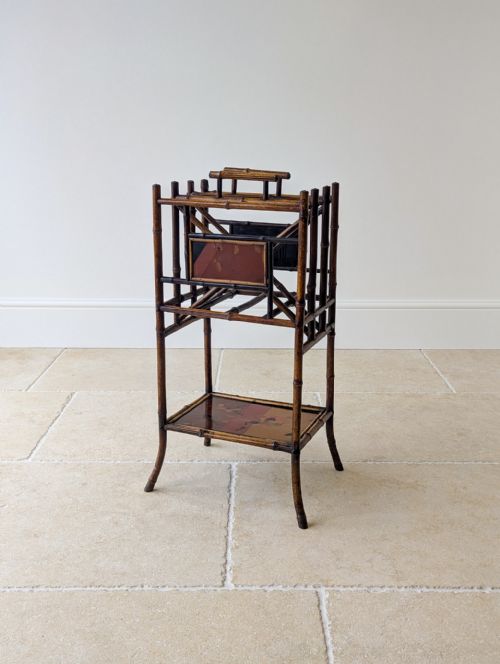
- A decorative European style reflecting Chinese artistic motifs and lacquer techniques. Pieces adorned in this manner feature painted oriental scenes on a dark ground.
- Aesthetic Movement
- A late nineteenth-century design current that prioritised visual beauty over moral or narrative purpose. Pieces from this movement frequently incorporate Japanese-inspired motifs and bamboo.
Vintage Paper Rack: Frequently Asked Questions
What is a canterbury used for?
A canterbury serves as a partitioned stand for holding newspapers, magazines, and sheet music off the floor. They were designed to keep everyday reading materials tidy beside a chair or desk.
Over time, their uses adapted from holding musical folios in the Georgian period to storing daily periodicals in Edwardian households.
How do I date a wooden rack?
Dating relies on timber selection, structural joinery, and stylistic details associated with periods like the Regency or Edwardian eras. Mahogany and rosewood frequently indicate earlier nineteenth-century manufacture.
Oak and simpler turned elements often point towards later Victorian, Arts and Crafts, or 1920s production.
Where should I place a desk tidy?
Desk tidies and letter racks sit naturally on top of writing tables, sideboards, or partner desks. They organise correspondence, envelopes, and small paper sheets within easy reach.
Compact tabletop versions fit well in studies or hallways where surface area is limited.
Are brass stands heavy?
Brass and copper stands vary in weight according to the thickness of the metal gauge and the construction of the frame. Heavier pieces offer greater stability when loaded with newspapers.
Lighter wirework or sheet designs provide an airy silhouette suited to smaller spaces.