


Vintage Painted Server Table
A vintage painted server table brings practical surface space and rustic character to a room.
Vintage Painted Server Table
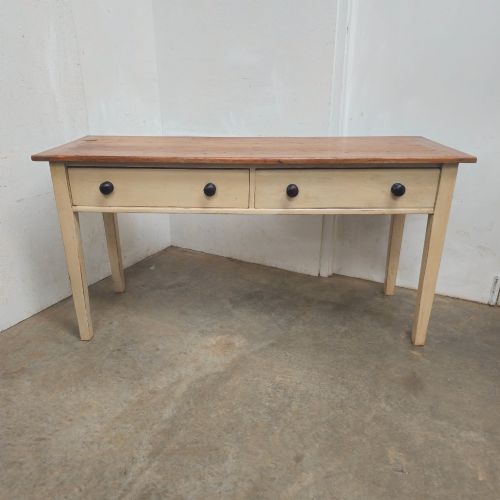
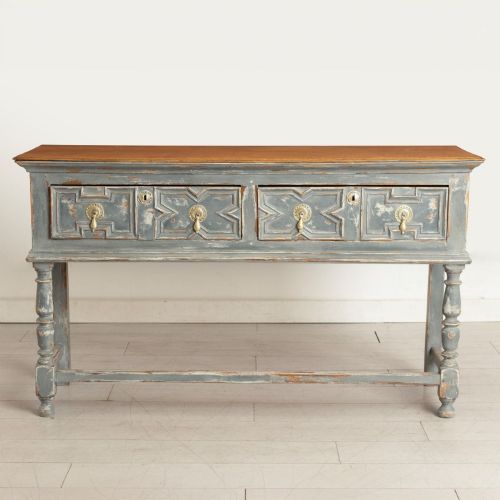
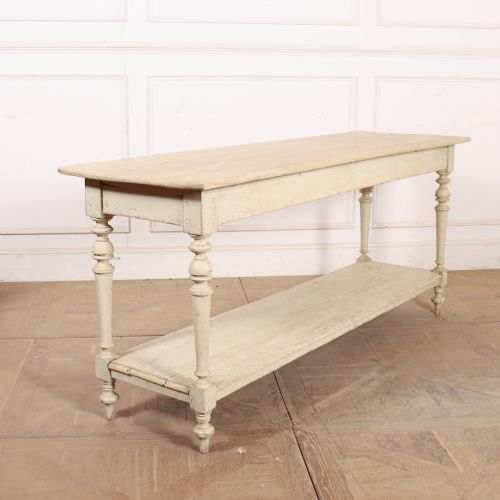
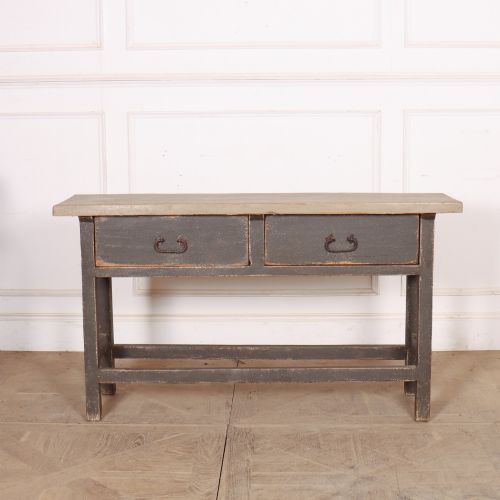
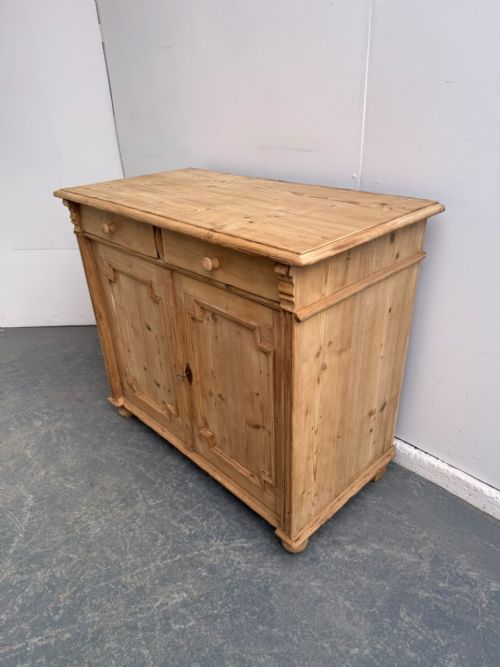
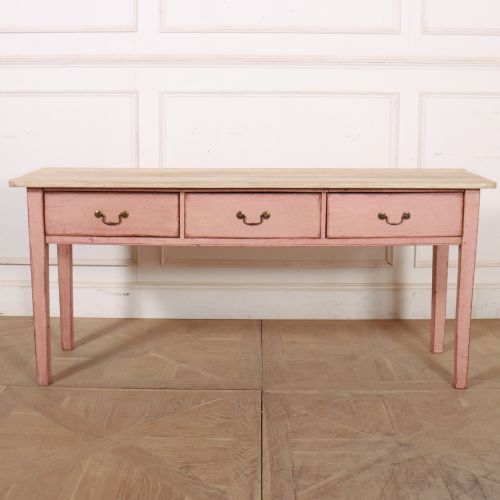
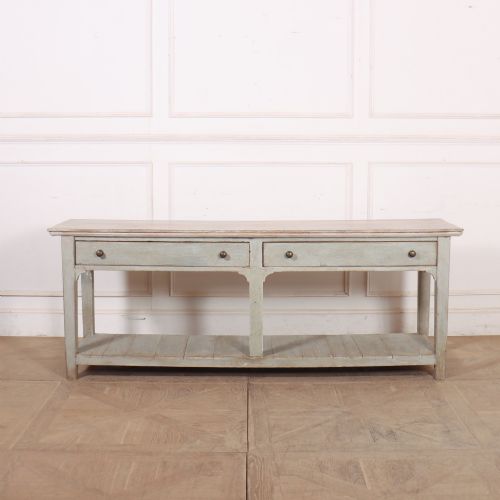
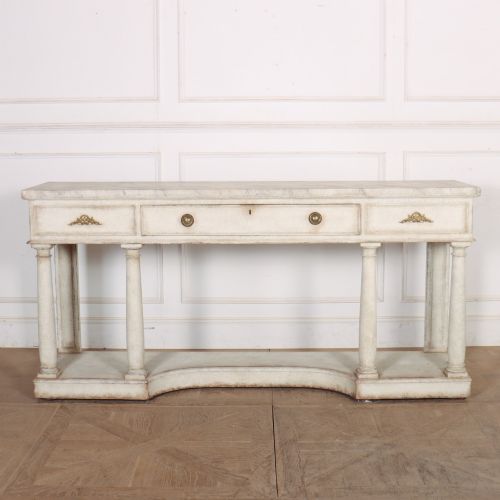
A vintage painted server table serves as a functional surface, drawing from forms such as dresser bases, console tables, serving tables, and drapers tables. These pieces originate across the 18th century, 19th century, and Victorian periods, reflecting practical domestic and commercial use.
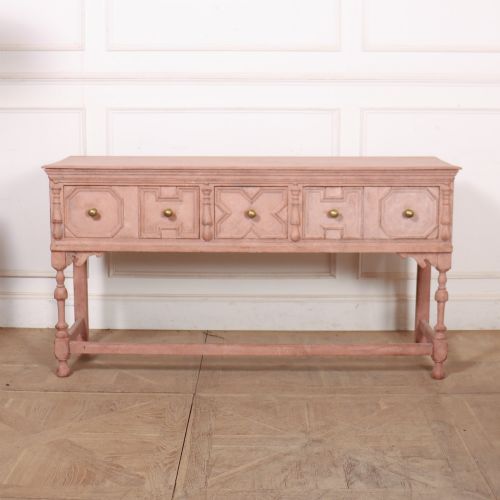
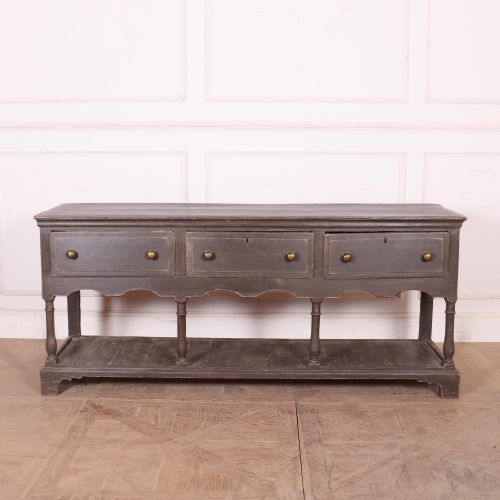
The selections here lean heavily toward English and French examples, taking shapes like potboard dresser bases, console tables, and narrow servers. Pine and oak provide the primary timber foundations, often finished in original paint that shows the marks of time.
Buyers will encounter items spanning English Country, French Provincial, and Rustic Farmhouse styles. These forms bridge utility and decorative presence, suiting kitchens, dining rooms, and hallways alike.
How they were made
Construction relies on solid timbers such as pine and oak, built to withstand daily preparation and serving tasks. Joinery is straightforward and robust, designed for longevity in domestic settings.
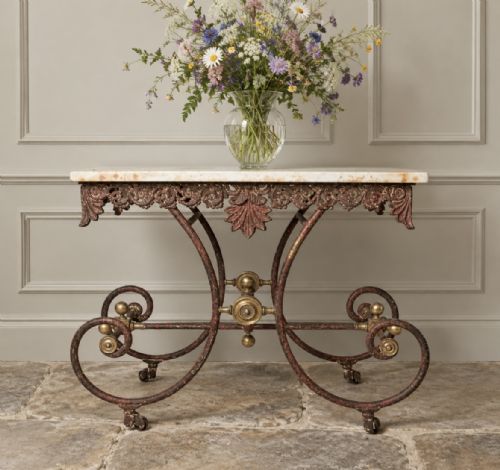
Surfaces are finished with layers of paint, sometimes applied over older wooden patinas, alongside occasional brass hardware or marble tops. Paint layers often show wear, revealing the underlying grain and history of each piece.
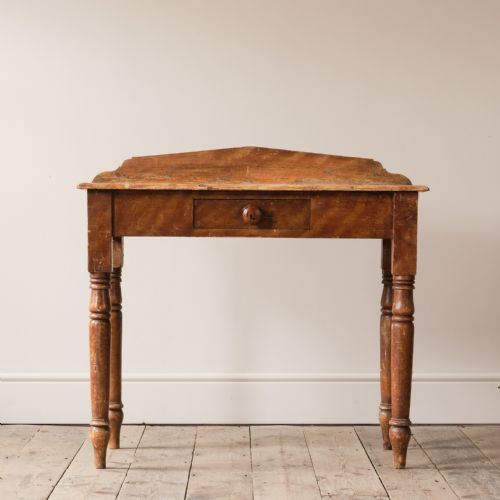
One Victorian washstand carries a later sign written for the Midland Grand Hotel.
What varies in quality
Quality rests in the integrity of the timber frame and the character of the surface finish. Pieces retaining original paint demonstrate a truer historical record than those painted later.
Proportions and structural soundness differentiate standard utility items from finer country house or provincial examples. The integration of drawers, potboards, and hardware adds distinct utility and visual weight.
The Vintage Painted Server Table Glossary
- Dresser base
- A low sideboard or cabinet featuring drawers and sometimes an open lower shelf known as a potboard. They were traditionally used in kitchens for food preparation and storage.
- Potboard
- An open lower shelf fitted between the legs of a dresser base or serving table. It was originally designed to hold pots, pans, and heavy kitchen utensils.
- Drapers table
- A long, narrow table originating from textile shops and merchants. Their generous length and shallow depth make them useful as console or serving surfaces today.
- Console table
- A table designed to stand against a wall, frequently supported by brackets or legs. They offer a narrow surface profile suited to hallways and living spaces.
- Original paint
- Surface coating applied during the period of manufacture rather than in a modern restoration. It provides an authentic historical patina valued by collectors.
Vintage Painted Server Table: Frequently Asked Questions
What is a vintage painted server table used for?
These tables function as surface storage and display units in kitchens, dining rooms, or hallways. Their long tops and drawer space accommodate serving dishes or everyday household items.
They originated as working furniture in domestic and commercial spaces, adapting easily to modern living arrangements.
How do I identify the period of a server table?
Dating relies on construction methods, timber choice, and stylistic cues from periods like the Georgian era or the 19th century. Oak is more common in earlier pieces, while pine appears frequently in 19th-century country furniture.
Paint characteristics and hardware styles also offer clues to the age of manufacture.
Are these tables suitable for everyday kitchen use?
Most pieces were built originally for practical domestic tasks, making them robust enough for contemporary utility. Solid wood construction ensures they handle regular placement of objects.
Care should be taken to protect older painted surfaces from excessive moisture and heat.
What is the difference between a server and a dresser base?
A server generally provides a clean surface and drawer storage for passing food or displaying items. A dresser base often includes a potboard shelf underneath and multiple drawers for kitchen storage.
Both forms share similar proportions and regional building traditions from the 18th and 19th centuries.