


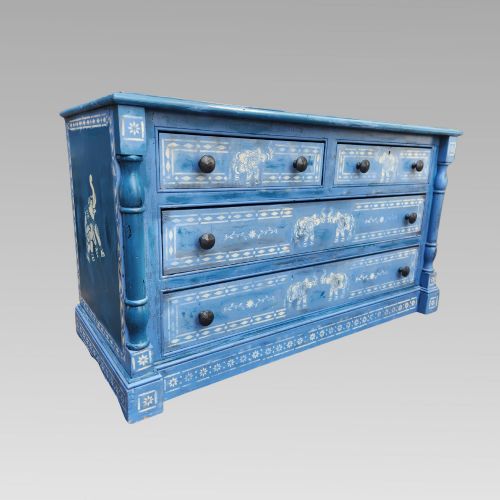
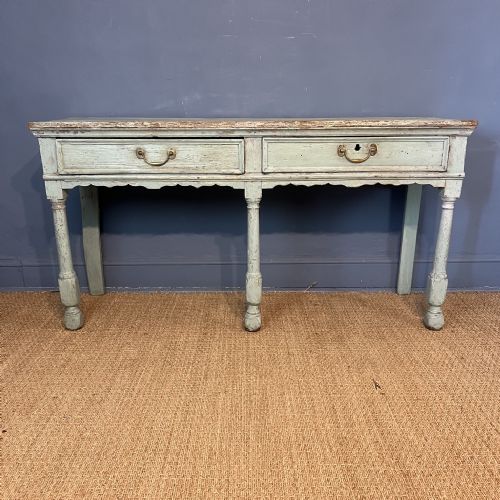


Blue Sideboard
A blue sideboard brings practical storage and a strong splash of colour to a room, drawing on centuries of painted pine and country traditions.
Blue Sideboard
When you search for a blue sideboard, you are looking at painted wooden furniture designed for storage, drawing chiefly from eighteenth-century and nineteenth-century country traditions. These pieces often overlap with dresser bases, serving tables, kitchen cupboards, and buffets.
The materials recorded in these listings rely heavily on pine and painted wood, with brass and iron hardware providing functional contrast. Styles range from Scandinavian country and English country house to French provincial and Gustavian forms.
You are most likely to meet painted pine pieces originating from Scandinavian, English, and European workshops. They span periods from the early eighteenth century through to the early twentieth century, showing various stages of original and scraped paint surfaces.
Materials and construction
Makers constructed these pieces primarily from solid pine and mixed painted woods, utilising timber suited to everyday domestic use. Joinery was straightforward and robust, tailored to the demands of rural kitchens, halls, and pantries.
Surfaces were finished with paint rather than clear polish, often employing regional pigments that aged over decades. Iron and brass handles, hinges, and keyplates were fitted to secure doors and drawers.
Blue Sideboard Retail Price Guide 2026
Typical asking prices for blue sideboard among the pieces listed under this phrase on Sellingantiques today, from the lower quarter to the upper quarter. They describe what is for sale here now, not the wider market.
Listings span the eighteenth and nineteenth centuries up to nineteen-twenty, featuring pine, painted wood, brass, iron, and glass.
Evaluating craftsmanship and age
The character of the paint surface distinguishes one piece from another, particularly where original or scraped finishes reveal layers of historic colour. Untouched regional surfaces carry greater authenticity than later decorative coats.
Proportion and construction depth separate standard utilitarian items from finer regional examples, such as Gustavian miniature dressers or serpentine commodes. Timber selection and the survival of original brass or iron hardware also influence the standing of a piece.
The Blue Sideboard Glossary
- Scraped paint
- A painted finish that has been partially worn or scraped back to reveal earlier underlying layers of colour. This technique highlights the age and decorative history of the timber.
- Dresser base
- A low cabinet or sideboard form featuring drawers and sometimes a potboard shelf below. It served as a primary work and storage surface in historic kitchens.
- Commode
- A low cabinet or chest of drawers, often standing on short legs. European examples frequently feature shaped fronts and painted decorative schemes.
- Gustavian
- A Swedish neoclassical style originating in the late eighteenth century. It translates French royal designs into lighter, simpler country forms finished in pale paint.
- Ragwork paint
- A decorative paint technique where rags or cloths are used to manipulate the wet glaze or colour on a surface. It creates a mottled, textured pattern across the wood.
Blue Sideboard: Frequently Asked Questions
What is a blue sideboard?
A blue sideboard is a painted wooden storage unit, typically drawn from eighteenth and nineteenth-century country traditions. These pieces include painted pine cupboards, serving tables, and dresser bases.
They offer functional shelving and drawer space while introducing historic colour and rustic texture to a modern interior.
How do I care for painted pine furniture?
Keep painted wooden furniture out of direct sunlight and away from rapid temperature changes to protect the historic surface. Dust gently with a dry cloth and avoid harsh chemical cleaners.
Wax or oil should only be applied if the specific finish calls for it, as many antique painted surfaces prefer a completely dry environment.
Where were these pieces made?
The pieces listed originate from various European regions, including Sweden, England, France, Spain, and Italy. Each area developed distinct local forms and painting styles.
Scandinavian workshops produced pale pine cupboards and Gustavian items, while English and Welsh makers built sturdy dresser bases in country houses.
How can I tell older pieces apart?
Age is determined by construction methods, timber choice, and the condition of the paint layers. Eighteenth-century examples often show hand-cut joinery and historic surface wear.
Nineteenth-century pieces tend to use more standardised milling while retaining regional hardware and traditional painted finishes.